- Company Articles
- Products and Technology
- Technology Sharing
- The Importance of Turning Angle Code 4040 in Lean Kaizen Continuous Improvement

The Importance of Turning Angle Code 4040 in Lean Kaizen Continuous Improvement
Related Product
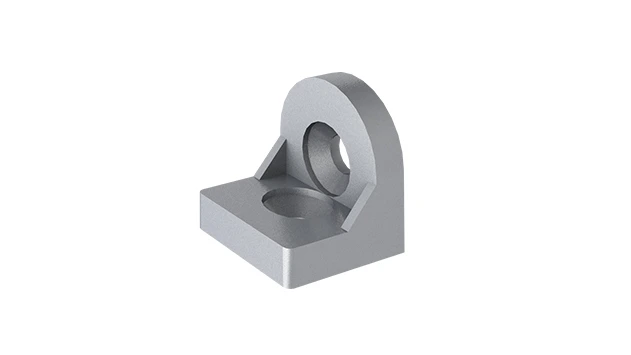
Turning Angle Code 4040
The turning angle aluminum profile connector provides a 90 degree hidden corner connection. 4040 it is means this size is used for 40 series aluminum profile.The corner code comes with set screws that allow for quick, easy connections.
Walk into any modern manufacturing facility, warehouse, or production line, and you'll likely notice a common thread: order. Tools are within arm's reach, materials flow smoothly from one station to the next, and workspaces feel tailored to the task at hand. This isn't just good housekeeping—it's the result of Lean Kaizen, a philosophy centered on continuous improvement. But Lean Kaizen isn't magic; it's built on tangible, adaptable tools that make efficiency possible. One such tool, often overlooked but critically important, is the Turning Angle Code 4040. In this article, we'll explore why this unassuming connector is a linchpin in creating the flexible, durable, and efficient systems that drive Lean success.
Understanding Lean Kaizen: More Than Just a Process, It's a Mindset
Before diving into the specifics of the Turning Angle Code 4040, let's ground ourselves in what Lean Kaizen really means. Originating from Toyota's production system, Lean Kaizen combines two concepts: "Lean," which focuses on eliminating waste (or "muda" in Japanese), and "Kaizen," which means "change for the better." Together, they form a culture where every team member is empowered to identify inefficiencies and implement small, incremental improvements—daily.
At its core, Lean Kaizen relies on three pillars: respect for people, continuous improvement, and standardized work. But here's the catch: standardized work doesn't mean rigid, unchanging processes. In fact, it's the opposite. To improve continuously, workspaces and tools must be adaptable . A production line might need to reconfigure for a new product size next month; a warehouse might shift to a new picking strategy next quarter. This is where modularity becomes key—and modularity, in turn, depends on components that can be easily assembled, disassembled, and reconfigured without sacrificing strength or stability.
Enter the world of aluminum profiles, workbenches, flow racks, and the connectors that hold them all together. These aren't just pieces of metal and plastic; they're the building blocks of a Lean system. And among these building blocks, angle codes—specifically the Turning Angle Code 4040—stand out as a critical component. Let's unpack why.
What Is the Turning Angle Code 4040?
If you've ever assembled a shelving unit or a DIY project, you know that connectors are the unsung heroes. They're what turn individual parts into a functional whole. In the industrial world, where loads are heavier, environments are harsher, and reconfiguration is frequent, connectors need to be more than just "good enough." They need to be reliable, versatile, and built to last. That's where the Turning Angle Code 4040 comes in.
The Turning Angle Code 4040 is a type of connector designed to join aluminum extrusion profiles at a 90-degree angle (hence the "turning angle" name). It's part of a family of angle codes, including smaller variants like the 3030 and 2020, but what sets the 4040 apart is its size, strength, and compatibility with larger, heavier-duty aluminum profiles. Typically made from high-grade aluminum or steel, it features a T-slot design that aligns with the grooves in aluminum profiles, allowing for secure attachment with bolts, nuts, or screws. This design isn't just about holding things together—it's about creating a connection that's both rigid enough to support heavy loads and flexible enough to be adjusted or disassembled when needed.
But why "4040"? The numbers refer to the profile size it's designed for: 40mm x 40mm aluminum extrusion profiles. These profiles are workhorses in industrial settings, used to build everything from workbenches and material racks to conveyor systems and machine guards. The Turning Angle Code 4040 is specifically engineered to fit these 40mm profiles, making it a staple in applications where strength and durability are non-negotiable.

Turning Angle Code 4040 vs. Other Angle Codes: A Comparison
To truly appreciate the value of the Turning Angle Code 4040, it helps to compare it to its smaller counterparts, the 3030 and 2020 angle codes. While all three serve the same basic purpose—connecting aluminum profiles—their differences highlight why the 4040 is indispensable in Lean Kaizen environments. The table below breaks down key features:
| Feature | Turning Angle Code 4040 | 3030 Angle Code | 2020 Angle Code |
|---|---|---|---|
| Compatible Profile Size | 40mm x 40mm aluminum profiles | 30mm x 30mm aluminum profiles | 20mm x 20mm aluminum profiles |
| Maximum Load Capacity | Up to 500kg (depending on material and installation) | Up to 250kg | Up to 100kg |
| Typical Applications | Industrial workbenches, heavy-duty flow racks, conveyor frames, machine bases | Light-duty workstations, small material racks, shelving units | DIY projects, small storage solutions, electronic enclosures |
| Durability | High (thicker walls, reinforced design for industrial use) | Medium (suitable for light industrial or commercial use) | Low to medium (best for non-industrial or temporary setups) |
| Flexibility for Reconfiguration | High (easily disassembled and reused with 40mm profiles) | High (but limited by smaller profile size) | High (but minimal load capacity restricts reuse in heavy applications) |
The takeaway? While 3030 and 2020 angle codes have their place in lighter applications, the Turning Angle Code 4040 is the go-to choice for industrial environments where heavy loads, frequent use, and adaptability are daily requirements. This makes it a critical component in Lean Kaizen, where workspaces must evolve with changing needs without compromising on safety or efficiency.

Turning Angle Code 4040 in Action: Building Blocks of Lean Systems
Now that we understand what the Turning Angle Code 4040 is and how it compares to other connectors, let's explore how it's used in real-world Lean environments. From workbenches to flow racks, this angle code is the glue that holds key Lean tools together.
1. Industrial Workbenches: The Heart of the Production Line
Walk up to any production workstation, and you'll likely find a workbench at its center. This isn't just a table—it's where operators assemble products, inspect parts, or pack orders. In Lean terms, the workbench must be ergonomic (to reduce fatigue), organized (to eliminate "searching" waste), and adaptable (to accommodate new tasks). The Turning Angle Code 4040 makes all of this possible.
Consider a typical industrial workbench built with 40mm aluminum profiles and Turning Angle Code 4040 connectors. The angle codes join the vertical and horizontal profiles to form the bench's frame, ensuring it can support heavy tools, materials, or even machinery. But what truly sets this setup apart is its flexibility. Need to add a shelf for extra storage? Use 4040 angle codes to attach a new profile. Want to raise the bench height to reduce operator bending? Loosen the angle code bolts, adjust the legs, and retighten. Switching to a new product that requires a wider workspace? Disassemble the bench using the angle codes, add longer profiles, and rebuild—no need to buy a brand-new bench.
This adaptability directly aligns with Kaizen principles. Instead of accepting a "one-size-fits-all" workspace, teams can tweak the bench to fit their evolving needs, reducing waste and improving comfort. And because the Turning Angle Code 4040 creates a sturdy connection, operators can trust that their workspace is safe, even when loaded with equipment.
2. Flow Racks: Keeping Materials Moving
In Lean, "material flow" is everything. When materials sit idle or require extra effort to move, it's a form of waste. Flow racks—structures with roller tracks that allow materials to glide from the back to the front—solve this by enabling "first-in, first-out" (FIFO) inventory and reducing manual handling. And again, the Turning Angle Code 4040 plays a starring role here.
Flow racks are typically built with aluminum profiles for the frame and roller tracks for the material slides. The Turning Angle Code 4040 connects the vertical supports to the horizontal beams that hold the roller tracks, ensuring the rack can withstand the weight of stacked boxes, bins, or parts. For example, a material rack B (3 row and 3 floor) design—common in warehouses—relies on 4040 angle codes to maintain structural integrity, even when loaded with heavy components. The angle codes also allow for adjustments: if a new type of bin is taller, the roller tracks can be repositioned by loosening the angle codes, moving the supports, and retightening.
In one automotive parts facility I visited, the team used Turning Angle Code 4040 to build custom flow racks for different component sizes. When a new part was introduced, they didn't need to purchase new racks—they simply reconfigured the existing ones using the angle codes. This saved them thousands of dollars and reduced lead time for the new product launch. That's Lean in action, made possible by a simple connector.
3. Aluminum Profiles: The Backbone of Modular Systems
Aluminum extrusion profiles are the "legos" of industrial design—versatile, lightweight, and strong. But without the right connectors, they're just pieces of metal. The Turning Angle Code 4040 unlocks the full potential of these profiles by creating secure, adjustable joints. This is especially important in Lean systems, where modularity is key to reducing waste.
Aluminum profiles with T-slot designs allow for endless customization. Accessories like end caps, rubber strips, and tool holders can be slid into the slots and secured in place. The Turning Angle Code 4040, by joining these profiles at 90-degree angles, turns individual profiles into complex structures: machine guards, assembly lines, inspection stations, and more. What's more, because the angle codes are reusable, old structures can be disassembled and the profiles repurposed for new projects—eliminating "waste of unused resources" and reducing costs.
For example, a electronics manufacturer needed to create a temporary testing station for a new product line. Using 40mm profiles and Turning Angle Code 4040 connectors, they built a station in a day, complete with a work surface, tool hooks, and a small conveyor. When the project ended, they disassembled the station, stored the profiles and angle codes, and reused them to build a material cart a month later. This kind of flexibility is why aluminum profiles and 4040 angle codes are staples in Lean environments.
Case Study: How Turning Angle Code 4040 Transformed a Packaging Line
The Challenge: A food packaging company was struggling with a bottleneck on its line. Their existing packaging station was a fixed wooden table that couldn't be adjusted for different box sizes. Workers often had to stretch or bend to reach materials, leading to fatigue and slower production. The team wanted to implement a Kaizen event to redesign the station but was worried about the cost of new equipment.
The Solution: The company's Lean coordinator recommended building a custom workbench using 40mm aluminum profiles and Turning Angle Code 4040 connectors. The team sourced the profiles, angle codes, and a plywood top, then assembled the bench in-house. Using the angle codes, they added adjustable shelves for boxes, a roller track (for sliding finished packages to the next station), and tool hooks.
The Results: Within a week, the new bench reduced worker bending by 60%, cut "searching" waste by 40% (thanks to organized shelves), and allowed the team to adjust the height and layout as needed. When a new box size was introduced three months later, the bench was reconfigured in under an hour using the Turning Angle Code 4040 connectors. The total cost? Less than half the price of a pre-made industrial bench. This small change—made possible by the 4040 angle code—boosted line productivity by 15% and became a model for other stations in the facility.
Why Turning Angle Code 4040 Drives Lean Kaizen Success
At this point, you might be thinking, "It's just a connector—how much difference can it really make?" The answer lies in how the Turning Angle Code 4040 addresses core Lean principles:
Eliminating Waste (Muda): In Lean, waste comes in many forms—overproduction, waiting, defects, and more. The Turning Angle Code 4040 reduces waste by enabling reusable, adaptable systems. Instead of buying new equipment every time needs change, companies can repurpose existing profiles and connectors, cutting down on "over-purchasing" waste. It also reduces "motion" waste by allowing workspaces to be tailored to operator movements, and "inventory" waste by enabling better material flow in flow racks.
Empowering Teams: Kaizen isn't just about managers making changes—it's about frontline teams identifying improvements. The Turning Angle Code 4040 makes it easy for operators to adjust their workspaces without needing specialized tools or skills. Loosening a bolt, repositioning a profile, and retightening is something any team member can learn, giving them ownership over their environment and fostering a culture of continuous improvement.
Supporting Standardization with Flexibility: Lean relies on standardized work to ensure consistency, but standardization shouldn't mean rigidity. The Turning Angle Code 4040 allows for standardized base structures (like a 40mm profile workbench) that can be customized with flexible elements (shelves, hooks, roller tracks). This balance ensures teams have a reliable foundation while still being able to adapt to unique tasks.
Durability = Long-Term Value: In Lean, "cheap" isn't always better—investing in durable tools reduces maintenance waste and replacement costs over time. The Turning Angle Code 4040, typically made from high-grade aluminum or steel, is built to withstand heavy use, corrosion, and frequent reconfiguration. Unlike plastic connectors that crack or weak metal joints that bend, the 4040 angle code maintains its strength, ensuring the systems it builds last for years.
Conclusion: Small Part, Big Impact
In the world of Lean Kaizen, success often hinges on the smallest details. The Turning Angle Code 4040 might not get the same attention as fancy software or automated machinery, but its role in building adaptable, efficient workspaces is irreplaceable. By enabling the construction of sturdy, flexible systems—from workbenches to flow racks—it empowers teams to eliminate waste, adapt to change, and continuously improve.
So the next time you walk through a well-organized production line or a warehouse, take a closer look at the structures around you. Chances are, you'll spot 40mm aluminum profiles held together by Turning Angle Code 4040 connectors. And now, you'll know: that small, unassuming part is more than just a connector—it's a symbol of Lean Kaizen in action, turning the philosophy of continuous improvement into tangible, everyday results.