- Company Articles
- Products and Technology
- Product knowledge
- The Manufacturing Process of Corrugated Aluminum Pipe: Step-by-Step Explanation

The Manufacturing Process of Corrugated Aluminum Pipe: Step-by-Step Explanation
Related Product
Corrugated Aluminum Pipe
Product Description The slot side is 10mm which can work with a T sliding block for connection accessories Quick Detail Product name Corrugated Aluminum pipe model GLT28-T-3010A Material Science 6005-T6 thickness 1.7mm surface treatment anodic oxidat
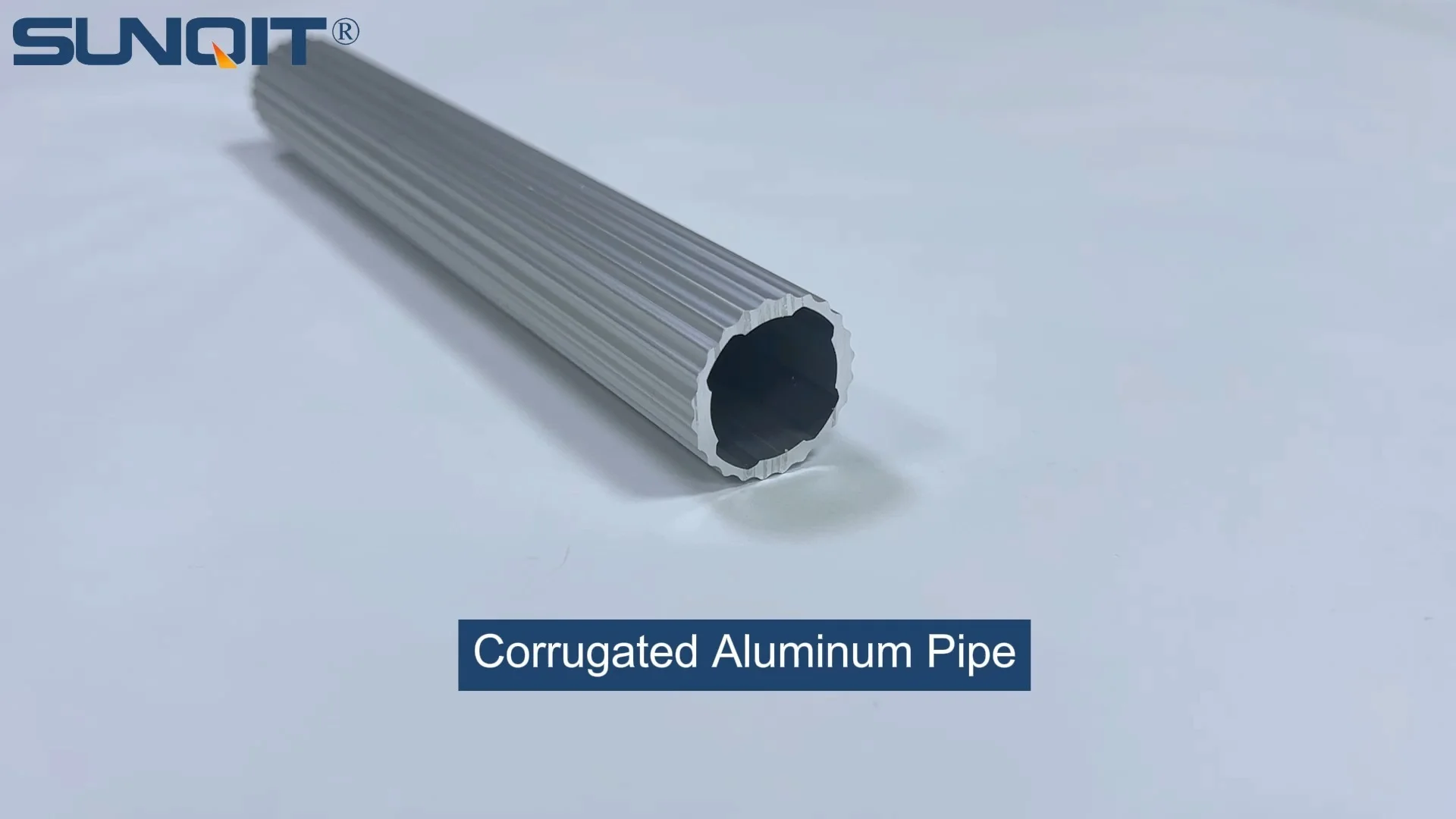
In the world of industrial materials, few products blend versatility, durability, and adaptability quite like corrugated aluminum pipes. These unassuming yet vital components play a silent role in countless sectors—from carrying fluids in HVAC systems and supporting structural frameworks in construction to streamlining material handling in factories and even enhancing vehicle performance in automotive engineering. What makes them so indispensable? It's the unique combination of aluminum's natural advantages—lightweight strength, resistance to corrosion, and exceptional recyclability—paired with the corrugated design, which adds flexibility and structural integrity. Let's take a deep dive into how these remarkable pipes come to life, from raw aluminum ingots to the finished products that keep industries moving.
Step 1: Raw Material Selection – Choosing the Right Aluminum
The journey of a corrugated aluminum pipe begins long before any machinery roars to life—it starts with selecting the perfect aluminum alloy. Not all aluminum is created equal, and the choice here directly impacts the pipe's performance, cost, and suitability for its final use. Most manufacturers turn to alloys from the 6000 series, particularly 6061 and 6063, for their excellent extrudability and balanced properties. These alloys contain magnesium and silicon, which form heat-treatable compounds, giving the aluminum the strength needed to withstand industrial demands while remaining malleable enough for shaping.
Before production, the raw aluminum undergoes rigorous testing. Samples are analyzed for purity—even tiny impurities like iron or copper can weaken the final product or cause defects during manufacturing. Once approved, the aluminum is cast into cylindrical billets, typically 6 to 12 inches in diameter and several feet long. These billets are the building blocks of the process, and their quality sets the foundation for everything that follows. Think of them as the "blank canvas" that will soon be transformed into an aluminum extrusion profile, ready for corrugation.
Step 2: Heating the Billets – Preparing for Extrusion
Aluminum, in its solid form, is tough—but to shape it into complex profiles like corrugated pipes, it needs a little help from heat. The billets are loaded into a furnace, where they're gradually heated to temperatures between 400°C and 500°C (about 750°F to 930°F). This isn't random; this range softens the aluminum just enough to make it pliable without melting it, a state known as "plastic deformation." Heating must be uniform, too—hot spots or cold pockets in the billet can lead to uneven extrusion, resulting in pipes with inconsistent wall thickness or warped corrugations.
Modern furnaces use computerized controls to monitor temperature, ensuring each billet is heated to the exact degree needed for its alloy type. Once ready, the billet is quickly transferred to the extrusion press to prevent cooling—timing here is critical. A cold billet won't flow through the die properly, while an overheated one might tear or develop surface cracks. It's a delicate balance, and experienced operators often rely on both technology and intuition to get it right.

Step 3: Extrusion – Shaping the Aluminum Profile
Now comes the most dramatic part of the process: extrusion. The heated billet is loaded into a hydraulic press, where a ram exerts thousands of pounds of pressure—sometimes up to 10,000 tons—pushing the aluminum through a custom die. The die is a precision-engineered steel tool with a hole shaped like the desired cross-section of the pipe. For corrugated pipes, this die might initially create a smooth-walled tube, but in some cases, it can include preliminary grooves that will later be expanded into full corrugations.
As the billet is forced through the die, it emerges as a long, continuous aluminum extrusion profile. This profile isn't yet corrugated, but it has the basic tube shape, with a consistent outer diameter and wall thickness. The extrusion press moves slowly—only a few inches per second—to ensure the aluminum flows evenly. Operators watch closely, adjusting pressure or speed if they spot issues like surface blemishes or uneven flow. Once extruded, the profile is guided onto a cooling table, where fans or water sprays rapidly cool it, locking in its shape.
Step 4: Corrugation – Adding the Signature Wavy Design
With the smooth aluminum tube now cooled and solidified, it's time to add the feature that gives corrugated pipes their name: the wavy, ridged pattern along their length. This step is what transforms a simple tube into a pipe that can bend, flex, and absorb stress—qualities that make it ideal for applications like exhaust systems, where vibrations are common, or underground piping, where soil movement might otherwise crack rigid materials.
Most manufacturers use a roll-forming process for corrugation. The smooth tube is fed through a series of paired rollers, each set gradually shaping the metal into deeper ridges and valleys. The rollers are precision-machined with the exact corrugation pattern—some pipes have large, widely spaced ridges for maximum flexibility, while others have smaller, tighter corrugations for higher pressure resistance. As the tube passes through, the aluminum is stretched and compressed, forming the waves without breaking. It's a bit like rolling out dough with a patterned rolling pin, but on an industrial scale and with metal instead of flour.
For more complex designs, some factories use hydroforming, where high-pressure fluid is pumped inside the tube while external dies press against it, forcing the aluminum to take the corrugated shape. This method is especially useful for pipes with irregular corrugation patterns or varying wall thicknesses. No matter the method, the goal is the same: create consistent, uniform corrugations that enhance the pipe's performance without compromising its structural integrity.
Step 5: Cutting and Sizing – Precision to the Inch
After corrugation, the pipe is still a long, continuous length—sometimes hundreds of feet long. The next step is to cut it into the specific sizes customers need. This might be 10-foot sections for construction, 3-foot lengths for automotive parts, or custom sizes for specialized industrial equipment. Precision here is non-negotiable; a pipe that's even a quarter-inch too short or too long can throw off an entire assembly line or construction project.
Modern cutting is done with automated saws or laser cutters. Laser cutters are particularly popular for their accuracy—they can slice through aluminum with minimal heat distortion, leaving clean, burr-free edges. After cutting, each pipe is deburred, either by machine or by hand, to remove sharp edges that could cause injury during handling or installation. Some pipes also get end treatments at this stage, like beveling the edges to make welding or connecting easier, or adding threads for screws or fittings.
Step 6: Surface Treatment – Protecting and Enhancing
Aluminum naturally forms a thin oxide layer that resists corrosion, but for many applications, extra protection is needed. Surface treatment not only boosts durability but can also add color, texture, or specific functional properties like electrical conductivity or chemical resistance. The most common treatments include anodizing, powder coating, and painting.
Anodizing involves submerging the pipe in an electrolytic solution and passing an electric current through it. This thickens the oxide layer, making the surface harder and more resistant to scratches and corrosion. It also allows for dyeing—pipes can be colored gold, black, blue, or any shade in between, though clear anodizing (which leaves the natural aluminum finish) is most common for industrial use. Powder coating, on the other hand, applies a dry powder to the surface, which is then baked to form a tough, even layer. This is popular for pipes used in visible applications, like architectural handrails or furniture frames, where aesthetics matter.
For pipes that will be exposed to harsh chemicals or extreme temperatures, specialized coatings like epoxy or fluoropolymers might be applied. These treatments create a barrier that repels acids, oils, or UV rays, extending the pipe's lifespan. After treatment, the pipes are inspected for coverage—any missed spots could lead to premature corrosion, so quality control here is strict.
Step 7: Quality Control – Ensuring Perfection
At every stage of manufacturing, quality control is the silent supervisor. But before the pipes are packaged and shipped, they undergo a final, comprehensive inspection. Teams check dimensions: outer diameter, wall thickness, corrugation depth, and length are measured with calipers, rulers, and laser scanners to ensure they meet specifications. A pipe that's supposed to be 2 inches in diameter but measures 2.1 inches is rejected—it might not fit with aluminum pipe accessories like couplings or end caps, causing delays for the customer.
Mechanical tests are also performed. Samples are bent to check flexibility—corrugated pipes should spring back without cracking. Others are pressure-tested, filled with water or air to ensure they can withstand the operating pressures they'll face in the field. For critical applications like aerospace or medical equipment, even more rigorous tests are done, including fatigue testing (repeatedly bending the pipe to simulate years of use) and chemical resistance testing (exposing it to oils, acids, or saltwater to check for corrosion).
Visual inspections catch surface flaws: scratches, dents, or uneven coatings. A small scratch might be acceptable for a pipe used in a hidden industrial setup, but one destined for a visible architectural project needs a flawless finish. Any pipe that fails these tests is either recycled (aluminum's recyclability makes this cost-effective) or reworked if possible. Only the best make it past this final checkpoint.
Step 8: Packaging and Shipping – Ready for the World
The last step is preparing the pipes for their journey to customers. Depending on size and fragility, they might be bundled together with steel bands, wrapped in protective plastic to prevent scratches, or placed in cardboard tubes for smaller diameters. For international shipping, wooden crates or pallets are used to ensure the pipes arrive undamaged. Labels are affixed with details like size, alloy type, batch number, and destination—this helps track the pipes through the supply chain and ensures customers get exactly what they ordered.
Many manufacturers also include aluminum pipe accessories with bulk orders—things like end caps to seal open ends, couplings to connect pipes, or brackets to mount them in place. These accessories are often made from the same aluminum alloy to ensure compatibility and corrosion resistance. Together, the pipes and accessories form a complete solution, ready to be installed and put to work.
Why Corrugated Aluminum Pipes Matter
From raw billet to finished product, the manufacturing process of corrugated aluminum pipes is a blend of science, skill, and precision. Each step—from selecting the right alloy to adding the final coat of anodizing—matters, because these pipes play critical roles in keeping our world running. They carry water to homes, exhaust fumes from cars, and chemicals in factories. They support solar panel installations, protect electrical wires, and even help launch satellites (corrugated aluminum is used in rocket fairings for its lightweight strength).
And let's not forget aluminum's sustainability story. Unlike plastic or steel, aluminum is 100% recyclable, and recycling it uses just 5% of the energy needed to produce new aluminum. This makes corrugated aluminum pipes not just durable and versatile, but also an eco-friendly choice—a win for both industry and the planet.
Aluminum Alloys Commonly Used in Corrugated Pipe Manufacturing
| Alloy Type | Key Elements | Strength (Tensile, psi) | Corrosion Resistance | Common Applications |
|---|---|---|---|---|
| 6061 | Magnesium, Silicon | 30,000 – 40,000 | Excellent | HVAC systems, structural frames, industrial piping |
| 6063 | Magnesium, Silicon (lower content than 6061) | 25,000 – 35,000 | Very Good | Automotive exhausts, architectural trim, lightweight pipes |
| 5052 | Magnesium (no silicon) | 28,000 – 38,000 | Outstanding (marine-grade) | Marine applications, saltwater piping, chemical transport |
| 7075 | Zinc, Magnesium, Copper | 74,000 – 83,000 | Good (needs coating for harsh environments) | Aerospace, high-stress industrial equipment |
So the next time you see a corrugated aluminum pipe—whether in a construction site, under the hood of a car, or in a factory—take a moment to appreciate the journey it took to get there. It's more than just a piece of metal; it's a testament to human ingenuity, turning raw aluminum into a tool that builds, connects, and powers our modern world.