- Company Articles
- Products and Technology
- Product knowledge
- The ROI of Suction Cup Anti-Slip Foot Adjusters: Cost-Effective Stability

The ROI of Suction Cup Anti-Slip Foot Adjusters: Cost-Effective Stability
Related Product
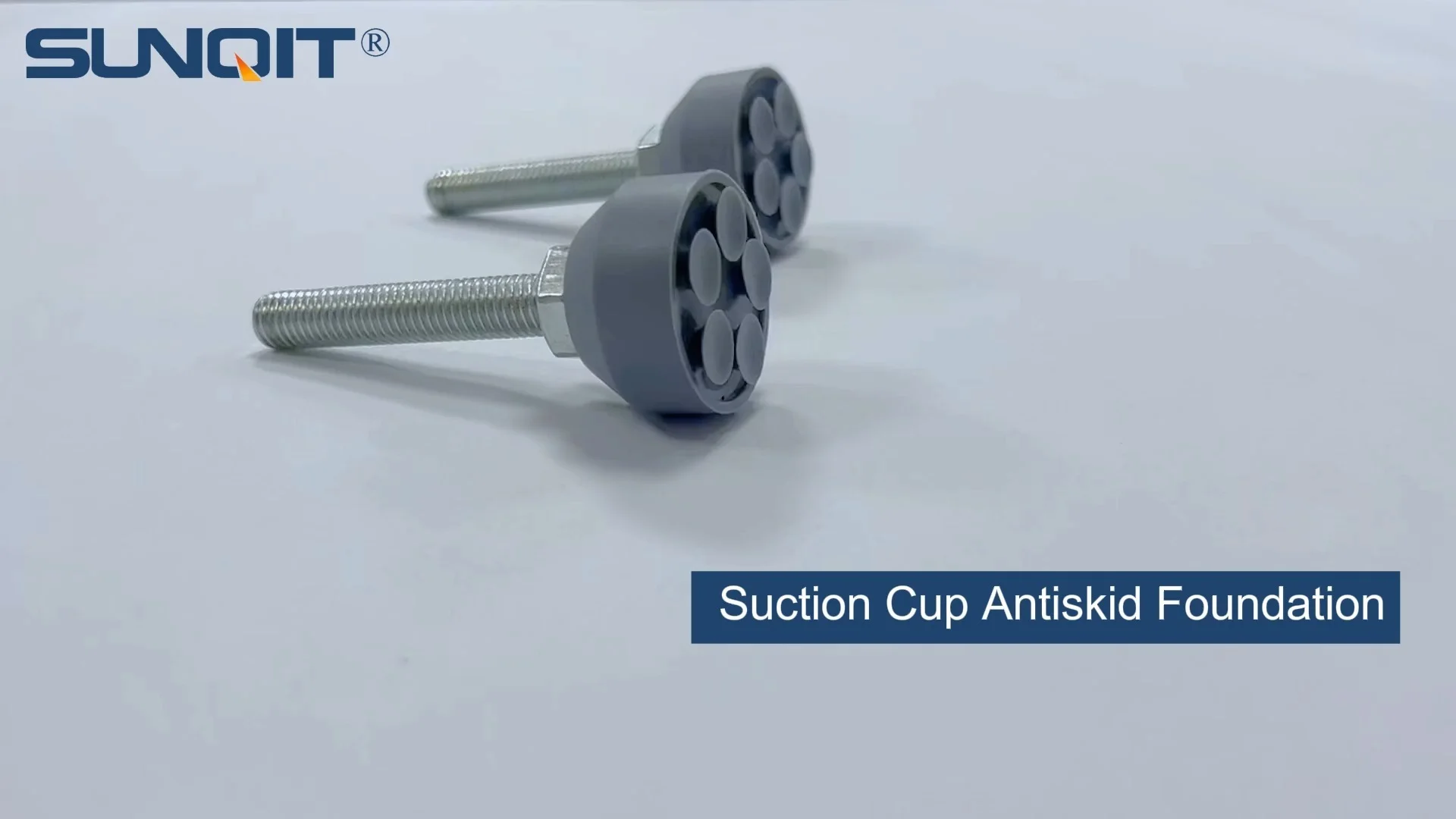
Suction Cup Anti-slip Foot Adjuster
D=35mm suction cup anti-slip foot adjusterï¼screw M10*55ï¼with a blot, used for workbench, flowrack pipe contact with groud.
Walk into any busy workshop, manufacturing floor, or warehouse, and you'll notice a common thread: movement . Parts roll along conveyor belts, workers maneuver turnover trolleys loaded with components, and precision tools hum on workbenches. But beneath all this activity lies an unsung hero of efficiency: stability . A wobbly workbench, a trolley that drifts, or a rack that leans might seem like minor nuisances—until they lead to a spilled batch of expensive parts, a delayed production run, or worse, an injury. That's where suction cup anti-slip foot adjusters come in. These small but mighty components aren't just about "keeping things steady"—they're about protecting your bottom line. In this article, we'll break down how these unassuming tools deliver tangible ROI by solving stability problems before they turn into costly disasters.
What Are Suction Cup Anti-Slip Foot Adjusters, Anyway?
Let's start with the basics. A suction cup anti-slip foot adjuster is exactly what it sounds like: a small, adjustable component designed to attach to the bottom of equipment—think workbenches, turnover trolleys, material racks, or even heavy machinery—to keep it stable. At first glance, it might look similar to a standard adjustable leveling foot (another workhorse in industrial setups), but there's a key difference: the suction cup base . Instead of relying solely on friction or a rubber pad, these adjusters use a vacuum-like seal (the suction cup) to grip smooth floors, while a textured, anti-slip surface ensures traction on rougher surfaces like concrete or tile.
Here's how they work: The top of the adjuster screws into the equipment's leg or frame, allowing you to twist it up or down to level the unit—perfect for uneven floors, which are par for the course in most facilities. The bottom features a flexible suction cup made from durable rubber or silicone. When you press the equipment down (or the weight of the equipment does the work), the suction cup compresses, forcing air out and creating a seal with the floor. This seal adds an extra layer of grip, preventing the equipment from sliding, shifting, or tipping—even when bumped or loaded with heavy materials.
They're surprisingly versatile, too. Whether you're outfitting a lightweight workbench E (single deck, without casters) in a electronics assembly line or a heavy-duty material rack B (3 rows, 3 floors) in a warehouse, these adjusters come in various sizes and load capacities to match the job. And because they're made from materials like stainless steel or reinforced plastic, they hold up to oil, chemicals, and the daily wear and tear of industrial environments.
The Hidden Cost of "Minor" Instability
To understand the ROI of suction cup anti-slip foot adjusters, let's first talk about what happens without them. Stability issues rarely announce themselves with a bang—they're more like a slow leak in your budget. Let's break down the costs:
1. Product and Material Damage
Imagine a turnover trolley loaded with circuit boards for a high-end audio system. The floor in your facility has a slight slope near the loading dock, and the trolley's standard casters don't lock well on the smooth concrete. As a worker pushes it, the trolley drifts, hits a door frame, and tips—spilling 50 circuit boards onto the floor. Each board costs $20 to replace, and 10 are too damaged to salvage. That's $200 in direct costs right there. But then there's the time: the worker has to clean up, the damaged boards need to be logged and reordered, and production for that batch is delayed by 2 hours. At an average labor cost of $35/hour, that's another $70. Total for one "minor" incident: $270. Multiply that by a few incidents a month, and you're looking at thousands in avoidable expenses.
2. Downtime and Lost Productivity
A wobbly workbench might not seem like a big deal until you're trying to assemble precision parts. A worker assembling small electronics needs steady hands, but if the workbench shifts every time they lean on it, they slow down to compensate. What should take 10 minutes per unit takes 12. Over an 8-hour shift, that's 40 fewer units assembled—costing your facility hundreds in lost output. Or consider a material rack that leans because its feet can't grip the floor. To prevent it from tipping, you assign a worker to "babysit" it during peak hours, diverting them from more valuable tasks. That's unproductive time, and unproductive time is expensive.
3. Safety Risks and Liability
The scariest cost of instability is human. A tipping trolley can injure a worker. A rack that collapses can crush feet or hands. Even a minor slip due to a wobbly step stool (yes, those need stability too!) can lead to a workers' compensation claim, medical bills, and lost workdays. According to the Bureau of Labor Statistics, the average cost of a non-fatal workplace injury is over $40,000 when you factor in medical expenses, lost wages, and legal fees. One incident like that could wipe out months of profits—and it all starts with something as simple as unstable equipment.

How Suction Cup Anti-Slip Foot Adjusters Deliver ROI
Now, let's get to the good part: how these foot adjusters turn stability into savings. The ROI here isn't about flashy features—it's about preventing losses. Let's break down the math.
1. Preventing Material and Product Loss
Let's revisit that turnover trolley scenario. If you equip it with suction cup anti-slip foot adjusters (which lock the trolley in place when not moving), the drift and tip never happen. No damaged circuit boards, no cleanup time, no delayed production. Let's say your facility has 10 such trolleys, and each averages one $270 incident per month without adjusters. That's $2,700/month in losses. A set of 4 suction cup adjusters costs around $60 per trolley (about $15 per adjuster). For 10 trolleys, that's $600 upfront. In just one month, you've saved $2,700—more than 4x your initial investment. By month two, you're in pure profit territory.
2. Boosting Productivity
A stable workbench isn't just safer—it's faster. Workers don't waste time readjusting their position or double-checking parts that shifted. Let's say a workbench with standard feet causes a 2-minute delay per unit. With suction cup adjusters, that delay disappears. For a worker assembling 40 units per day, that's 80 minutes saved—over an hour of extra productivity. At $35/hour, that's $46.67 in added value per worker per day. Multiply by 5 workers and 22 workdays a month, and you're looking at $5,133 in added output. The workbench needs 4 adjusters at $15 each: $60. The ROI here? Almost 86x in the first month.
3. Reducing Safety Costs
Preventing even one injury pays for a lifetime of foot adjusters. Let's say you outfit 20 pieces of equipment (workbenches, trolleys, racks) with adjusters at $60 per unit: $1,200 total. If those adjusters prevent just one $40,000 injury, your ROI is 33x. And that's not counting the intangibles: lower insurance premiums, better employee morale (workers feel safer, so they stay longer), and a reputation as a responsible employer.
4. Versatility = More Savings
Unlike some specialized tools, suction cup anti-slip foot adjusters work across your facility. You can use them on workbenches in the assembly line, turnover trolleys in the warehouse, and even small material racks in the shipping area. This versatility means you're not buying separate stability solutions for each piece of equipment—saving on procurement costs and simplifying maintenance (one part, one supplier, one repair process).
| Scenario | Cost Without Adjusters (Annual) | Cost With Adjusters (Upfront + Annual) | Annual Savings |
|---|---|---|---|
| 10 Turnover Trolleys (Material Damage) | $2,700/month x 12 = $32,400 | $600 (upfront) + $0 (annual) = $600 | $31,800 |
| 5 Workbenches (Productivity Loss) | $5,133/month x 12 = $61,596 | $300 (upfront) + $0 (annual) = $300 | $61,296 |
| 1 Avoided Injury (Safety) | $40,000 (one-time) | $1,200 (upfront for 20 units) + $0 = $1,200 | $38,800 |
| Total Estimated Savings | $133,996 | $2,100 | $131,896 |
*Table assumes average costs based on industry data and hypothetical scenarios. Actual savings may vary by facility size and usage.

Suction Cup vs. Standard Adjustable Leveling Feet: Why the Upgrade Matters
You might be thinking, "We already use adjustable leveling feet—why switch?" It's a fair question. Standard leveling feet are great for basic height adjustment, but they rely on friction (via a rubber pad) to stay put. On smooth floors (like polished concrete or tile), that friction isn't always enough. A trolley with standard feet might still drift when pushed, or a workbench might slide if someone bumps it hard. Suction cup adjusters add that extra layer of grip—the vacuum seal—making them far more effective on smooth surfaces. On rough floors, their anti-slip texture outperforms standard pads, which can wear down quickly.
Another key difference: durability. Many suction cup adjusters use reinforced rubber or silicone cups that resist oil, chemicals, and abrasion—critical in industrial settings where floors are rarely spotless. Standard feet often use cheaper rubber that cracks or hardens over time, reducing their effectiveness and requiring frequent replacement. Over 2-3 years, the cost of replacing worn standard feet can add up, making suction cup adjusters the more economical choice in the long run.

Choosing the Right Suction Cup Anti-Slip Foot Adjusters for Your Facility
Not all foot adjusters are created equal. To maximize ROI, you need to pick the right ones for your equipment and environment. Here's what to look for:
- Load Capacity: Don't skimp here! A foot adjuster rated for 200 lbs won't work on a 500 lb workbench. Check the equipment's total weight (including maximum load) and choose adjusters with a capacity that exceeds that by 20-30% (to be safe).
- Floor Type: Smooth floors (tile, polished concrete) need a strong suction cup seal. Rough floors (unfinished concrete, asphalt) need a textured anti-slip pad. Some adjusters combine both—ideal for facilities with mixed floor types.
- Adjustment Range: If your floors are very uneven, look for adjusters with a longer screw (more height adjustment). A range of 1-2 inches is standard, but some go up to 4 inches for extreme cases.
- Material: For wet or corrosive environments (like food processing or chemical plants), stainless steel bodies and silicone cups resist rust and degradation. For dry, general use, reinforced plastic is more budget-friendly.
- Compatibility: Make sure the adjuster's top thread (the part that screws into the equipment) matches your equipment's leg or frame. Common thread sizes are M10, M12, or 1/2-inch—check your existing legs or consult the equipment manual.
Real-World Results: A Small Manufacturer's Success Story
Let's wrap up with a real example (names changed for privacy). A small electronics manufacturer in Ohio was struggling with monthly incidents: trolleys tipping, workbenches sliding, and a material rack that leaned so badly they had to limit its load. Their monthly losses from damaged parts and downtime averaged $1,800. They tried standard leveling feet, but the problem persisted—especially on their smooth warehouse floors.
After switching to suction cup anti-slip foot adjusters (equipping 8 trolleys, 5 workbenches, and 2 racks), they saw immediate results. In the first month, incidents dropped to zero. Over six months, they saved $10,800 in losses. Their total investment? $840 (about $15 per adjuster, 56 adjusters total). ROI? 12.8x in just six months. Today, they're expanding the use of adjusters to new equipment and estimate annual savings of over $20,000.
Final Thoughts: Stability = Profitability
In the fast-paced world of manufacturing and warehousing, it's easy to focus on big-ticket investments—new conveyors, automated machines, fancy software. But sometimes the best ROI comes from the smallest tools. Suction cup anti-slip foot adjusters don't just keep your equipment steady—they protect your materials, boost productivity, and keep your workers safe. And as we've seen, the math speaks for itself: a few hundred dollars upfront can save tens of thousands in losses. So the next time you walk through your facility, take a look at those wobbly workbenches or drifting trolleys. They're not just nuisances—they're opportunities to save. Invest in stability, and watch your bottom line grow.