- Company Articles
- Products and Technology
- Product knowledge
- The Role of Adjustable Leveling Feet in Lean Manufacturing – A Beginner's Guide

The Role of Adjustable Leveling Feet in Lean Manufacturing – A Beginner's Guide
Related Product
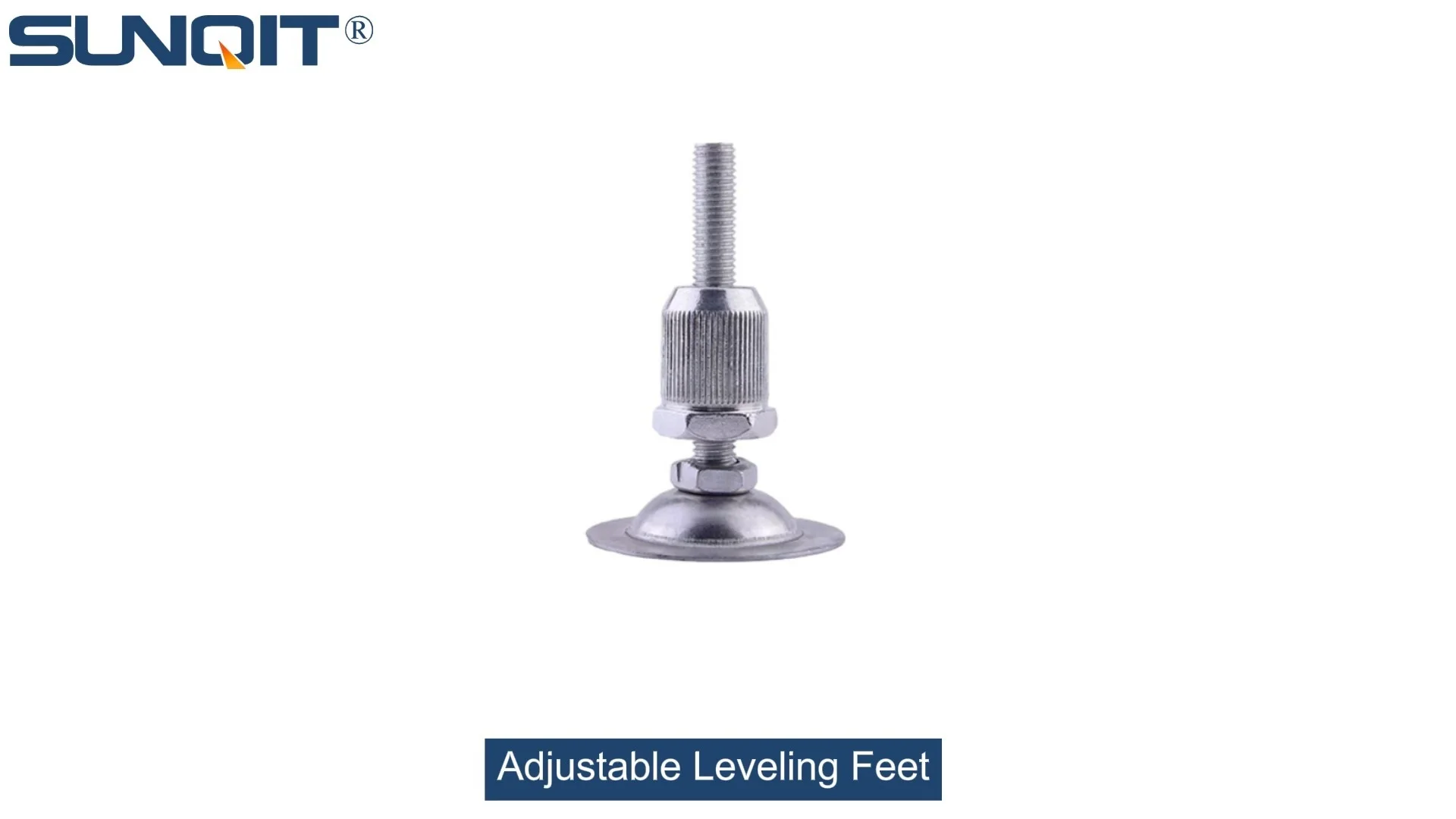
Adjustable Leveling Feet
Adjustable leveling feet are designed to keep machines level when placed on uneven or sloped ground. Otherwise known as adjustable equipment feet, they are available to order in a wide variety of size and load capacity combinations.
1. Introduction: The Heartbeat of Lean Manufacturing
Lean manufacturing isn't just a buzzword—it's a philosophy that transforms how businesses create value by stripping away waste and focusing on efficiency. At its core, lean is about making every action count: reducing time spent on non-essential tasks, minimizing errors, and ensuring that every tool, workspace, and process serves a clear purpose. But here's the thing: you can't build a lean system on shaky ground—literally. The physical infrastructure of a factory or workshop—think workbenches, material racks, and production lines—plays a silent yet critical role in making lean principles work. And today, we're shining a light on one of the most underrated heroes of this infrastructure: adjustable leveling feet.
Imagine walking into a busy assembly plant. Conveyors hum, workers move with purpose, and every inch of space feels intentional. Now, zoom in on a workbench where an operator is assembling small electronic components. If that workbench wobbles even slightly, what happens? The operator pauses to steady it. A part slips. Maybe their posture strains from compensating for the uneven surface. Suddenly, "waste" creeps in—waste of time, waste of effort, and waste of potential. That's where adjustable leveling feet step in. They're the quiet problem-solvers that keep lean systems stable, productive, and aligned with the goal of continuous improvement.
2. Meet the Unsung Hero: What Are Adjustable Leveling Feet?
Let's start with the basics. Adjustable leveling feet are small, unassuming components attached to the bottom of equipment like workbenches, material racks, and trolleys. Their job? To level out uneven surfaces, stabilize heavy loads, and ensure that whatever they're supporting stays steady, no matter the floor conditions. Think of them as the "feet" of your workspace—except these feet can grow, shrink, or pivot to adapt to their environment.
Most adjustable leveling feet share a simple but effective design: a threaded stem (the "leg") that screws into a base (the "foot"). By twisting the stem, you raise or lower the foot, adjusting the height of the equipment it's attached to. The base often has a rubber or plastic pad to grip the floor and prevent slipping—like the M10*56 rubber leveling feet you might find in industrial settings, designed for durability and traction. Some models, like heavy-duty split foot seats, are built for extra stability with larger bases, while others, such as anti-slip adjustable leveling feet, prioritize grip on smooth or wet floors.
At first glance, they might seem like a minor detail. But in lean manufacturing, where even small inefficiencies add up, these little feet punch way above their weight. They turn wobbly workbenches into rock-solid stations, transform uneven factory floors into level playing fields, and quietly support the entire ecosystem of lean tools—from lean pipe workbenches to aluminum profile material racks.

3. Why Stability Matters in Lean Workspaces (Spoiler: It's About Waste)
Lean manufacturing teaches us to spot waste in all its forms: overproduction, waiting, defects, and even "motion waste"—unnecessary movement by workers. But there's another type of waste that's easy to overlook: the waste caused by instability. Uneven floors are a common culprit. Most factory floors, even well-maintained ones, have small dips, cracks, or slopes from years of heavy equipment use. Left unaddressed, these imperfections turn into big problems.
Take a lean pipe workbench used for assembling circuit boards, for example. If the workbench isn't level, tools roll off, parts slide into hard-to-reach corners, and the operator spends extra time readjusting their position. Over a shift, those seconds add up to minutes—and over a week, to hours of lost productivity. Worse, instability can lead to defects: a wobbly hand might misalign a component, requiring rework or scrapping the part entirely. Suddenly, that "small" uneven floor is costing the company time, money, and morale.
Adjustable leveling feet solve this by acting as "floor equalizers." Twist the stem a few times, and the foot extends to fill a dip; twist it the other way, and it retracts to account for a bump. The result? A workbench that stays put, even on the most uneven concrete. No more wasted motion. No more lost parts. Just a stable surface where workers can focus on what matters: building quality products efficiently.

4. Ergonomics: When Stability Meets Comfort
Lean isn't just about efficiency—it's about people. A lean system that ignores worker comfort won't sustain long-term success. That's where adjustable leveling feet play another key role: ergonomics. Think about it: not all workers are the same height. A workbench that's perfect for a 6-foot operator might force a 5-foot-4 operator to hunch over, leading to back pain, fatigue, and higher turnover. Adjustable leveling feet let you customize the height of workbenches, material racks, and even conveyor supports to fit the people using them.
Let's say you're setting up a new assembly line with aluminum profile workbenches. With adjustable feet, you can tweak each station to the ideal height for the operator assigned there—no more one-size-fits-all. An operator assembling small parts might need the bench higher to avoid bending; someone lifting heavier components might need it lower to reduce strain. The result? Happier workers, fewer injuries, and a 15-20% boost in productivity (studies by the Occupational Safety and Health Administration back this up). When workers aren't fighting discomfort, they focus better, make fewer mistakes, and stay engaged longer.
And it's not just about height. Some leveling feet, like anti-slip models, also reduce vibration. If a workbench sits near a loud machine, the constant shaking can make precise tasks (like soldering or labeling) harder. The rubber pad on a leveling foot absorbs that vibration, turning a jittery workspace into a steady one. It's these small, thoughtful touches that turn a "lean in name only" system into a truly people-centric operation.

5. How Adjustable Leveling Feet Fit Into the Lean System Ecosystem
Lean systems thrive on modularity. The ability to reconfigure workspaces quickly—adding a new workbench, rearranging a material rack, or shifting a conveyor line—lets businesses adapt to changing demand. But modularity only works if the components are easy to move and reset. That's where adjustable leveling feet shine: they make reconfiguration a breeze.
Consider a lean system built with aluminum profiles and lean pipes. These materials are lightweight and easy to assemble, but their flexibility depends on stable foundations. When you need to move a workbench from one corner of the factory to another, you don't want to spend hours shimming it with wood scraps to level it again. Adjustable leveling feet let you disassemble, relocate, and readjust in minutes. Just wheel the workbench to the new spot, twist the feet until it's steady, and you're back to production. No wasted time, no guesswork—just lean efficiency in action.
They also play well with other lean tools. Take material racks, for example. A material rack B (3 row and 3 floor) loaded with heavy parts needs to stay upright, even when workers are pulling bins from the top shelf. Adjustable leveling feet distribute the weight evenly, preventing the rack from tipping or sagging. Similarly, on conveyor lines, misaligned rollers can cause products to jam or slide off. Leveling feet on conveyor supports ensure the entire line stays straight, keeping materials flowing smoothly from station to station.
6. Types of Adjustable Leveling Feet: Choosing the Right One for Your Workspace
Not all adjustable leveling feet are created equal. The right choice depends on your equipment, floor type, and what you're trying to stabilize. Let's break down the most common types and when to use them:
| Type of Leveling Foot | Key Features | Best For | Example Use Case |
|---|---|---|---|
| M10*56 Rubber Leveling Feet | Threaded M10 stem, rubber base for grip, corrosion-resistant metal stem | General-purpose workbenches, light to medium loads, concrete floors | Lean pipe workbench in an electronics assembly line |
| Anti-Slip Adjustable Leveling Feet | Textured rubber pad, wide base for stability, high friction | Wet or smooth floors (e.g., tiled areas), equipment prone to sliding | Material rack B (3 row and 3 floor) in a food processing plant |
| Heavy Duty Split Foot Seat | Large, split metal base for weight distribution, thick stem for durability | Heavy equipment (e.g., industrial ovens, large conveyors) | Steel roller track supports in an automotive parts warehouse |
| Swivel Adjustable Leveling Feet | Base swivels to adapt to uneven floors, 360° rotation | Floors with severe slopes or irregularities | Mobile turnover trolleys used across multiple factory areas |
When choosing, ask yourself: How much weight does the equipment carry? Is the floor smooth, rough, or prone to moisture? Do I need the feet to resist chemicals or corrosion? For example, in a cleanroom, you might opt for stainless steel stems to avoid rust. In a warehouse with polished concrete, anti-slip feet would prevent workbenches from sliding during loading/unloading.
7. Real-World Impact: How Adjustable Leveling Feet Transform Lean Operations
Let's dive into some real scenarios where adjustable leveling feet made a tangible difference. These aren't just hypothetical—they're stories from factories and workshops that embraced these small components and saw big results.
Case Study 1: The Wobbly Workbench That Slashed Defects
A medical device manufacturer was struggling with a 5% defect rate on their insulin pump assembly line. The issue? Their lean pipe workbenches sat on a floor that had settled over time, causing the benches to wobble. Workers reported parts slipping during delicate wiring tasks, leading to misconnections and failed quality checks. The fix? Installing M10*56 rubber leveling feet on each bench. Within a week, defects dropped to 1.2%. Why? The stable surface let operators focus on precision, not steadying their workspace. The ROI? The cost of the leveling feet was recouped in 2 months through reduced rework and scrap.
Case Study 2: Ergonomic Wins in a Furniture Factory
A furniture manufacturer with a diverse workforce (operators ranging from 5'2" to 6'4") was struggling with high turnover in their assembly department. Exit interviews cited "discomfort" and "back pain" as top reasons. The problem? Fixed-height workbenches made from aluminum profiles. The solution? Retrofitting each bench with adjustable leveling feet. Workers could now tweak their station's height to their liking. Within 3 months, turnover dropped by 30%, and production speed increased by 12% as workers reported less fatigue. One operator summed it up: "I used to go home with a sore back. Now? I forget I'm even working at a bench."
Case Study 3: Material Flow in a Distribution Center
A distribution center relied on roller tracks to move packages between sorting stations. But uneven floors caused the tracks to dip, slowing down package flow and leading to jams. Workers spent 2 hours daily unjamming packages—waste that ate into their productivity. By adding adjustable leveling feet to the roller track supports, the team leveled the tracks precisely. Jams dropped by 90%, and the saved 2 hours per day were redirected to sorting, increasing daily throughput by 15%.
8. Common Mistakes to Avoid When Using Adjustable Leveling Feet
Even the best tools can fail if misused. Here are a few pitfalls to watch for when installing or using adjustable leveling feet:
- Over-tightening: Cranking the stem too hard can strip the threads or crack the base. Stop when the foot feels secure—no need to overtighten.
- Ignoring floor conditions: Using metal-base feet on concrete might work, but on tile, they'll scratch and slide. Match the foot to the floor.
- Underestimating load capacity: A heavy material rack needs heavy-duty feet. Using light-duty feet can lead to collapse or instability.
- Forgetting regular checks: Leveling feet can loosen over time with vibration. Add a quick "level check" to your weekly maintenance routine.
9. Conclusion: Small Parts, Big Lean Wins
Adjustable leveling feet might not make headlines, but they're the backbone of a stable, efficient lean workspace. They turn uneven floors into assets, transform rigid workbenches into ergonomic havens, and keep material flow smooth and consistent. In a world where lean manufacturing demands every detail count, these little components deliver big results—reducing waste, boosting productivity, and keeping workers happy and healthy.
So the next time you walk through a lean factory, take a second to look down. Under those workbenches, material racks, and conveyor supports, you'll see the unsung heroes: adjustable leveling feet, quietly doing their job to keep the lean dream alive. And if you're building a lean system from scratch? Don't overlook them. They might just be the most cost-effective investment you'll make.