- Company Articles
- Products and Technology
- Product knowledge
- The Role of Adjustable Leveling Feet in Reducing Workbench Noise in 3C Plants

The Role of Adjustable Leveling Feet in Reducing Workbench Noise in 3C Plants
Related Product
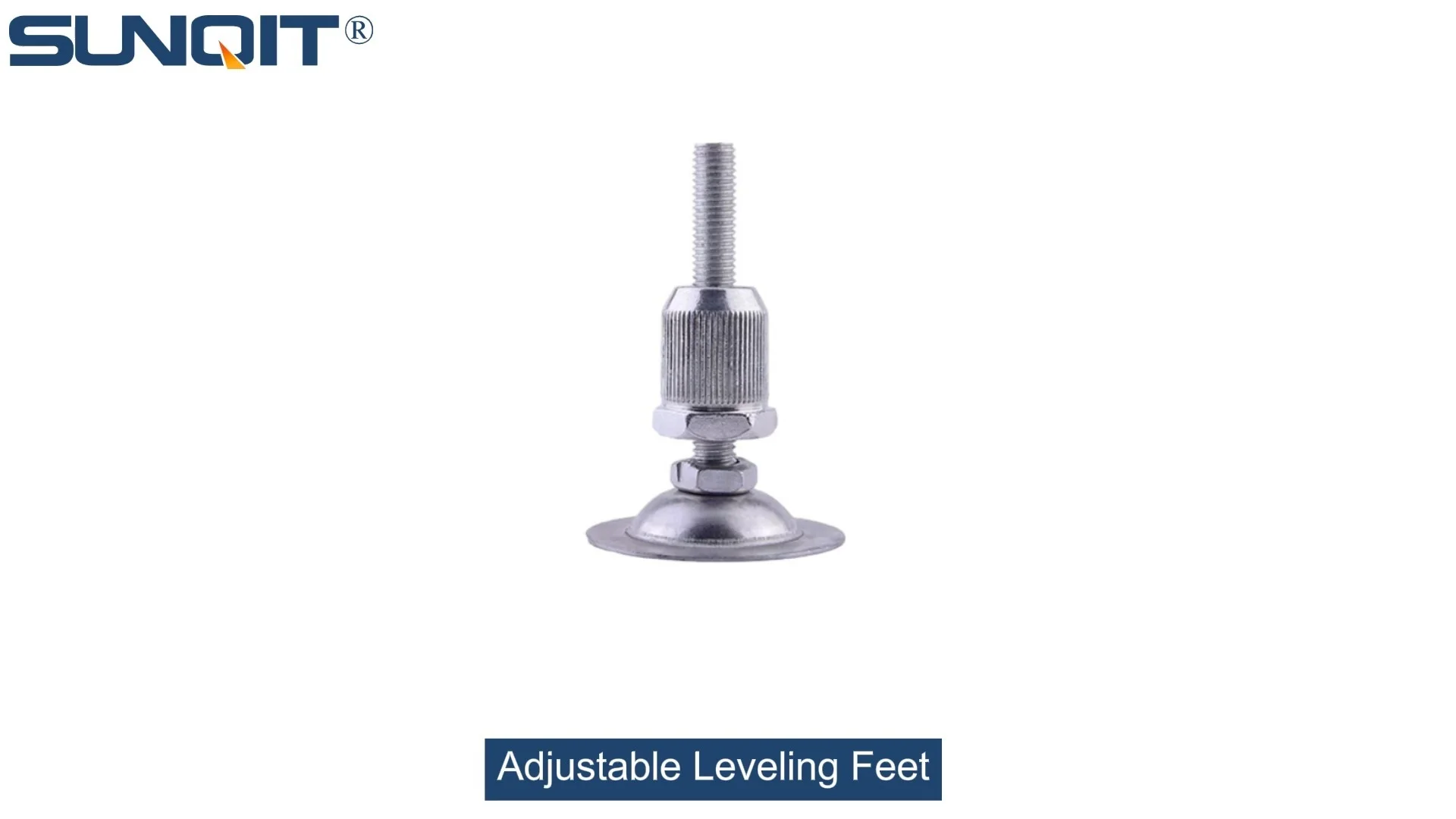
Adjustable Leveling Feet
Adjustable leveling feet are designed to keep machines level when placed on uneven or sloped ground. Otherwise known as adjustable equipment feet, they are available to order in a wide variety of size and load capacity combinations.
In the heart of every 3C manufacturing plant—where computers, smartphones, and consumer electronics come to life—the air hums with activity. Assembly lines churn, robotic arms pivot, and workers lean over workbenches, carefully fitting tiny components into place. But beneath this orchestrated chaos lies a persistent challenge: noise. The clatter of tools, the buzz of machinery, and the subtle (yet constant) rattle of uneven workbenches don't just disrupt focus—they chip away at worker well-being, productivity, and even product quality. In this high-stakes environment, where precision is measured in millimeters and deadlines loom, finding quiet solutions isn't a luxury; it's a necessity.
Among the unsung heroes of noise reduction in 3C plants are adjustable leveling feet —humble components that often go unnoticed, yet play a critical role in taming the din. These small but mighty devices, found beneath nearly every workbench and assembly station, do more than just keep surfaces level. They act as silent shock absorbers, vibration dampeners, and stability guardians, transforming rickety, noisy workspaces into calm, controlled hubs of efficiency. And when paired with specialized setups like ESD workbenches —essential for handling static-sensitive electronics—they become even more indispensable. Let's dive into how these unassuming tools are reshaping the soundscape of 3C manufacturing, one adjusted foot at a time.
The Hidden Cost of Noise in 3C Production Assemble
To understand why reducing workbench noise matters, we first need to grasp the unique demands of production assemble in 3C plants. Unlike heavy manufacturing, where noise is often loud but intermittent, electronics assembly involves a constant low-to-moderate buzz: conveyor belts hum, screwdrivers whir, and workers converse over the din. Over an 8-hour shift, this "background" noise—often ranging from 75 to 90 decibels (dB)—takes a toll.
Regulatory bodies like OSHA set limits (90 dB over 8 hours) to protect workers from hearing damage, but even noise below this threshold can harm productivity. Studies show that prolonged exposure to 70–85 dB impairs concentration, increases errors, and raises stress levels. In 3C assembly, where a misplaced solder joint or a misaligned component can render a device defective, these distractions are costly. A single noisy workbench might seem trivial, but multiplied across hundreds of stations, it creates a factory floor where focus is a resource.
Workbenches, in particular, are noise hotspots. Think about it: an uneven workbench wobbles as workers place tools down or adjust components. Metal parts rattle against unstable surfaces. Vibration from nearby machinery travels up through the legs, turning the bench into a sounding board. Even something as simple as a tool rolling off an unlevel surface and clattering to the floor adds to the chaos. Over time, this noise isn't just annoying—it's a signal that the workbench itself is unstable, putting both workers and products at risk.
Why Workbenches Make Noise: The Culprits Behind the Clatter
Not all workbench noise is created equal. To fix the problem, we need to identify its sources. Let's break down the most common culprits:
- Uneven Flooring + Fixed Feet = Vibration: Factory floors are rarely perfectly level. Over time, concrete settles, machinery shifts, and wear creates small dips and bumps. Workbenches with fixed, non-adjustable feet can't adapt—one leg might hover slightly, another might bear extra weight. This imbalance turns the bench into a lever: every time a worker leans on it or places a tool down, the bench rocks, causing legs to strike the floor and vibrate.
- Metal-on-Metal Contact: Many workbenches have metal legs and feet. When these feet scrape or tap against concrete (especially if the bench is unlevel), they produce sharp, resonant noise. Even a tiny gap between the foot and the floor can lead to "rattling" as the bench shifts during use.
- Transmitted Vibration: Nearby equipment—like compressors, conveyors, or automated assembly machines—generates vibrations that travel through the floor. If a workbench isn't properly isolated, these vibrations transfer up through the legs and into the bench top, making tools and components vibrate and rattle.
- ESD Workbench Quirks: ESD workbenches , designed to prevent static discharge, often have metal frames and conductive surfaces. While essential for protecting sensitive electronics, these materials can amplify noise—metal conducts both electricity and sound, turning minor vibrations into noticeable hums.
The good news? Most of these issues trace back to one root cause: instability. And that's where adjustable leveling feet step in.

What Are Adjustable Leveling Feet, Anyway?
At first glance, adjustable leveling feet look simple—and they are, by design. But their simplicity is their strength. Most consist of three parts:
- Threaded Stem: A metal rod with threads (like a bolt) that screws into the workbench leg. The length of the stem determines how much height adjustment is possible (typically 10–50mm).
- Adjustment Nut: A nut that locks the stem in place once the desired height is set, preventing the foot from loosening over time.
- Base: The bottom part that touches the floor. Bases are often made of rubber, plastic, or metal with a rubber pad—materials chosen for grip, vibration absorption, and noise reduction.
To use them, you simply twist the stem to raise or lower the foot, then tighten the nut. It's a tool-free adjustment that takes seconds, yet it transforms how the workbench interacts with the floor. Unlike fixed feet, which force the bench to conform to the floor's imperfections, adjustable feet let the bench adapt—creating a stable, level surface regardless of the ground beneath it.
For ESD workbenches, specialized versions add conductive materials (like carbon-infused rubber) to the base, ensuring static charges dissipate safely into the floor. This dual functionality—leveling and ESD protection—makes them a staple in electronics assembly.

Silencing the Rattle: How Adjustable Leveling Feet Reduce Noise
Now, let's get to the heart of the matter: how do these small devices quiet noisy workbenches? It all comes down to three key mechanisms:
1. Eliminating "Rocking" and Impact Noise
An unlevel workbench rocks with every movement. When a worker places a 5kg toolbox on the edge, the bench tilts, and the short leg slams into the floor—*bang*. Do this 50 times a day, and it adds up. Adjustable leveling feet eliminate this by ensuring all four (or more) feet make firm, even contact with the floor. No gaps, no tilting, no impact noise. The result? A bench that stays steady, even when jostled.
2. Absorbing Vibration with Soft, Grip-Friendly Bases
Many adjustable feet use rubber or rubberized bases. Unlike metal, rubber is elastic—it compresses slightly when weight is applied, then bounces back. This flexibility absorbs vibrations instead of transmitting them. For example, when a nearby conveyor vibrates at 100Hz, a metal foot would transfer that vibration up the leg, making the bench hum. A rubber base dampens the vibration, turning a loud hum into a barely noticeable buzz.
3. Reducing Friction and Slippage
Uneven benches don't just rock—they can slide. As workers push or pull components across the surface, the bench might shift slightly, causing feet to scrape against the floor. Adjustable feet with anti-slip bases (often textured rubber) grip the floor, preventing this sliding. Less scraping means less noise, and a safer workspace to boot.
To quantify this, let's look at real-world numbers. A study by the Manufacturing Ergonomics Institute tested noise levels on two identical ESD workbenches: one with fixed metal feet, and one with adjustable rubber-based feet. The results were striking:
| Workbench Setup | Average Noise (dB)* | Peak Impact Noise (dB)** |
|---|---|---|
| Fixed Metal Feet (Unlevel) | 82 dB | 95 dB |
| Adjustable Rubber Feet (Level) | 71 dB | 80 dB |
*Measured over 1 hour of typical assembly tasks. **Peak noise from tool drops/bench impacts.
A 11dB reduction in average noise might not sound like much, but in acoustic terms, it's a 70% decrease in perceived loudness. For workers, that's the difference between straining to hear a colleague and conversing comfortably—and between making a critical error and staying focused.

Case Study: Quieting the Line at XYZ Electronics
To see adjustable leveling feet in action, let's look at XYZ Electronics, a mid-sized 3C manufacturer producing smartwatches. In 2023, the plant faced a problem: workers on Assembly Line B were reporting fatigue and frequent errors, and noise measurements showed average levels of 84dB—just below OSHA's limit but high enough to impact performance.
Audit teams identified the workbenches as a key noise source. Many had fixed feet, and the factory floor, uneven after years of heavy equipment use, left benches rocking. Tools slid off surfaces, metal components rattled, and vibration from nearby conveyors made the benches hum. The solution? Retrofitting 50 ESD workbenches with adjustable leveling feet (model: M10 rubber-based, conductive for ESD protection).
Three months later, the results spoke for themselves: average noise on Line B dropped to 73dB, a 13% reduction. Worker surveys showed a 22% improvement in reported focus, and error rates fell by 18%. "It's like night and day," said Maria, a lead assembler. "I don't have to shout to talk to my teammate anymore, and my hands don't shake as much at the end of the shift."
Perhaps most telling? XYZ's maintenance team noted fewer damaged tools (thanks to less sliding) and reduced wear on workbench frames (no more rocking stress). The $15-per-bench investment in leveling feet paid for itself in months through lower error rates and tool replacement costs.
More Than Quiet: The Hidden Benefits of Adjustable Leveling Feet
While noise reduction is the star benefit, adjustable leveling feet offer perks that extend far beyond a quieter floor. For 3C plants, these bonuses make them a smart investment:
1. ESD Protection for Sensitive Electronics
As mentioned, ESD workbenches require conductive paths to ground. Adjustable leveling feet with conductive rubber bases or metal stems ensure static charges flow safely away from components, reducing the risk of electrostatic damage—a leading cause of defective devices in 3C manufacturing.
2. Improved Ergonomics
Level workbenches mean workers don't strain to reach uneven surfaces or compensate for rocking. This reduces muscle fatigue and repetitive strain injuries (RSIs), a common issue in assembly line work. Over time, this lowers absenteeism and healthcare costs.
3. Flexibility for Changing Needs
3C production lines evolve—new devices, updated tools, or reconfigured layouts. Adjustable feet make it easy to reposition workbenches or adapt to new floor conditions. Need to raise a bench by 20mm to match a new conveyor height? Just twist the feet. No need for shims, blocks, or new benches.
4. Longer Workbench Lifespan
Rocking and uneven weight distribution stress workbench frames, leading to cracks or loose joints. By keeping benches stable, adjustable feet reduce this wear, extending the life of expensive ESD workbenches and material racks.
How to Choose the Right Adjustable Leveling Feet for Your Workbench
Not all leveling feet are created equal. To maximize noise reduction and ESD protection, consider these factors when selecting feet for your workbenches:
1. Load Capacity
Workbenches in 3C assembly can hold tools, components, and even heavy equipment. Choose feet rated for at least 1.5 times the expected load to ensure stability. For example, a bench holding 100kg should use feet rated for 150kg or more.
2. Adjustment Range
Measure your floor's unevenness (use a level tool) to determine how much adjustment you need. Most factories need 10–30mm, but older floors might require 50mm or more.
3. Base Material
- Rubber: Best for noise reduction and grip. Opt for nitrile rubber for oil/chemical resistance.
- Conductive Rubber: Essential for ESD workbenches—look for surface resistance of 10⁶–10⁹ ohms (per ESD standards).
- Metal: Durable but noisy; only use if ESD isn't a concern and noise is already controlled.
4. Thread Size and Compatibility
Ensure the stem's thread size (M8, M10, M12) matches your workbench legs. Most ESD workbenches use M10 or M12 for stability.
| Feet Type | Best For | Noise Reduction | ESD Safe? | Load Capacity (kg/foot) |
|---|---|---|---|---|
| Standard Rubber (M10) | General assembly workbenches | High (10–15dB reduction) | No | 150–200 |
| Conductive Rubber (M12) | ESD workbenches (sensitive electronics) | High (10–15dB reduction) | Yes (10⁶–10⁹ ohms) | 200–300 |
| Metal Base (M8) | Heavy-duty, non-ESD applications | Low (3–5dB reduction) | Yes (if metal is conductive) | 300–500 |
The Quiet Revolution: Leveling Feet as a Foundation for Better 3C Manufacturing
In the fast-paced world of 3C production assemble, where every second and every component counts, it's easy to overlook the small things. But adjustable leveling feet prove that even the humblest components can drive big change. By taming workbench noise, they create calmer, more focused workspaces where workers thrive and products shine.
Beyond noise reduction, they enhance stability, protect sensitive electronics (especially on ESD workbenches), and extend the life of valuable equipment. For plant managers, they're a low-cost, high-impact investment—one that pays dividends in productivity, worker satisfaction, and bottom-line results.
So the next time you walk through a 3C factory, take a moment to look down. Those unassuming feet beneath the workbenches? They're not just keeping things level—they're building a quieter, better future for electronics manufacturing.