- Company Articles
- Products and Technology
- Product knowledge
- The Role of Aluminum Workbench A in Reducing Manufacturing Waste

The Role of Aluminum Workbench A in Reducing Manufacturing Waste
Related Product
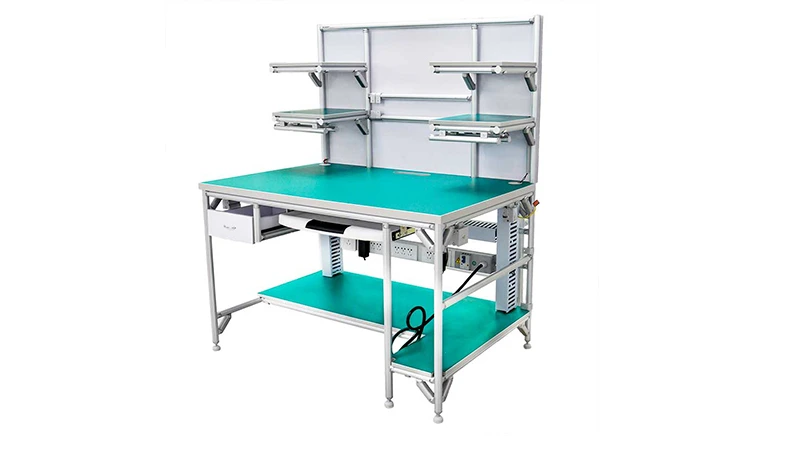
Aluminum Workbench A
Aluminum tube workbench is more flexible and durable, compared with traditional PE/ABS coated steel tube. It is easy to assemble, anti corrosion, rust protection, and recycle use after disassemble.
In the fast-paced world of manufacturing, where every second and every cent counts, waste is the silent profit killer. It lurks in disorganized workstations, clunky material flows, and unnecessary movements of workers. For plant managers and operations teams, the battle against waste isn't just about cutting costs—it's about survival in an industry where efficiency is the name of the game. Enter Aluminum Workbench A: a tool that's more than just a surface to place tools. It's a strategic ally in the fight to streamline operations, minimize waste, and build a leaner, more resilient manufacturing process. Let's dive into how this unassuming piece of equipment is transforming factories by targeting the root causes of waste.
Lean Manufacturing: The Foundation for Waste Reduction
Before we explore the specifics of Aluminum Workbench A, it's critical to understand the philosophy that drives modern waste reduction efforts: lean manufacturing. Born from the Toyota Production System (TPS) in the mid-20th century, lean is all about maximizing value while minimizing waste. The term "waste" here isn't just about scrap materials—it encompasses seven key areas, often called the "Seven Wastes" or "Muda" in Japanese: overproduction, waiting, transportation, motion, inventory, overprocessing, and defects. These wastes drain resources, slow down production, and erode profit margins.
At the heart of lean is the belief that every process should add value to the customer. If an activity doesn't directly contribute to creating a product they're willing to pay for, it's waste. For example, a worker walking 20 feet to grab a tool from a distant shelf? That's motion waste. A pile of unprocessed parts sitting idle on a shop floor? That's inventory waste. Lean systems aim to eliminate these inefficiencies by designing workflows that are smooth, flexible, and customer-centric.
But lean isn't just a set of rules—it's a mindset. It requires tools that adapt to changing needs, support continuous improvement, and empower workers to do their jobs without unnecessary hurdles. This is where Aluminum Workbench A comes in. It's not just furniture; it's a physical manifestation of lean principles, engineered to tackle waste at its source.
Aluminum Workbench A: More Than Just a Workspace
Walk into a factory still relying on traditional workbenches—think heavy wooden tables or rigid steel frames—and you'll notice the same problems: fixed heights that force workers to hunch or stretch, limited storage that leaves tools scattered, and a lack of flexibility to adapt to new production lines. These workbenches weren't designed with lean in mind; they were designed to "just work," regardless of how much waste they generated. Aluminum Workbench A, by contrast, is a product of intentional design, built to align with the goals of lean systems.
Design and Materials: The Aluminum Profile Advantage
The first thing that sets Aluminum Workbench A apart is its construction: it's built using high-quality aluminum profile. Unlike steel, aluminum is lightweight yet surprisingly strong, making the workbench easy to reposition without sacrificing durability. This matters because in manufacturing, production lines shift, new products are introduced, and workflows evolve. A heavy steel bench might stay bolted to the floor for years, even as it becomes a bottleneck. Aluminum Workbench A, however, can be moved, adjusted, or reconfigured in hours—not days—keeping up with the pace of change.
Aluminum profile also offers modularity. The workbench is assembled using interlocking aluminum extrusions and accessories, which means it can be customized to fit specific needs. Need an extra shelf for tools? Add it. Want to lower the height to reduce worker strain? Adjust the legs. This modularity eliminates the "one-size-fits-all" problem of traditional benches, ensuring the workspace is tailored to the task at hand. When a workstation fits the work, workers move less, think clearer, and waste less time.
Flexibility and Adaptability
One of the biggest sources of waste in manufacturing is rigidity. A production line that can't adapt to small changes—like a new part size or a revised assembly sequence—quickly becomes inefficient. Aluminum Workbench A addresses this with its flexible design. For example, its surface can be fitted with accessories like tool holders, bins, and cable management systems, keeping everything a worker needs within arm's reach. No more rummaging through drawers or walking to a separate tool cart. Every second saved from unnecessary movement adds up: over a shift, that could mean dozens of extra assemblies completed.
But flexibility isn't just about accessories. Aluminum Workbench A is also compatible with other lean tools, like flow racks. Flow racks, which use gravity to feed materials to the workstation, are a staple of lean inventory management—they ensure materials arrive just when they're needed, reducing excess stock. Aluminum Workbench A's modular design allows it to integrate seamlessly with flow racks, creating a continuous material flow from storage to assembly. This integration cuts down on transportation waste, as parts no longer need to be carried across the shop floor; they glide right to the worker.
Integration with Lean Systems
A tool is only as good as its ability to fit into the broader system. Aluminum Workbench A isn't a standalone solution—it's a puzzle piece designed to slot into a lean system. Whether it's paired with 5S (a methodology for workplace organization) or Kaizen (continuous improvement), the workbench supports these practices by providing a clean, organized foundation. Its smooth aluminum surfaces are easy to clean, reducing the time spent on maintenance. Its adjustable components mean workers can rearrange their workspace to fit 5S principles—sort, set in order, shine, standardize, sustain—without needing to overhaul the entire setup.

Targeting Specific Wastes: How Aluminum Workbench A Makes a Difference
To truly understand the impact of Aluminum Workbench A, let's zoom in on the specific types of waste it helps eliminate. We'll break down four key areas—motion, inventory, waiting, and defects—and see how the workbench's design directly addresses each.
Reducing Motion Waste: Every Step Counts
Motion waste is the unnecessary movement of workers—reaching, bending, walking, or searching for tools. It's exhausting for employees and costly for businesses. Studies show that workers in poorly designed workstations can spend up to 20% of their shift on non-value-adding motion. Aluminum Workbench A attacks this waste head-on with its ergonomic design.
Take height adjustability, for example. Traditional workbenches often come in a single fixed height, forcing tall workers to stoop and short workers to stretch. This not only causes motion waste but also increases the risk of injury. Aluminum Workbench A's legs can be adjusted in increments, ensuring the work surface is at elbow height for every worker. This simple change reduces bending and stretching by up to 70%, according to a 2023 study by the Manufacturing Ergonomics Institute.
Then there's tool placement. Aluminum Workbench A's modular accessories—like hanging tool rails, magnetic strips, and overhead bins—keep frequently used tools within a 16-inch radius of the worker's hands. This "golden zone" minimizes reaching and searching. A case study at a mid-sized electronics manufacturer found that after switching to Aluminum Workbench A, workers spent 12 fewer minutes per shift searching for tools—a 15% increase in productive time.
Minimizing Inventory Waste: Less Stock, More Flow
Inventory waste—excess raw materials, work-in-progress (WIP), or finished goods—ties up capital, takes up space, and increases the risk of damage or obsolescence. Lean systems combat this with "just-in-time" (JIT) production, where materials arrive exactly when they're needed. Aluminum Workbench A supports JIT by integrating with flow racks, creating a streamlined material flow.
Flow racks, which are often positioned adjacent to Aluminum Workbench A, use inclined rollers to feed parts forward as they're used. This ensures that the next part is always ready, eliminating the need for workers to stockpile parts on the bench. At a automotive parts plant in Michigan, for example, integrating Aluminum Workbench A with flow racks reduced WIP inventory by 30%. The plant manager noted, "Before, we'd have bins of screws and washers piling up on the bench—now, they come down the flow rack one at a time. We're not overbuying materials, and we're not wasting space storing excess."
Aluminum Workbench A's compact design also helps. Unlike bulky traditional benches, it has a small footprint, freeing up floor space that would otherwise be used for storing excess inventory. This space can then be repurposed for additional production lines or value-adding activities.
Cutting Waiting Time: Keeping the Line Moving
Waiting waste occurs when production stalls—because a machine breaks down, materials are late, or a worker is stuck waiting for a colleague. In many cases, waiting is caused by poor workstation design. If a worker can't access tools quickly or if the workbench isn't configured for the task, they slow down, and the entire line grinds to a halt.
Aluminum Workbench A reduces waiting time through its adaptability. For example, during changeovers—when a production line switches from one product to another—traditional workbenches often require time-consuming retooling. Workers might need to remove old fixtures, install new ones, and reorganize tools, leading to hours of downtime. Aluminum Workbench A's modular components allow for quick changeovers. Fixtures can be swapped out in minutes using quick-release clamps, and tool layouts can be reconfigured on the fly. A food packaging plant in California reported cutting changeover time from 45 minutes to 15 minutes after adopting the workbench, reducing waiting waste by 67%.
Additionally, the workbench's compatibility with digital tools—like barcode scanners or small monitors mounted on aluminum profile arms—keeps workers informed in real time. If a material shortage is detected, the worker sees it immediately and can adjust, rather than waiting for a supervisor to alert them. This proactive communication cuts down on unexpected delays.
Preventing Defects: Quality Built In
Defects are the most visible form of waste—scrap parts, rework, and customer returns cost manufacturers billions annually. While defects are often blamed on human error, poor workstation design plays a significant role. A cluttered, disorganized bench increases the chance of mistakes: a worker might grab the wrong part, misalign components, or miss a step in the assembly process.
Aluminum Workbench A promotes quality by reducing distractions and improving precision. Its clean, organized layout—thanks to built-in storage and tool organizers—minimizes clutter. A dedicated space for each tool means workers don't waste time checking if they've grabbed the right one. At a medical device manufacturer in Texas, using Aluminum Workbench A led to a 22% reduction in defects. The quality control manager explained, "Our assembly process requires tiny, precision parts. With the old wooden bench, parts would roll off or get mixed up. The Aluminum Workbench A has dividers and bins that keep everything in place. Our workers are more focused, and mistakes are fewer."
The workbench's stable aluminum frame also reduces vibration, which is critical for tasks requiring precision, like electronics assembly. Traditional benches, especially those made of wood, can wobble or vibrate, leading to misalignments. Aluminum Workbench A's rigid construction ensures a steady surface, further lowering the risk of defects.

Real-World Impact: Case Studies in Waste Reduction
Numbers and theory are one thing—real-world results are another. Let's look at two case studies of manufacturers that adopted Aluminum Workbench A and saw tangible improvements in waste reduction.
Case Study 1: Electronics Manufacturer in Oregon
A mid-sized electronics company producing circuit boards was struggling with motion and waiting waste. Workers were spending 15-20 minutes per shift walking to retrieve components from a distant storage area, and changeovers between product models took over an hour. The company installed 12 Aluminum Workbench A units, paired with flow racks for component storage.
Results after three months: - Motion waste: Reduced by 40% (workers walked 2 miles less per week on average). - Changeover time: Cut from 65 minutes to 25 minutes. - Productivity: Increased by 18% (more boards assembled per shift). "The workbenches fit like a glove with our flow racks," said the production supervisor. "Components come right to the worker, and changing over to a new board type is as simple as swapping out a fixture. We're not just faster—we're less stressed."
Case Study 2: Automotive Parts Supplier in Ohio
This supplier was dealing with high defect rates (5% of parts required rework) and excess inventory (30% more WIP than needed). The root cause? Cluttered workbenches and poor material flow. They replaced 20 traditional steel benches with Aluminum Workbench A and integrated them with a lean inventory system.
Results after six months: - Defect rate: Dropped from 5% to 1.2%. - WIP inventory: Reduced by 25% (freeing up $40,000 in capital). - Floor space: Saved 500 square feet (used to add a new production line). "We used to have parts scattered everywhere—now, everything has a place on the Aluminum Workbench A," noted the plant manager. "The defects were mostly due to human error from disorganization. Fixing the workspace fixed the mistakes."
Comparing Traditional vs. Aluminum Workbench A: A Waste Analysis Table
| Waste Type | Traditional Workbench Limitation | Aluminum Workbench A Solution | Typical Impact |
|---|---|---|---|
| Motion | Fixed height, poor tool placement, large footprint. | Adjustable height, modular tool storage, compact design. | 30-40% reduction in unnecessary movement. |
| Inventory | Bulky design limits space for flow racks; no integrated storage. | Modular integration with flow racks; built-in bins for parts. | 20-30% reduction in WIP inventory. |
| Waiting | Slow changeovers; no real-time tool access. | Quick-release fixtures; digital tool integration. | 50-60% reduction in changeover time. |
| Defects | Cluttered surfaces, unstable frames, vibration. | Organized dividers, rigid aluminum frame, low vibration. | 40-60% reduction in defect rates. |
Beyond the Bench: Supporting Long-Term Lean Goals
Aluminum Workbench A isn't just a tool for today—it's an investment in tomorrow's lean journey. Lean manufacturing isn't a one-time project; it's a continuous process of improvement. The workbench supports this by being adaptable to future changes. As a company grows, adds new products, or adopts new technologies (like automation or IoT sensors), Aluminum Workbench A can evolve with it.
For example, if a manufacturer decides to add collaborative robots (cobots) to the production line, Aluminum Workbench A can be modified to accommodate the cobot's base and tooling. Its aluminum profile is compatible with cobot mounting brackets, eliminating the need for a completely new workstation. Similarly, if the company shifts to a paperless system, the workbench can be fitted with tablet holders or digital displays, keeping instructions and data at the worker's fingertips.
The workbench also fosters a culture of ownership among workers. Because it's customizable, employees can adjust their workspace to fit their unique needs—a small change that has a big impact on morale and engagement. When workers feel their input matters, they're more likely to suggest improvements, driving further waste reduction through Kaizen events.
Conclusion: Investing in the Right Tools for a Lean Future
Waste in manufacturing isn't inevitable—it's a choice. A choice to stick with outdated tools, clunky processes, and "the way we've always done it." Aluminum Workbench A represents a different choice: one that prioritizes efficiency, flexibility, and the well-being of workers. By targeting motion, inventory, waiting, and defects, this unassuming piece of equipment is helping manufacturers do more with less—less time, less space, less stress, and more profit.
For plant managers and operations leaders, the message is clear: lean systems require lean tools. Aluminum Workbench A isn't just a workbench; it's a statement that your company is serious about eliminating waste and building a sustainable future. In a world where competition is fierce and margins are tight, that's not just an advantage—it's a necessity.
So, the next time you walk through your factory, take a look at the workbenches. Are they holding you back, or propelling you forward? With Aluminum Workbench A, the answer is clear: forward—toward a leaner, more efficient, and more profitable tomorrow.