- Company Articles
- Products and Technology
- Application Cases
- The Role of Aluminum Workbench C in Lean Manufacturing Systems

The Role of Aluminum Workbench C in Lean Manufacturing Systems
Related Product
Aluminum Workbench C
aluminum-tube-workbench-is-more-flexible-and-durable,-compared-with-traditional-pe/abs-coated-steel-tube.-it-is-easy-to-assemble,-anti-corrosion,-rust-protection,-and-recycle-use-after-disassemble.
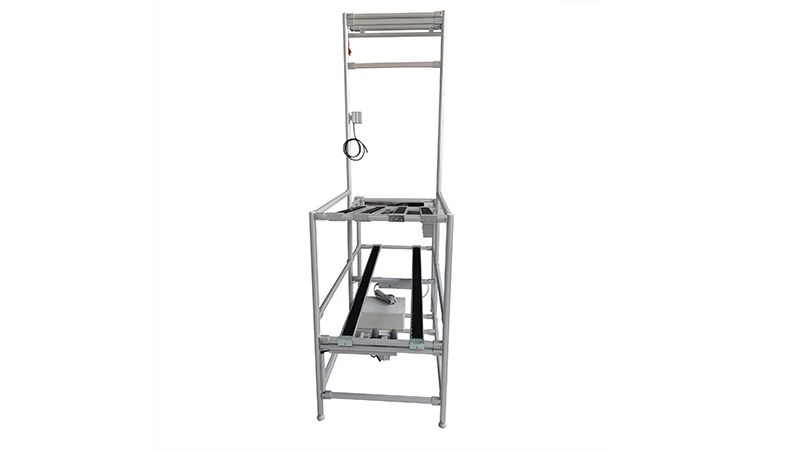
In the fast-paced world of manufacturing, where every second counts and waste is the enemy, lean manufacturing has emerged as more than just a buzzword—it's a philosophy that shapes how teams work, how products are built, and how businesses thrive. At its core, lean is about stripping away inefficiencies, streamlining processes, and putting people at the center of productivity. And while big-picture strategies like value stream mapping or 5S get a lot of attention, the tools and workspaces that ground these efforts often fly under the radar. Enter the Aluminum Workbench C: a humble yet powerful player in the lean ecosystem that quietly transforms how teams collaborate, build, and innovate. Let's dive into why this unassuming workstation has become a cornerstone of modern lean systems, and how it's redefining what it means to work smarter, not harder.
Understanding Lean Manufacturing: More Than Just Waste Reduction
Before we zoom in on the Aluminum Workbench C, let's take a step back to understand the "why" behind lean. Lean manufacturing, born from the Toyota Production System (TPS) in the mid-20th century, is built on two foundational pillars: jidoka (automation with a human touch) and just-in-time (producing only what's needed, when it's needed). But at its heart, lean is about respect for people and continuous improvement. It's not just about cutting costs—it's about creating systems where workers can do their best work, where bottlenecks are identified before they become problems, and where every tool and space serves a clear, value-adding purpose.
In this context, workspaces aren't just physical locations—they're operational hubs. A poorly designed workspace can lead to wasted motion (a classic lean "Muda," or waste), frustrated employees, and delayed production. On the flip side, a well-designed workspace becomes a silent partner in efficiency: it reduces unnecessary movement, keeps tools within arm's reach, adapts to changing needs, and grows with the team. This is where the Aluminum Workbench C comes into play. It's not just a table to place tools on; it's a modular, adaptable, and human-centered solution that embodies lean principles from the ground up.
From Clunky to Agile: The Evolution of Workbenches in Lean Systems
Think about the workbenches of yesteryear: heavy wooden slabs bolted to the floor, or rigid steel structures that weighed a ton and stayed in one place for decades. They were sturdy, sure, but that was about it. If a team needed to reconfigure their line to accommodate a new product, they'd need a forklift (or a small army) to move the workbench. If a worker needed to adjust the height to avoid straining their back, tough luck—it was set in stone. And if a part of the bench got damaged? You'd either live with the imperfection or replace the entire thing. These workbenches were the opposite of lean: they created waste (in time, effort, and resources) and ignored the needs of the people using them.
As lean principles gained traction, manufacturers started demanding more. They needed workbenches that could keep up with rapid change—workbenches that were lightweight but strong, easy to assemble but durable, and customizable without requiring a engineering degree. This shift gave rise to modular workbenches, often made from materials like aluminum, which offered the best of both worlds: strength and flexibility. And among these, the Aluminum Workbench C stands out as a masterclass in lean design. Let's break down why.

What Makes Aluminum Workbench C Unique? A Closer Look at Its DNA
At first glance, the Aluminum Workbench C might look like any other modern workstation, but its true magic lies in the details. Let's start with the material: aluminum extrusion profile. Unlike traditional steel or wood, aluminum extrusion profile is lightweight yet surprisingly robust. It's made by pushing heated aluminum through a die to create uniform, hollow shapes with internal channels (called "T-slots") that make attaching accessories a breeze. This design isn't just about aesthetics—it's about modularity. Want to add a shelf? Slide a bracket into the T-slot and tighten a screw. Need a tool holder? Snap it into place. No drilling, no welding, no hassle. This means the workbench can evolve with your needs, whether you're adding a monitor arm for digital work instructions or a bin for small parts storage.
But the Aluminum Workbench C isn't just about the aluminum extrusion profile. It's the entire ecosystem built around it. Take the internal rotatary aluminum joints, for example. These small but mighty connectors allow you to adjust the angle of shelves or extensions with a simple twist, so you can tilt a material tray to reduce neck strain or reposition a work surface for a team member in a wheelchair. Then there's the frame: designed to be both stable and lightweight, it can support heavy loads (think: power tools, machinery, or stacks of components) without weighing so much that moving it requires a team effort. Even the worktop itself is intentional—often made from a durable, scratch-resistant material that's easy to clean, ensuring the bench stays functional and professional-looking for years.
A Workbench Built for People, Not Just Products
One of the most overlooked aspects of lean manufacturing is ergonomics. Lean isn't just about making machines run faster—it's about making work easier on the humans operating them. Repetitive strain injuries, back pain, and fatigue are all forms of waste too: they lead to absenteeism, reduced productivity, and unhappy teams. The Aluminum Workbench C addresses this head-on with features designed to prioritize worker well-being. Many models come with adjustable height settings, so team members can raise or lower the surface to match their ideal working position (whether sitting or standing). The edges are often rounded to prevent cuts or bruises, and the worktop is smooth to avoid snags on gloves or clothing. Even the placement of accessories—like tool hooks or bin rails—is designed to minimize reaching and bending, turning a 30-second search for a wrench into a 2-second grab.
I remember visiting a electronics assembly plant a few years back where the team had recently switched to Aluminum Workbench C. One worker, Maria, told me she'd struggled with wrist pain for months using their old steel workbench, which was too low for her standing height. Within a week of adjusting the Aluminum Workbench C to her ideal height, the pain was gone. "It sounds small," she said, "but being able to work without discomfort means I can focus on the job, not my wrist. And when I'm focused, I make fewer mistakes." That's the power of a workbench designed with people in mind: it turns individual comfort into collective efficiency.

Integration with Lean Tools: How Aluminum Workbench C Plays Well with Others
A lean system is only as strong as its weakest link, and workbenches don't operate in isolation. They need to connect seamlessly with other lean tools—like flow racks, material handling carts, and kanban boards—to create a cohesive, waste-free workflow. The Aluminum Workbench C excels here, thanks to its modular design and compatibility with standard lean accessories.
Take flow racks, for example. Flow racks are a staple in lean material handling, using gravity to feed components to the workstation as needed, ensuring "just-in-time" delivery and reducing the need for workers to walk to a storage area. The Aluminum Workbench C is designed to integrate with flow racks effortlessly. Its T-slots allow you to mount a flow rack directly to the side of the bench, so components roll right to the work surface. Imagine assembling a circuit board: instead of walking 10 feet to the storage shelf for each resistor or capacitor, the parts come to you, one bin at a time, as you need them. That's motion waste eliminated, and productivity boosted.
Or consider turnover trolleys and racks. These mobile carts are used to transport materials between workstations, and the Aluminum Workbench C's lightweight design means you can position a trolley right next to the bench (or even attach it temporarily using a caster wheel accessory) for easy loading and unloading. No more lifting heavy boxes across gaps—just slide parts from the trolley to the workbench, and you're off. It's these small, interconnected efficiencies that add up to big gains in a lean system.
The Numbers Speak: Comparing Traditional vs. Aluminum Workbench C
To truly understand the impact of the Aluminum Workbench C, let's put it side by side with a traditional steel workbench. The table below breaks down key factors that matter in a lean environment:
| Feature | Traditional Steel Workbench | Aluminum Workbench C |
|---|---|---|
| Weight | Heavy (200-300 lbs); requires equipment to move | Lightweight (50-80 lbs); can be moved by 1-2 people |
| Assembly Time | 2-3 hours (requires tools, drilling, and bolts) | 30-60 minutes (tool-free assembly with T-slot accessories) |
| Customization | Limited (fixed shelves, no easy accessory attachment) | Unlimited (add shelves, tool holders, bins, etc., in minutes) |
| Ergonomics | Fixed height; no adjustability | Adjustable height; customizable angles for surfaces/shelves |
| Durability | Prone to rust; heavy scratches damage the finish | Corrosion-resistant; scratch-resistant aluminum extrusion profile |
| Waste Reduction | High (wasted time in reconfiguration, movement, and maintenance) | Low (minimal setup time, adaptable to changes, easy to repair) |
The difference is clear: the Aluminum Workbench C isn't just better—it's leaner . It reduces setup time, eliminates motion waste, adapts to change, and prioritizes worker health. And these aren't just theoretical benefits—they translate to real-world results.

Case Study: How Aluminum Workbench C Transformed a Small Manufacturing Team
Let's take a look at a real example. A mid-sized automotive parts manufacturer I worked with a few years ago was struggling with inefficiencies in their assembly line. Their team of 15 assemblers was using old steel workbenches that hadn't been updated in 15 years. The biggest pain points? The workbenches were too low for most workers, leading to frequent backaches and a 10% absenteeism rate. They also couldn't reconfigure the line quickly when switching between product models, resulting in 2-3 hours of downtime per changeover. And because the workbenches lacked storage, tools were constantly misplaced, leading to 15-20 minutes of wasted time per worker per day searching for equipment.
The solution? They replaced all 15 workbenches with Aluminum Workbench C units. The results were staggering. Within the first month: absenteeism dropped by 70% as workers reported less pain. Changeover time was cut to 30 minutes (a 90% reduction) because the workbenches could be moved and reconfigured by the team themselves, without tools. And tool search time fell to less than 5 minutes per day, thanks to custom bin rails and tool holders added to the workbenches. The plant manager, Raj, summed it up: "We thought we were 'lean' before, but we didn't realize how much waste was hiding in our workspaces. The Aluminum Workbench C didn't just fix the benches—it fixed how we work together."
Maintenance and Longevity: A Lean Investment That Pays Off
In lean manufacturing, every purchase is an investment, and the Aluminum Workbench C is no exception. But unlike many tools that depreciate quickly, this workbench is built to last—and to remain useful for years, even as your needs change. Aluminum is naturally resistant to corrosion, so it won't rust in humid environments or after spills (a common issue with steel workbenches). The T-slot design means that if a bracket or accessory breaks, you can replace just that part, not the entire bench. And because it's lightweight, cleaning is a breeze—no need to drag heavy equipment around to wipe down the surface.
I spoke with a maintenance supervisor at a food packaging plant who told me about their experience with Aluminum Workbench C. "In our industry, cleanliness is non-negotiable," she said. "Our old wooden workbenches would absorb spills and harbor bacteria, no matter how much we cleaned them. The Aluminum Workbench C? We wipe it down with disinfectant at the end of each shift, and it looks brand new. We've had them for three years, and they still function like the day we bought them. That's a return on investment you can't put a price on."
Future-Proofing Your Lean System: Aluminum Workbench C in the Age of Industry 4.0
As manufacturing evolves—with Industry 4.0, automation, and digitalization becoming the norm—the tools we use need to keep up. The Aluminum Workbench C is uniquely positioned to thrive in this new era, thanks to its modular design. Want to add a barcode scanner holder for tracking parts? Snap it into the T-slot. Need to mount a tablet for accessing digital work instructions? There's an accessory for that. Even as technology advances, the workbench remains a flexible foundation that can integrate new tools without requiring a complete overhaul.
What's more, as sustainability becomes a key focus for lean systems (after all, waste reduction includes environmental waste), aluminum stands out as an eco-friendly choice. It's 100% recyclable, and the production process for aluminum extrusion profile uses significantly less energy than steel manufacturing. So not only does the Aluminum Workbench C reduce operational waste—it reduces your environmental footprint too.
Conclusion: Aluminum Workbench C—More Than a Workbench, a Lean Partner
At the end of the day, lean manufacturing is about creating systems that work with people, not against them. It's about removing barriers to efficiency, celebrating continuous improvement, and building resilience into every process. The Aluminum Workbench C embodies all of these principles. It's lightweight but strong, simple but adaptable, and designed with the understanding that the best tool is one that fades into the background, letting your team focus on what they do best: building great products.
Whether you're a small workshop just starting your lean journey or a large manufacturer looking to optimize an existing system, the Aluminum Workbench C isn't just a purchase—it's an investment in your team's health, your operational efficiency, and your ability to adapt to whatever the future brings. So the next time you walk through your facility, take a look at your workbenches. Are they holding you back, or propelling you forward? With the Aluminum Workbench C, the answer is clear: forward—one lean, efficient step at a time.