- Company Articles
- Products and Technology
- Product knowledge
- The Role of Aluminum Workbench D in Reducing Manufacturing Lead Times

The Role of Aluminum Workbench D in Reducing Manufacturing Lead Times
Related Product
Aluminum Workbench D
Aluminum tube workbench is more flexible and durable, compared with traditional PE/ABS coated steel tube. It is easy to assemble, anti corrosion, rust protection, and recycle use after disassemble.
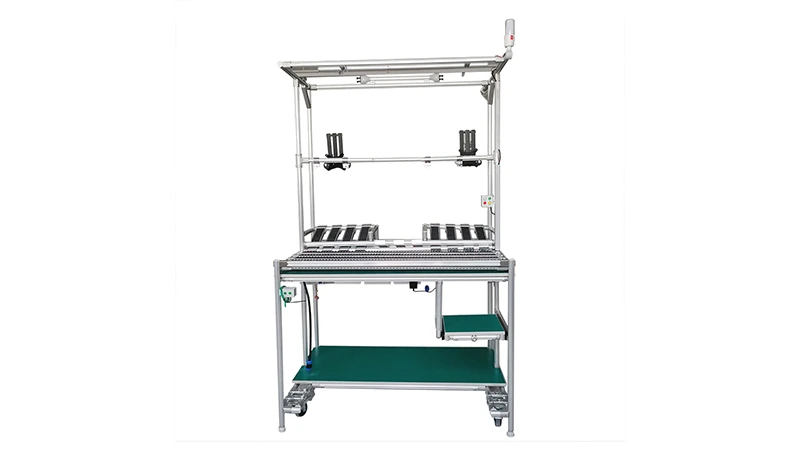
How a simple workbench is transforming production floors and redefining efficiency
The Pressure of Lead Times in Modern Manufacturing
Walk into any manufacturing facility, and you'll feel it—the quiet hum of urgency. Workers move with purpose, machines whir at full tilt, and everywhere you look, there's a clock ticking. In today's market, lead times aren't just numbers on a spreadsheet; they're promises to customers, benchmarks for success, and sometimes, the difference between profit and loss.
Consider the reality for most manufacturers: A customer places an order with a 10-day turnaround. The production team juggles that with three other orders, each with their own deadlines. A single delay—a stuck machine, a misplaced part, or even a disorganized workbench—can domino into missed shipments, frustrated clients, and lost revenue. And let's not forget the human cost: Workers stressed by constant rushing, morale dipping as errors pile up, and the slow, steady burn of inefficiency eating away at their pride in their work.
For years, the solution to these challenges was seen as "work harder, work faster." But anyone who's spent a day on a production floor knows that's not sustainable. Fatigue sets in, mistakes happen, and the cycle repeats. What if the answer wasn't about pushing harder, but about working smarter? What if the key to slashing lead times lay not in overhauling entire production lines, but in reimagining the most basic tool in a worker's arsenal: the workbench?
Enter Aluminum Workbench D . At first glance, it might look like just another flat surface. But for manufacturers who've integrated it into their operations, it's become something far more powerful: a catalyst for leaner, faster, and more human-centered production. This isn't just about a table—it's about building a workspace that adapts to your team, not the other way around. And in doing so, it's helping manufacturers turn the tide on lead times, one assembly at a time.
What is Aluminum Workbench D? Breaking Down the Basics
Let's start with the fundamentals. Aluminum Workbench D is a single-deck workbench designed with one goal in mind: to make production assembly smoother, more efficient, and less of a daily battle. Unlike clunky traditional workbenches—think heavy steel frames, fixed layouts, and surfaces that scratch or warp over time—this workbench is built around aluminum profile , a material that's as durable as it is versatile.
At its core, Workbench D features a sleek, flat work surface supported by a lightweight yet sturdy aluminum frame. It's intentionally designed without built-in casters (though optional caster wheels can be added for mobility, a flexibility we'll dive into later), prioritizing stability for precision tasks. The single-deck design keeps the focus on the work at hand—no unnecessary shelves cluttering the space, just a clean, open area that adapts to whatever parts, tools, or components come through the production line that day.
But what really sets it apart is the aluminum profile construction. Aluminum isn't just light; it's resistant to rust, easy to clean, and—thanks to its modular design—infinitely customizable. The T-slots running along the profile allow workers to attach accessories in seconds: tool holders, part bins, cable management clips, or even small flow rack extensions for quick access to materials. It's a workbench that grows with your needs, not one that boxes you into a rigid, one-size-fits-all setup.
Take a moment to think about a typical workbench in your facility. Chances are, it's seen better days. Maybe the surface is pitted from years of use, or the legs wobble slightly, making delicate assembly tasks a nightmare. Maybe you've bolted on extra shelves or clamped on tool hooks, turning it into a Frankenstein's monster of functionality. Now imagine replacing that with Workbench D: a surface that stays level, a frame that doesn't rust, and a design that lets you add exactly what you need, exactly where you need it—no drilling, no welding, no hassle.
It's simple, but that simplicity is intentional. In a world of overcomplicated solutions, Aluminum Workbench D proves that sometimes, the most effective tools are the ones that get out of your way and let you work.

The Lean Connection: How Aluminum Workbench D Aligns with Lean System Principles
To understand why Aluminum Workbench D is more than just a workbench, you need to understand lean system thinking. Lean isn't a buzzword—it's a philosophy centered on eliminating waste, streamlining processes, and creating value for the customer. And waste, in lean terms, comes in many forms: wasted time, wasted motion, wasted space, and even wasted human potential.
Let's break down how Workbench D attacks these wastes head-on:
Wasted Motion: Think about how much time a worker spends reaching, bending, or searching for tools each day. A traditional workbench with fixed shelves might force them to stretch across the surface to grab a wrench, or kneel to retrieve parts from a bin on the floor. Aluminum Workbench D's modular design changes that. With T-slots and compatible aluminum profile accessories, tools and materials can be positioned exactly at arm's length. No more stretching, no more kneeling—just smooth, efficient movement.
Wasted Time (Setup and Changeover): Most production lines switch between tasks daily, if not hourly. A workbench that's optimized for one type of assembly becomes a liability when the next job comes in. Workbench D solves this with its quick-adjust accessories. Need to add a parts tray for small components? Snap it into the T-slot. Switching to a larger assembly? Remove the tray and expand the workspace in seconds. Setup time that once took 15 minutes now takes 2, freeing up hours of productive work each week.
Wasted Space: Floor space in a manufacturing facility is precious. Bulky workbenches eat into that space, limiting how you arrange production lines or flow racks. Aluminum Workbench D's lightweight aluminum frame is slim yet strong, taking up minimal floor area while still supporting heavy loads. And because it's customizable, you can add vertical storage (shelves, hooks) without expanding the bench's footprint, keeping the area around it clear for workers and material flow.
Wasted Potential: A cluttered, frustrating workspace doesn't just slow down production—it demotivates workers. When you're constantly fighting your tools, it's hard to take pride in your work. Aluminum Workbench D, with its clean design and user-centric features, sends a message: "We value your time and your effort." A worker who feels supported by their tools is more engaged, more focused, and less likely to make costly mistakes. That's not just good for morale—it's good for lead times.
Lean system success isn't about grand overhauls; it's about thousands of small improvements adding up. Aluminum Workbench D is one of those improvements—a tool that turns lean principles from theory into daily practice, one task at a time.

Aluminum Profile: The Unsung Hero of Workbench D's Design
We've mentioned aluminum profile a few times, but let's zoom in on why this material is a game-changer. Traditional workbenches are often made of steel—strong, but heavy, prone to rust, and nearly impossible to modify without power tools. Aluminum profile, by contrast, is a material built for the way modern manufacturing works: fast, flexible, and focused on adaptability.
First, there's the weight. Aluminum is significantly lighter than steel, which means Workbench D is easy to move (even without casters, two people can reposition it if needed) but still strong enough to support heavy components. A steel workbench might require a forklift to rearrange; Workbench D can be shifted by hand, letting teams reconfigure their workspace on the fly to meet changing production needs.
Then there's durability. Aluminum naturally resists corrosion, so unlike steel, it won't rust when exposed to oils, coolants, or humidity—common in manufacturing environments. That means less maintenance, fewer replacements, and a workbench that looks and functions like new for years, not months. For workers, this translates to a surface that stays smooth (no rust flakes to interfere with delicate parts) and a frame that doesn't weaken over time.
But the real magic is in the T-slots. These grooves running along the length of the aluminum profile act as built-in connection points for accessories. Need a lamp to brighten your workspace? Slide a bracket into the T-slot and tighten a screw. Want to add a bin for scrap material? Snap in a holder. The possibilities are endless, and the best part is that changes are reversible. If tomorrow's task requires a different setup, you can reconfigure the accessories in minutes—no permanent modifications, no wasted time, no limits.
Consider a small electronics manufacturer that switches between assembling circuit boards and testing components. With a traditional workbench, they'd need two separate stations—one for assembly, one for testing—taking up double the space. With Aluminum Workbench D, they can add a static-dissipative mat for circuit boards in the morning, then swap it out for a testing fixture in the afternoon, using the same workbench for both tasks. It's space-saving, cost-effective, and a perfect example of how aluminum profile turns "either/or" into "both/and."
Aluminum profile isn't just a material choice for Workbench D—it's a design philosophy. It's about building tools that adapt to people, not the other way around. And in manufacturing, that adaptability is the key to staying competitive.
Integrating with Flow Racks: Creating a Seamless Material Flow
No workbench exists in isolation. On a production floor, it's part of a larger ecosystem—connected to flow racks , conveyors, and other material handling systems. And if that ecosystem isn't working in harmony, even the best workbench can't save you from delays.
Aluminum Workbench D shines here, too. Its design is intentionally compatible with flow racks, creating a material flow that feels almost effortless. Let's walk through a typical scenario:
Imagine a production line assembling small appliances. Parts are stored in a flow rack positioned next to each workbench. With a traditional setup, the flow rack might be too low, forcing workers to bend down to retrieve parts, or too far away, requiring them to step away from the bench. Either way, time is lost, and motion is wasted.
Now, pair that flow rack with Aluminum Workbench D. Because the workbench's height is adjustable (another benefit of aluminum profile legs), it can align perfectly with the flow rack's shelves. Parts slide directly from the rack to the workbench surface, no bending or stretching required. The workbench's T-slots can even hold small dividers, creating dedicated "landing zones" for each part, so workers don't have to sort through a jumble of components.
But it gets better. For high-volume lines, Workbench D can be outfitted with roller track accessories (think small, smooth rollers embedded in the workbench surface), turning it into a mini conveyor that moves parts from one end to the next. A worker assembles a component on one side, gives it a gentle push, and it glides to the next station—no lifting, no carrying, no delays.
Take a real-world example: A furniture manufacturer was struggling with lead times for their dining chair line. The bottleneck? Workers had to walk 10 feet to the flow rack for each set of legs, costing 2 minutes per chair. By positioning Aluminum Workbench D directly next to the flow rack and adding a short roller track between them, they cut that walk time to zero. Over an 8-hour shift, that added up to 40 more chairs assembled—enough to shave 2 days off their weekly lead time.
Flow racks and workbenches are two sides of the same coin: one stores materials, the other transforms them into products. Aluminum Workbench D ensures that coin spins smoothly, turning material storage into material flow—and flow, as any lean expert will tell you, is where lead times go to shrink.
A Side-by-Side Comparison: Traditional vs. Aluminum Workbench D
| Feature | Traditional Steel Workbench | Aluminum Workbench D |
|---|---|---|
| Material | Heavy steel; prone to rust and dents | Lightweight aluminum profile; corrosion-resistant and durable |
| Customization | Limited; requires drilling, welding, or permanent modifications | Unlimited; T-slots allow tool-free attachment of accessories |
| Setup/Changeover Time | 15–20 minutes per task change | 2–5 minutes with quick-swap accessories |
| Ergonomics | Fixed height; often leads to bending, stretching, or awkward postures | Adjustable height; customizable layout reduces unnecessary motion |
| Impact on Lead Time | Wasted time from setup, motion, and inefficiency | Reduced setup time, smoother material flow, and fewer errors |
| Maintenance | High; requires painting to prevent rust, repairs for loose parts | Low; aluminum resists damage, and accessories are replaceable |
Real-World Results: The Case Study of Precision Parts Co.
From Stagnant Lead Times to 30% Faster Production
Precision Parts Co., a mid-sized manufacturer of automotive components, was stuck in a rut. Their lead times for sensor assemblies had plateaued at 14 days, and customer complaints were rising. The team was working overtime, but errors were increasing, and morale was low. A lean consultant suggested they start small: audit their workbenches.
What they found was eye-opening: Workers were spending 25% of their shift on non-value-added tasks—searching for tools, adjusting clamps, and moving parts from flow racks to workbenches. Their steel workbenches were rusted, cluttered, and impossible to customize. The consultant recommended swapping out 10 of their oldest workbenches with Aluminum Workbench D.
The results were immediate:
- Setup time dropped by 75%: With T-slot tool holders and pre-labeled part bins, workers went from 15-minute setup times to 4 minutes.
- Errors decreased by 40%: The clean, organized workbench surface reduced mix-ups between similar parts.
- Lead times shrank to 10 days: The combined savings in setup time, motion, and errors added up to 4 fewer days per order.
- Morale improved: "I don't dread coming to work anymore," one assembler told the consultant. "The bench works with me, not against me."
Today, Precision Parts Co. has replaced all 45 of their workbenches with Aluminum Workbench D. Their lead times for sensor assemblies? 7 days. And they've expanded the workbenches to other product lines, with similar results.
Precision Parts Co.'s story isn't unique. Across industries, manufacturers are discovering that the workbench—often overlooked as a "basic" tool—is actually a linchpin of efficiency. By investing in Aluminum Workbench D, they're not just buying a table; they're investing in their team's ability to do more, do better, and do it faster.
Addressing the Elephant in the Room: Cost vs. ROI
Let's be honest: Any new equipment investment comes with questions, and Aluminum Workbench D is no exception. "Is it worth the cost?" "Can we justify replacing perfectly good workbenches?" These are valid concerns, especially for small to mid-sized manufacturers operating on tight budgets.
Here's the truth: Aluminum Workbench D isn't an expense—it's an investment. And like any good investment, it pays dividends. Let's crunch the numbers using Precision Parts Co.'s example. Each Aluminum Workbench D costs roughly $500 (prices vary by accessories). They replaced 10 benches, totaling $5,000. The result? They cut lead times by 4 days per order, allowing them to take on 2 more orders per month. Each order is worth $10,000, so that's $20,000 in additional revenue— in the first month alone . The ROI? 400% in 30 days.
But the ROI goes beyond revenue. Consider maintenance costs: A steel workbench might last 3–5 years before rust or wear makes it unusable. Aluminum Workbench D, with its corrosion-resistant frame, lasts 10–15 years. Over time, that's fewer replacements and lower long-term costs.
Then there's the cost of errors. A single mistake in assembly can cost hundreds of dollars in rework, scrap, or even customer returns. By reducing errors (as Precision Parts Co. did), Workbench D saves money that would've been lost to mistakes.
And let's not forget the intangibles: Happier workers are more likely to stay, reducing turnover and the cost of training new hires. A more efficient production line makes your business more competitive, allowing you to win more contracts and grow. These benefits are harder to quantify, but they're just as real.
At the end of the day, the question isn't "Can we afford Aluminum Workbench D?" It's "Can we afford not to?" In a market where lead times make or break success, a tool that pays for itself in a month and keeps paying for years is more than a good investment—it's a necessity.
Conclusion: More Than a Workbench— A Partner in Productivity
Lead times are the heartbeat of manufacturing. When they're healthy—short, consistent, and reliable—your business thrives. When they're not, everything suffers. For too long, manufacturers looked to big-ticket solutions—new machines, software overhauls—to fix their lead time woes. But as Aluminum Workbench D proves, sometimes the most powerful solutions are the ones right under your nose.
This workbench isn't just a piece of equipment. It's a statement: that you value your workers' time, that you're committed to lean principles, and that you're willing to invest in the small, daily improvements that add up to big results. It's a tool that turns frustration into focus, chaos into order, and wasted time into productive work.
So, to the manufacturers reading this: Take a walk through your production floor. Look at your workbenches. Are they helping your team, or holding them back? If it's the latter, consider this: Aluminum Workbench D isn't just a way to reduce lead times. It's a way to build a better workplace—one where efficiency and humanity go hand in hand.
Because at the end of the day, manufacturing isn't just about making products. It's about making progress. And with Aluminum Workbench D, progress has never been easier.