- Company Articles
- Products and Technology
- Product knowledge
- The Role of Anti-Slip Adjustable Leveling Feet in Mechanical Manufacturing Stability

The Role of Anti-Slip Adjustable Leveling Feet in Mechanical Manufacturing Stability
Related Product
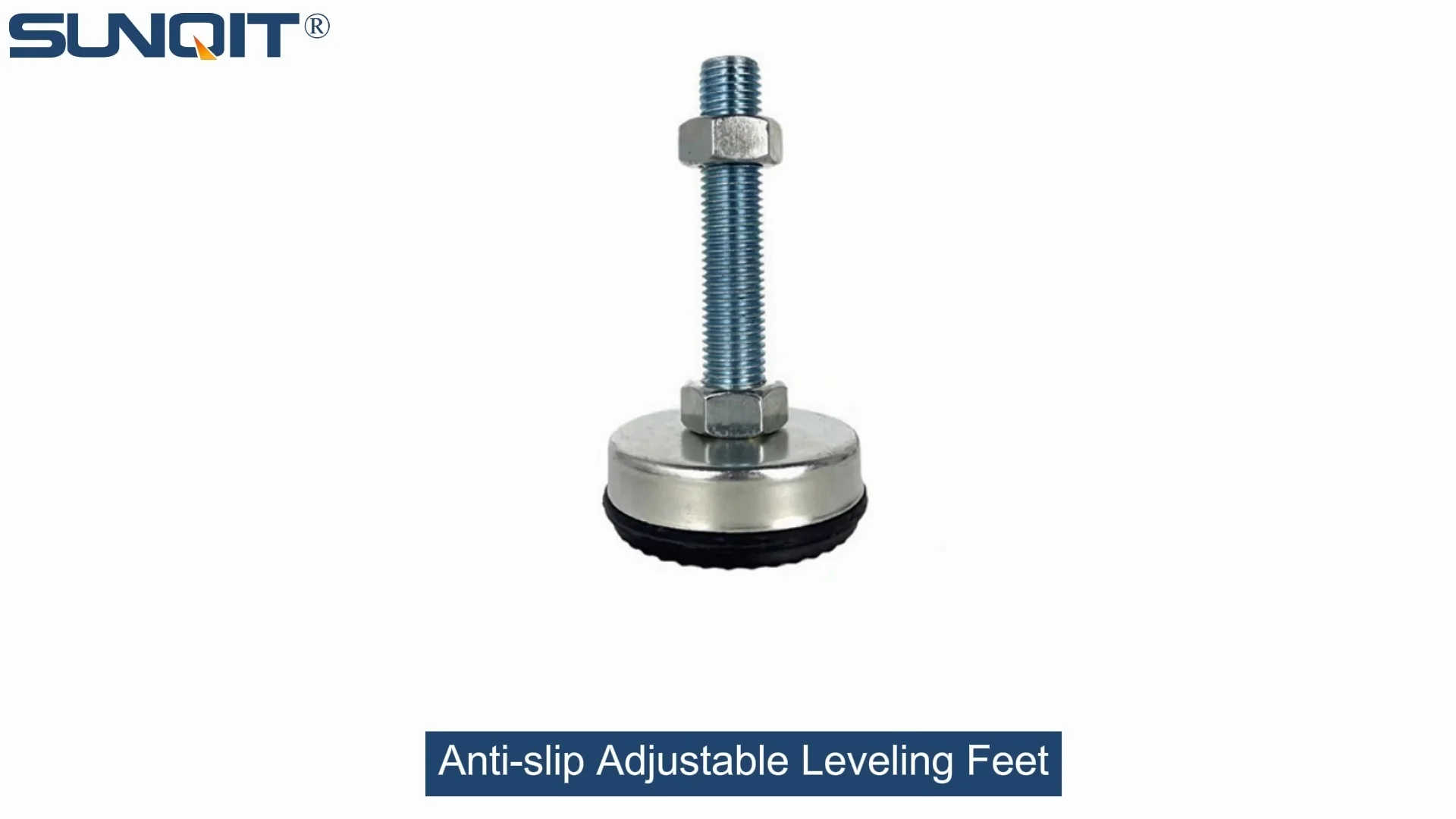
Anti-slip Adjustable Leveling Feet
Anti-slip Adjustable Leveling Feet are designed to keep machines level when placed on uneven or sloped ground, the rubber base will prevent product slip during work.
In the fast-paced world of mechanical manufacturing, where precision is the backbone of every operation, stability isn't just a buzzword—it's the foundation upon which quality, efficiency, and safety rest. Imagine a production line where a workbench wobbles slightly during assembly, or a material rack tilts under the weight of components. These seemingly minor inconsistencies can cascade into costly errors: misaligned parts, damaged machinery, delayed deadlines, and even workplace accidents. Yet, amid the complexity of advanced robotics, automated conveyors, and high-tech assembly systems, there's a humble component that often goes unnoticed but plays a pivotal role in maintaining this critical stability: the anti-slip adjustable leveling foot.
These small, unassuming devices are the unsung heroes of manufacturing floors, quietly ensuring that workbenches, assembly stations, material racks, and even heavy machinery stay level, secure, and steady. In this article, we'll dive deep into the world of anti-slip adjustable leveling feet, exploring their design, functionality, and the indispensable role they play in mechanical manufacturing. We'll also examine how they integrate with other essential components like lean pipe workbenches and aluminum profiles, and why they're more than just "feet"—they're guardians of precision.
What Are Anti-Slip Adjustable Leveling Feet?
At first glance, anti-slip adjustable leveling feet might seem like simple pieces of hardware, but their design is a testament to engineering pragmatism. These devices are primarily used to stabilize equipment by adjusting height and preventing slippage, even on uneven surfaces. They consist of four key components: a base, a threaded stem, an adjustment nut, and a mounting plate (or bracket). Let's break down each part:
- Base: The bottommost part, typically made of rubber or a rubberized material, is responsible for the "anti-slip" feature. Its textured surface creates friction with the floor, preventing the equipment from shifting during operation. Rubber is preferred here for its elasticity, which also helps absorb vibrations.
- Threaded Stem: A metal rod (often steel or stainless steel) with threads that allow for height adjustment. By rotating the stem, users can raise or lower the equipment to compensate for uneven floors.
- Adjustment Nut: A nut that locks the stem in place once the desired height is set, ensuring the leveling foot doesn't loosen over time due to vibrations or weight.
- Mounting Plate/Bracket: The top part that attaches the leveling foot to the equipment (e.g., the bottom of a workbench or material rack). It's usually made of metal (like aluminum or steel) for durability and may include holes for screws or bolts.
What sets these feet apart from fixed feet or simple casters is their dual functionality: adjustability and anti-slip protection. Unlike fixed feet, which can't adapt to uneven surfaces, adjustable leveling feet let operators fine-tune height to ensure equipment is perfectly level. And unlike casters (which prioritize mobility), their anti-slip bases keep equipment anchored, making them ideal for stationary setups where stability is non-negotiable.
The Core Role of Anti-Slip Adjustable Leveling Feet in Stability
Stability in manufacturing isn't just about keeping things from falling over—it's about maintaining consistent alignment, reducing wear and tear, and ensuring precision in every task. Anti-slip adjustable leveling feet contribute to this stability in four critical ways:
1. Load Distribution: Preventing Stress and Strain
Mechanical manufacturing equipment, from lean pipe workbenches to heavy-duty material racks, often bears significant weight. A single workbench might hold tools, components, and even operators during assembly, while a material rack could store hundreds of kilograms of raw materials. Without proper load distribution, this weight can (concentrate) on specific points, leading to structural stress, warping, or even collapse.
Anti-slip adjustable leveling feet solve this by distributing the load evenly across all contact points with the floor. For example, a standard lean pipe workbench typically has four leveling feet (one at each corner). If the floor is uneven, one foot might bear more weight than the others, causing the workbench to tilt. By adjusting each foot's height, the weight is spread equally, reducing strain on the workbench's frame (often made of aluminum profiles or steel pipes) and extending its lifespan.
2. Vibration Dampening: Protecting Precision and Machinery
Manufacturing floors are noisy, dynamic environments. Heavy machinery, pneumatic tools, and conveyor systems generate constant vibrations that can travel through the floor and disrupt nearby equipment. Over time, these vibrations can loosen bolts, misalign components, and even affect the accuracy of sensitive tasks like measuring or assembling small parts.
The rubber base of anti-slip leveling feet acts as a shock absorber. When vibrations hit the base, the rubber compresses and rebounds, dissipating the energy rather than transferring it to the equipment. This is especially important for workbenches used in precision assembly, where even a (tiny) tremor can result in misaligned screws or ill-fitting parts. By dampening vibrations, these feet not only protect the equipment but also the quality of the products being manufactured.
3. Alignment: Ensuring Precision in Assembly and Measurement
In mechanical manufacturing, precision is measured in millimeters—sometimes even micrometers. A workbench that's out of level by just a few millimeters can throw off an entire assembly line. For example, when assembling a gearbox, if the workbench tilts, the gears might not mesh correctly, leading to premature wear or mechanical failure in the final product.
Anti-slip adjustable leveling feet allow operators to align equipment with pinpoint accuracy. Using a spirit level, they can adjust each foot's height until the workbench or material rack is perfectly horizontal. This alignment is critical for tasks like:
- Using precision tools (e.g., calipers, micrometers) that require a stable surface for accurate readings.
- Assembling components with tight tolerances (e.g., electronics, medical devices).
- Integrating equipment with conveyor systems, where even a slight tilt can cause products to jam or slide off the line.
4. Anti-Slip Protection: Safety First
Slippage is a silent threat in manufacturing. Even a stable-looking workbench can shift if the floor is wet (from spills) or oily, or if the equipment is subjected to sudden forces (e.g., an operator pushing or pulling heavy components). This slippage not only endangers the equipment but also the workers nearby.
The rubber base of anti-slip leveling feet is engineered to grip even smooth or slightly contaminated floors. Its high coefficient of friction creates a strong bond with the surface, preventing movement even under lateral forces. This is especially important for equipment like turnover trolleys (when stationary) or workbenches used for manual assembly, where operators rely on the stability of the surface to apply force safely.

Integration with Lean Pipe Workbenches and Aluminum Profiles
Anti-slip adjustable leveling feet don't operate in isolation—they're part of a larger ecosystem of manufacturing components. Two common systems they integrate with are lean pipe workbenches and aluminum profiles, both of which are staples in modern manufacturing for their flexibility and modularity.
Lean Pipe Workbenches: Stability Meets Flexibility
Lean pipe workbenches (also known as "flexible workbenches") are built using lean pipes (hollow steel or aluminum tubes) and joints, allowing for easy customization. They're popular in lean manufacturing environments because they can be reconfigured quickly to adapt to changing production needs. However, their modular design means they're only as stable as their foundation—and that's where anti-slip adjustable leveling feet come in.
A typical lean pipe workbench has a frame made of lean pipes connected by joints, with a work surface (often a wooden or metal top) and storage shelves. To ensure the bench remains stable during use, anti-slip adjustable leveling feet are mounted at the bottom of the frame's legs. This setup offers two key benefits:
- Adaptability to Uneven Floors: Manufacturing floors are rarely perfectly flat, especially in older facilities. Leveling feet let operators adjust each leg's height to keep the workbench level, even if the floor dips or rises.
- Stability During Reconfiguration: When the workbench is reconfigured (e.g., adding shelves or extending the surface), the weight distribution changes. Leveling feet can be readjusted to ensure the new setup remains stable.
Aluminum Profiles: Lightweight Strength, Enhanced Stability
Aluminum profiles (extruded aluminum bars with T-slots) are another cornerstone of modular manufacturing systems. They're lightweight, strong, and compatible with a wide range of accessories (e.g., brackets, panels, and yes—leveling feet). Aluminum profile workbenches, material racks, and conveyor frames often use anti-slip adjustable leveling feet to enhance stability.
Aluminum profiles are ideal for applications where weight matters (e.g., mobile workstations or temporary assembly lines), but their lightness can make them prone to tipping if not properly stabilized. Anti-slip adjustable leveling feet counteract this by:
- Increasing Contact Area: The rubber base of the leveling foot spreads the profile's weight over a larger area, reducing the risk of sinking into soft floors (e.g., concrete with cracks).
- Preventing Slippage: Aluminum is a smooth metal, so without leveling feet, an aluminum profile rack might slide on a smooth floor. The anti-slip base ensures it stays put.
Many aluminum profile accessories are designed to work seamlessly with leveling feet. For example, some mounting brackets have T-slot nuts that slide into the profile's slots, allowing for easy installation and repositioning of the leveling feet as needed.

Comparing Anti-Slip Adjustable Leveling Feet to Other Stability Solutions
To truly appreciate the value of anti-slip adjustable leveling feet, it's helpful to compare them to other common stability solutions: fixed feet, casters, and shims.
| Stability Solution | Key Function | Pros | Cons | Best For |
|---|---|---|---|---|
| Anti-Slip Adjustable Leveling Feet | Height adjustment + anti-slip grip | Adapts to uneven floors; prevents slippage; absorbs vibrations | Not mobile; requires manual adjustment | Stationary equipment (workbenches, material racks) |
| Fixed Feet | Basic support (no adjustment) | Simple, low-cost | Can't adapt to uneven floors; no anti-slip protection | Light, stationary equipment on flat floors |
| Casters (with brakes) | Mobility + basic stability | Easy to move equipment; brakes prevent rolling | Brakes don't always prevent slippage; less stable than leveling feet | Mobile equipment (trolleys, temporary workstations) |
| Shims (wood/metal wedges) | Leveling on uneven floors | Low-cost, quick fix | Not secure (can slip); no anti-slip protection; permanent once installed | Emergency leveling (temporary use only) |
As the table shows, anti-slip adjustable leveling feet strike the best balance between adaptability, stability, and safety for most stationary manufacturing equipment. While casters are great for mobility, they can't match the stability of leveling feet when equipment needs to stay put. Fixed feet and shims, on the other hand, lack the adjustability and anti-slip features that modern manufacturing demands.

Installation and Maintenance: Getting the Most Out of Your Leveling Feet
To ensure anti-slip adjustable leveling feet perform optimally, proper installation and maintenance are key. Here's a step-by-step guide to installation, followed by tips for keeping them in top shape:
Installation Steps
- Assess the Equipment: Determine how many leveling feet are needed. Most equipment (e.g., workbenches, racks) requires one foot per leg. For larger or heavier equipment, consider adding extra feet for stability.
- Prepare the Surface: Clean the bottom of the equipment's legs to remove dirt or debris, which could prevent the mounting plate from attaching securely.
- Mark Mounting Holes: Place the leveling foot's mounting plate on the leg and mark the positions of the screw holes with a pencil or marker.
- Drill Holes: Use a drill bit slightly smaller than the screws to drill holes into the leg. This ensures a tight fit for the screws.
- Attach the Leveling Foot: Align the mounting plate with the drilled holes and secure it using screws or bolts. Tighten until the plate is flush with the leg.
- Adjust Height: Place the equipment in its final position. Use a spirit level to check for levelness. Rotate the threaded stem of each leveling foot to raise or lower the leg until the equipment is level. Once adjusted, tighten the adjustment nut to lock the stem in place.
- Test Stability: Gently push and pull the equipment to ensure it doesn't wobble or slip. If it does, readjust the feet or check for loose screws.
Maintenance Tips
- Inspect the Rubber Base Regularly: Over time, the rubber base can wear down or harden, reducing its anti-slip effectiveness. Check for cracks, smooth spots, or debris (e.g., oil, dirt) and replace the foot if the base is damaged.
- Lubricate Threads: The threaded stem can seize up if exposed to moisture or debris. Apply a small amount of lubricant (e.g., silicone spray) to the threads every few months to keep adjustment smooth.
- Tighten Adjustment Nuts: Vibrations from equipment can loosen the adjustment nut, causing the foot to lower over time. Check and retighten the nuts monthly, especially for high-vibration equipment.
- Clean the Base: Wipe the rubber base with a damp cloth to remove oil, grease, or dust, which can reduce friction. Avoid using harsh chemicals that might degrade the rubber.
Case Study: How Anti-Slip Adjustable Leveling Feet Improved Assembly Line Precision
To illustrate the real-world impact of anti-slip adjustable leveling feet, let's look at a case study from a mid-sized automotive parts manufacturer. The company was struggling with inconsistent quality in their brake caliper assembly line, where workers used lean pipe workbenches to assemble small components (e.g., pistons, seals, and bolts).
The Problem: Quality control inspections revealed that 8-10% of calipers had misaligned pistons, leading to brake drag and customer complaints. Root cause analysis pointed to the workbenches: the shop floor had minor unevenness, causing the benches to wobble slightly during assembly. Workers reported that the benches sometimes shifted when they applied force to tighten bolts, leading to misaligned parts.
The Solution: The manufacturer replaced the fixed plastic feet on their lean pipe workbenches with anti-slip adjustable leveling feet. Each bench had four feet installed, with rubber bases and steel stems for durability.
The Results: Within two weeks of installation, the defect rate dropped to 1-2%. Workers noted that the benches felt "rock solid" during assembly, and there was no more shifting or wobbling. The maintenance team also reported fewer instances of bench legs bending or warping, as the leveling feet distributed weight more evenly. Over six months, the company saved an estimated $45,000 in rework costs and reduced production delays by 15%.
This case study highlights a simple truth: even small improvements in stability can have a big impact on manufacturing outcomes. Anti-slip adjustable leveling feet didn't just fix a wobble—they restored precision, reduced waste, and boosted worker confidence.
Future Trends: Smart Leveling Feet and Sustainable Materials
As manufacturing evolves, so too do the components that support it. Anti-slip adjustable leveling feet are no exception. Two emerging trends are set to shape their future:
Smart Leveling Feet with Sensors
The rise of Industry 4.0 is driving demand for "smart" manufacturing tools—including leveling feet. Companies are developing leveling feet embedded with sensors that monitor height, load distribution, and vibration. These sensors can send real-time data to a central system, alerting operators if a foot becomes loose, the equipment tilts, or the load exceeds safe limits. Some advanced models even feature motorized stems that automatically adjust height to maintain levelness, eliminating the need for manual intervention.
Sustainable and Eco-Friendly Materials
With sustainability becoming a priority for manufacturers, there's growing interest in leveling feet made from recycled or biodegradable materials. For example, some companies are experimenting with rubber bases made from recycled tires, or stems made from recycled aluminum. Additionally, water-based lubricants and non-toxic coatings are replacing traditional chemicals, reducing environmental impact without compromising performance.
Conclusion: Small Feet, Big Impact
In the grand scheme of mechanical manufacturing, anti-slip adjustable leveling feet may seem, but their role is irreplaceable. They're the quiet guardians of stability, ensuring that workbenches stay level, material racks stay upright, and assembly lines stay precise. By distributing loads, absorbing vibrations, preventing slippage, and adapting to uneven floors, they lay the groundwork for quality, efficiency, and safety.
Whether integrated with lean pipe workbenches in a small workshop or aluminum profile systems in a large factory, these humble devices prove that sometimes, the most critical innovations are the ones that keep things steady. As manufacturing continues to advance, one thing is clear: anti-slip adjustable leveling feet will remain essential—because in a world of constant change, stability is never out of style.