- Company Articles
- Products and Technology
- Product knowledge
- The Role of Castor Install Bases in Flexible Production Line Layouts

The Role of Castor Install Bases in Flexible Production Line Layouts
Related Product
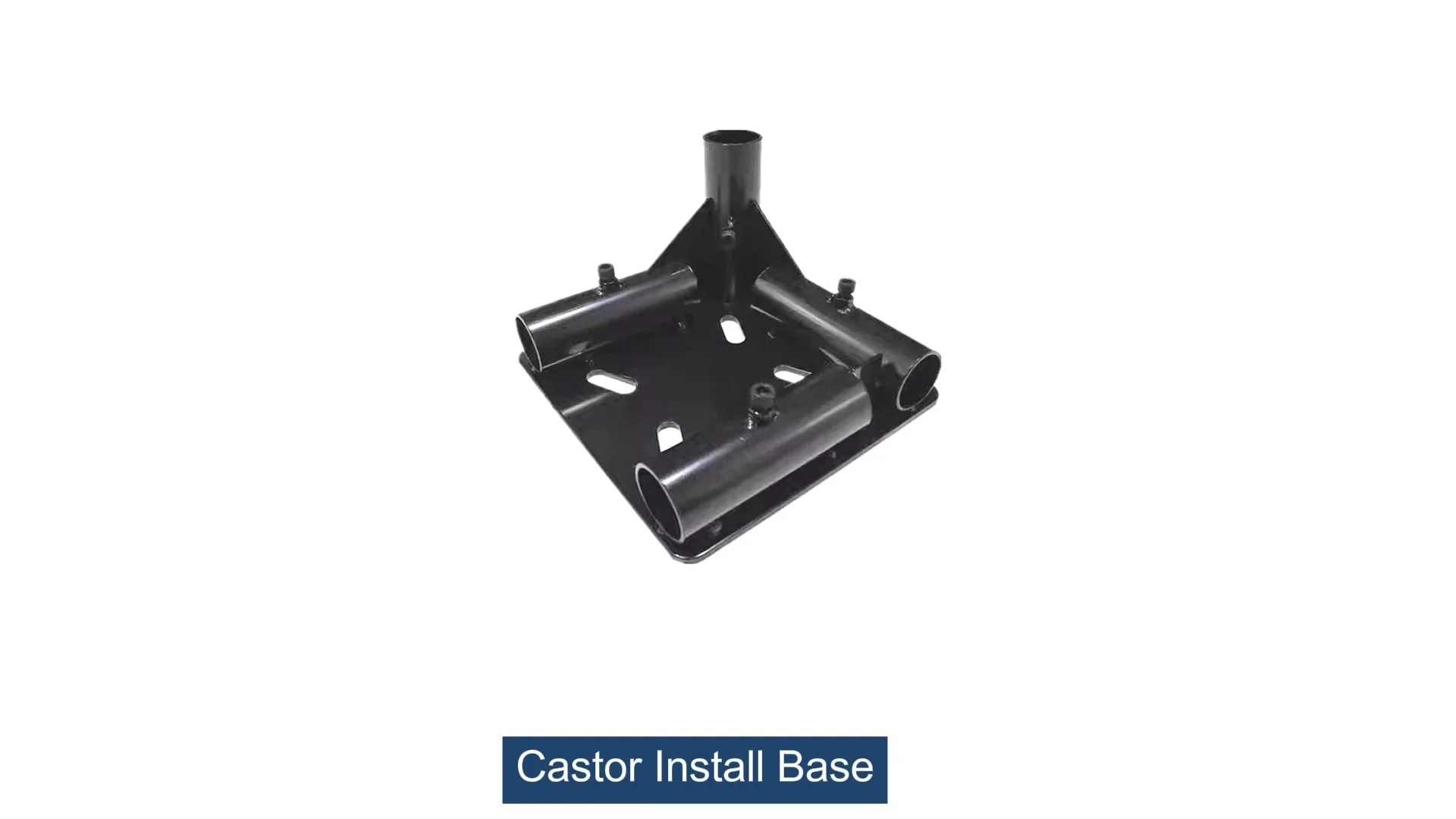
Castor Install Base
Castor install base, used for connection between pipe and castor, it can connect 4 pcs pipe by 1 pcs castor base, to make the structure strong and stable.
Introduction: The Unsung Hero of Modern Manufacturing
Walk into any modern factory, warehouse, or assembly plant today, and you'll notice a common theme: adaptability. Gone are the days of rigid, fixed production lines that take weeks to reconfigure. Instead, manufacturers are racing to keep up with shifting consumer demands, shorter product lifecycles, and the need for rapid innovation. At the heart of this flexibility lies a seemingly component: the castor install base. While it might not grab headlines like robotic arms or AI-driven quality control systems, this small but critical part plays a pivotal role in making production lines agile, efficient, and responsive.
Imagine a scenario where a electronics manufacturer needs to switch from assembling smartphones to tablets overnight. Or a food processing plant that must rearrange its packaging line to accommodate a new product size. In both cases, the ability to move workstations, material trolleys, and even entire assembly modules quickly can mean the difference between meeting a tight deadline and losing a client. This is where castor install bases shine. By serving as the bridge between equipment (like workbenches, turnover trolleys, and racks) and their casters, these bases provide the stability needed for safe operation while enabling the mobility required for rapid reconfiguration. In short, they turn static tools into dynamic assets—exactly what modern manufacturing demands.
What Exactly Is a Castor Install Base?
Let's start with the basics: a castor install base is a mounting component designed to secure casters (wheels) to equipment. Think of it as the foundation that connects a caster wheel to a workbench leg, a turnover trolley frame, or a material rack. Without a reliable base, even the best caster wheels would wobble, fail under load, or detach—putting both workers and productivity at risk.
These bases come in a variety of shapes, sizes, and materials, each tailored to specific needs. Common materials include steel (for heavy-duty applications), aluminum (lightweight and corrosion-resistant), and reinforced plastic (cost-effective for lighter loads). For instance, aluminum castor install bases are increasingly popular in industries where weight matters—such as automotive assembly lines, where reducing the load on mobile workstations makes them easier to maneuver. They're also a natural fit for setups using aluminum profiles, as they integrate seamlessly with the lightweight, modular frames that define modern lean production systems.
But a castor install base isn't just a "plate with holes." Quality bases are engineered with precision to distribute weight evenly across the caster, prevent stress fractures, and ensure compatibility with different caster types—from swivel casters for 360-degree movement to rigid casters for straight-line transport. They might include features like threaded holes for easy caster attachment, reinforced edges to handle impact, or adjustable height mechanisms to level equipment on uneven floors. In essence, they're the unsung engineers of the production line, working behind the scenes to balance mobility and stability.

Key Features of High-Quality Castor Install Bases
Not all castor install bases are created equal. To truly enhance flexibility in production line layouts, a base must several critical features. Let's break down the most important ones:
1. Load Capacity: The base must support the combined weight of the equipment, materials, and workers (if applicable). A base rated for 500kg won't cut it for a heavy-duty assembly workbench loaded with tools and components. Manufacturers often list load capacities per base, so it's crucial to calculate total load (equipment + maximum material weight) and choose bases that exceed this by a safety margin (typically 20-30%).
2. Compatibility: Castor install bases must work with the caster and accessories already in use. This includes matching bolt patterns, caster stem sizes, and mounting styles (plate-mount vs. stem-mount casters). For example, a base designed for a 1-inch stem caster won't fit a 2-inch plate-mount caster, leading to installation delays or unsafe setups. Many suppliers now offer universal bases or adapter kits to simplify compatibility, but it's always best to check specs upfront.
3. Durability: Production environments are tough. Floors are often dirty, chemicals may be present, and equipment is moved frequently—all of which can wear down a base over time. High-quality bases use corrosion-resistant materials (like stainless steel or anodized aluminum) and robust finishes (powder coating, zinc plating) to withstand these conditions. This is especially important in industries like food processing (where hygiene standards require easy cleaning) or automotive manufacturing (where oil and grease can degrade materials).
4. Ease of Installation: In a fast-paced factory, downtime for equipment setup is costly. The best castor install bases are designed for quick, tool-free or minimal-tool installation. Features like pre-drilled holes, snap-on brackets, or self-tapping screws can reduce installation time from hours to minutes—critical when reconfiguring a production line to meet a sudden order surge.
5. Floor Protection: While the caster wheel itself is responsible for rolling smoothly, the base plays a role in preventing damage to floors. Bases with low profiles or rounded edges reduce the risk of scuffing or indentation, especially on delicate surfaces like polished concrete or epoxy floors. Some bases even include rubber pads or gaskets to absorb shock and minimize noise during movement—another win for worker comfort.

The Critical Role in Flexible Production Line Layouts
Now, let's get to the heart of the matter: how do castor install bases enable flexible production line layouts? To answer this, we need to look at the core principles of modern manufacturing—specifically, lean system thinking and the drive for agility.
Lean manufacturing, or "lean system," focuses on minimizing waste (time, materials, effort) while maximizing value. One of the biggest sources of waste in traditional production lines is downtime caused by reconfiguration. If rearranging a workstation takes hours (or days), that's time not spent producing goods. Castor install bases eliminate this waste by making equipment mobile. With a stable, reliable base, workbenches, turnover trolleys, and material racks can be moved in minutes, not hours. For example, a pharmaceutical company using lean principles might need to shift its packaging line from bottles to blister packs. With castor-mounted workstations, workers can reposition filling machines, labeling stations, and inspection tables in under an hour—keeping the line running and meeting delivery deadlines.
Mobility also enables "cellular manufacturing," a lean approach where production is divided into small, self-contained cells (e.g., assembly, testing, packaging). Each cell can be reconfigured independently, allowing the factory to produce multiple product variants simultaneously. Castor install bases make these cells truly dynamic: if demand for Product X spikes, a cell can be expanded by adding a mobile workbench; if Product Y needs to be phased out, its cell can be disassembled and repurposed. Without mobile equipment (made possible by sturdy bases), cellular manufacturing would be little more than a concept.
Another key role of castor install bases is supporting "just-in-time" (JIT) material delivery. In JIT systems, materials are delivered to the production line exactly when needed, reducing inventory costs. Turnover trolleys and racks, equipped with castor install bases, are the backbone of this process. For example, in an automotive plant, a trolley loaded with door panels can be wheeled directly to the assembly line as workers start building the next car. The base ensures the trolley moves smoothly (even when fully loaded) and stops securely when positioned—preventing delays or accidents. Without a reliable base, the trolley might tip, spill parts, or get stuck, disrupting the entire JIT flow.
Beyond lean and JIT, castor install bases also enhance safety. A wobbly workstation or a trolley that veers off course can lead to trips, falls, or collisions. High-quality bases keep equipment stable, even when moving at speed or over uneven floors. Many bases also work with locking casters, allowing workers to "park" equipment securely during use. This stability is especially critical for workbenches, where precision tasks (like electronics assembly) require zero movement. A base that keeps the workbench steady ensures workers can focus on their jobs, not on keeping the table from sliding.

Real-World Applications: How Castor Install Bases Drive Flexibility
To better understand the impact of castor install bases, let's look at real-world applications across different industries. The table below highlights how these bases are used, the features that make them effective, and the benefits they deliver:
| Industry | Equipment Type | Castor Install Base Feature | Key Benefit |
|---|---|---|---|
| Electronics Manufacturing | ESD Workbench | Aluminum construction (lightweight, ESD-safe) | Workbench can be moved to different assembly lines; aluminum base prevents static discharge, protecting sensitive components. |
| Food & Beverage | Turnover Trolley and Rack | Stainless steel base (corrosion-resistant, easy to clean) | Trolley withstands frequent washdowns; base ensures smooth movement on wet floors, reducing contamination risk. |
| Automotive | Heavy-Duty Assembly Workbench | Reinforced steel base (high load capacity) | Supports weight of power tools, car parts, and workers; base distributes load evenly to prevent caster failure. |
| Logistics & Warehousing | Mobile Material Rack | Adjustable height base (levels rack on uneven warehouse floors) | Rack remains stable when loaded with boxes; adjustable base prevents tipping, even on sloped floors. |
| Medical Device Manufacturing | Cleanroom Workstation | Non-marking, low-profile base (prevents floor scratches) | Workstation can be moved without damaging cleanroom floors; base is easy to sanitize, meeting strict hygiene standards. |
In each of these cases, the castor install base isn't just a component—it's a strategic asset. It turns ordinary equipment into tools that adapt to changing needs, reduce waste, and keep workers safe. For example, the ESD workbench in electronics manufacturing relies on its aluminum base to stay mobile and static-free, ensuring sensitive microchips aren't damaged during assembly. In food production, the stainless steel base of a turnover trolley resists rust from daily washdowns, keeping the line compliant with health regulations. These are the kinds of details that make or break a flexible production line.
Choosing the Right Castor Install Base: A Buyer's Guide
With so many options on the market, selecting the right castor install base can feel overwhelming. But by focusing on a few key factors, you can ensure you choose a base that meets your production line's unique needs. Here's what to consider:
1. Calculate Load Requirements: Start by determining the total weight the base will need to support. This includes the weight of the equipment itself, plus the maximum load of materials it will carry, plus any workers who might stand on it (for workbenches). As a rule of thumb, multiply the total weight by 1.3 to account for dynamic forces (e.g., moving the equipment over bumps). For example, a workbench weighing 100kg with a 200kg material load needs a base rated for at least 390kg (300kg x 1.3).
2. Assess the Environment: Where will the base be used? A factory floor with oil spills and debris needs a corrosion-resistant base (stainless steel or anodized aluminum). A cleanroom requires a non-shedding material (like aluminum) that's easy to sanitize. Outdoor or humid environments may need bases with weatherproof coatings. Ignoring environmental factors can lead to premature base failure—costing more in replacements than investing in the right base upfront.
3. Match with Existing Equipment: If your production line uses aluminum profiles (a common choice for modular setups), look for castor install bases designed to attach to these profiles. Many suppliers offer bases with T-slot compatible brackets, making installation a breeze. Similarly, if you're using specific caster and accessories (e.g., stem-mount casters with a 2-inch stem), ensure the base has the correct hole pattern and stem diameter.
4. Consider Floor Conditions: Uneven floors are a reality in many factories. Bases with adjustable height (via threaded feet) can level equipment, preventing wobbling and reducing stress on casters. For smooth floors (like polished concrete), low-profile bases minimize the risk of tripping. For rough surfaces (like gravel or grated floors), bases with reinforced edges and larger caster plates distribute weight better, preventing the base from sinking or catching.
5. Evaluate Installation and Maintenance: How easy is it to install the base? Does it require special tools? Can it be replaced quickly if damaged? Look for bases with clear installation instructions, pre-drilled holes, and standard fasteners (so you don't need to hunt for specialty bolts). Maintenance is also key—bases that are easy to clean (no crevices for dirt buildup) will last longer and perform better.
Challenges and Solutions: Overcoming Common Castor Install Base Issues
Even with the right base, challenges can arise. Let's address the most common issues and how to solve them:
Challenge 1: Wobbling Equipment
Cause:
Bases that are too small for the equipment, uneven floor surfaces, or loose caster attachment.
Solution:
Use a larger base (wider footprint) to distribute weight, add adjustable feet to level the base, or tighten caster bolts regularly (include this in preventive maintenance checks).
Challenge 2: Base Failure Under Load
Cause:
Using a base with insufficient load capacity or material weakness (e.g., plastic bases for heavy metal workbenches).
Solution:
Upgrade to a higher load-rated base (steel or reinforced aluminum) and always factor in dynamic loads (movement) when calculating capacity.
Challenge 3: Corrosion and Rust
Cause:
Exposure to moisture, chemicals, or salt (in coastal areas).
Solution:
Switch to stainless steel or anodized aluminum bases, apply anti-corrosion coatings, or schedule regular cleaning to remove corrosive substances.
Challenge 4: Difficulty Moving Equipment
Cause:
Bases that are too heavy, casters that don't swivel smoothly, or misaligned bases causing friction.
Solution:
Use lightweight aluminum bases, ensure casters are properly lubricated, and align bases so they're parallel (prevents "dragging" during movement).
Future Trends: The Next Generation of Castor Install Bases
As manufacturing continues to evolve, so too will castor install bases. Here are a few trends to watch:
Smart Bases with Sensors: Imagine a base that tracks load weight in real time, alerting workers if equipment is overloaded. Or a base with built-in motion sensors that detect when a trolley is left in a walkway, triggering a warning light. These "smart" bases could integrate with factory IoT systems, providing data to optimize workflows and prevent accidents.
Eco-Friendly Materials: With sustainability becoming a priority, suppliers are developing bases from recycled aluminum or bioplastics. These materials reduce environmental impact without sacrificing strength—a win for both factories and the planet.
Modular Designs: Modular bases that can be reconfigured (e.g., adding extensions for wider equipment or swapping brackets for different caster types) will make it easier to adapt to changing needs. This aligns with the trend toward "future-proof" factories, where equipment can be upgraded rather than replaced.
3D-Printed Bases: For custom applications (e.g., unique equipment shapes or extreme load requirements), 3D printing could allow for on-demand, precision-engineered bases. This would reduce lead times and enable factories to create bases tailored to their exact needs.
Conclusion: Small Component, Big Impact
In the grand scheme of manufacturing, castor install bases may seem like small fry. But as we've explored, they're the backbone of flexible production line layouts. By enabling mobility, supporting lean principles, enhancing safety, and adapting to changing needs, these unassuming components play a critical role in keeping factories efficient, agile, and competitive.
Whether you're running a small workshop or a large-scale production facility, investing in high-quality castor install bases is never a waste. They reduce downtime, minimize waste, and ensure your equipment can keep up with the demands of modern manufacturing. So the next time you walk through a factory and see a workbench glide into place or a trolley deliver materials right on time, take a moment to appreciate the castor install base—quietly doing its job, and doing it well.
In the end, flexibility isn't just about big machines or fancy software. It's about the small, thoughtful components that make agility possible. And in that story, castor install bases are the unsung heroes we can't afford to overlook.