- Company Articles
- Products and Technology
- Solution
- The Role of Castor Install Bases in Lean Kaizen Events for Workflow Improvement

The Role of Castor Install Bases in Lean Kaizen Events for Workflow Improvement
Related Product
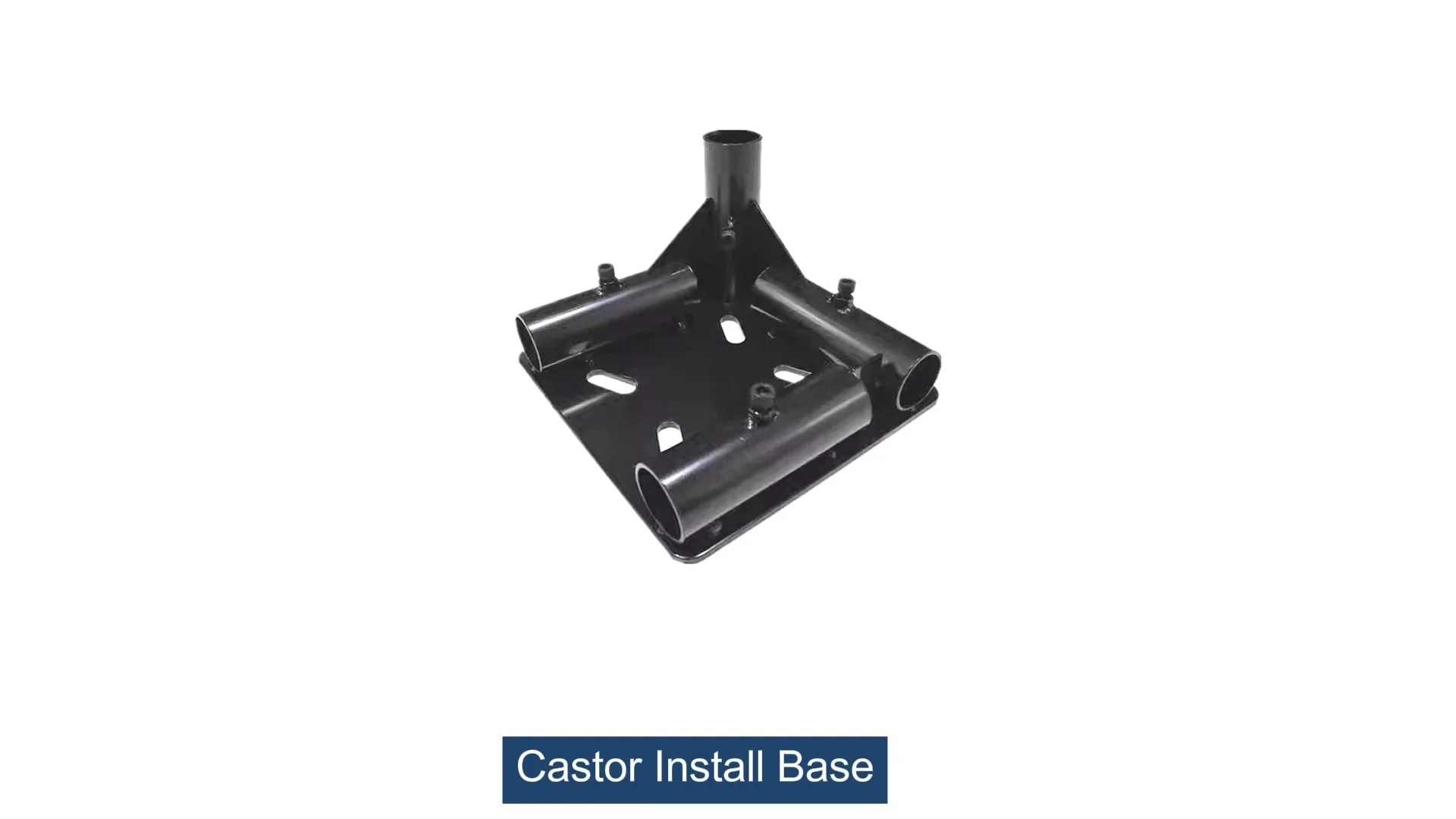
Castor Install Base
Castor install base, used for connection between pipe and castor, it can connect 4 pcs pipe by 1 pcs castor base, to make the structure strong and stable.
Walk into any manufacturing plant, warehouse, or assembly line, and you'll quickly notice a common thread: the constant push to do things better, faster, and with less waste. This relentless pursuit is at the heart of Lean Kaizen—small, continuous improvements that add up to big results in efficiency, productivity, and employee satisfaction. But here's the thing: even the best Kaizen ideas can stall if the tools on the ground don't support flexibility and adaptability. That's where but powerful components like
caster install bases
come into play. These unassuming parts might not grab headlines, but they're the unsung heroes behind the smooth, mobile workflows that make Lean transformations possible. In this article, we'll dive into how castor install bases empower teams to reimagine their workspaces, cut through inefficiencies, and turn Kaizen goals into daily realities—one rolling workstation, one adjustable flow rack, at a time.
Understanding Lean Kaizen: The "Why" Behind Workflow Improvement
Before we get into the nuts and bolts of castor install bases, let's ground ourselves in what Lean Kaizen is really about. At its core, Kaizen is a philosophy of continuous improvement—rooted in the idea that every process, no matter how "good," can be made better. It's not about massive overhauls; it's about small, incremental changes driven by the people who do the work every day. Whether it's reducing the time it takes to fetch a tool, cutting down on unnecessary movement, or making a workstation more comfortable, Kaizen thrives on details.
A big part of Kaizen is eliminating "muda"—the Japanese term for waste. Waste comes in many forms: wasted time (waiting for materials), wasted motion (walking back and forth to a storage area), wasted space (cluttered workbenches), and even wasted human effort (straining to reach heavy items). The goal? Streamline workflows so that every action adds value, and nothing is done just because "that's how we've always done it."
Now, here's the challenge: many workspaces are stuck in rigidity. Fixed
workbench
es bolted to the floor, static
flow rack
s that can't be repositioned, and heavy equipment that requires a forklift to move. In a static setup, even the best Kaizen idea—like rearranging a production line to reduce bottlenecks—becomes a logistical nightmare. That's where mobility enters the picture. If workstations, racks, and tools can move easily, teams can adapt on the fly, test new layouts, and respond to changing demands without disruption. And that's exactly where castor install bases shine.
What Are Castor Install Bases, Anyway? Breaking Down the Basics
Let's start with the basics: a castor install base is the component that connects a
caster wheel
to a piece of equipment—like a workbench, a flow rack, or a turnover trolley. Think of it as the bridge between the wheel and the structure it's moving. Without a sturdy, well-designed base, even the best caster wheel won't perform reliably. These bases come in various shapes, sizes, and materials (often steel or aluminum, depending on the load they need to support), but their core job is simple: to secure the caster wheel and distribute weight evenly, ensuring smooth movement and stability.
But castor install bases aren't one-size-fits-all. Some are designed for light-duty use, like a small parts trolley in a electronics assembly line. Others are heavy-duty, built to support hundreds of pounds—think of a
lean pipe workbench
loaded with tools and materials. They might have locking mechanisms to keep the equipment stationary when needed, or swivel capabilities to allow 360-degree movement. The key is that they're engineered to integrate seamlessly with other Lean components, like aluminum profiles, lean pipes, and workbench frames.
For example, a typical lean pipe workbench might use a castor install base that bolts directly to the workbench legs. The base is designed to fit the diameter of the lean pipe, ensuring a tight, wobble-free connection. When paired with a high-quality caster wheel—one with ball bearings for smooth rolling and a brake to lock it in place—the result is a workstation that can be moved to wherever it's needed, then locked down to stay put during use. It's this combination of mobility and stability that makes castor install bases so critical for Lean environments.
Real-World Example:
A small electronics manufacturer was struggling with bottlenecks in their circuit board assembly line. Workers had to walk 15 feet to a fixed flow rack to fetch components, then walk back to their workbenches—wasting 2-3 minutes per board. Their Kaizen team proposed moving the flow rack closer to the workstations, but the rack was bolted to the floor. By adding castor install bases and caster wheels to the flow rack, the team could now roll it directly alongside the assembly line. Result? A 40% reduction in time spent fetching materials, and workers reported less fatigue from reduced walking. All from a simple change: adding mobility where there was none before.

The Role of Castor Install Bases in Lean Kaizen: 3 Key Contributions
So, how exactly do castor install bases support Lean Kaizen efforts? Let's break it down into three game-changing contributions: flexibility, ergonomics, and adaptability. Each plays a unique role in turning static workspaces into dynamic, waste-fighting machines.
1. Flexibility: Turning "Fixed" into "Flexible" Workspaces
One of the biggest barriers to Kaizen is inflexibility. When equipment can't move, workflows are locked into a single configuration—even if that configuration isn't optimal for today's tasks. Castor install bases shatter that rigidity by making mobility accessible. Suddenly, a
lean pipe workbench
isn't tied to one spot; it can be rolled to where the action is. A flow rack can be repositioned to support a new production schedule. A turnover trolley can be moved from the warehouse to the assembly line in seconds, instead of requiring a team to carry materials by hand.
This flexibility is a Kaizen superpower. For example, imagine a team wants to test a new "U-shaped" production layout to reduce handoffs between workers. In a fixed setup, this would require days of planning, maybe even construction. With mobile workbenches and flow racks (thanks to castor install bases), the team can rearrange the line in hours, test the new layout, and adjust on the fly if something isn't working. If it doesn't pan out? Roll everything back. No permanent changes, no wasted time, no risk. That's the beauty of flexibility—Kaizen ideas can be tested quickly, with minimal disruption.
Flexibility also supports "cellular manufacturing," a Lean concept where work is organized into small, self-contained cells instead of long, linear lines. Each cell is responsible for a specific task, and workers within the cell can collaborate more closely. But cells need to be compact and adaptable. With mobile workbenches and racks, cells can be resized or reconfigured as production needs change—say, shifting from high-volume, low-mix to low-volume, high-mix orders. Castor install bases make that possible.
2. Ergonomics: Putting People at the Center of Workflow Design
Lean isn't just about efficiency—it's about people. A workflow that's "efficient" on paper but leaves workers strained, fatigued, or injured is not truly Lean. Ergonomics—the science of designing work to fit the human body—is a cornerstone of Kaizen, and castor install bases play a big role here.
Think about a traditional fixed workbench. If a worker is shorter or taller than average, they might have to hunch, stretch, or bend awkwardly to reach tools or materials. Over time, this leads to discomfort, reduced productivity, and even repetitive strain injuries. Now, add castor wheels and a height-adjustable workbench (another common Lean tool). With mobility, the worker can position the workbench at the perfect height, then lock it in place. No more straining. Similarly, a flow rack on casters can be adjusted to eye level, so workers don't have to bend down to reach items on lower shelves or stand on tiptoes for upper ones.
Castor install bases also reduce the need for heavy lifting. Instead of a team of workers manually moving a heavy
workbench
(risking injury), one person can roll it into place with minimal effort. This not only cuts down on physical strain but also empowers individual workers to customize their own workspaces—a key part of Kaizen, which relies on frontline employees to identify improvements. When workers feel that their comfort is a priority, they're more engaged, more motivated, and more likely to contribute their own Kaizen ideas.
3. Adaptability: Keeping Up with Changing Demands
In today's manufacturing and warehousing environments, change is constant. Customer orders fluctuate, product designs evolve, and new technologies emerge. A workspace that works today might be obsolete tomorrow. Castor install bases make adaptability possible by turning equipment into "modular" assets that can be repurposed as needs change.
For example, a toy manufacturer ramps up production for the holiday season, then scales back in January. During peak season, they need extra workbenches and flow racks to handle the increased volume. Instead of buying new fixed equipment (which would sit idle for 10 months), they use mobile workbenches and racks with castor install bases. During peak season, they roll them into place; during slow periods, they store them compactly or repurpose them for other tasks (like inventory counting or maintenance). This reduces waste in two ways: no unnecessary capital spending on equipment that's rarely used, and no wasted space storing idle tools.
Adaptability also supports "5S"—another Lean pillar focused on workplace organization (Sort, Set in Order, Shine, Standardize, Sustain). A cluttered workspace is a breeding ground for waste, but keeping it organized is hard if equipment can't be moved to clean underneath or repositioned for better flow. With mobile tools, 5S becomes easier: at the end of each shift, workers can roll workbenches aside to sweep, rearrange flow racks to keep frequently used items front and center, and standardize layouts that work best for their current tasks.

Comparing Static vs. Mobile Workspaces: A Lean Kaizen Impact Table
To put this in concrete terms, let's compare a traditional static workspace with one enhanced by castor install bases and mobile equipment. The table below highlights key metrics that matter for Lean Kaizen: waste reduction, ergonomics, flexibility, and employee engagement.
| Metric | Static Workspace (No Castor Install Bases) | Mobile Workspace (With Castor Install Bases) | Kaizen Impact |
|---|---|---|---|
| Time Spent on Non-Value-Added Motion | High: Workers walk long distances to fetch materials/tools. | Low: Materials/tools are rolled to the worker. | 30-50% reduction in wasted motion time. |
| Ergonomic Strain | High: Fixed heights/positions lead to bending, stretching, lifting. | Low: Workspaces adjusted to individual worker needs. | 25-40% reduction in reported discomfort/injuries. |
| Layout Change Time | High: Requires tools, team effort, and downtime (hours/days). | Low: One person can reconfigure in minutes. | 90% reduction in time to implement layout changes. |
| Equipment Utilization | Low: Fixed tools are tied to one task; idle during off-peak times. | High: Tools can be repurposed for multiple tasks. | 50-70% increase in equipment utilization rates. |
| Employee Engagement in Kaizen | Low: Rigid setup limits ability to test ideas. | High: Workers can experiment with layouts/tools easily. | 60% increase in employee-submitted Kaizen suggestions. |
The numbers speak for themselves: mobility—powered by castor install bases—isn't just a "nice-to-have"; it's a catalyst for Lean Kaizen success. By reducing waste, improving ergonomics, and making change easy, these small components create a ripple effect that touches every part of the workflow.

Choosing the Right Castor Install Bases: Key Considerations for Kaizen Success
Not all castor install bases are created equal, and choosing the right ones is critical to maximizing their impact on Kaizen. Here are a few key factors to keep in mind:
Load Capacity:
Start by calculating the maximum weight the equipment will carry. A lightweight parts trolley might need a base rated for 100-200 pounds, while a heavy-duty
lean pipe workbench
loaded with tools could require 500+ pounds. Overloading a castor install base leads to instability, premature wear, and safety risks—all of which undermine Kaizen goals.
Floor Compatibility:
Consider the type of flooring in your workspace. Smooth concrete floors work well with most caster wheels, but rough or uneven surfaces might require larger wheels or shock-absorbing bases to prevent wobbling. For warehouse environments with cracks or debris, pneumatic (air-filled) caster wheels (paired with sturdy bases) can provide a smoother ride.
Locking Mechanisms:
Mobility is great, but stability is equally important. Look for castor install bases with reliable brake systems—preferably ones that lock both the wheel and the swivel motion (called "total lock" brakes). This prevents the equipment from rolling or shifting during use, which is critical for precision tasks like assembly or quality inspection.
Durability:
Lean environments are busy, and equipment takes a beating. Choose castor install bases made from robust materials like steel or aluminum, with corrosion-resistant finishes (especially important in humid or dusty environments). Cheaper plastic bases might save money upfront, but they'll wear out quickly, leading to downtime and replacement costs—exactly the kind of waste Kaizen aims to eliminate.
Compatibility with Existing Equipment:
If you're retrofitting existing tools (like adding casters to a fixed workbench), ensure the castor install bases are compatible with the equipment's frame or legs. Many manufacturers offer universal bases, but it's always best to check dimensions (bolt hole spacing, height, weight distribution) to avoid mismatches.
Conclusion: Small Parts, Big Results—The Kaizen Power of Mobility
Lean Kaizen is about seeing the potential in the "small stuff"—the details that add up to big improvements in efficiency, ergonomics, and morale. Castor install bases might not be the most glamorous Lean tools, but they're a perfect example of how focusing on the small stuff can drive transformative change. By turning fixed, rigid workspaces into dynamic, mobile environments, these unassuming components empower teams to eliminate waste, adapt to change, and design workflows that work
for
people, not against them.
Whether it's a
flow rack
that rolls to the assembly line, a
workbench
that adjusts to a worker's height, or a turnover trolley that reduces lifting strain, castor install bases make the "impossible" Kaizen ideas possible. They remind us that Lean isn't just about tools and processes—it's about creating workspaces that are flexible, human-centered, and always evolving.
So, the next time you walk through a Lean workspace and see a smoothly rolling workstation or a repositioned flow rack, take a moment to appreciate the castor install base underneath. It might be small, but its impact on workflow improvement? That's anything but.