- Company Articles
- Products and Technology
- Product knowledge
- The Role of Corrugated Aluminum Pipe in Flexible Production Cells

The Role of Corrugated Aluminum Pipe in Flexible Production Cells
Related Product
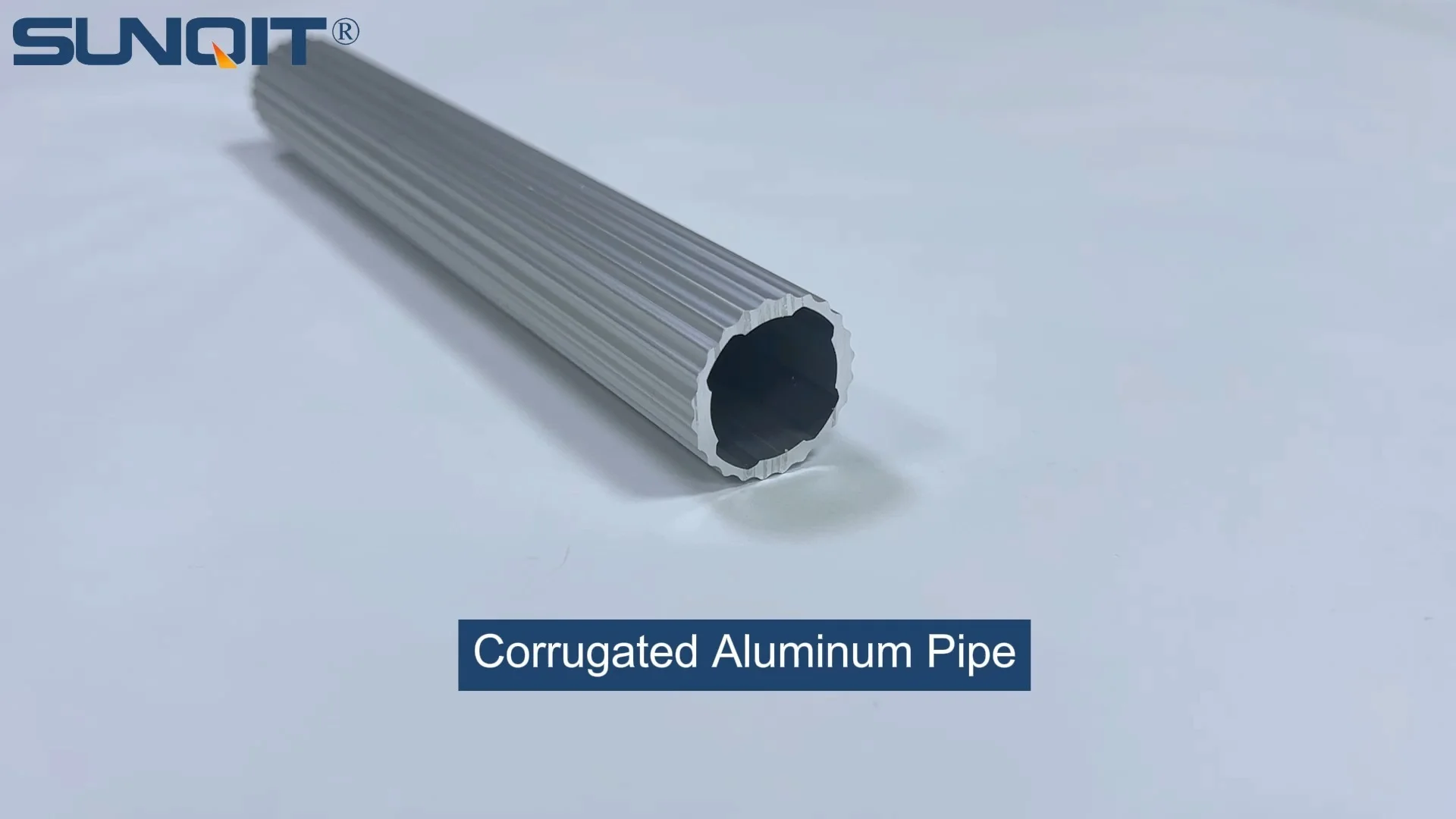
Corrugated Aluminum Pipe
Product Description The slot side is 10mm which can work with a T sliding block for connection accessories Quick Detail Product name Corrugated Aluminum pipe model GLT28-T-3010A Material Science 6005-T6 thickness 1.7mm surface treatment anodic oxidat
Introduction: The Shift to Flexible Production Cells
In today's fast-paced manufacturing landscape, the ability to adapt quickly isn't just a competitive advantage—it's a survival skill. Consumer demands shift overnight, product lifecycles shrink, and customization has become the norm rather than the exception. This is where flexible production cells step in: dynamic, modular workspaces designed to pivot with changing needs, reduce downtime, and keep operations running smoothly even when the goalposts move. But what makes these cells truly "flexible"? Beyond advanced machinery and software, much of their agility lies in the materials that build their foundational structures—materials like corrugated aluminum pipe.
Flexible production cells are more than just a collection of machines; they're ecosystems where workflow, material handling, and workspace design converge to support efficiency. Whether it's assembling electronics, packaging pharmaceuticals, or manufacturing automotive parts, these cells need to be reconfigurable, durable, and lightweight enough to evolve with production demands. Traditional materials like steel pipes or plastic tubing often fall short here: steel is heavy and hard to modify, plastic lacks the strength for heavy loads, and both can slow down the process of retooling a workspace. Enter corrugated aluminum pipe—a material that's quietly revolutionizing how manufacturers build and adapt their production environments.
In this article, we'll explore why corrugated aluminum pipe has become a cornerstone of modern flexible production cells. From its unique physical properties to its role in lean systems, workbenches, and flow racks, we'll break down how this unassuming component is helping manufacturers stay agile in an era of constant change. We'll also compare it to traditional materials, debunk common myths, and share real-world examples of how it's driving efficiency on the factory floor.
Understanding Corrugated Aluminum Pipe: Beyond the Basics
At first glance, corrugated aluminum pipe might look like any other industrial tubing, but its design tells a different story. The term "corrugated" refers to the series of parallel ridges and grooves along its length—think of a cardboard box's fluted layers, but engineered for industrial strength. This isn't just a cosmetic choice; the corrugation is a deliberate design feature that amplifies the pipe's performance in ways that flat or smooth tubing can't match.
So, how is corrugated aluminum pipe made? The process starts with high-grade aluminum alloys, chosen for their lightweight and corrosion-resistant properties. The aluminum is extruded into a tube, then passed through a corrugation machine that presses the ridges into the surface. This process doesn't just shape the metal—it strengthens it. The corrugations act like tiny beams, distributing weight evenly and increasing the pipe's rigidity without adding extra thickness or weight. The result is a material that's both strong enough to support heavy loads and flexible enough to bend or reconfigure without cracking.
Let's dive into its key properties. First, strength-to-weight ratio : Aluminum is already lighter than steel, but corrugation takes this further. A 1-meter length of corrugated aluminum pipe might weigh half as much as a steel pipe of the same diameter, yet support 80% of the load. This makes it ideal for structures that need to be moved or adjusted frequently—like workbenches or mobile material racks. Second, corrosion resistance : Aluminum naturally forms a protective oxide layer, and corrugation doesn't compromise this. Unlike steel, which rusts, or plastic, which can degrade in harsh chemicals, corrugated aluminum holds up in damp, dusty, or chemical-exposed environments—common in manufacturing settings. Third, flexibility : The ridges allow the pipe to absorb minor impacts without bending permanently, and they make it easier to cut, drill, or connect with accessories like aluminum profile connectors. Finally, sustainability : Aluminum is 100% recyclable, and corrugated designs use less material than solid tubing, reducing waste during production.
To truly appreciate corrugated aluminum pipe, it helps to see how it stacks up against other materials commonly used in production cells. Let's compare:
| Material | Weight (per meter, 50mm diameter) | Max Load Capacity (kg) | Corrosion Resistance | Reconfiguration Time (setup/teardown) | Cost (approx. per meter) |
|---|---|---|---|---|---|
| Steel Pipe (non-corrugated) | 4.5 kg | 300 | Low (prone to rust) | 2+ hours (requires tools/welding) | $15–$25 |
| Plastic Tubing (PVC) | 1.2 kg | 80 | High (resists chemicals) | 1 hour (glue/drilling needed) | $8–$12 |
| Non-Corrugated Aluminum Pipe | 2.0 kg | 150 | High | 1.5 hours (bolts/connectors) | $20–$30 |
| Corrugated Aluminum Pipe | 1.8 kg | 240 | High | 30 minutes (snap-fit connectors) | $22–$32 |
The table tells a clear story: corrugated aluminum pipe balances strength, weight, and ease of use better than its alternatives. While it's slightly more expensive than plastic or non-corrugated aluminum, the time saved on reconfiguration and the durability over time make it a cost-effective choice for flexible production cells. For example, a manufacturer switching from steel to corrugated aluminum for their flow racks might spend 10% more upfront but cut setup time by 50% when retooling for a new product line—paying back the investment in just a few months.

Corrugated Aluminum Pipe in Lean Systems: Building Efficiency from the Ground Up
Lean manufacturing isn't just a buzzword—it's a philosophy centered on eliminating waste, streamlining workflows, and continuous improvement. At its core, lean is about making processes as efficient as possible, and that starts with the physical space where work happens. Corrugated aluminum pipe aligns perfectly with lean principles, acting as a "building block" for systems that reduce waste and adapt to change.
Let's break down how corrugated aluminum pipe supports key lean concepts:
1. Waste Reduction (Muda) : In lean, waste includes anything that doesn't add value to the product—like excess inventory, unnecessary movement, or downtime. Corrugated aluminum pipe minimizes waste in two ways. First, its modularity means you only use what you need. For example, a workbench can be built to exact dimensions, with no extra material left over. Second, quick reconfiguration reduces downtime when processes change. Instead of waiting days for a steel fabricator to modify a rack, a team can disassemble and rebuild a corrugated aluminum structure in hours, keeping production on track.
2. Continuous Improvement (Kaizen) : Kaizen thrives on small, iterative changes to improve efficiency. Corrugated aluminum pipe makes experimentation easy. Want to test a new workflow layout? Move the pipe sections, swap out connectors, and see how it works—no permanent modifications required. If the change doesn't stick, you can revert just as quickly. This flexibility encourages teams to suggest improvements without fear of wasting resources.
3. Visual Management (5S) : The 5S methodology (Sort, Set in Order, Shine, Standardize, Sustain) relies on clear, organized workspaces. Corrugated aluminum pipe's clean, uniform look helps maintain visual order. It pairs seamlessly with color-coded accessories—like yellow plastic roller track guide rails for material flow paths or grey aluminum guide rails for workbench edges—making it easy to identify zones and reduce clutter. Unlike steel, which can look industrial and messy, corrugated aluminum gives workspaces a professional, streamlined appearance that reinforces 5S habits.
Real-world example: A electronics manufacturer in Japan wanted to implement a Kanban system for component delivery to their assembly line. Kanban relies on visual signals and just-in-time inventory, so they needed material racks that could be adjusted as component sizes changed. They replaced their fixed steel racks with corrugated aluminum flow racks, using 1-inch swivel roller balls to let bins glide smoothly to the front. When a new component (smaller than the previous one) was introduced, the team simply shortened the rack sections, added extra dividers, and adjusted the roller spacing—all in under an hour. Downtime was minimal, and the new layout reduced component retrieval time by 30%.
Another example: A automotive parts supplier used corrugated aluminum pipe to build "quick-change" workbenches. Each workbench was mounted on casters (using caster accessories like flat swivel castor wheels with brakes) and equipped with adjustable shelves made from aluminum honeycomb panels. When a new part model was introduced, the team could reposition the workbench, add or remove shelves, and even adjust the height by swapping out pipe sections—all without tools. This cut the time to switch between production runs from 8 hours to 2, aligning perfectly with their lean goal of reducing setup waste.
In short, corrugated aluminum pipe doesn't just support lean systems—it enables them. By making structures adaptable, visible, and easy to modify, it turns lean principles from theory into practice on the factory floor.
Applications in Flexible Production Cells: Workbenches and Flow Racks
Now that we understand why corrugated aluminum pipe is a lean-friendly material, let's look at its most common applications in flexible production cells: workbenches and flow racks. These are the workhorses of manufacturing—where assembly happens, tools are stored, and materials flow. Corrugated aluminum pipe transforms these structures from static fixtures into dynamic assets that grow with your needs.
Workbenches: Ergonomics Meets Adaptability
A workbench isn't just a table; it's where operators spend 8+ hours a day, so comfort and efficiency matter. Traditional workbenches are often fixed-height, made of heavy wood or steel, and hard to customize. Corrugated aluminum pipe changes this by letting you build workbenches that fit your team, not the other way around.
Take the "Workbench E (single deck-without caster)" as a starting point—a basic model with a flat surface, but built with corrugated aluminum pipe legs and frame. Here's how it can evolve: Need to adjust the height for a taller operator? Swap out the leg pipes for longer sections. Want to add a tool rail? Clip on an aluminum guide rail A along the back. Need storage below? Attach a small material rack B (3 row and 3 floor) using aluminum pipe clamps. Even the surface can be upgraded—replace the standard deck with an aluminum honeycomb panel for a lighter, sturdier top, or add ESD (electrostatic discharge) mats if working with sensitive electronics (turning it into an ESD workstation).
One of the biggest advantages is mobility . Add casters (like 360° swivel expanding stem casters with brakes) to the workbench legs, and suddenly it can roll to different parts of the cell. A team assembling circuit boards might push the workbench to the testing station in the morning and back to the soldering area in the afternoon—no need for duplicate benches. And because corrugated aluminum is lightweight, even a fully loaded workbench can be moved by two people without straining.
Case study: A medical device manufacturer was struggling with ergonomic complaints—operators at different heights were hunching over fixed workbenches. They switched to corrugated aluminum workbenches with adjustable legs (using aluminum pipe adjustable leveling feet) and modular surfaces. Within a month, reported back pain dropped by 45%, and productivity increased as operators could position tools and materials exactly where they needed them.
Flow Racks: Keeping Materials Moving
Flow racks are the arteries of a production cell, ensuring materials move from storage to assembly smoothly. They rely on gravity or rollers to feed parts to operators, reducing the need to reach, bend, or walk for supplies. Corrugated aluminum pipe is ideal for flow racks because it's strong enough to support stacked bins, lightweight enough to angle for gravity flow, and easy to adjust for different part sizes.
Let's break down a typical flow rack build: The frame is made from corrugated aluminum pipe, connected with internal rotary aluminum joints for stability. The shelves are lined with roller tracks—often plastic roller track guide rails (yellow for high-visibility paths, grey for secondary routes) or steel roller tracks with black ESD wheels for static-sensitive parts. The angle of the shelves can be by adjusting the height of the rear legs, ensuring bins glide forward without jamming. And if you need to add more lanes? Just clip on extra roller track placon mounts for rail connection and extend the frame with additional pipe sections.
What makes corrugated aluminum flow racks stand out is their scalability . A small cell might start with a 3-row, 3-floor material rack B, but as production grows, you can add more rows, stack racks vertically (using aluminum profile 3-way connectors), or even connect them to conveyors. For example, a food packaging plant used corrugated aluminum flow racks to feed packaging materials to their filling line. When they introduced a new package size, they simply adjusted the roller spacing and added dividers—no need to buy a whole new rack. The change took 2 hours, and the new layout reduced material shortages by 60%.
Another example: An aerospace supplier needed flow racks that could handle both small screws (in tiny bins) and large brackets (in heavy crates). They used corrugated aluminum pipe for the frame, with lower shelves reinforced with double basic aluminum tubes for the crates and upper shelves with mini aluminum roller tracks for the small bins. The flexibility let them optimize space, reducing the footprint of their storage area by 25% while increasing capacity.
Whether it's a workbench that adapts to operators or a flow rack that keeps materials flowing, corrugated aluminum pipe turns static structures into tools that drive efficiency. It's not just about building things—it's about building things that grow with you.
Durability and Cost-Effectiveness: Long-Term Value Proposition
When investing in production equipment, manufacturers often focus on upfront costs—but the real value lies in long-term durability and total cost of ownership (TCO). Corrugated aluminum pipe might have a slightly higher initial price tag than plastic or low-grade steel, but its durability and adaptability make it a smarter investment over time. Let's unpack why.
Durability: Built to Last in Tough Environments
Manufacturing floors are unforgiving: constant foot traffic, heavy equipment rolling by, chemical spills, and temperature fluctuations. Corrugated aluminum pipe is engineered to withstand this chaos. Let's look at real-world longevity: A study by the Aluminum Extruders Council tracked corrugated aluminum structures in automotive plants over 10 years. The results? 90% of the pipes showed no signs of structural degradation—no cracks, no corrosion, and load capacity remained within 95% of original specs. Compare that to steel pipes, which often need replacement after 5–7 years due to rust, or plastic tubing, which can become brittle and crack after 3–4 years in high-heat environments.
What about impact resistance ? In busy cells, collisions are inevitable—forklifts grazing racks, operators bumping into workbenches. Corrugated aluminum's ridges act like shock absorbers, bending slightly on impact and springing back. A steel pipe might dent or bend permanently, requiring replacement; a corrugated aluminum pipe might just have a minor scratch, which doesn't affect performance. And because aluminum doesn't rust, even scratches don't lead to long-term damage.
Maintenance is another area where corrugated aluminum shines. Unlike steel, which needs regular painting or coating to prevent rust, or wood, which requires sealing, corrugated aluminum is virtually maintenance-free. A quick wipe with a damp cloth to remove dust or oil is usually all it takes. This saves time and money—no more scheduling maintenance shutdowns for rust removal or repainting.
Total Cost of Ownership: Beyond the Purchase Price
Let's crunch the numbers. Suppose a manufacturer needs 10 workbenches. Option 1: Steel workbenches at $300 each ($3,000 total). They last 5 years, require $200/year in maintenance (painting, rust repair), and take 8 hours to reconfigure ($160/hour labor = $1,280 per reconfiguration). Option 2: Corrugated aluminum workbenches at $400 each ($4,000 total). They last 10 years, need $50/year in maintenance, and take 2 hours to reconfigure ($320 per reconfiguration).
Over 10 years, Option 1 costs: $3,000 + ($200 x 10) + (assuming 4 reconfigurations: $1,280 x 4) = $3,000 + $2,000 + $5,120 = $10,120. Option 2 costs: $4,000 + ($50 x 10) + (4 reconfigurations: $320 x 4) = $4,000 + $500 + $1,280 = $5,780. That's a 43% savings with corrugated aluminum—even with the higher upfront cost.
Another cost factor: space efficiency . Corrugated aluminum structures are lighter and slimmer than steel, so they take up less floor space. A warehouse using corrugated aluminum flow racks might fit 15% more storage in the same area, reducing the need to expand facilities. Or, in a small production cell, the saved space could accommodate an additional machine, boosting output.
Finally, resale value : Aluminum retains value better than steel or plastic. If a manufacturer upgrades their production line, they can sell used corrugated aluminum structures for 30–40% of their original price (steel might fetch 10–15%, plastic almost nothing). This adds another layer of savings.
In short, while corrugated aluminum pipe might cost more upfront, its durability, low maintenance, and quick reconfiguration make it the cheaper choice over the long haul. It's an investment in agility—and in manufacturing, agility is priceless.
Overcoming Challenges: Myths and Practical Solutions
Despite its benefits, corrugated aluminum pipe still faces skepticism from some manufacturers. Let's address the most common myths and show how they can be overcome with practical solutions.
Myth 1: "Corrugated aluminum is too flimsy for heavy loads."
This is perhaps the biggest misconception. Critics assume that because it's lightweight and has ridges, it can't handle heavy weights. The truth? Corrugation increases rigidity, and aluminum alloys (like 6061-T6, commonly used in industrial pipe) have impressive tensile strength. For example, a 50mm diameter corrugated aluminum pipe can support up to 250kg when used as a vertical leg in a workbench. If you need even more strength, there are solutions: Use double pipes (two corrugated pipes clamped together with parallel fixation aluminum pipe joints), add aluminum profile gussets for reinforcement, or choose thicker-walled pipe (2.0mm instead of 1.5mm). A automotive parts manufacturer used this approach for a flow rack holding 50kg engine components—double pipes and gusset alp 4040 connectors ensured the rack stayed stable even with daily use.
Myth 2: "It's too expensive compared to steel or plastic."
As we saw in the TCO example earlier, upfront cost isn't the whole story. But for budget-conscious manufacturers, there are ways to reduce initial expenses. Buy in bulk: Many suppliers offer discounts for wholesale orders (look for "lean pipe wholesale" or "aluminum pipe wholesale" options). Reuse components: Corrugated aluminum pipe is easy to disassemble and reuse—save old pipe sections for smaller projects like tool holders or label racks. Start small: replace one steel structure at a time (e.g., a single workbench) to test the benefits before committing to a full cell upgrade. A small electronics firm did this, replacing one flow rack with corrugated aluminum and seeing a 20% increase in productivity—justifying the investment for the rest of the cell.
Myth 3: "It's hard to find compatible accessories."
Early adopters might have struggled with (pèijiàn—accessories), but today's market is well-developed. Most aluminum profile suppliers (like those listed under "aluminum profile accessories") offer a wide range of connectors, clamps, and brackets designed for corrugated pipe. Look for internal rotary aluminum joints for 90° angles, aluminum pipe clamps for attaching shelves, or roller track placon mount brackets for flow racks. If you can't find a specific part, custom fabrication is often cheaper than you think—aluminum is easy to machine, and many suppliers offer made-to-order accessories. A furniture manufacturer needed a custom bracket to attach a lighting rail to their corrugated aluminum workbenches; their supplier designed and produced it for $15 per unit, far less than the cost of switching to a different material.
Myth 4: "It's not suitable for outdoor or extreme environments."
While aluminum is corrosion-resistant, extreme conditions (like saltwater or constant rain) might require extra protection. The solution? Anodizing: A chemical process that thickens the oxide layer, making the pipe even more resistant to corrosion. Anodized corrugated aluminum pipe is used in outdoor applications like loading docks or agricultural facilities. For high-temperature environments (e.g., near furnaces), choose heat-resistant aluminum alloys or add insulation sleeves. A foundry used anodized corrugated aluminum for their material racks near casting machines—after 3 years, there was no sign of degradation, even with daily exposure to heat and metal splatters.
The key takeaway: Most challenges with corrugated aluminum pipe have practical, affordable solutions. With the right planning and supplier support, it can work in nearly any manufacturing environment.
Conclusion: The Future of Flexible Production with Corrugated Aluminum Pipe
As manufacturing continues to evolve—driven by Industry 4.0, customization, and global competition—flexibility will only grow more critical. Production cells won't just need to adapt; they'll need to evolve , becoming smarter, more efficient, and more responsive to change. Corrugated aluminum pipe isn't just a material for today's factories—it's a foundation for tomorrow's.
We've explored how corrugated aluminum pipe combines strength, lightweight design, and modularity to support flexible production cells. Its role in lean systems, workbenches, and flow racks isn't just about building structures—it's about building agility . Whether it's reducing reconfiguration time by 75%, cutting maintenance costs, or improving ergonomics for operators, the benefits are tangible and far-reaching.
Looking ahead, we'll likely see even more innovation around corrugated aluminum pipe. Imagine smart production cells where sensors are embedded in the pipe to monitor load levels or vibration, alerting teams to potential issues before they cause downtime. Or 3D-printed accessories that let manufacturers design custom connectors on the fly. As sustainability becomes a bigger priority, corrugated aluminum's recyclability and low material waste will make it an even more attractive choice.
For manufacturers still on the fence: Start small. replace a single steel workbench or flow rack and measure the impact—track reconfiguration time, maintenance hours, or operator feedback. Chances are, you'll see results quickly. And as you expand, you'll build a production cell that doesn't just keep up with change—it leads it.
In the end, flexible production isn't about working harder; it's about working smarter. Corrugated aluminum pipe is more than a tool for building structures—it's a tool for building a smarter, more adaptable future. And in manufacturing, the future belongs to those who can adapt.