- Company Articles
- Products and Technology
- Product knowledge
- The Role of Five Way Straight Lean Pipe Joint Chrome in Lean Manufacturing Systems

The Role of Five Way Straight Lean Pipe Joint Chrome in Lean Manufacturing Systems
Related Product
Five Way Straight Lean Pipe Joint Chrome
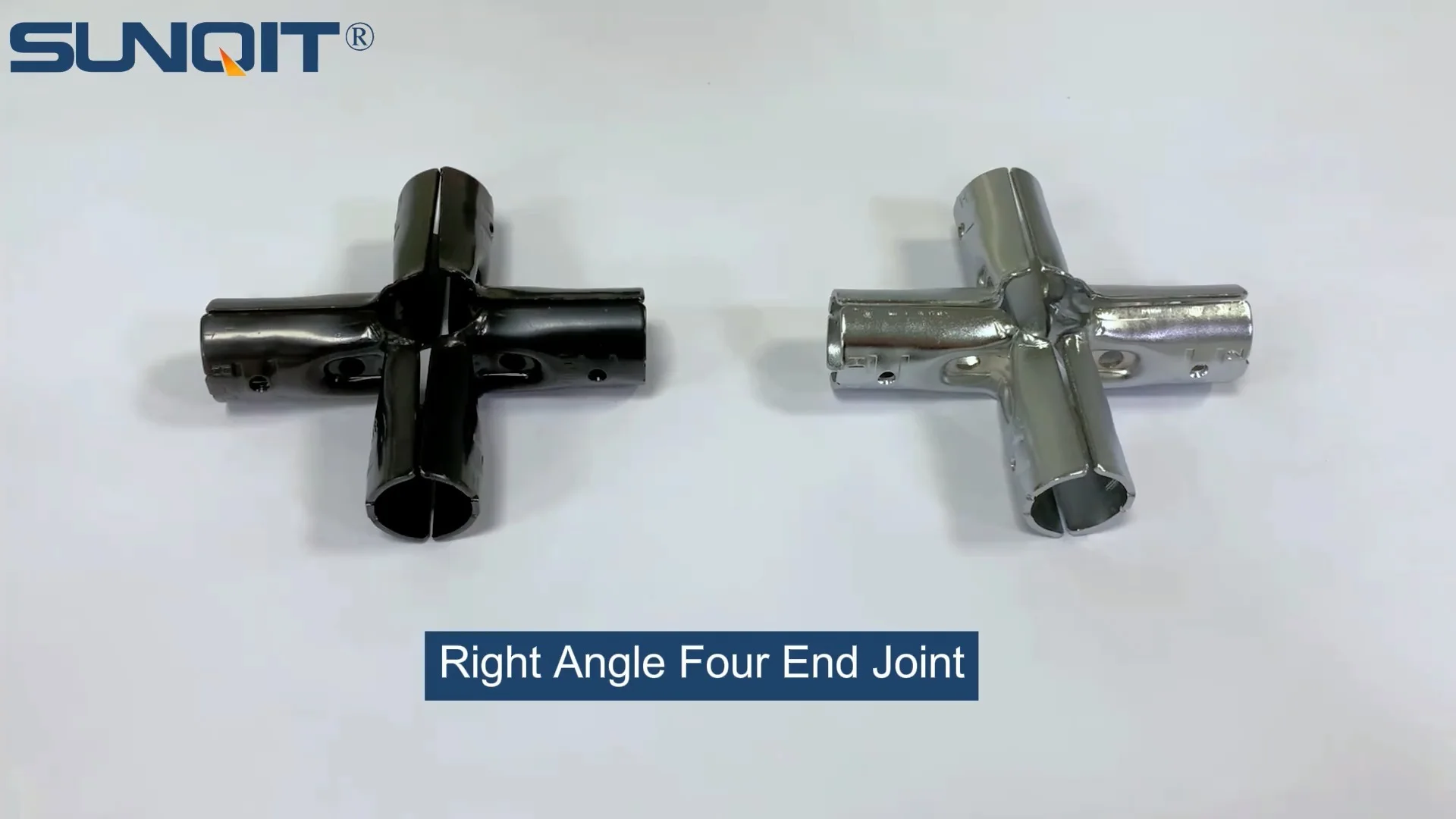
Five way straight lean pipe joint, for 5 pcs 28mm lean pipe connect in straight angle,which used widely in workbench, flow rack, hand trolley frame connection.
The Role of Five Way Straight Lean Pipe Joint Chrome in Lean Manufacturing Systems
Introduction: The Unsung Heroes of Lean Manufacturing
In the world of manufacturing, where buzzwords like "automation," "Industry 4.0," and "smart factories" dominate conversations, it's easy to overlook the quiet, unassuming components that form the backbone of efficient operations. Lean manufacturing, a philosophy centered on eliminating waste, streamlining workflows, and maximizing value, relies heavily on such components. While large machinery and advanced software often take the spotlight, the success of a lean system frequently hinges on smaller, more fundamental parts—parts like the five way straight lean pipe joint chrome. This unassuming connector, with its ability to link multiple pipes in precise configurations, plays a critical role in building the flexible, adaptable structures that make lean manufacturing possible. In this article, we'll explore how this small but mighty component contributes to the efficiency, durability, and scalability of lean systems, from the factory floor to the supply chain.
Understanding Lean Manufacturing: Beyond the Buzzword
Before diving into the specifics of the five way straight lean pipe joint chrome, it's important to ground ourselves in what lean manufacturing truly entails. At its core, lean is about flow —ensuring that materials, information, and processes move seamlessly from start to finish, with minimal interruptions or waste. Waste, in lean terms, includes anything that doesn't add value to the end product: excess inventory, unnecessary movement of workers, waiting times, defects, and overproduction. To eliminate these, lean systems depend on structures that are both rigid enough to maintain order and flexible enough to adapt to changing needs. This is where components like lean pipes, aluminum profiles, and their connecting joints come into play. They form the "skeleton" of workbenches, flow racks, conveyors, and material trolleys—the physical infrastructure that dictates how work happens.
Imagine a typical manufacturing plant: workbenches cluttered with tools, materials stacked haphazardly, workers walking back and forth to retrieve parts, and bottlenecks where materials pile up because the flow path is too narrow. These are all symptoms of a system lacking the right structural foundation. A well-designed lean system, by contrast, uses modular components to create workspaces that are tailored to the task at hand—where tools are within arm's reach, materials flow directly to the point of use, and every square inch of space serves a purpose. And at the heart of this modularity lies the humble pipe joint.
What Is a Five Way Straight Lean Pipe Joint Chrome?
Let's start with the basics: What exactly is a five way straight lean pipe joint chrome, and how does it differ from other pipe joints? At its simplest, this joint is a connecting piece designed to link five lean pipes (or aluminum profiles) in a straight, multi-directional configuration. Unlike three-way or four-way joints, which limit connections to three or four directions, the five way joint expands possibilities by allowing five pipes to meet at a single point. This might sound like a minor distinction, but in the context of lean manufacturing, where space and efficiency are paramount, that extra connection point can transform how a workspace is designed.
The "chrome" in its name refers to its finish—a layer of chromium plating applied to the base metal (often steel). This isn't just for aesthetics; chrome plating adds a hard, corrosion-resistant surface that protects the joint from rust, scratches, and wear, even in busy factory environments where moisture, oils, or chemicals might be present. For manufacturers operating in sectors like automotive, electronics, or food processing, where cleanliness and durability are non-negotiable, this corrosion resistance is a game-changer. A joint that resists rust means less maintenance, fewer replacements, and a longer lifespan for the entire structure it supports.
But what truly sets the five way straight lean pipe joint chrome apart is its design. Most lean pipe joints are cylindrical or angular, with ports (holes) where pipes insert. The five way joint typically features one central port and four surrounding ports, all aligned to allow pipes to extend in straight lines—forward, backward, left, right, and either up or down, depending on orientation. This straight configuration ensures that the structure remains stable, as forces are distributed evenly across the joint. Whether it's supporting a heavy shelf on a lean pipe workbench or directing materials along a flow rack, this stability is critical to preventing collapse or misalignment, which could disrupt operations or even cause safety hazards.
Key Features: Why This Joint Stands Out
To understand why the five way straight lean pipe joint chrome is indispensable in lean systems, let's break down its most important features:
1. Multi-Directional Flexibility
The ability to connect five pipes means designers aren't limited to simple, linear structures. For example, a lean pipe workbench built with five way joints can have a main frame, plus side extensions for tool storage, a top shelf for documentation, and a lower rack for raw materials—all connected at a single joint point. This reduces the number of joints needed overall, simplifying assembly and reducing the risk of weak points. In flow racks, which are used to move materials from storage to production lines, the five way joint allows for the creation of multi-level, crisscrossing paths. A single joint might connect a vertical support pipe, two horizontal flow rails (left and right), and two diagonal braces for stability—something a four-way joint couldn't achieve without adding extra components.
2. Tool-Free Assembly and Disassembly
Lean manufacturing thrives on agility—being able to reconfigure workspaces quickly as production needs change. Traditional manufacturing structures often require welding or complex fasteners, which are time-consuming to modify. The five way straight lean pipe joint chrome, however, is designed for tool-free assembly . Most models use a set screw or a clamping mechanism: insert the pipe into the joint, tighten the screw with a hex key or even by hand, and the connection is secure. When it's time to reconfigure—say, to accommodate a new product line or a larger workbench surface—simply loosen the screws, adjust the pipes, and retighten. This speed of assembly and modification saves hours of downtime, making it easier for manufacturers to adapt to fluctuations in demand or process improvements.
3. Compatibility with Multiple Materials
A common misconception is that lean pipe joints only work with traditional steel lean pipes. While they do pair seamlessly with pe-coated lean pipes (a popular choice for their affordability and corrosion resistance), the five way straight lean pipe joint chrome is also compatible with aluminum profiles. Aluminum profiles, known for their lightweight yet strong properties, are increasingly used in lean systems to reduce overall weight without sacrificing durability. The joint's standardized port sizes (often 28mm or 30mm) mean it can grip both steel pipes and aluminum profiles, giving manufacturers the flexibility to mix materials based on their needs. For example, a workbench might use steel pipes for the base (for stability) and aluminum profiles for the upper shelves (to reduce weight), all connected by five way joints.
4. Load-Bearing Capacity
In manufacturing, structures like workbenches and flow racks often need to support heavy loads: tools, raw materials, finished products, or even machinery. The five way joint, with its chrome-plated steel construction and reinforced port design, is built to handle these demands. Most models can support loads of up to 50kg per pipe connection, meaning a single joint could theoretically bear 250kg (if all five pipes are under load). This is more than enough for typical factory applications, from holding boxes of components on a flow rack to supporting a desktop on a lean pipe workbench. For heavier loads, manufacturers can pair the joint with thicker-walled pipes or aluminum profiles, further increasing stability.
Real-World Applications: How Factories Benefit
To put this into perspective, let's look at two common applications where the five way straight lean pipe joint chrome shines: lean pipe workbenches and flow racks. These are two of the most ubiquitous structures in lean manufacturing, and their performance directly impacts worker productivity and material flow.
Case Study 1: Lean Pipe Workbench Customization
Consider a small electronics manufacturer producing circuit boards. Their assembly line requires workers to have access to soldering irons, tweezers, magnifying glasses, and bins of tiny components—all within arm's reach. Previously, they used generic workbenches with fixed shelves: the top shelf was too high for easy access, and the lower shelf was too narrow to hold all the component bins. Workers wasted time stretching for tools or bending to retrieve parts, leading to fatigue and slower assembly times.
The solution? A custom lean pipe workbench built with five way straight lean pipe joint chrome. By using five way joints, the manufacturer could design a workbench with: (1) a main desktop surface at waist height; (2) a lower shelf (connected via two vertical pipes) for component bins; (3) a side extension (connected via a horizontal pipe) holding a tool organizer; (4) a top shelf (connected via two more vertical pipes) at eye level for documentation; and (5) a rear rail (connected via a fifth pipe) for hanging cables or small parts. All these elements met at five way joints, creating a compact, ergonomic workspace where everything the worker needed was within 18 inches of their hands. The result: a 20% reduction in time spent retrieving tools/parts and a 15% increase in daily circuit board production.
Case Study 2: Flow Rack Optimization
A automotive parts supplier faced a different challenge: their flow rack system, used to move plastic components from the warehouse to the assembly line, had become a bottleneck. The existing racks, built with four-way joints, could only support two levels of flow rails, meaning components piled up during peak production times. Workers had to stop assembly to unload the racks, causing delays. Additionally, the racks couldn't be extended horizontally without adding extra support structures, which took up valuable floor space.
After consulting with a lean system supplier, they replaced the four-way joints with five way straight lean pipe joint chrome. This allowed them to add a third level of flow rails (using the fifth connection point on the joint) without sacrificing stability. They also extended the racks horizontally by connecting additional flow rails to the side ports of the five way joints, creating a "T" shape that directed components to two assembly lines instead of one. The new design eliminated the pile-up issue, reduced worker waiting time by 30%, and freed up floor space by 15% (since fewer support structures were needed). The chrome plating on the joints also proved valuable in the factory's humid environment, as the racks showed no signs of rust after six months of use—unlike the previous steel joints, which had required regular painting to prevent corrosion.
Comparing Joint Types: Why Five Way Chrome Stands Above
To further highlight the value of the five way straight lean pipe joint chrome, let's compare it to other common joint types used in lean systems. The table below breaks down key factors like connection count, best use cases, and durability:
| Joint Type | Number of Connections | Best For | Durability (Chrome vs. Non-Chrome) | Flexibility |
|---|---|---|---|---|
| Three-Way Joint | 3 | Simple structures (e.g., basic shelving, small trolleys) | Non-chrome: Prone to rust; Chrome: Moderate durability | Low (limited to 3 directions) |
| Four-Way Joint | 4 | Medium-complexity structures (e.g., two-level workbenches) | Non-chrome: Moderate rust resistance; Chrome: High durability | Medium (4 directions, but no fifth for vertical/horizontal extension) |
| Five Way Straight Lean Pipe Joint Chrome | 5 | Complex, multi-level structures (e.g., custom workbenches, multi-tier flow racks) | High (chrome plating resists rust, scratches, and corrosion) | High (5 directions, enabling 3D configurations) |
| Angled Joint (90° or 45°) | 2 | Corner connections (e.g., workbench corners, trolley frames) | Non-chrome: Low durability; Chrome: Moderate durability | Very low (fixed angle, no multi-directional connections) |
As the table shows, the five way straight lean pipe joint chrome outperforms other joints in flexibility and durability, making it ideal for the complex, high-use structures common in lean manufacturing. Its ability to support five connections also reduces the number of joints needed in a structure, which lowers costs and simplifies assembly.
Choosing the Right Lean System Supplier: Why Quality Matters
While the five way straight lean pipe joint chrome is a powerful component, its performance depends largely on the quality of the joint itself. Not all joints are created equal—subpar versions, often made with thin steel or poor chrome plating, can bend under load, corrode quickly, or fail to grip pipes securely. This is why partnering with a reputable lean system supplier is critical. A reliable supplier will ensure that the joints meet industry standards for load capacity, corrosion resistance, and dimensional accuracy. They'll also offer technical support, helping manufacturers design structures that maximize the joint's capabilities, and provide warranties that protect against defects.
When evaluating a lean system supplier, look for the following:
- Material Certifications: Ensure the joint's base steel and chrome plating meet international standards (e.g., ISO 9001 for quality management). Ask for test reports on corrosion resistance or load-bearing capacity.
- Compatibility: Verify that the joint works with your existing lean pipes or aluminum profiles. A good supplier will stock joints in multiple sizes (e.g., 28mm, 30mm) to match common pipe diameters.
- Customization Options: If you need specialized joints (e.g., with locking mechanisms or higher load ratings), check if the supplier offers custom manufacturing.
- Inventory and Lead Times: Lean systems often require quick reconfigurations, so choose a supplier with ample inventory and short lead times to avoid production delays.
Remember, the cost of a cheap, low-quality joint is far higher than the initial savings. A joint that fails can damage materials, injure workers, or halt production—costing thousands in downtime. Investing in a quality five way straight lean pipe joint chrome from a trusted supplier is an investment in the long-term efficiency and safety of your lean system.
The Future of Lean Systems: Adaptability and Innovation
As manufacturing continues to evolve, lean systems will need to become even more adaptable. The rise of small-batch production, custom orders, and rapid product cycles demands structures that can be reconfigured in hours, not days. Here, the five way straight lean pipe joint chrome will play an even bigger role. Its modular design aligns perfectly with the "plug-and-play" ethos of modern manufacturing, where flexibility is key.
Looking ahead, we may see innovations like integrated sensors in joints to monitor load stress or pipe alignment, alerting maintenance teams before a failure occurs. Or, advancements in chrome plating technology could lead to even more durable, scratch-resistant finishes, extending joint lifespans further. Whatever the future holds, one thing is clear: the five way straight lean pipe joint chrome, with its unique combination of flexibility, durability, and simplicity, will remain a cornerstone of lean manufacturing systems.
Conclusion: Small Component, Big Impact
In the grand scheme of manufacturing, the five way straight lean pipe joint chrome may seem insignificant. It's small, unassuming, and rarely featured in company brochures. But as we've explored, its impact is anything but minor. By enabling multi-directional, customizable structures, it transforms workbenches into ergonomic hubs, flow racks into efficient material highways, and factory floors into spaces where waste is minimized and value is maximized. It's a testament to the lean philosophy itself: that true efficiency lies not in grand gestures, but in the careful attention to detail—the small, intentional choices that add up to big results.
Whether you're a manufacturer looking to optimize your current lean system or a startup building your first production line, don't overlook the power of the five way joint. Partner with a trusted lean system supplier, invest in quality components, and watch as this small but mighty connector helps you build a more efficient, adaptable, and successful manufacturing operation.