- Company Articles
- Products and Technology
- Product knowledge
- The Role of Lean Pipe Clamps in Modular Production Systems

The Role of Lean Pipe Clamps in Modular Production Systems
Related Product
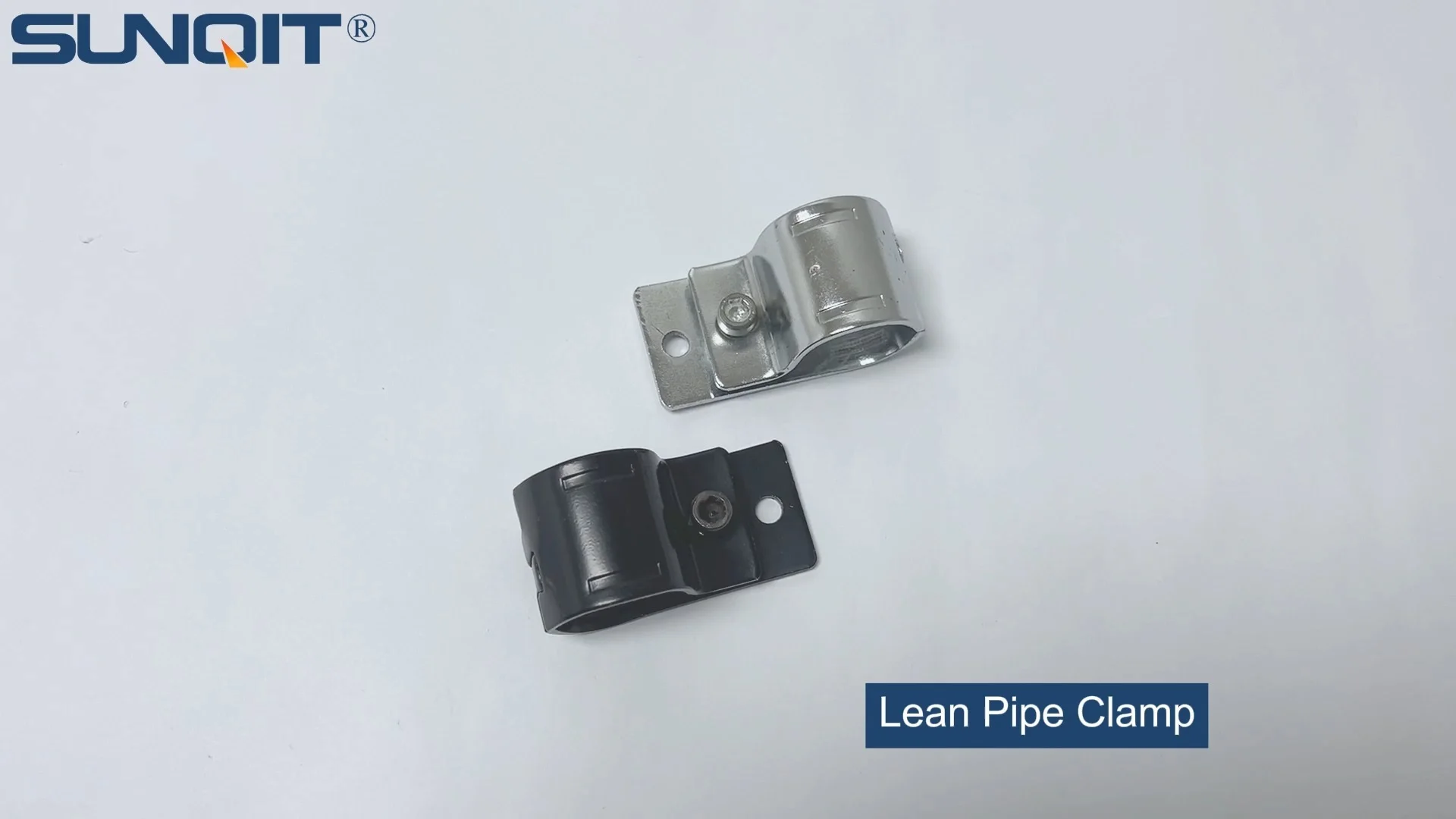
Lean Pipe Clamp
Lean pipe clamp is used for rack system hang monitor or other panel for workbenck, flowrack in production daily use.
In the fast-paced world of manufacturing, where consumer demands shift overnight and production lines must adapt in real time, rigidity is the enemy. Traditional production systems—with their welded steel frames, fixed workstations, and one-size-fits-all layouts—once ruled the factory floor, but they now struggle to keep up. Downtime for reconfiguration, skyrocketing costs for custom tooling, and the inability to scale quickly have left manufacturers searching for a better way. Enter modular production systems: flexible, scalable, and designed to evolve with your needs. At the heart of this revolution? A small but mighty component: the lean pipe clamp. Often overlooked, these unassuming connectors are the glue that holds modular systems together, turning simple pipes and profiles into dynamic, adaptable workspaces. Let's dive into why lean pipe clamps are more than just hardware—they're the key to unlocking manufacturing agility.
What Are Lean Pipe Clamps, Anyway?
At their core, lean pipe clamps are mechanical fasteners designed to connect and secure lean pipes (also called "lean tubes")—hollow metal or plastic tubes used to build everything from workbenches to material racks. Think of them as the adjustable joints of the manufacturing world: they hold pipes together firmly but allow for quick disassembly and reconfiguration. Unlike permanent welds or glued connections, lean pipe clamps let you tweak, expand, or repurpose structures in minutes, not days.
Materials matter here. Most lean pipe clamps are made from durable steel, often coated in zinc or plastic to resist corrosion—a must in busy factories where spills, dust, and humidity are part of daily life. For lighter-duty applications or environments where weight is a concern (like mobile workstations), aluminum alloy clamps are gaining popularity. They offer the same strength as steel but with significantly less heft, making them ideal for assembly lines that need to move or adjust frequently. Some clamps even pair with PE coated lean pipe (polyethylene-coated steel pipes), adding a layer of protection against scratches and electrical discharge—critical in electronics manufacturing where static can damage sensitive components.
The design of a lean pipe clamp is deceptively simple: a two-piece bracket that wraps around the pipe, secured by a bolt or lever. Tighten the bolt, and the clamp grips the pipe with enough force to support heavy loads—think stacks of raw materials or fully assembled products. Loosen it, and you can slide the clamp along the pipe, rotate it, or remove it entirely. This adjustability is what sets modular systems apart: no more cutting pipes to length or welding new joints when a production line changes. With clamps, your setup evolves as your needs do.
A Perfect Partnership: Lean Pipe Clamps and Lean Pipe Joints
Lean pipe clamps rarely work alone. Their true power shines when paired with lean pipe joints —specialized connectors that join pipes at angles (90°, 45°, 135°, etc.) or split a single pipe into multiple directions. Together, clamps and joints form the building blocks of modular structures, turning a pile of pipes into a functional workbench, a flow rack, or even a conveyor system.
Consider a basic workstation: vertical pipes support a horizontal shelf. A 90° lean pipe joint connects the vertical and horizontal pipes, while a clamp reinforces the connection, ensuring the shelf doesn't wobble under the weight of tools or parts. If the operator needs more shelf space later, adding a second horizontal pipe is easy: slide a new clamp onto the vertical pipe, attach a T-joint, and secure the new shelf—no power tools required. This synergy between clamps and joints is why modular systems are so versatile: joints handle the angles, clamps handle the stability, and both work together to keep the structure rigid yet reconfigurable.
Not all joints are created equal, and clamps must adapt accordingly. Fixed joints lock pipes in place, ideal for permanent sections of a production line, while swivel joints allow for rotation—useful for adjustable work surfaces that need to tilt or turn. Clamps designed for fixed joints often have a more robust grip, while those for swivel joints prioritize smooth movement without sacrificing security. The key is compatibility: using clamps and joints from the same supplier ensures a snug fit, reducing the risk of slippage or structural failure. After all, a workstation is only as strong as its weakest connection.

Aluminum Profile: The Foundation That Elevates Modularity
While lean pipes are the "bones" of modular systems, aluminum profile is the "muscle." These extruded aluminum beams—with their signature T-slots running along the length—provide a sturdy, lightweight base for everything from workbenches to material racks. And lean pipe clamps? They're the bridge that connects pipes to these profiles, creating structures that are both strong and infinitely customizable.
Aluminum profiles have revolutionized modular manufacturing for a few reasons. First, they're incredibly strong for their weight. A 40x40mm aluminum profile can support hundreds of pounds, yet it's light enough for two workers to carry and install without heavy machinery. Second, those T-slots are a game-changer. They let you attach clamps, brackets, shelves, and even tools directly to the profile—no drilling or welding needed. Slide a clamp into the T-slot, tighten the bolt, and you've got a secure connection that can be moved or removed in seconds.
Here's how it works in practice: Imagine building a workbench for an electronics assembly line. The frame is made of 40x80mm aluminum profiles, chosen for their stability. Vertical lean pipes, clamped to the profiles via T-slot clamps, support a wooden or aluminum work surface. Need a shelf above the bench to hold tools? Add two more vertical pipes, connect them with horizontal pipes using lean pipe joints, and secure everything with clamps. Want to add a roller track to slide parts from one end of the bench to the other? Clamp the track directly to the aluminum profile using specialized brackets. The result? A workstation tailored to the exact needs of the operator, built in hours instead of days, and easy to reconfigure when the next product comes along.
Aluminum profiles also play well with other materials. Pair them with steel lean pipes for heavy loads, or with lightweight aluminum pipes for mobile setups. And because aluminum is naturally resistant to rust, these systems last for years—even in harsh factory environments. For manufacturers looking to reduce waste, aluminum is fully recyclable, aligning with sustainability goals that are becoming increasingly important to customers and regulators alike.

The Core Roles of Lean Pipe Clamps in Modular Production
So, what exactly do lean pipe clamps do in a modular production system? Their roles are as varied as the systems they support, but four stand out as game-changers for manufacturers.
1. Flexibility: Adapt or Die (But With Clamps, You Adapt)
In manufacturing, change is constant. A new product design might require a wider workbench; a surge in demand could mean adding more material racks; a shift to smaller batches might call for a more compact assembly line. Traditional systems crumble under these changes—ripping out welded frames or buying new equipment is expensive and time-consuming. Lean pipe clamps eliminate that pain. Loosen a few bolts, reposition the pipes, and your line is ready for the next challenge. A furniture manufacturer we worked with recently needed to switch from making dining chairs to office chairs (a narrower product). Using clamps, they adjusted their workbench width by 18 inches in under an hour—no contractors, no downtime, just a few tools and a small team.
2. Cost-Efficiency: Save Money by Reusing, Not Replacing
Manufacturing is a tight-margin business, and every dollar counts. Lean pipe clamps slash costs in two ways: by reducing the need for custom tooling and by letting you reuse components. Instead of buying a new workbench for each product line, you can reconfigure an existing one with clamps. When a project ends, disassemble the structure and use the pipes, clamps, and joints for something else. A automotive parts supplier reported saving over $50,000 in one year by reusing modular components across three different product launches. That's money that can go into R&D, hiring, or improving worker conditions—not into landfills full of discarded steel frames.
3. Safety: Strong Connections Mean Happy (and Safe) Workers
A wobbly workstation or a shelf that collapses isn't just a productivity killer—it's a safety hazard. Lean pipe clamps are engineered to hold tight under stress. Most can support 300–500 pounds per connection, far more than the typical loads in a factory. The secret is in the grip: when tightened properly, the clamp's jaws dig into the pipe, creating friction that resists sliding or twisting. For extra security, some clamps feature serrated edges that bite into the pipe's surface, ensuring even greater stability. This peace of mind is priceless for plant managers who need to comply with OSHA regulations and keep their teams safe.
4. Streamlining Workflow: From Chaos to Order
A disorganized production line is a slow production line. Workers waste time searching for tools, bending to reach materials, or moving parts by hand. Lean pipe clamps help create efficient workflows by letting you design workstations around the task at hand. Need parts to flow smoothly from one station to the next? Clamp a roller track to the aluminum profile of your workbench, and gravity does the rest—parts glide along the track, reducing manual lifting. Want tools within arm's reach? Add a vertical pipe with clamp-on tool holders. The result? Workers stay focused, fatigue drops, and productivity soars. A electronics manufacturer saw a 22% increase in assembly speed after reconfiguring their lines with clamp-mounted roller tracks and tool organizers.
Choosing the Right Lean Pipe Clamp: A Quick Guide
| Clamp Type | Material | Max Load Capacity | Best For |
|---|---|---|---|
| Standard Steel | Zinc-plated steel | 500 lbs | Heavy-duty workbenches, material racks |
| Aluminum Alloy | Aluminum | 300 lbs | Lightweight mobile workstations, roller tracks |
| PE Coated | Steel + PE coating | 400 lbs | ESD-sensitive environments (electronics, medical devices) |

Installing and Maintaining Lean Pipe Clamps: A Few Pro Tips
You don't need to be an engineer to work with lean pipe clamps, but a little know-how goes a long way. Here's how to get the most out of your clamps:
- Don't overtighten: Yes, you want a secure connection, but cranking the bolt until it strips will damage the clamp and the pipe. Tighten until the clamp grips firmly—you should need a wrench to loosen it, but not a cheater bar.
- Check for wear: Over time, clamp bolts can loosen from vibration. Do a quick inspection every month—tighten any loose bolts and replace clamps with cracked brackets or worn threads.
- Use the right size: Clamps are designed for specific pipe diameters (1 inch, 0.5 inch, etc.). Using a clamp that's too big or small will lead to slippage. If you're unsure, ask your supplier for a size guide.
- Clean regularly: Dust and grime can build up in the clamp's jaws, reducing grip. Wipe clamps down with a damp cloth during routine maintenance—your future self (and your production line) will thank you.
The Future of Modular Manufacturing: Where Clamps Are Headed
As manufacturing continues to evolve—with trends like Industry 4.0, automation, and mass customization leading the way—lean pipe clamps are evolving too. We're already seeing clamps with built-in sensors that alert managers when a connection loosens, preventing failures before they happen. For smart factories, this means less downtime and more data-driven maintenance. There's also a push for even more sustainable materials: bioplastic coatings for clamps and recycled aluminum profiles are on the horizon, helping manufacturers reduce their carbon footprint.
Perhaps the most exciting development is the integration of clamps with collaborative robots (cobots). These small, flexible robots work alongside humans, and modular workstations with clamps make it easy to reposition cobots as tasks change. Imagine a cobot assembling smartphones one day and tablets the next—all thanks to a workstation reconfigured with a few turns of a wrench and some well-placed clamps.
Conclusion: Lean Pipe Clamps—Small Parts, Big Impact
In the grand scheme of manufacturing, lean pipe clamps might seem like components. But as we've explored, they're the unsung heroes of modular production systems. They turn rigid factories into adaptable spaces, cut costs without cutting corners, and keep workers safe while streamlining workflows. Whether you're building a simple workbench or a complex conveyor system, clamps are the key to unlocking flexibility and efficiency.
So, the next time you walk through a factory, take a closer look at those metal brackets holding pipes together. Those are lean pipe clamps—and they're not just connecting pipes. They're connecting manufacturers to a future where change is opportunity, not a headache. And in today's manufacturing landscape, that's a connection worth investing in.