- Company Articles
- Products and Technology
- Product knowledge
- The Role of Lean Pipe Clamps in Reducing Assembly Line Downtime

The Role of Lean Pipe Clamps in Reducing Assembly Line Downtime
Related Product
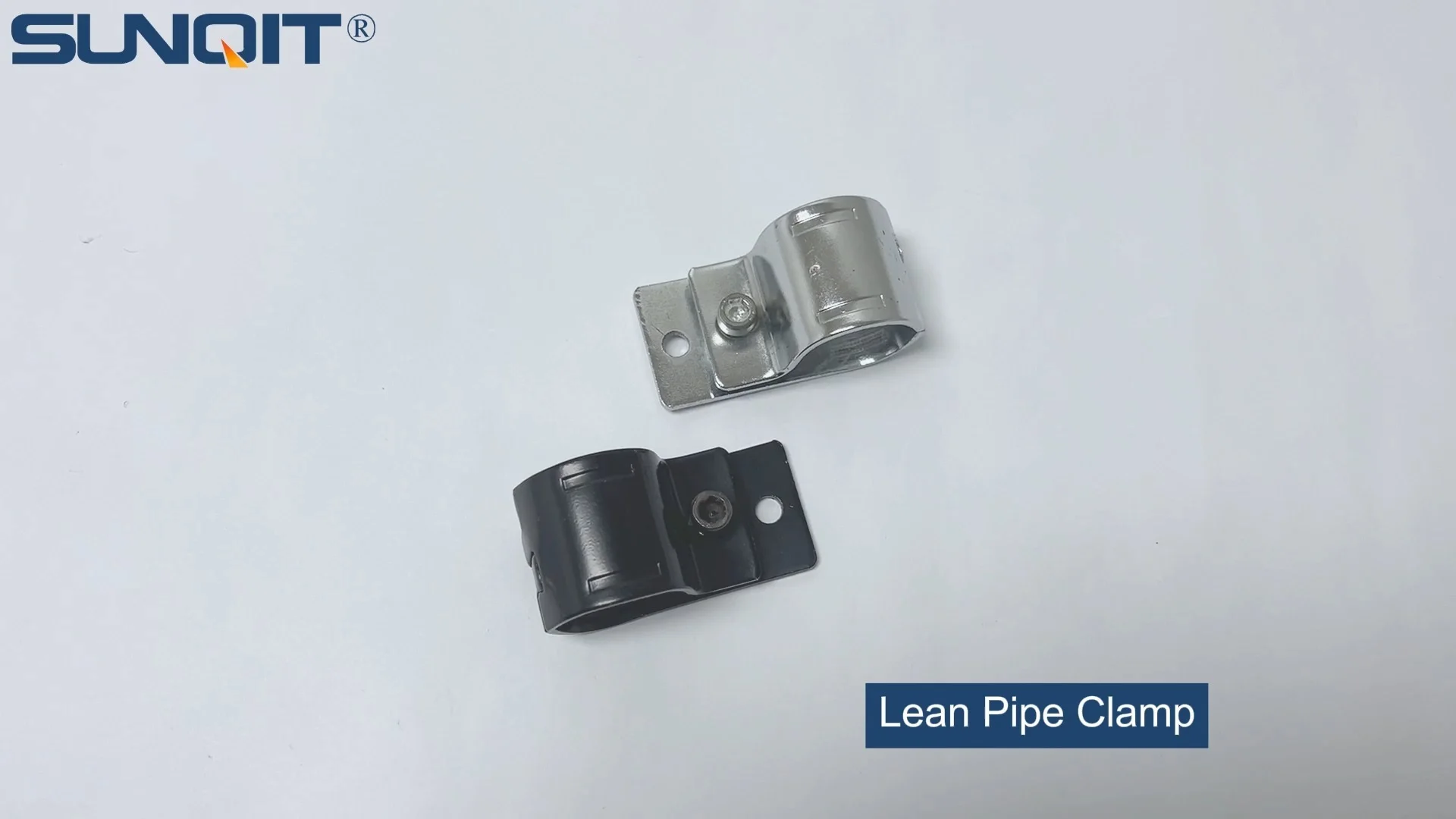
Lean Pipe Clamp
Lean pipe clamp is used for rack system hang monitor or other panel for workbenck, flowrack in production daily use.
In the fast-paced world of manufacturing, where every second counts, downtime isn't just an inconvenience—it's a silent profit killer. Imagine a production floor where conveyor belts stall, workbenches wobble, and material racks creak under the weight of inefficiency. For plant managers and line supervisors, these aren't just daily headaches; they're financial drains. Studies suggest that unplanned downtime costs manufacturers an average of $22,000 per minute, and even planned reconfigurations can eat up hours of valuable production time. But what if the solution to slashing this downtime was hiding in plain sight? Enter lean pipe clamps—the unassuming yet critical components that hold together the backbone of lean manufacturing systems. From securing aluminum pipes in workbenches to stabilizing roller tracks on assembly lines, these small but mighty tools play a pivotal role in keeping operations running smoothly. In this article, we'll dive into how lean pipe clamps, paired with complementary components like lean pipe joints and caster wheels, act as the unsung heroes of downtime reduction.
What Are Lean Pipe Clamps, Anyway?
Before we unpack their impact, let's start with the basics: What exactly are lean pipe clamps? At their core, these are mechanical fasteners designed to secure lean pipes—typically made of aluminum, steel, or plastic-coated materials—in modular structures. Think of them as the "glue" that holds together everything from workbenches and roller tracks to turnover trolleys and material racks. Unlike rigid, welded joints or permanent bolts, lean pipe clamps are engineered for flexibility: they can be tightened, loosened, and repositioned with minimal tools, allowing teams to adapt structures on the fly.
But lean pipe clamps don't work alone. They're part of a larger ecosystem of lean components, often working in tandem with lean pipe joints. While joints connect pipes at angles (90°, 45°, or custom), clamps reinforce these connections, ensuring stability even under heavy loads. For example, a workbench built with aluminum lean pipes might use a 90° lean pipe joint to connect vertical and horizontal pipes, then a lean pipe clamp to lock that joint in place, preventing wobbling during assembly tasks. This synergy between clamps and joints is what makes lean systems so versatile—and so effective at reducing downtime.
The Hidden Cost of Downtime: It's More Than Just Lost Time
To understand why lean pipe clamps matter, we first need to grasp the true cost of downtime. It's easy to chalk it up to "lost production," but the ripple effects run deeper. Let's break it down with a common scenario: A mid-sized electronics plant produces 500 smartphones per hour. If their main assembly line goes down for 2 hours due to a loose workbench joint, they lose 1,000 units—translating to roughly $50,000 in revenue (assuming a $50 profit per phone). But that's just the tip of the iceberg. There's also the cost of idle labor: 10 workers standing around for 2 hours, costing $30/hour each, adds another $600. Then there's the overtime needed to catch up, the potential for missed deadlines, and even damage to customer trust. Suddenly, a "small" 2-hour downtime becomes a $60,000+ problem.
What causes these delays? More often than not, it's the failure of basic components. A roller track might jam because a clamp holding the guide rail has loosened, causing misalignment. A workbench might wobble, leading to errors in precision assembly and requiring rework. Or a turnover trolley with faulty caster wheels (secured by weak clamps) could get stuck, halting material flow. In each case, the root issue traces back to unstable or inflexible connections—exactly the problem lean pipe clamps are designed to solve.

How Lean Pipe Clamps Slash Downtime: 4 Key Benefits
1. Flexibility: Adapt Fast, Reduce Planned Downtime
One of the biggest drains on productivity is planned downtime for reconfigurations. Traditional manufacturing setups—think welded steel frames or bolted workbenches—take hours (or even days) to modify. If a product design changes, or seasonal demand spikes require a new assembly layout, teams often have to disassemble and rebuild structures from scratch. Lean pipe clamps turn this process on its head.
Consider a scenario where a toy manufacturer needs to switch from assembling action figures to holiday-themed dolls in time for the peak season. With a lean system built using aluminum pipes and quick-release lean pipe clamps, the team can loosen the clamps, adjust the height of the workbench, reposition the roller track to accommodate smaller doll parts, and tighten the clamps—all in under an hour. Compare that to a welded workbench, which would require cutting, welding, and repainting, taking 8+ hours. By slashing reconfiguration time, lean pipe clamps turn planned downtime into "planned uptime," keeping production on track.
2. Durability: Fewer Breakdowns, Less Unplanned Downtime
Unplanned downtime—caused by sudden component failures—is even more costly than planned reconfigurations. Cheap, flimsy clamps made of plastic or low-grade steel are common culprits here. They wear out quickly under repeated use, loosen due to vibration, or snap under heavy loads, leading to collapsed structures, jammed roller tracks, or unstable workbenches. High-quality lean pipe clamps, by contrast, are built to last.
Take stainless steel lean pipe clamps, for example. Designed to resist corrosion and withstand up to 150kg of load, they maintain their grip even in humid environments (like food processing plants) or high-vibration settings (like automotive assembly lines). Aluminum lean pipe clamps, while lighter, offer excellent strength-to-weight ratios, making them ideal for mobile structures like turnover trolleys with caster wheels. By reducing the frequency of clamp failures, these durable components minimize the risk of sudden line stoppages, keeping production rolling.
3. Easy Maintenance: Swap, Tighten, and Go
Even the most durable components need maintenance, but not all require the same amount of time and effort. Traditional welded joints or permanent bolts often mean disassembling entire structures to replace a single faulty part. With lean pipe clamps, maintenance becomes a 5-minute task. If a clamp shows signs of wear—a loose screw or cracked housing—technicians can simply loosen the adjacent joints, swap out the old clamp for a new one, and retighten. No welding, no cutting, no specialized tools.
This ease of maintenance is a game-changer for busy production floors. For instance, a roller track on a packaging line might start jamming because a plastic roller track guide rail has worn down. With lean pipe clamps securing the rail, the team can loosen the clamps, slide out the old rail, insert a new one, and tighten the clamps—all without stopping the entire line. The result? Maintenance that happens in minutes, not hours, and downtime that's barely noticeable.
4. Compatibility: Work Seamlessly with Other Lean Components
Lean manufacturing systems are only as strong as their weakest link, and lean pipe clamps excel at playing well with others. They're designed to work seamlessly with lean pipe joints, caster wheels, roller tracks, and aluminum profiles, creating a cohesive ecosystem that's greater than the sum of its parts. For example, a mobile workbench might combine aluminum pipes, 90° lean pipe joints, caster wheels for mobility, and a roller track for material flow—all secured by lean pipe clamps. This integration ensures that every component works in harmony, reducing the risk of misalignment or failure.
Consider a caster wheel on a turnover trolley: If the clamp securing the wheel to the trolley frame is poorly designed, the wheel might wobble, causing the trolley to get stuck on uneven floors. But with a heavy-duty lean pipe clamp, the wheel stays firmly attached, even when carrying heavy loads. Similarly, on a roller track, clamps ensure that the aluminum guide rails stay aligned, preventing product jams and keeping materials moving smoothly from station to station.

Real-World Impact: A Case Study
To put these benefits into perspective, let's look at a real-world example (with identifying details changed for privacy). PrecisionTech, a mid-sized electronics manufacturer, was struggling with 12 hours of unplanned downtime per week due to unstable workbenches and frequent roller track jams. Their old setup used wooden workbenches and plastic clamps that loosened easily, leading to errors in circuit board assembly and constant rework. After consulting with a lean system supplier, they upgraded to a modular system built with aluminum lean pipes, stainless steel lean pipe clamps, and lean pipe joints.
The results were staggering: Within three months, unplanned downtime dropped to 3 hours per week—a 75% reduction. The team attributed this to two key changes: First, the stainless steel clamps maintained their grip, eliminating workbench wobble and reducing assembly errors by 40%. Second, the aluminum roller tracks, secured by adjustable clamps, rarely jammed, keeping material flow steady. Even planned reconfigurations, which used to take 6 hours, now took 45 minutes, thanks to quick-release clamps. For PrecisionTech, this translated to an additional 45 hours of production per week, boosting output by 15% and increasing annual revenue by over $500,000. All from upgrading a single component: the humble lean pipe clamp.

Choosing the Right Lean Pipe Clamp: A Quick Guide
Not all lean pipe clamps are created equal, and choosing the right one depends on your application. Below is a breakdown of common clamp types, their materials, and ideal uses to help you select the best option for reducing downtime:
| Clamp Type | Material | Load Capacity | Ideal Application | Downtime Reduction Potential |
|---|---|---|---|---|
| Standard Lean Clamp | Aluminum | Up to 50kg | Light-duty workbenches, small material racks | 30-40% (reduces reconfig time for light tasks) |
| Heavy-Duty Clamp | Stainless Steel | Up to 150kg | Roller tracks, conveyors, heavy workbenches | 50-60% (minimizes failures under high loads) |
| Quick-Release Clamp | Steel Alloy | Up to 100kg | Frequent reconfigurations (e.g., seasonal product lines) | 60-70% (slashes reconfig time by 75%+) |
| ESD-Safe Clamp | Conductive Plastic/Steel | Up to 80kg | Electronics assembly (prevents static damage) | 40-50% (reduces errors from static-related failures) |
When selecting a clamp, also consider compatibility with your existing lean pipe joints and materials. For example, if you're using aluminum lean pipes, aluminum clamps will prevent galvanic corrosion (a common issue when mixing metals). For mobile structures with caster wheels, opt for heavy-duty clamps to handle the added stress of movement.
Beyond Clamps: Building a Downtime-Resistant Lean Ecosystem
While lean pipe clamps are critical, they're most effective when part of a holistic lean system. Pairing them with high-quality lean pipe joints, durable roller tracks, and reliable caster wheels creates a setup that's greater than the sum of its parts. For example, a workbench built with aluminum pipes, reinforced by both lean pipe joints and clamps, will be far more stable than one using joints alone. Similarly, a roller track with plastic guide rails (secured by clamps) and stainless steel swivel roller balls will glide smoothly, reducing jams.
It's also worth investing in a trusted lean pipe supplier who offers not just clamps, but a full range of accessories—from end caps to caster wheel brakes. This ensures consistency in quality and compatibility, reducing the risk of mismatched components that can lead to failures. Remember: downtime reduction isn't about one "magic" part; it's about building a system where every component works together to keep the line moving.
Conclusion: Small Clamps, Big Impact
In the grand scheme of manufacturing, lean pipe clamps might seem like minor players. But as we've explored, their impact on reducing downtime is anything but small. By enabling fast reconfigurations, resisting wear and tear, simplifying maintenance, and integrating seamlessly with other lean components, these unassuming tools save manufacturers thousands of dollars in lost productivity each year. Whether you're running a small electronics shop or a large automotive plant, upgrading to high-quality lean pipe clamps is one of the most cost-effective ways to turn downtime into uptime.
So the next time you walk your production floor, take a closer look at those clamps holding together your workbenches, roller tracks, and trolleys. They might just be the key to unlocking smoother operations, happier teams, and a healthier bottom line. After all, in manufacturing, the smallest components often make the biggest difference.