- Company Articles
- Products and Technology
- Product knowledge
- The Role of M10*56 Rubber Leveling Feet in Reducing Equipment Vibration

The Role of M10*56 Rubber Leveling Feet in Reducing Equipment Vibration
Related Product
M10*56 Rubber Leveling Feet
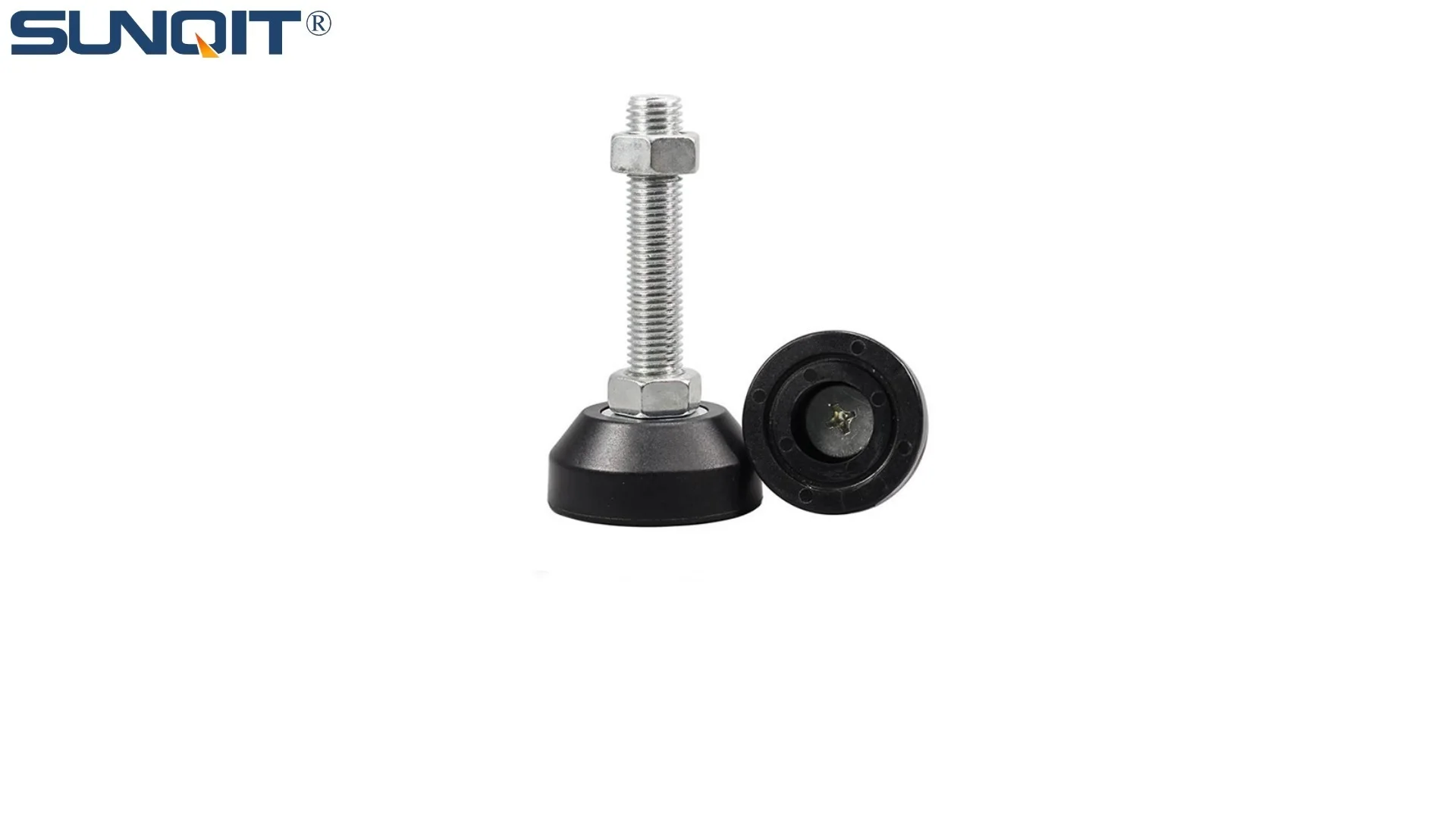
Adjustable leveling feet are designed to keep machines level when placed on uneven or sloped ground. Otherwise known as adjustable equipment feet, they are available to order in a wide variety of size and load capacity combinations.
Walk into any busy workshop, manufacturing plant, or even a small garage, and you'll notice a common theme: machines hum, tools rattle, and the floor seems to vibrate with a steady, low-frequency buzz. At first glance, this might feel like the "sound of productivity"—a sign that work is getting done. But what if I told you that all that vibration is secretly costing you money? Not just in broken parts or worn-out equipment, but in lost efficiency, product defects, and even employee fatigue. That's where components like M10*56 rubber leveling feet come into play. They're not the flashiest tools in the shed, but they might just be the unsung heroes keeping your operation running smoothly.
Let's start with the basics: vibration isn't just an annoyance. For precision equipment—think of a lean pipe workbench where delicate electronics are assembled, or an aluminum profile workstation where measurements need to be exact—even the smallest shake can throw off alignment, scratch sensitive surfaces, or cause parts to shift during assembly. Over time, that constant movement wears down machine parts, loosens bolts, and shortens the lifespan of expensive tools. And let's not forget the human element: studies show that prolonged exposure to vibration and noise can increase stress levels, reduce focus, and even lead to physical discomfort for workers. So, what's the solution? It starts with stabilizing your equipment at the source—and that's exactly what M10*56 rubber leveling feet are designed to do.
What Are M10*56 Rubber Leveling Feet, Anyway?
If you've ever adjusted the feet on a wobbly table, you're already familiar with the concept of leveling feet. But M10*56 rubber leveling feet are a step up from your average table leg adjuster. Let's break down the name first: "M10*56" refers to the specifications of the threaded stem. The "M10" means the stem has a metric thread with a 10mm diameter, and "56" indicates the length of the threaded portion is 56mm. That thread allows you to screw the foot in or out, adjusting the height to compensate for uneven floors—a critical feature in older buildings or workshops where the ground might slope or have cracks.
The real star here, though, is the "rubber" part. The base of the foot is made from a durable, elastic rubber compound that's designed to absorb shocks and vibrations. Unlike metal feet, which can transmit vibration straight through to the floor (and back up into the equipment), rubber acts like a buffer. When the machine vibrates, the rubber compresses and flexes, dissipating that energy instead of letting it rattle the entire setup. It's like putting a shock absorber under your equipment—simple, but incredibly effective.
These feet are typically used on medium to heavy-duty equipment. Think of a workbench loaded with power tools, a conveyor system that moves parts across the factory floor, or even a material rack holding boxes of inventory. Anywhere stability and vibration control matter, M10*56 rubber leveling feet find a home. They're versatile, too: you'll see them on everything from industrial-grade lean pipe workbenches in automotive plants to smaller aluminum profile workstations in electronics labs. Their size—M10*56—strikes a balance between strength and adjustability, making them a go-to choice for engineers and workshop managers alike.
How Do They Actually Reduce Vibration?
To understand how M10*56 rubber leveling feet work, let's get a little science-y (but don't worry, I'll keep it simple). Vibration is essentially energy moving through a surface—when a machine runs, its motors or moving parts create kinetic energy that travels down through the equipment's frame and into the floor. If the floor isn't perfectly level, or if the equipment's feet are hard and unyielding (like metal), that energy bounces back up, creating a feedback loop of shaking. Rubber breaks that loop.
Rubber is a viscoelastic material, which means it has both elastic (springy) and viscous (flowy) properties. When vibration hits the rubber base, the material deforms slightly, absorbing the energy like a sponge soaks up water. The elastic part allows it to bounce back to its original shape, while the viscous part converts some of that energy into heat, effectively "damping" the vibration. This dual action means less energy is transmitted to the floor and less is reflected back into the machine. It's like putting a pillow under a jumping kid—instead of the floor shaking with every bounce, the pillow absorbs the impact.
But the design of the leveling foot itself matters, too. The threaded stem isn't just for height adjustment; it also creates a rigid connection between the equipment and the rubber base. This ensures that the vibration has a direct path into the rubber, rather than leaking out through loose or wobbly connections. And because you can adjust the height of each foot individually, you can fine-tune the balance of the equipment. Imagine a four-legged workbench where one leg is slightly shorter than the others—without leveling feet, the bench would rock, amplifying vibration. By screwing the shorter leg's leveling foot out a bit, you stabilize the bench, eliminating the rock and reducing the surface area where vibration can "catch" and build up.
Another key feature is the rubber base's texture. Most M10*56 rubber leveling feet have a non-slip surface, which adds extra grip between the foot and the floor. This prevents the equipment from sliding around during operation, which not only reduces vibration but also improves safety. A machine that stays put is a machine that's less likely to cause accidents or damage to surrounding tools.

Beyond Vibration: Other Benefits of M10*56 Rubber Leveling Feet
While reducing vibration is their main claim to fame, M10*56 rubber leveling feet offer a host of other advantages that make them a smart investment for any workspace. Let's start with floor protection. If you've ever seen a concrete floor scarred by metal chair legs or the scuffed tiles under a heavy cabinet, you know how quickly hard feet can damage surfaces. Rubber, on the other hand, is gentle on floors. The soft base won't scratch, dent, or leave marks, even when supporting heavy equipment. This is especially important in environments like labs, clean rooms, or showrooms where floor appearance matters as much as functionality.
Then there's corrosion resistance. Many M10*56 leveling feet have a zinc-plated or stainless steel stem, which stands up to moisture, oil, and chemicals common in industrial settings. Unlike plain steel, which can rust and seize up over time, these coated stems stay smooth, making it easy to adjust the height even after years of use. And the rubber base itself is resistant to most oils and solvents, so you don't have to worry about it degrading if it comes into contact with spills—a common concern in garages or manufacturing plants.
Let's not overlook versatility. These feet aren't limited to one type of equipment. You'll find them on everything from small workbenches to large conveyor systems, and they pair well with other workshop essentials. For example, if you have a mobile cart with caster wheels for easy movement, you can install leveling feet alongside the casters. When you need to park the cart and use it as a workstation, simply lower the leveling feet to lift the casters off the ground, stabilizing the cart and reducing vibration. It's the best of both worlds: mobility when you need it, stability when you don't.
Cost-effectiveness is another big plus. Compared to complex vibration-dampening systems or custom-built anti-vibration platforms, M10*56 rubber leveling feet are affordable and easy to install. You don't need special tools or professional help—just a wrench to tighten them into place. And because they extend the life of your equipment by reducing wear and tear, they save you money in the long run by delaying the need for repairs or replacements. Think of it as a small investment now to avoid big expenses later.

Real-World Applications: Where M10*56 Rubber Leveling Feet Shine
To really understand the impact of M10*56 rubber leveling feet, let's look at some common scenarios where they make a difference. Take the lean pipe workbench, for example. Lean pipe workbenches are popular in manufacturing and assembly lines because they're lightweight, modular, and easy to customize. But their flexibility can also make them prone to vibration—especially if they're loaded with tools, monitors, or assembly jigs. By installing M10*56 rubber leveling feet on the legs of the workbench, you stabilize the entire structure. This is crucial for tasks like soldering small electronics or assembling precision parts, where a steady surface can mean the difference between a flawless product and a defective one.
Another common application is aluminum profile workstations. Aluminum profiles are used to build everything from shelving units to machine guards, thanks to their strength and versatility. But when used as work surfaces—say, for 3D printing or laser cutting—they need to stay rock-solid. M10*56 rubber leveling feet ensure that the aluminum profile frame doesn't wobble, even when the printer or cutter is in operation. This stability improves the accuracy of the machines, reduces waste from misprints or uneven cuts, and extends the life of the equipment by preventing unnecessary strain on moving parts.
Material racks and storage systems also benefit from leveling feet. If you've ever tried to stack boxes on a wobbly rack, you know how frustrating (and dangerous) it can be. A rack that leans to one side is at risk of tipping over, especially when loaded with heavy items. M10*56 rubber leveling feet let you adjust each leg to compensate for uneven floors, keeping the rack upright and secure. The rubber base also prevents the rack from sliding during loading or unloading, which is a big safety win in busy warehouses.
Even in home workshops, these feet prove their worth. A garage workbench used for woodworking or metalworking often hosts power tools like sanders, drills, or grinders—all of which generate significant vibration. Without leveling feet, that vibration can travel up into the workbench, making it harder to control the tools and increasing the risk of mistakes. Adding M10*56 rubber leveling feet dampens the vibration, making the tools easier to handle and the workspace more comfortable.

Choosing the Right Leveling Feet: Why M10*56 Stands Out
Not all leveling feet are created equal, so why choose M10*56 rubber leveling feet over other sizes or materials? Let's start with the size. The M10 thread is a common standard in industrial equipment, which means these feet are widely available and compatible with many existing workbenches, racks, and machines. You won't have to hunt for specialty parts or adapt your equipment to fit them—just screw them in and go. The 56mm stem length is also practical: it's long enough to handle most uneven floors but not so long that it compromises stability. For medium to heavy equipment (up to a few hundred kilograms), M10*56 feet provide the perfect balance of adjustability and strength.
Material matters too. Rubber is the ideal choice for most environments, but not all rubber is the same. High-quality M10*56 rubber leveling feet use a durable, oil-resistant rubber compound that can withstand exposure to common workshop fluids, extreme temperatures, and heavy loads. Cheaper feet might use softer rubber that wears out quickly or hardens in cold weather, losing their vibration-damping properties. When shopping, look for feet with a Shore hardness rating (a measure of rubber elasticity) between 60 and 80 Shore A—this range offers the best combination of flexibility (for damping) and durability (for long-term use).
Another factor to consider is the load capacity. M10*56 rubber leveling feet typically have a load rating of 200-300 kilograms per foot, which is more than enough for most workbenches, racks, or small machines. If you're dealing with extremely heavy equipment (like industrial presses or large CNC machines), you might need larger feet, but for the average workshop, M10*56 is more than sufficient.
To help you compare, here's a quick table of common leveling foot sizes and their best uses:
| Size | Typical Load Capacity (per foot) | Best For | Vibration Damping |
|---|---|---|---|
| M8*40 | 100-150 kg | Lightweight shelves, small workbenches | Good (smaller rubber base) |
| M10*56 | 200-300 kg | Lean pipe workbenches, aluminum profile stations, medium racks | Excellent (larger rubber base, optimal hardness) |
| M12*70 | 400-500 kg | Heavy machinery, large conveyor systems | Very Good (stiffer rubber for heavy loads) |
As you can see, M10*56 hits the sweet spot for most workshop and industrial needs. It's strong enough to handle medium loads, offers excellent vibration damping, and is compatible with a wide range of equipment.
Installation and Maintenance: Getting the Most Out of Your Leveling Feet
Installing M10*56 rubber leveling feet is a straightforward process, but a few tips can ensure you get the best results. First, start by cleaning the mounting points on your equipment. Dust, grease, or debris can prevent the leveling feet from screwing in smoothly, so wipe the threads on the equipment legs with a clean cloth before you begin. If the legs don't already have threaded holes, you may need to drill and tap them to fit the M10 thread—just make sure to use the correct drill bit size (typically 8.5mm for M10 threads) to avoid damaging the equipment.
Once the holes are clean and ready, screw the leveling feet into place by hand until they're snug. Then, use a wrench to tighten them an additional quarter-turn—this ensures a secure connection without over-tightening, which could strip the threads or damage the rubber base. Next, check the level of your equipment. You can use a spirit level on the surface of the workbench or rack to see if it's sitting evenly. If one side is higher than the other, simply screw the corresponding leveling foot out a bit to raise that side, or screw it in to lower it. Repeat until the equipment is perfectly level.
Maintenance is just as easy. Every few months, give the leveling feet a quick inspection. Check for signs of wear on the rubber base—cracks, tears, or a loss of elasticity mean it's time to replace the foot. Also, tighten any feet that have come loose due to vibration (this is common in high-use areas). If the rubber base becomes dirty or greasy, wipe it with a damp cloth and mild soap to restore its grip. Avoid using harsh chemicals, as they can degrade the rubber over time.
One common mistake to avoid is overloading the feet. Even though M10*56 rubber leveling feet can handle 200-300 kg per foot, it's important to distribute the weight of your equipment evenly. If one leg is supporting significantly more weight than the others, the rubber base on that foot may wear out faster, and the equipment may still vibrate due to uneven load distribution. Take the time to balance your equipment during installation, and rearrange tools or materials as needed to keep the weight even.
Conclusion: Small Feet, Big Impact
At the end of the day, M10*56 rubber leveling feet might not be the most glamorous tools in your workshop, but they play a critical role in keeping your operation running smoothly. By reducing vibration, stabilizing equipment, protecting floors, and improving safety, they address a host of hidden problems that can eat into your bottom line. Whether you're running a large manufacturing plant with lean pipe workbenches and aluminum profile stations or a small home workshop with a single tool bench, these humble feet offer a simple, affordable solution to a common challenge.
So, the next time you're setting up a new workstation, upgrading your equipment, or just dealing with a wobbly rack, don't overlook the power of a good leveling foot. M10*56 rubber leveling feet prove that sometimes, the smallest components make the biggest difference. They're a reminder that in the world of tools and machinery, stability isn't just a nice-to-have—it's the foundation of productivity, quality, and success.
Investing in quality M10*56 rubber leveling feet today means fewer repairs, fewer defects, and a more efficient, comfortable workspace tomorrow. And isn't that what every business (and every worker) deserves?