- Company Articles
- Products and Technology
- Product knowledge
- The Role of One Way Rotatory Straight Lean Pipe Joints in 5S Workplace Organization

The Role of One Way Rotatory Straight Lean Pipe Joints in 5S Workplace Organization
Related Product
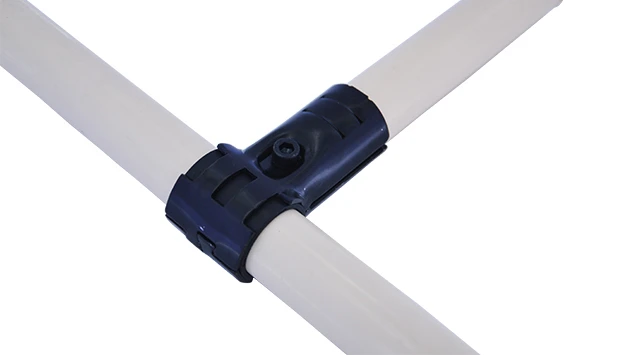
One Way Rotatory Straight Lean Pipe Joint
Two way lean pipe joint for 2 pcs 28MM lean pipe connection in straight angle with rotatory fucntion, which used widely in workbench, flow rack, hand trolley frame connection.
Walk into any well-run factory or workshop, and you'll notice something immediately: order. Tools have a home, materials flow smoothly, and every inch of space feels intentional. This isn't by accident—it's the result of 5S workplace organization, a methodology that turns chaos into clarity through five simple steps: Sort, Set in Order, Shine, Standardize, and Sustain. But here's the thing: maintaining 5S isn't just about checklists or holding occasional cleanups. It requires tools and systems that make organization easy —so easy that even on the busiest days, your team doesn't skip a beat. That's where lean systems come in, and at the heart of these systems lies a small but mighty component: the one way rotatory straight lean pipe joint. In this article, we'll explore how this unassuming piece of hardware becomes a cornerstone of 5S success, transforming rigid workspaces into adaptable, efficient hubs where order isn't just a goal—it's a daily reality.
Lean Systems: The Foundation of 5S-Ready Workspaces
Before diving into the specifics of lean pipe joints, let's take a step back and understand why lean systems matter for 5S. Traditional workspaces often rely on fixed furniture: heavy steel workbenches bolted to the floor, static shelving units, and inflexible conveyor belts. These might work for a single product line, but when production needs change—and they always do—these rigid setups become obstacles. Tools get misplaced because there's no built-in storage for new equipment. Materials pile up because the flow rack can't be adjusted to accommodate a larger component. Suddenly, the "Set in Order" step of 5S feels impossible, and before you know it, the workspace slips back into disarray.
Lean systems solve this by prioritizing flexibility. At their core is lean pipe—a lightweight, durable tube (often made of steel or aluminum) that, when combined with joints and accessories, can be configured into almost anything: workbenches, flow racks, turnover trolleys, you name it. Unlike fixed furniture, lean pipe structures are modular. Need a taller shelf? Add a few more pipes. Want to reposition your workbench? Unfasten the joints, move it, and rebuild. This adaptability is exactly what 5S needs. It ensures that as your workflow evolves, your workspace can evolve with it—without sacrificing organization.
The Unsung Hero: One Way Rotatory Straight Lean Pipe Joints
If lean pipe is the "bones" of a flexible workspace, then lean pipe joints are the "joints" that let those bones move. And among the many types of joints available, the one way rotatory straight lean pipe joint stands out for its unique ability to balance stability and adjustability. Let's break down what makes it special.
What Is a One Way Rotatory Straight Lean Pipe Joint?
At first glance, it looks like a simple metal connector. But inside, there's a clever mechanism designed for precision. Unlike fixed joints that lock pipes at a 90-degree angle (and require tools to change), or multi-angle joints that offer too much flexibility (risking wobbly structures), the one way rotatory straight joint does exactly what its name suggests: it allows a pipe to rotate in one direction (usually 180 degrees) and lock securely at specific intervals. Think of it like a hinge with built-in stops—you can swing the pipe up, down, left, or right, but it won't flop around. Once you find the perfect angle, it clicks into place, holding steady even under the weight of tools or materials.
Most one way rotatory straight joints are made from high-grade aluminum or steel, coated to resist rust and wear. They're engineered to fit standard lean pipe sizes (often 28mm or 30mm in diameter), making them compatible with most lean pipe systems. And here's the kicker: they require no tools to adjust. A simple push or pull of a locking pin, a twist of the pipe, and you're done. This "tool-free" design is a game-changer for busy teams—no more hunting for wrenches or slowing down production to reconfigure a workstation.
How It Works: A Closer Look at the Mechanism
Let's say you're building a lean pipe workbench. You've got the frame up, but you need to add a side shelf for tools. With a traditional fixed joint, you'd have to measure, mark, and tighten bolts to attach the shelf at a 90-degree angle. If later you realize the shelf is too low (and hitting your knees), you'd have to loosen all those bolts, adjust, and retighten—wasting 20 minutes of your day. With a one way rotatory straight joint, it's different. You slide the joint onto the vertical pipe of the workbench, attach the horizontal pipe for the shelf, and then rotate the shelf up or down until it's at the right height. The joint's internal springs and notches lock it into position, so it stays put. If tomorrow you need the shelf higher? Just pull the locking pin, rotate, and release. Done in 30 seconds.
This mechanism isn't just about speed—it's about precision. Many one way rotatory joints have notches every 15 or 30 degrees, ensuring that your adjustments are consistent. That means if you're building two identical workbenches, both shelves will end up at exactly the same height. No guesswork, no uneven surfaces—just the kind of standardization 5S thrives on.

From Theory to Practice: Real-World Applications
To understand the impact of one way rotatory straight lean pipe joints, let's look at two common workplace setups: lean pipe workbenches and flow racks. These are staples in manufacturing, and both benefit dramatically from the joint's unique features.
Lean Pipe Workbenches: Customized for Every Task
A workbench is the heart of any assembly station. It's where operators spend most of their day, so it needs to be ergonomic, organized, and tailored to the task at hand. With a traditional workbench, you're stuck with whatever surface and storage the manufacturer provided. If you're assembling small electronics, you might need a shelf for tiny screws and a tray for tweezers. If you switch to assembling larger parts, that shelf gets in the way, and suddenly you're stacking tools on the floor—violating "Set in Order."
A lean pipe workbench with one way rotatory straight joints solves this. Let's say Maria, an assembly line supervisor, needs to reconfigure her team's workbenches for a new product. The old setup had a fixed shelf 12 inches above the work surface, but the new product requires a heat gun that needs to hang 18 inches high. With traditional joints, Maria would need to disassemble the shelf, drill new holes, and rebuild. With one way rotatory joints, she just adjusts each shelf bracket to the 18-inch mark. The joints lock in place, and the shelf stays secure. Then, she adds a side rail using the same joints, rotating it outward to hold the heat gun's cord—keeping it off the work surface and preventing tangles (hello, "Shine" step!).
But it's not just about height. One way rotatory joints also let operators angle components. For example, a parts bin holder can be tilted slightly forward, so small parts don't get stuck in the back. A tool board can be rotated to face the operator directly, reducing neck strain. These small adjustments make the workspace feel personal and efficient—encouraging operators to keep it organized because it works for them.
Flow Racks: Keeping Materials Moving (Without the Clutter)
Flow racks are another 5S essential. They use gravity to feed materials from the back to the front, ensuring operators always take the oldest stock first (FIFO—First In, First Out) and reducing waste. But traditional flow racks have fixed roller tracks. If you switch from small plastic parts to larger metal components, the track angle might be too steep, causing parts to slide too fast and get damaged. Or too shallow, leading to jams. Either way, materials pile up, and "Sort" becomes a daily headache.
Enter one way rotatory straight lean pipe joints. By attaching roller tracks to these joints, you can adjust the angle of the track in seconds. Let's say Raj runs a warehouse where his team picks parts for automotive assemblies. On Monday, they're handling small screws (lightweight, need a gentle slope). On Tuesday, they switch to heavy brackets (need a steeper slope). With a traditional flow rack, Raj would need two separate racks. With a lean pipe flow rack using one way rotatory joints, he just adjusts the track angle each morning. The joints hold the track steady, so parts flow smoothly—no jams, no damage, and no piles of unsorted materials cluttering the workspace.

How One Way Rotatory Joints Strengthen Every Step of 5S
Now that we've seen how these joints work in practice, let's connect the dots to 5S. Each step of the methodology benefits from the flexibility and precision of one way rotatory straight lean pipe joints. Here's how:
1. Sort: Eliminating the "Maybe" Piles
The first step of 5S is to "Sort"—separate what's needed from what's not. But if your storage is fixed, it's tempting to keep "maybe useful" tools or obsolete parts because there's no easy way to create temporary storage for them. With lean pipe structures using one way rotatory joints, you can quickly build a temporary bin rack for questionable items. Once you've decided they're unnecessary, disassemble the rack and repurpose the pipes elsewhere. No more cluttering permanent shelves with "just in case" items.
2. Set in Order: A Place for Everything, and Everything in Its Place
This is where one way rotatory joints shine brightest. "Set in Order" means assigning a specific location to every tool, part, and piece of equipment. With adjustable workbenches and flow racks, you can create dedicated spots that fit your items perfectly. A 6-inch wrench gets a hook at 30 inches high; a 2-inch bolt bin sits at a 15-degree angle on the flow rack. When everything has a spot that's easy to reach and see, operators are far more likely to put things back—no more "I'll do it later" piles.
3. Shine: Making Cleaning a Breeze
"Shine" is about keeping the workspace clean, but that's hard if there are nooks and crannies where dust and debris collect. Traditional fixed joints often have gaps or require bolts that trap dirt. One way rotatory joints, with their smooth, tool-free design, are easier to wipe down. Plus, since lean pipe structures are lightweight, you can disassemble sections to clean underneath or behind them—no more ignoring dust bunnies under the workbench.
4. Standardize: Consistency Across Shifts
"Standardize" ensures that everyone follows the same organization rules. With one way rotatory joints, you can standardize workspace setups across shifts. For example, you can mark the optimal angle for a flow rack track or the height of a tool shelf on the joints. New operators know exactly where to position components, and experienced operators don't have to readjust everything when they start their shift. Consistency = less chaos.
5. Sustain: Keeping 5S Alive for the Long Haul
The biggest challenge of 5S is "Sustain"—making organization a habit, not a one-time project. Rigid workspaces fail here because they can't keep up with changing needs, leading teams to abandon 5S out of frustration. One way rotatory joints solve this by making adaptation easy. When a new product, tool, or process comes along, the team can adjust their lean pipe structures in minutes. They don't have to choose between productivity and organization—they can have both. And when 5S feels sustainable, it becomes part of the culture.
Traditional vs. One Way Rotatory Straight Lean Pipe Joints: A Comparison
| Feature | Traditional Fixed Joints | One Way Rotatory Straight Lean Pipe Joints |
|---|---|---|
| Adjustment Time | 20–30 minutes (requires tools, disassembly) | 30 seconds–2 minutes (tool-free, no disassembly) |
| Flexibility | Fixed angles only (e.g., 90°, 45°) | 180° rotation with lockable intervals |
| Stability | High (but only at fixed angles) | High (locks securely at any interval) |
| Operator Adoption | Low (too time-consuming to adjust) | High (easy enough for anyone to use) |
| 5S Compatibility | Limited (struggles with "Set in Order" and "Sustain") | Excellent (supports all 5S steps) |
Choosing the Right Joints: Why Quality Matters
Not all one way rotatory straight lean pipe joints are created equal. To get the full benefits for 5S, you need to choose high-quality joints from a reputable lean pipe supplier. Here's what to look for:
- Material: Opt for aluminum or stainless steel joints if you work in a humid or corrosive environment (like food processing or electronics manufacturing, where ESD workstations are common). Steel joints are durable but heavier, so save them for high-weight applications.
- Locking Mechanism: Look for joints with a spring-loaded pin or ball-bearing lock. These provide a positive "click" when locked, so operators know the joint is secure. Avoid friction-based locks—they can slip over time.
- Compatibility: Ensure the joint fits your lean pipe size. Most suppliers offer joints for 28mm, 30mm, and 40mm pipes. If you're using aluminum lean pipe, check that the joint's inner diameter matches the pipe's outer diameter to prevent wobbling.
- Load Capacity: Check the manufacturer's specs for weight limits. A joint that holds 50kg is fine for a tool shelf, but a flow rack holding heavy components might need one that supports 100kg or more.
Remember: A cheap, poorly made joint will undo all your 5S efforts. If it slips, breaks, or is too hard to adjust, operators will stop using it—and your workspace will slide back into disarray. Invest in quality now, and you'll save time, money, and frustration later.
Conclusion: Small Joints, Big Impact on 5S Success
5S workplace organization isn't about perfection—it's about creating a system where organization feels natural. And in that system, flexibility is key. One way rotatory straight lean pipe joints might seem like small components, but they're the difference between a workspace that fights against you and one that works with you. They let you adjust on the fly, customize for every task, and keep up with the ever-changing demands of production—all while keeping "Sort," "Set in Order," and the rest of the 5S steps front and center.
So, the next time you walk into a well-organized factory, take a closer look at the workbenches and flow racks. Chances are, there's a one way rotatory straight lean pipe joint holding it all together—quietly, reliably, and always ready to adapt. And that's the beauty of lean systems: they turn "impossible" organization into "just another day at work."