- Company Articles
- Products and Technology
- Product knowledge
- The Role of Parallel Lean Pipe Joint Chrome in Modular Production Systems

The Role of Parallel Lean Pipe Joint Chrome in Modular Production Systems
Related Product
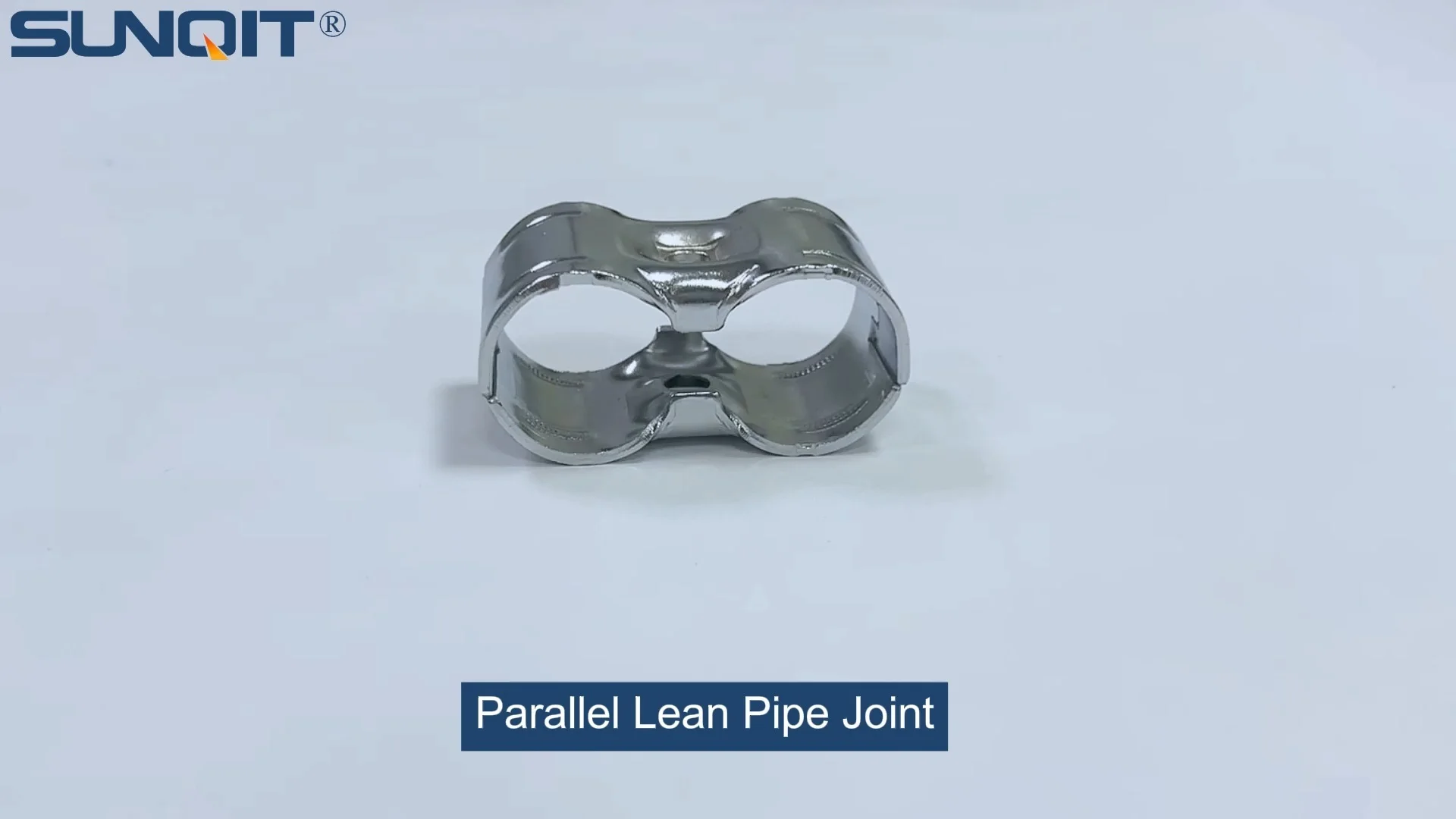
Parallel Lean Pipe Joint Chrome
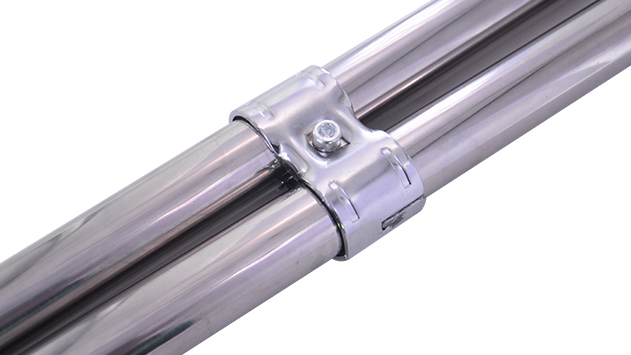
Parallel lean pipe joint used for 2 pcs 28MM lean pipe connection in parallel direction to enhance frame structure, usually for heavy payload requirement for workbench. flow rack, hand trolley.
1. Introduction: The Quiet Revolution of Modular Production
Walk into any modern factory, warehouse, or assembly line today, and you'll likely notice a shift. Gone are the days of rigid, one-size-fits-all production setups—fixed workbenches bolted to the floor, material racks that can't be reconfigured, and conveyor systems that require a team of engineers to modify. Instead, you'll find flexible, adaptable spaces where workstations evolve with demand, material flows adjust to new products, and every component feels like a piece of a giant, ever-changing puzzle. This is the world of modular production systems, and at their core lies a humble yet powerful component: the parallel lean pipe joint chrome.
Modular systems have transformed manufacturing by prioritizing flexibility, efficiency, and cost-effectiveness. Unlike traditional fixed infrastructure, these systems use interchangeable parts—think pipes, joints, and accessories—that can be assembled, disassembled, and reconfigured in hours, not weeks. Whether a factory needs to scale up production, introduce a new product line, or rearrange workflows for better ergonomics, modular systems make it possible without massive overhauls. And while much attention is paid to flashier elements like aluminum profiles or high-tech conveyor belts, it's the small, unassuming parts that hold everything together. Among these, the parallel lean pipe joint chrome stands out as a critical link, enabling the stability and adaptability that make modular systems so valuable.
2. Understanding Modular Systems: Beyond the Surface
To appreciate the role of the parallel lean pipe joint chrome, it helps to first understand how modular production systems work. Imagine building with Lego blocks—each piece is simple on its own, but combined in different ways, they create complex structures. Modular systems operate on the same principle, using basic components like lean pipes, aluminum profiles, roller tracks, and joints to build everything from workbenches and flow racks to material trolleys and conveyor systems.
At the heart of this system are the pipes and profiles. These can be made of steel, aluminum, or even stainless steel, depending on the application. Aluminum profiles, for example, are lightweight yet strong, making them ideal for workbenches that need to be moved occasionally. Lean pipes, often coated in plastic or chrome, are durable and resistant to wear, perfect for heavy-duty use in factories. But pipes alone are useless without a way to connect them. That's where joints come in. Joints are the connectors that hold pipes together at angles, allowing the creation of frames, shelves, and supports. And among the many types of joints—fixed, rotating, crossing—parallel joints are especially important. They're designed to connect two pipes side by side, creating stable, parallel structures that form the backbone of workbenches, racks, and other horizontal surfaces.
Take a lean pipe workbench, for instance. A typical workbench might consist of four vertical pipes as legs, connected by horizontal pipes at the top and bottom to form a frame. To add a shelf halfway up, you'd need parallel joints to connect two horizontal pipes across the frame—one on the left, one on the right—ensuring the shelf stays level and can support tools or materials. Without reliable parallel joints, that shelf might wobble, sag, or even collapse under weight. In short, parallel joints are the glue that turns individual pipes into functional, robust structures.
3. The Unsung Hero: Parallel Lean Pipe Joint Chrome
Now, let's zoom in on the star of the show: the parallel lean pipe joint chrome. At first glance, it might look like just another metal connector, but its design, materials, and finish make it a standout choice for modular systems. Let's break down what makes it unique.
Design and Material: Built for Stability
Parallel lean pipe joint chrome is engineered to connect two pipes in a side-by-side (parallel) configuration. Its shape typically features two circular openings—sized to fit standard lean pipes (often 28mm or 30mm in diameter)—connected by a sturdy metal bridge. This bridge distributes weight evenly across both pipes, preventing stress concentration and ensuring the joint can handle heavy loads. Most parallel joints are made from high-quality steel, chosen for its strength and durability. Steel can withstand the daily wear and tear of factory environments, from accidental bumps with forklifts to the constant vibration of machinery.
Chrome Finish: More Than Just Shiny
The "chrome" in the name isn't just for aesthetics. Chrome plating involves coating the steel joint with a thin layer of chromium, a process that offers two key benefits: corrosion resistance and reduced friction. In factories, where moisture, oils, and chemicals are common, uncoated steel joints would rust over time, weakening the connection and compromising safety. Chrome acts as a barrier, protecting the steel from rust and extending the joint's lifespan. Additionally, the smooth chrome surface reduces friction when adjusting or repositioning pipes, making it easier to disassemble and reconfigure structures— a must for modular systems that need to adapt quickly.
Key Features: Flexibility Meets Strength
Beyond its basic design, the parallel lean pipe joint chrome boasts features that make it indispensable in modular systems:
- Adjustable Tightness: Most parallel joints use set screws or bolts to secure pipes. This allows users to tighten or loosen the joint as needed—tightening for stability during use, loosening to reposition pipes during reconfiguration.
- Compatibility: They're designed to work with standard lean pipes, aluminum profiles, and even roller track connectors, making them versatile across different modular setups.
- Low Maintenance: Chrome plating resists scratches and stains, so joints stay functional with minimal upkeep. A quick wipe with a cloth is usually enough to keep them clean.

4. Applications in Action: How Parallel Chrome Joints Power Real-World Systems
To truly grasp the impact of parallel lean pipe joint chrome, let's look at how it's used in three common modular setups: lean pipe workbenches, flow racks, and roller tracks. Each application highlights a different strength of the joint, from stability to adaptability.
Lean Pipe Workbenches: The Foundation of Productivity
A lean pipe workbench is the workhorse of many assembly lines. It's where operators assemble products, test components, or pack goods—so it needs to be sturdy, adjustable, and customizable. Parallel chrome joints play a key role here. Consider a workbench used in electronics manufacturing, where operators need space for tools, circuit boards, and testing equipment. The frame of the workbench is built with vertical pipes, but the horizontal supports (which hold the tabletop and any lower shelves) rely on parallel joints.
For example, the lower shelf—used to store toolboxes or spare parts—might be supported by two parallel pipes running along the front and back of the workbench legs. Parallel chrome joints connect these pipes to the legs, ensuring the shelf stays level even when loaded with heavy tools. If the team needs to add a second shelf later, they can simply loosen the set screws on the existing joints, slide new pipes into place, and secure them with additional parallel joints. No welding, no drilling—just quick adjustments. The chrome finish ensures that even if oil or solder splatters onto the joints, they won't rust, keeping the workbench safe and functional for years.
Flow Racks: Keeping Materials Moving
Flow racks are another modular staple, designed to move materials from one point to another using gravity. They're common in warehouses and factories where items need to be picked, sorted, or transported efficiently—think boxes of components feeding an assembly line or finished products moving to packaging. A typical flow rack has multiple levels, each fitted with roller tracks that allow materials to glide smoothly from the back (where items are loaded) to the front (where they're unloaded).
Parallel lean pipe joint chrome is critical here for maintaining alignment. Each level of the flow rack is supported by horizontal beams, which are connected to the rack's vertical posts using parallel joints. These joints ensure the beams are perfectly parallel, so the roller track (which sits on top of the beams) doesn't slope unevenly. If the beams were misaligned, materials might get stuck or slide too quickly, causing jams or damage. The chrome finish also helps here: roller tracks rely on smooth movement, and any rust or debris on the joints could transfer to the tracks, increasing friction. With chrome, the joints stay clean and smooth, ensuring materials flow consistently.
Roller Tracks: Seamless Integration with Conveyors
Roller tracks are often used in conjunction with conveyors to create extended material flow systems. For example, a conveyor might carry products to the end of a line, where they're transferred onto a roller track that feeds into a packing station. To connect the conveyor to the roller track, you need a stable frame that keeps both systems aligned. Parallel chrome joints are ideal for this, as they can connect the pipes of the conveyor frame to the roller track supports, ensuring a smooth transition.
Imagine a food processing plant where packages of snacks move from a filling machine to a sealing machine via a roller track. The track is supported by a frame made of lean pipes, with parallel joints holding the horizontal supports in place. If the frame wobbles, the packages might tip over, causing spills and delays. But with parallel chrome joints—strong, corrosion-resistant, and easy to adjust—the frame stays stable, even when handling hundreds of packages per hour. The joints also make it easy to modify the track's length or angle if the production line is reconfigured, saving time and money compared to fixed conveyor systems.
5. Comparing with Other Joints: Why Chrome Parallel Stands Out
There are many types of joints used in modular systems—fixed angle joints, rotating joints, crossing joints—but parallel lean pipe joint chrome offers unique advantages. Let's compare it to two common alternatives to see why it's often the top choice for parallel connections.
As the table shows, chrome parallel joints outperform uncoated steel in durability and maintenance, and plastic in load capacity and longevity. For factories and warehouses that rely on modular systems daily, these advantages translate to less downtime, lower replacement costs, and safer working environments.
6. Real-World Impact: A Hypothetical Case Study
To illustrate the difference parallel lean pipe joint chrome can make, let's consider a hypothetical scenario. Imagine a small electronics manufacturer with 50 employees. The company recently expanded its product line, which meant its old fixed workbenches and material racks were no longer sufficient. Workers were wasting time walking to storage areas, and the assembly line couldn't be adjusted to fit the new, larger components.
The manufacturer decided to switch to a modular system, investing in lean pipe workbenches, flow racks, and roller tracks—all using parallel lean pipe joint chrome. Within a week, the factory was reconfigured: workbenches were adjusted to ergonomic heights, flow racks were added to bring components directly to the line, and roller tracks connected the assembly area to packaging. The results were striking:
Case Study: Modular Transformation with Parallel Chrome Joints
- Productivity Up by 25%: Workers spent less time moving materials, and the adjustable workbenches reduced fatigue, leading to faster assembly times.
- Downtime Reduced by 40%: The durable chrome joints required no maintenance, and reconfiguring the line for new products took hours instead of days.
- Safety Incidents Down by 30%: Stable workbenches and flow racks reduced trips and falls, while the corrosion-resistant joints prevented rust-related failures.
While this is a hypothetical example, it reflects the real benefits modular systems—powered by components like parallel lean pipe joint chrome—can bring to manufacturing operations of all sizes.
7. Choosing the Right Supplier: What to Look For
Not all parallel lean pipe joint chrome products are created equal. To ensure you're getting a quality product that will stand the test of time, look for suppliers who prioritize the following:
- Material Quality: Ask about the grade of steel used (e.g., Q235 or Q345, which are high-strength) and the thickness of the chrome plating (at least 0.01mm for good corrosion resistance).
- Testing Standards: Reputable suppliers will test joints for load capacity, durability, and corrosion resistance. Look for certifications like ISO 9001, which indicates adherence to quality management standards.
- Compatibility: Ensure the joints fit standard lean pipe sizes (28mm, 30mm) and work with other components like aluminum profiles or roller track connectors.
- Customer Support: A good supplier should offer technical assistance, helping you design your modular system and troubleshoot issues if they arise.
8. Conclusion: The Future of Modular Production
Modular production systems are here to stay, driven by the need for flexibility, efficiency, and sustainability in manufacturing. As these systems evolve, components like parallel lean pipe joint chrome will only grow in importance. They may not be the most glamorous part of the factory floor, but they're the backbone that holds everything together—enabling the adaptability that allows businesses to thrive in a fast-changing world.
Whether you're building a lean pipe workbench, a flow rack, or a roller track system, choosing the right joints matters. Parallel lean pipe joint chrome offers the perfect balance of strength, durability, and flexibility, making it an essential choice for any modular setup. So the next time you walk through a factory and admire the seamless flow of materials or the adjustable workstations, take a moment to appreciate the small, shiny connectors that make it all possible. They're not just joints—they're the unsung heroes of modern manufacturing.