- Company Articles
- Products and Technology
- Product knowledge
- The Role of Parallel Lean Pipe Joint One Side Rotatory in Sustainable Lean Manufacturing

The Role of Parallel Lean Pipe Joint One Side Rotatory in Sustainable Lean Manufacturing
Related Product
Parallel Lean Pipe Joint One Side Rotatory
Parallel rotatory lean pipe joint, for 2 pcs 28mm pipe conenction in parallel direction with one side rotatory function.
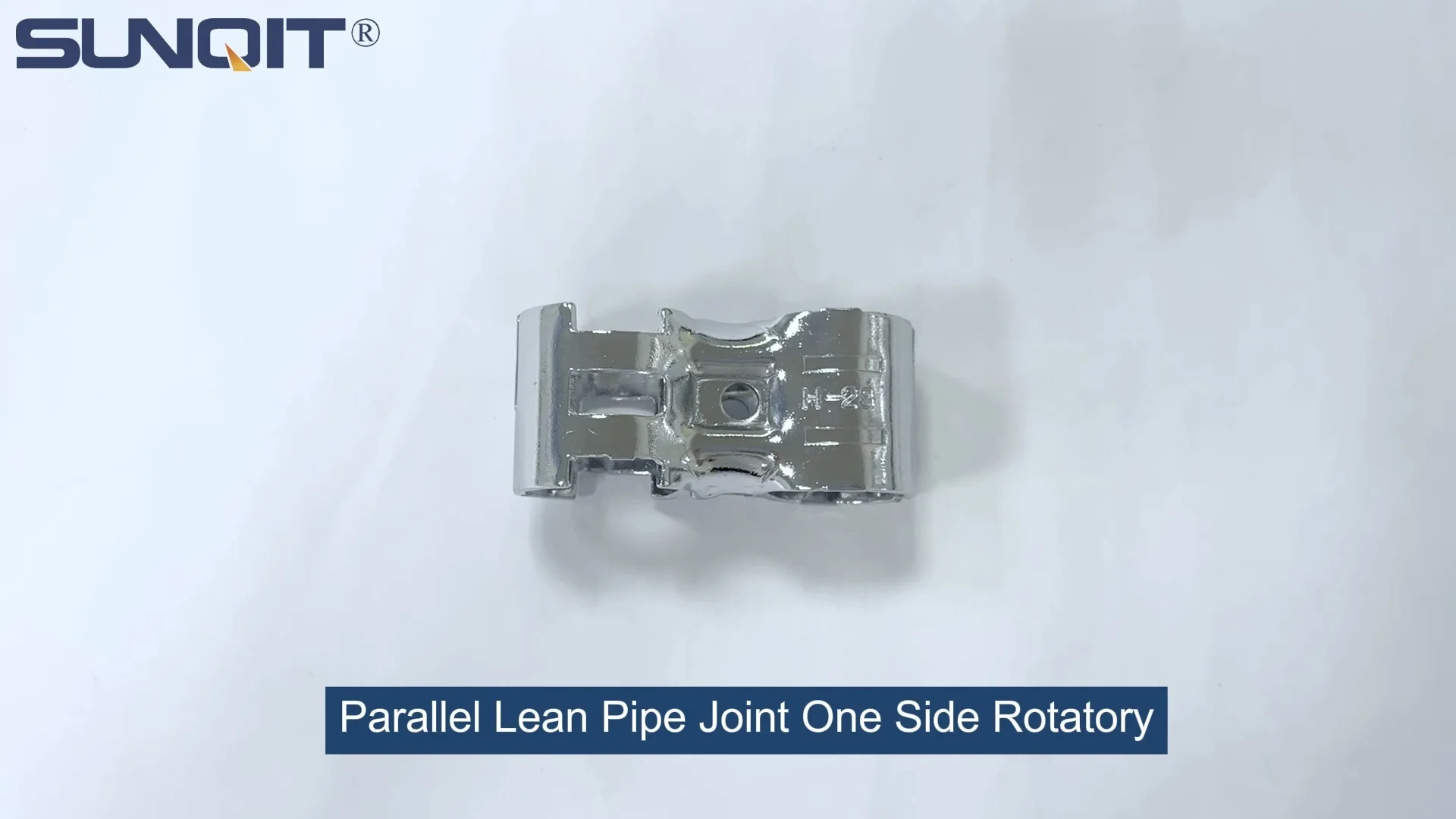
In today's fast-paced manufacturing landscape, where efficiency and environmental responsibility are no longer optional but essential, the quest for smarter, more sustainable solutions has become a driving force. Lean manufacturing, with its core principle of eliminating waste while maximizing value, has long been a cornerstone of operational excellence. But as industries worldwide pivot toward sustainability—balancing profitability with planetary health—the tools and components that power lean systems are evolving too. Among these innovations, the Parallel Lean Pipe Joint One Side Rotatory stands out as a quiet yet transformative player, bridging the gap between lean efficiency and sustainable practice. This article explores how this unassuming component is reshaping production lines, reducing environmental impact, and empowering businesses to build lean systems that stand the test of time.
Lean Manufacturing and Sustainability: A Symbiotic Relationship
Before diving into the specifics of the Parallel Lean Pipe Joint One Side Rotatory, it's critical to understand why the intersection of lean manufacturing and sustainability matters. Lean, at its heart, is about flow —streamlining processes to minimize waste (or "muda," as defined by Toyota's lean framework) in all its forms: overproduction, waiting, transportation, defects, inventory, motion, and overprocessing. Sustainability, meanwhile, extends this philosophy to the planet and people, focusing on reducing environmental harm, conserving resources, and ensuring long-term economic viability.
The two concepts are inherently linked. A lean system that cuts waste also reduces resource consumption; a sustainable approach ensures that efficiency gains don't come at the cost of future generations. For manufacturers, this means rethinking not just workflows, but the physical tools that enable those workflows. Rigid, one-size-fits-all equipment, for example, often leads to waste when production needs change—think of a fixed workbench that becomes obsolete after a product redesign, ending up in a landfill. Modular, adaptable components, on the other hand, align with both lean and sustainable goals: they reduce waste by extending product lifecycles, lower costs by enabling reconfiguration, and minimize environmental impact by prioritizing reuse over replacement.
Modular Components: The Backbone of Modern Lean Systems
At the heart of any agile lean system lies modularity. Modular components—like lean pipes , joints, workbenches, and flow racks—are designed to be easily assembled, disassembled, and reconfigured. This flexibility is game-changing for manufacturers facing shifting consumer demands, shorter product lifecycles, and the need to scale operations up or down quickly. Unlike traditional welded or bolted structures, which are time-consuming to modify and often irreversible, modular systems act like building blocks: they adapt to new needs without requiring a complete overhaul.
Consider a typical production line. A few years ago, it might have relied on custom-built conveyor systems or fixed material racks. Today, forward-thinking plants use lean pipe workbenches and flow racks constructed from lightweight aluminum or steel pipes and joints. These systems can be adjusted in hours (not days) to accommodate a new product size, reorganized to optimize workflow, or repurposed entirely for a different production line. This adaptability isn't just efficient—it's sustainable. By extending the lifespan of equipment, modular components reduce the need for raw materials, energy, and transportation associated with manufacturing new tools.

Meet the Parallel Lean Pipe Joint One Side Rotatory: A Closer Look
Now, let's zoom in on the star of the show: the Parallel Lean Pipe Joint One Side Rotatory. At first glance, it might seem like just another hardware piece—a small, unassuming connector used to join lean pipes. But its design holds the key to unlocking new levels of flexibility and sustainability in lean systems. Let's break down its features and why they matter.
Design and Functionality
The Parallel Lean Pipe Joint One Side Rotatory is engineered for one primary purpose: to enable controlled rotation between two parallel lean pipes while maintaining structural stability. Unlike fixed joints, which lock pipes into a rigid angle, this joint allows one side to rotate up to 180 degrees (depending on the model), while the other side remains fixed. This rotation is smooth and precise, often achieved through a combination of ball bearings or friction-reducing materials, ensuring that adjustments can be made quickly without tools—critical for minimizing downtime during reconfigurations.
Most models are crafted from durable materials like aluminum or high-grade steel, chosen for their strength-to-weight ratio and resistance to corrosion. Aluminum, in particular, is a popular choice, aligning with the growing use of aluminum profiles in modular systems. Aluminum is not only lightweight (reducing energy use during transportation and installation) but also 100% recyclable, making it a sustainability standout.
Compatibility and Versatility
What truly sets this joint apart is its compatibility with existing lean system components. It works seamlessly with standard lean pipes (often 28mm or 30mm in diameter), aluminum profiles, and accessories like roller tracks, casters, and workbench surfaces. This means manufacturers don't have to replace their entire setup to adopt it—they can integrate it into their current lean system , extending the life of their investment and reducing waste from premature replacements.
Common applications include: adjusting the angle of flow rack shelves to optimize material flow, repositioning workbench accessories (like tool holders or monitor arms) for ergonomic worker comfort, or modifying conveyor paths to accommodate new product dimensions. For example, in a electronics assembly line, a flow rack using these joints can quickly tilt to feed components to workers at the optimal angle, reducing motion waste (a key lean principle) and fatigue.

Sustainability Benefits: Beyond Efficiency
While the Parallel Lean Pipe Joint One Side Rotatory enhances lean efficiency by enabling faster reconfigurations, its sustainability benefits are equally compelling. Let's explore how it contributes to a greener, more responsible manufacturing process.
Reduced Material Waste
Traditional fixed joints often lead to "overbuilding." When a production line needs to change, rigid structures may require cutting pipes, welding new connections, or replacing entire sections—all of which generate scrap material. The rotatory joint eliminates this by allowing non-destructive reconfiguration. Pipes and joints can be reused repeatedly, reducing the need for new raw materials. A study by the Lean Enterprise Institute found that modular systems with adjustable components like this joint can cut material waste by up to 35% compared to fixed setups.
Energy and Carbon Footprint Reduction
The lightweight design of aluminum-based rotatory joints (and their compatibility with aluminum profiles) also reduces energy consumption. Lighter components require less fuel to transport, and their ease of installation means fewer labor hours and lower energy use on the factory floor. Additionally, by extending the lifespan of lean systems, manufacturers delay the need for new production equipment—each new workbench or flow rack requires energy to mine raw materials, manufacture parts, and assemble, so prolonging the life of existing systems directly cuts carbon emissions.
Circular Economy Alignment
The rotatory joint embodies the principles of a circular economy, where products are designed for reuse, repair, and recycling. At the end of its lifespan, an aluminum joint can be melted down and repurposed into new components with minimal loss of quality. This stands in contrast to plastic joints, which degrade over time and often end up in landfills, or welded steel joints, which are difficult to disassemble and recycle.

Real-World Impact: Case Study in Action
To understand the practical value of the Parallel Lean Pipe Joint One Side Rotatory, let's look at a hypothetical (but representative) case study. Consider a mid-sized automotive parts manufacturer struggling with two challenges: frequent product design changes (requiring constant reconfiguration of their assembly line) and mounting pressure to reduce their carbon footprint.
Before: Rigid Systems, High Waste
Prior to adopting rotatory joints, the manufacturer relied on fixed steel joints and welded frames for their workbenches and flow racks. When a new part design required adjusting the height or angle of a flow rack, the team had to cut and reweld steel pipes—a process that took 4-6 hours per rack and generated significant metal scrap. Over a year, this led to: 1) 200+ hours of downtime for reconfigurations, 2) 500+ kg of steel waste, and 3) increased energy use from welding equipment and transporting new materials.
After: Modular Adaptation with Rotatory Joints
The manufacturer switched to a modular system using aluminum lean pipes, aluminum profiles, and Parallel Lean Pipe Joint One Side Rotatory. The results were striking: Reconfiguring a flow rack now took 30 minutes (not hours), as workers simply rotated the joints to adjust shelf angles. Scrap waste dropped by 80%, as pipes and joints were reused instead of cut. Energy use from welding decreased by 65%, and the lighter aluminum setup reduced transportation costs for new components by 40%. Perhaps most importantly, worker satisfaction improved—ergonomic adjustments (like tilting work surfaces) reduced fatigue, aligning with the "social sustainability" pillar of responsible manufacturing.
Comparing Rotatory Joints to Traditional Alternatives
To highlight the advantages of the Parallel Lean Pipe Joint One Side Rotatory, let's compare it to two common alternatives: fixed rigid joints and universal swivel joints. The table below summarizes key factors for manufacturers evaluating sustainability and efficiency.
| Factor | Parallel Lean Pipe Joint One Side Rotatory | Fixed Rigid Joint | Universal Swivel Joint |
|---|---|---|---|
| Flexibility | High (180° rotation on one side; maintains parallel alignment) | Low (fixed angle; no rotation) | High (360° rotation on both sides) |
| Reusability | High (easily disassembled and repurposed) | Low (often requires cutting/welding to reconfigure) | Medium (may require tools for adjustment; higher wear on moving parts) |
| Material Waste | Low (modular; minimal scrap during reconfiguration) | High (scrap from cutting/welding) | Medium (some waste from wear and tear on swivel components) |
| Environmental Impact | Low (aluminum/steel construction; recyclable) | Medium (steel-heavy; higher transportation energy) | Medium (often includes plastic components; lower recyclability) |
| Cost Over Time | Low (reduced downtime and replacement costs) | High (frequent rework and material replacement) | Medium (higher initial cost; moderate maintenance) |
The table reveals a clear pattern: while universal swivel joints offer flexibility, they often come with higher maintenance and lower recyclability. Fixed joints, though cheap upfront, lead to long-term waste and inefficiency. The Parallel Lean Pipe Joint One Side Rotatory strikes a balance, offering targeted flexibility, minimal waste, and strong sustainability credentials—making it the ideal choice for lean systems focused on both efficiency and the planet.
Future Trends: The Role of Suppliers in Driving Sustainability
As demand for sustainable lean solutions grows, the role of suppliers becomes increasingly critical. A lean pipe supplier or aluminum profile supplier that prioritizes eco-friendly materials, energy-efficient manufacturing, and modular design can empower manufacturers to build greener systems. Many leading suppliers now offer "cradle-to-cradle" programs, where old joints and pipes are collected, recycled, and repurposed into new components—closing the loop on material waste.
Looking ahead, we can expect to see even more innovation in rotatory joint design, such as integrated sensors to monitor wear and predict maintenance needs (reducing unexpected downtime) or bio-based lubricants for smoother rotation (further cutting environmental impact). The goal? To create lean systems that are not just efficient, but intelligently sustainable—adapting to both production needs and planetary limits.
Conclusion: Small Joint, Big Impact
The Parallel Lean Pipe Joint One Side Rotatory may be small in size, but its impact on sustainable lean manufacturing is profound. By enabling quick, tool-free reconfigurations, reducing material waste, and aligning with recyclable materials like aluminum, it embodies the future of manufacturing: systems that are efficient, adaptable, and kind to the planet. In a world where businesses are judged not just by their profits, but by their purpose, components like this are more than tools—they're building blocks for a leaner, greener tomorrow.
For manufacturers ready to embrace this future, the message is clear: sustainability doesn't have to come at the cost of efficiency. With the right components—starting with something as simple as a rotatory joint—you can build a lean system that works for your bottom line, your team, and the world we all share.