- Company Articles
- Products and Technology
- Product knowledge
- The Role of Parallel Lean Pipe Joints in Achieving Lean Manufacturing Goals

The Role of Parallel Lean Pipe Joints in Achieving Lean Manufacturing Goals
Related Product
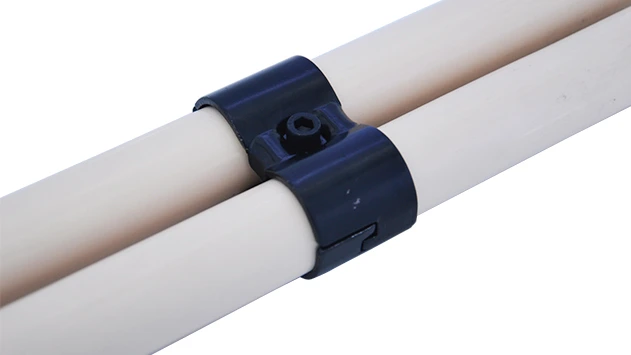
Parallel Lean Pipe Joint
Parallel lean pipe joint used for 2 pcs 28MM lean pipe connection in parallel direction to enhance frame structure, usually for heavy payload requirement for workbench. flow rack, hand trolley.
In the fast-paced world of manufacturing, where efficiency and adaptability can make or break a business, lean manufacturing has emerged as more than just a buzzword—it's a philosophy that drives operational excellence. At its core, lean manufacturing is about eliminating waste, streamlining processes, and creating value for customers. But how do businesses turn these ideals into tangible results on the factory floor? The answer often lies in the tools and components that form the backbone of their production systems. Among these, parallel lean pipe joints stand out as unsung heroes, quietly enabling the flexibility and efficiency that lean manufacturing demands. In this article, we'll explore how these simple yet innovative components play a pivotal role in achieving lean goals, from reducing waste to enhancing workflow, and why they've become indispensable for modern manufacturers.
Understanding Lean Manufacturing: The Pursuit of Waste Reduction
Before diving into the specifics of parallel lean pipe joints, it's essential to ground ourselves in what lean manufacturing truly entails. Coined by Toyota in the mid-20th century, the Toyota Production System (TPS) laid the foundation for lean principles, which have since been adopted globally across industries. At its heart, lean is guided by two primary pillars: jidoka (automation with a human touch) and just-in-time (JIT) production, which ensures materials arrive exactly when needed, eliminating overstock and storage waste.
Waste, or muda in Japanese, is the enemy of lean. Toyota identified seven key types of waste: overproduction, waiting, transportation, overprocessing, inventory, motion, and defects. To combat these, lean systems prioritize simplicity, flexibility, and continuous improvement. A production line that can adapt to changing demand, minimize unnecessary movement, and reduce setup times isn't just efficient—it's resilient. This is where modular components like lean pipe and parallel lean pipe joints come into play, offering a cost-effective way to build and rebuild production environments on demand.
Parallel Lean Pipe Joints: The Building Blocks of Flexibility
At first glance, a parallel lean pipe joint might seem like a humble piece of hardware—a small, often metallic connector designed to join two lean pipes in parallel. But its simplicity is deceptive. These joints are engineered to provide stability while allowing for quick assembly and disassembly, making them ideal for creating modular structures like workbenches, flow racks, and material handling systems. Unlike traditional welded or bolted joints, which are fixed and time-consuming to modify, parallel lean pipe joints enable workers to adjust layouts in minutes, not days.
Lean pipe, also known as "flexible pipe" or "kitchen pipe" in some regions, is typically made of steel with a plastic coating, though aluminum and stainless steel variants are also common. When paired with parallel lean pipe joints, these pipes become the backbone of customizable production systems. The joints themselves come in various designs—some fixed, others with rotational capabilities—but parallel joints are specifically designed to keep pipes aligned side by side, creating stable frameworks for everything from work surfaces to storage racks.
| Traditional Manufacturing Setups | Lean Setups with Parallel Lean Pipe Joints |
|---|---|
| Fixed, welded structures | Modular, tool-free assembly |
| High cost to reconfigure | Low cost to adjust layouts |
| Long lead times for changes | Changes completed in hours/days |
| Prone to obsolescence with product changes | Adaptable to new products/processes |
| Excess inventory of specialized tools | Shared, reusable components |

Key Features of Parallel Lean Pipe Joints: Why They Matter for Lean
To understand why parallel lean pipe joints are so valuable in lean manufacturing, let's break down their core features and how each contributes to waste reduction and efficiency:
1. Tool-Free Assembly and Disassembly
Most parallel lean pipe joints are designed to be tightened by hand or with a simple hex key, eliminating the need for welding torches, drills, or specialized tools. This not only speeds up the initial setup of workbenches or flow racks but also makes it easy for production teams to reconfigure layouts when demand shifts. For example, if a factory needs to switch from assembling smartphones to tablets, workers can quickly adjust the height of a workbench or the spacing of a flow rack using parallel joints—no need to call in maintenance or wait for external contractors. This reduces waiting waste and keeps production lines running smoothly.
2. Compatibility with Other Lean Components
Parallel lean pipe joints don't work in isolation. They're part of a broader ecosystem of lean accessories, including roller tracks, casters, and workbench surfaces. For instance, a flow rack built with lean pipe and parallel joints can be outfitted with roller tracks to allow materials to glide from one workstation to the next, minimizing transportation waste . Similarly, adding casters to a lean pipe trolley (assembled with parallel joints) creates a mobile material handling system that can be moved directly to where it's needed, reducing unnecessary motion for workers.
This compatibility is key to lean's "just-in-time" philosophy. When components like roller tracks and parallel joints work seamlessly together, materials flow through the production line without bottlenecks, ensuring that each workstation has exactly what it needs, exactly when it needs it.
3. Durability Without Overcomplication
While parallel lean pipe joints prioritize flexibility, they don't sacrifice strength. Made from materials like zinc-plated steel or aluminum, these joints can support significant weight, making them suitable for heavy-duty applications—think automotive parts or large electronics. This durability means that even as production lines are reconfigured, the underlying framework remains reliable, reducing the risk of equipment failure and the defect waste that comes with it.
Unlike complex mechanical systems that require constant maintenance, parallel lean pipe joints are low-maintenance. Their simple design—often just a clamp or bolt mechanism—minimizes the risk of breakdowns, keeping production lines operational and reducing downtime.
4. Cost-Effectiveness Over the Long Term
At first glance, investing in lean pipe and parallel joints might seem like an added expense compared to traditional fixed structures. But the long-term savings tell a different story. Traditional setups require significant upfront investment in custom welding or fabrication, and any changes down the line mean additional costs. In contrast, lean systems with parallel joints are built using standardized components that can be reused repeatedly. A workbench that's no longer needed for one product can be disassembled, and its pipes and joints repurposed to build a flow rack for another product. This reusability reduces inventory waste (no need to stockpile new materials for every change) and lowers the total cost of ownership over time.

Integrating Parallel Lean Pipe Joints with Other Lean Components
To truly appreciate the role of parallel lean pipe joints, it's helpful to see how they work in harmony with other key lean components. Let's explore a few common pairings and how they enhance lean manufacturing goals:
Workbenches: The Heart of the Production Line
Workbenches are where the magic happens in manufacturing—where components are assembled, inspected, and prepared for the next stage. A well-designed workbench minimizes motion waste, keeps tools within easy reach, and adapts to the needs of the operator. Parallel lean pipe joints are instrumental in creating such workbenches. By connecting lean pipes in parallel, workers can build sturdy frames that support various surfaces, from wooden tops to anti-static ESD workbench surfaces (critical for electronics manufacturing). The joints allow for easy adjustment of height, width, and depth, ensuring that the workbench fits the operator, not the other way around. This ergonomic customization reduces fatigue and errors, directly contributing to lower defect waste.
For example, a pharmaceutical packaging line might use a workbench built with parallel lean pipe joints to support a conveyor belt for bottles, with adjustable shelving above for labeling tools. If the bottle size changes, the height of the conveyor can be adjusted in minutes by loosening the parallel joints, repositioning the pipes, and retightening—no need for a new workbench.
Flow Racks and Roller Tracks: Streamlining Material Flow
Flow racks are designed to optimize the movement of materials from storage to production, following the lean principle of "first in, first out" (FIFO) to reduce inventory waste. These racks rely on gravity or roller tracks to move items smoothly, and parallel lean pipe joints provide the stable framework needed to support these systems. By aligning lean pipes in parallel, the joints create level, sturdy sides for the racks, ensuring that roller tracks are evenly spaced and materials glide without jamming. This consistency in material flow reduces waiting waste, as workers never have to pause production to retrieve stuck or misaligned items.
Roller tracks themselves often connect to the flow rack framework using specialized brackets, many of which are compatible with parallel lean pipe joints. This modularity means that roller tracks can be added, removed, or repositioned as needed—for example, to accommodate larger boxes during a seasonal rush or narrower components for a new product line.
Trolleys and Mobile Carts: On-Demand Material Delivery
In lean manufacturing, moving materials efficiently is critical to reducing transportation waste. Trolleys and mobile carts, built with lean pipe and parallel joints, enable materials to be delivered directly to the point of use, eliminating unnecessary trips to central storage. The parallel joints ensure that the trolley frames are rigid yet lightweight, making them easy to maneuver even when loaded. Adding casters (another common lean accessory) to these trolleys further enhances mobility, allowing workers to transport materials with minimal effort.
Consider a automotive assembly line: instead of workers walking to a distant storage area to fetch bolts, a mobile trolley—built with parallel lean pipe joints to support bins of various sizes—can be stationed at each workstation, stocked with exactly the number of bolts needed for the shift. This not only saves time but also reduces the risk of overstocking (inventory waste) and understocking (waiting waste).
Real-World Impact: A Case Study in Lean Transformation
To put the theory into practice, let's look at a hypothetical (but realistic) case study of a mid-sized electronics manufacturer that adopted lean systems using parallel lean pipe joints. Prior to the transformation, the company faced several common lean challenges: long setup times for new product lines, excess inventory of specialized tools, and frequent bottlenecks in material flow.
The Problem: The company produced a range of small electronic devices, from smartwatches to Bluetooth speakers. Each product required a unique assembly line layout, and reconfiguring the fixed, welded workbenches and storage racks took 2–3 weeks, leading to lost production time. Inventory waste was also an issue: the factory stored dozens of specialized fixtures, many of which were rarely used but took up valuable space.
The Solution: The company invested in a lean system built around lean pipe, parallel lean pipe joints, roller tracks, and modular workbenches. Over a weekend, the old fixed structures were removed, and workers—trained in basic lean principles—began assembling new workbenches and flow racks using the new components. The parallel joints allowed them to quickly adjust the height and width of work surfaces, while roller tracks were integrated into flow racks to move components from storage to assembly stations.
The Results: Within the first month, setup times for new product lines dropped from weeks to days. For example, switching from smartwatch to speaker assembly now took just 24 hours, as workers simply reconfigured the existing lean pipe workbenches using parallel joints and adjusted the roller tracks to accommodate larger speaker components. Inventory waste decreased by 30% as specialized fixtures were replaced with reusable lean pipe frameworks. Material flow bottlenecks were eliminated, as roller tracks and mobile trolleys ensured components arrived exactly when needed, reducing waiting waste by 40%.
Perhaps most notably, employee satisfaction improved. Workers reported less fatigue, thanks to ergonomically adjustable workbenches, and took pride in being able to adapt their workspace to meet new challenges. This cultural shift toward continuous improvement—enabled by the flexibility of parallel lean pipe joints—became a cornerstone of the company's long-term success.
Overcoming Challenges: Common Hurdles and How to Address Them
While parallel lean pipe joints offer numerous benefits, adopting them isn't without challenges. Here are a few common hurdles and strategies to mitigate them:
Perceived Upfront Cost
Some manufacturers hesitate to invest in lean components, viewing them as more expensive than traditional welded structures. To address this, it's important to focus on the total cost of ownership. While lean pipe and joints may have a higher initial price tag, their reusability and low maintenance costs often lead to ROI within 6–12 months, especially for facilities with frequent product changes.
Resistance to Change
Workers accustomed to fixed setups may be wary of modular systems, fearing instability or increased workload. Training is key here. By involving employees in the design and assembly process, manufacturers can build buy-in. Many workers appreciate the autonomy to adjust their workspaces, and hands-on training with parallel joints (which are intuitive to use) quickly dispels fears of complexity.
Ensuring Compatibility
With so many lean pipe suppliers and joint designs on the market, ensuring compatibility can be a challenge. To avoid issues, manufacturers should partner with reputable suppliers that offer a full range of components—from lean pipe and parallel joints to roller tracks and casters. Standardizing on a single supplier or system (e.g., metric vs. imperial sizes) simplifies inventory management and ensures components work together seamlessly.
The Future of Lean Manufacturing: Where Parallel Lean Pipe Joints Fit In
As manufacturing evolves—driven by Industry 4.0, automation, and sustainability—parallel lean pipe joints are poised to play an even greater role. Here's how we can expect them to adapt:
Integration with Smart Manufacturing
Industry 4.0 emphasizes data-driven decision-making and connectivity. Future lean systems may incorporate sensors into parallel lean pipe joints to monitor factors like weight distribution, vibration, or usage patterns. For example, a flow rack equipped with smart joints could alert managers when material levels are low, triggering automatic restocking and further reducing inventory waste.
Sustainable Materials
Sustainability is increasingly a priority for manufacturers, and lean principles align closely with eco-friendly practices (reducing waste, reusing materials). Parallel lean pipe joints made from recycled aluminum or biodegradable plastics may become more common, reducing the environmental impact of production systems without sacrificing durability.
Advanced Design Tools
3D modeling and virtual reality (VR) tools are making it easier to design and test lean layouts before physical assembly. Manufacturers can use these tools to simulate how parallel lean pipe joints will perform in different configurations, optimizing workflows and reducing the need for trial-and-error adjustments on the factory floor.
Conclusion: Parallel Lean Pipe Joints—Small Components, Big Impact
In the world of lean manufacturing, success often hinges on the smallest details. Parallel lean pipe joints may not grab headlines, but their ability to enable flexibility, reduce waste, and streamline processes makes them indispensable tools for achieving lean goals. By connecting lean pipe into customizable frameworks, these joints transform static production lines into adaptive ecosystems that can keep pace with changing markets, customer demands, and technological advancements.
Whether used to build a simple workbench or a complex flow rack system, parallel lean pipe joints embody the lean philosophy: they do more with less, prioritize value over waste, and empower workers to take ownership of their workspace. As manufacturing continues to evolve, these unassuming components will remain at the heart of lean transformation—proving that sometimes, the most powerful solutions are the ones that fit seamlessly into the bigger picture.