- Company Articles
- Products and Technology
- Product knowledge
- The Role of Parallel Rotatory Lean Pipe Joints in Continuous Improvement

The Role of Parallel Rotatory Lean Pipe Joints in Continuous Improvement
Related Product
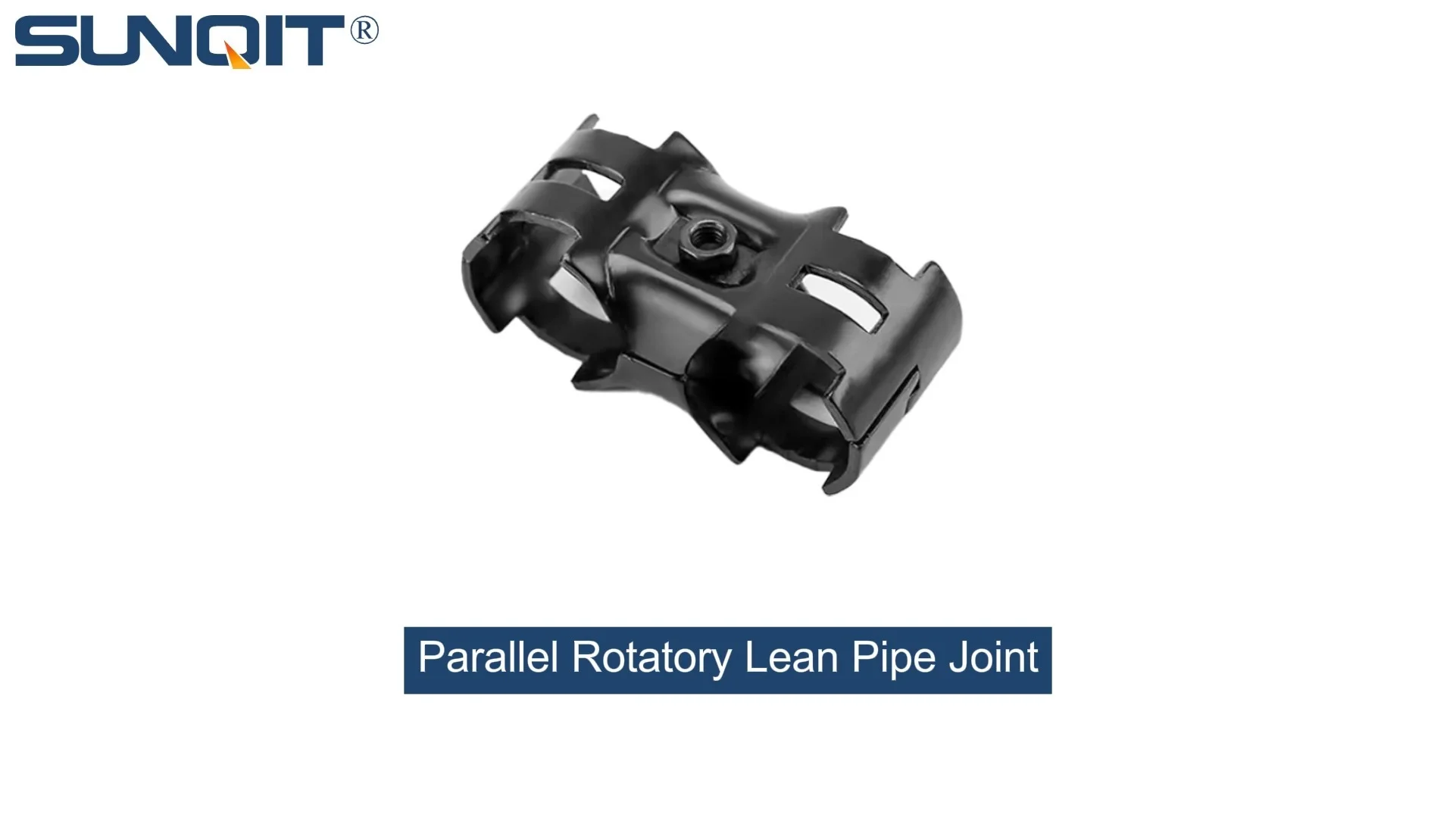
Parallel Rotatory Lean Pipe Joint
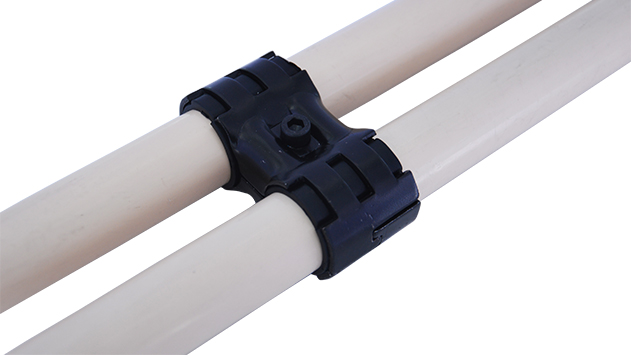
Parallel rotatory lean pipe joint, for 2 pcs pipe conenction in parallel direction with rotatory function.
Imagine standing on a bustling manufacturing floor where every second counts. A team of assemblers works diligently to meet a tight deadline, but their workbench feels "off"—the angle of the tool rack forces awkward reaches, and the material shelf is just a few inches too low, causing frequent bending. One worker mutters, "If we could just tilt this section a little…" but the thought fades. The workbench, built with fixed metal joints, hasn't changed in years. This scenario isn't just about discomfort; it's about waste—wasted motion, wasted time, and wasted potential. Now, picture that same floor with a different setup: a lean pipe workbench where joints rotate smoothly, allowing the team to adjust tool positions, shelf heights, and material flow paths in minutes. No tools, no waiting for maintenance, no downtime. This is the reality parallel rotatory lean pipe joints bring to life—a small component with a massive impact on continuous improvement.
1. Lean Manufacturing and the Need for Adaptive Systems
Lean manufacturing, at its core, is a philosophy of empowerment. It trusts workers to identify waste and solve problems—because who better to optimize a process than the people performing it daily? But empowerment requires agency, and agency requires tools that bend to human needs, not the other way around. Traditional production systems, with their welded frames and permanent fixtures, strip this agency away. They're built for stability, not change, and in today's fast-paced markets, stability often translates to stagnation.
Continuous improvement (kaizen) thrives on small, incremental changes. A worker notices that rotating a material bin 30 degrees reduces reach time by 5 seconds per cycle; another realizes that lowering a conveyor slightly cuts down on back strain. These tweaks add up to big gains over time—but only if the system lets them happen. This is where lean pipe systems revolutionized manufacturing. By using lightweight steel or aluminum pipes and modular joints, they made reconfiguration possible without welding or heavy tools. But early lean pipe joints had limitations: many were fixed at 90-degree angles or required manual loosening/tightening with wrenches, slowing down adjustments.
Parallel rotatory lean pipe joints emerged as the next evolution. Designed to connect pipes while allowing smooth, 360-degree rotation along a parallel axis, these joints turn "maybe tomorrow" into "right now." They're the bridge between a worker's insight and immediate action, turning lean pipe systems from "flexible" to "adaptable on demand."
2. What Are Parallel Rotatory Lean Pipe Joints?
At first glance, a parallel rotatory lean pipe joint might look similar to other lean pipe connectors—a small, often plastic or metal component with holes for inserting pipes. But its magic lies in the rotation mechanism. Unlike fixed joints (which lock pipes at static angles) or basic swivel joints (which rotate but lack precision), parallel rotatory joints allow two connected pipes to rotate parallel to each other while maintaining structural integrity. Think of it like a door hinge, but for pipes: smooth, controlled movement that stays in place once adjusted.
Most parallel rotatory joints are made from durable materials like reinforced nylon, aluminum, or stainless steel, depending on the application. They feature internal bearings or friction-based mechanisms that let workers rotate pipes by hand—no tools required—yet hold firm under the weight of tools, materials, or equipment. Some models even include locking levers for extra stability when adjustments are final. This combination of ease and reliability is what sets them apart.
2.1 How They Differ from Traditional Joints
To understand their value, let's compare parallel rotatory joints to two common alternatives: fixed 90-degree joints and basic swivel joints. The table below highlights key differences:
| Feature | Fixed 90-Degree Joints | Basic Swivel Joints | Parallel Rotatory Lean Pipe Joints |
|---|---|---|---|
| Adjustability | No rotation; fixed angle only | Limited rotation (often 180 degrees); no parallel alignment | 360-degree rotation; maintains parallel pipe alignment |
| Tool Requirement | Wrench or hex key needed for disassembly/reassembly | Often requires tools to tighten/loosen | Tool-free; hand-adjustable |
| Typical Application | Static structures (permanent racks, fixed workbenches) | Simple reconfigurations (tilting shelves, basic flow racks) | Dynamic environments (assembly lines, lean pipe workbenches, roller tracks) |
| Waste Reduction Impact | Low (no on-the-fly adjustments) | Moderate (some adjustments, but slow) | High (enables real-time kaizen by workers) |
Table 1: Comparison of joint types in lean manufacturing systems
3. Applications: From Workbenches to Roller Tracks
Parallel rotatory lean pipe joints aren't just theoretical—they shine in real-world applications, transforming how teams interact with their workspaces. Let's explore three key areas where they make the biggest difference:
3.1 Lean Pipe Workbenches: Customization at Your Fingertips
The workbench is the heart of any assembly operation, and one size rarely fits all. A technician assembling small electronics needs tools within arm's reach; a mechanic working on heavy machinery needs more clearance below. Parallel rotatory joints turn a single workbench into a chameleon. For example, a lean pipe workbench equipped with these joints can have tool hangers that rotate to face the worker, material shelves that tilt for easier access, and side extensions that swing out when needed and fold away when not. In a case study at a mid-sized automotive parts plant, workers using such workbenches reported a 15% reduction in "non-value-added motion" (reaching, bending, twisting)—saving over 20 minutes per shift per worker.
3.2 Flow Racks: Smoothing Material Flow with Adjustable Angles
Flow racks are critical for "first in, first out" (FIFO) material handling, ensuring components move smoothly from storage to assembly. But product sizes vary, and a flow rack optimized for small boxes may struggle with larger bins. Parallel rotatory joints let teams adjust the angle of roller tracks in seconds. Need steeper incline for heavier parts? Rotate the joints up. Lighter items sliding too fast? Tilt them down. This adaptability isn't just about efficiency—it prevents jams, reduces product damage, and cuts down on the time workers spend manually adjusting materials. A furniture manufacturer in Ohio, for instance, used parallel rotatory joints to reconfigure their flow racks for seasonal product changes, slashing changeover time from 4 hours to 20 minutes.
3.3 Roller Tracks: Adapting to Product Variability
Roller tracks are the arteries of material flow, moving parts between workstations. But when product dimensions change—say, from a 12-inch to an 18-inch component—the distance between tracks needs to widen. Traditional roller tracks, bolted to fixed frames, require disassembly and re-drilling. With parallel rotatory joints, workers can simply rotate the track supports outward, lock them in place, and continue production. This flexibility is a game-changer for mixed-model manufacturing, where multiple products share the same line. A medical device manufacturer reported that this capability reduced their "changeover waste" by 30%, allowing them to run smaller batch sizes without sacrificing speed.

4. The Business Case: Beyond Flexibility
Skeptics might ask: "Are these joints really worth the investment?" The answer lies in the numbers—and the intangibles. Let's break down the ROI:
Reduced Downtime: Reconfiguring a traditional workbench or flow rack can take 2–8 hours. With parallel rotatory joints, it takes 5–15 minutes. For a facility with 10 reconfigurations per month, that's 195–465 hours saved annually—time that can be redirected to production.
Lower Labor Costs: Maintenance teams no longer need to handle minor adjustments; workers do it themselves. A Midwest manufacturing plant estimated this saved $45,000 annually in maintenance labor alone.
Improved Ergonomics: By letting workers adjust their stations to fit their bodies, parallel rotatory joints reduce strain injuries. The Bureau of Labor Statistics reports that musculoskeletal disorders cost U.S. employers $50 billion annually in workers' compensation. Even a small reduction in incidents delivers significant savings.
Enhanced Employee Engagement: When workers see their ideas implemented in real time, they feel valued. A survey by Gallup found that engaged teams are 21% more productive. Parallel rotatory joints don't just improve processes—they nurture a culture where workers take ownership of improvement.
Case Study: XYZ Electronics Boosts Productivity with Parallel Rotatory Joints
XYZ Electronics, a contract manufacturer of circuit boards, faced a common challenge: frequent product design changes required constant reconfiguration of their assembly lines. Their existing lean pipe workbenches used basic swivel joints, which took 2 hours to adjust and often slipped out of position. In 2023, they switched to parallel rotatory lean pipe joints. The results were striking:
- Changeover time for workbenches dropped from 2 hours to 12 minutes—a 90% reduction.
- Worker-reported ergonomic issues fell by 40%, reducing absenteeism.
- Line productivity increased by 18% in the first quarter, as more time was spent assembling and less on setup.
- Employees submitted 3x more kaizen suggestions, as they now saw tangible results from their input.

5. Pairing with Aluminum Profiles: The Future of Lean Systems
While traditional lean pipes are often made of steel with plastic coatings, modern systems are increasingly turning to aluminum profiles. Lightweight, corrosion-resistant, and infinitely recyclable, aluminum profiles offer strength without the bulk. When paired with parallel rotatory joints, they create systems that are both durable and hyper-adaptable. Aluminum profile accessories—like T-slot nuts and quick-release brackets—further enhance this flexibility, allowing for even more customization. For example, an aluminum profile workbench with parallel rotatory joints can integrate power strips, LED lights, or tool holders that slide along the T-slots and rotate into position. This synergy of aluminum profiles and parallel rotatory joints is setting a new standard for lean manufacturing, proving that sustainability and efficiency can go hand in hand.
6. Conclusion: Small Components, Big Impact
Parallel rotatory lean pipe joints are more than hardware—they're enablers of a leaner, more human-centered manufacturing future. In a world that demands constant adaptation, they put the power of improvement back where it belongs: in the hands of the people doing the work. From reducing waste and downtime to boosting engagement and ergonomics, their impact ripples through every level of an organization. As one worker at XYZ Electronics put it: "It sounds silly, but being able to adjust my workbench myself… it makes me feel like my opinion matters. And when you feel that way, you care more about making things better."
In the end, continuous improvement isn't about grand overhauls—it's about the small, daily wins. And with parallel rotatory lean pipe joints, those wins are finally within easy reach.