- Company Articles
- Products and Technology
- Product knowledge
- The Role of Saddle Pipe Clamps in Lean Manufacturing Systems

The Role of Saddle Pipe Clamps in Lean Manufacturing Systems
Related Product
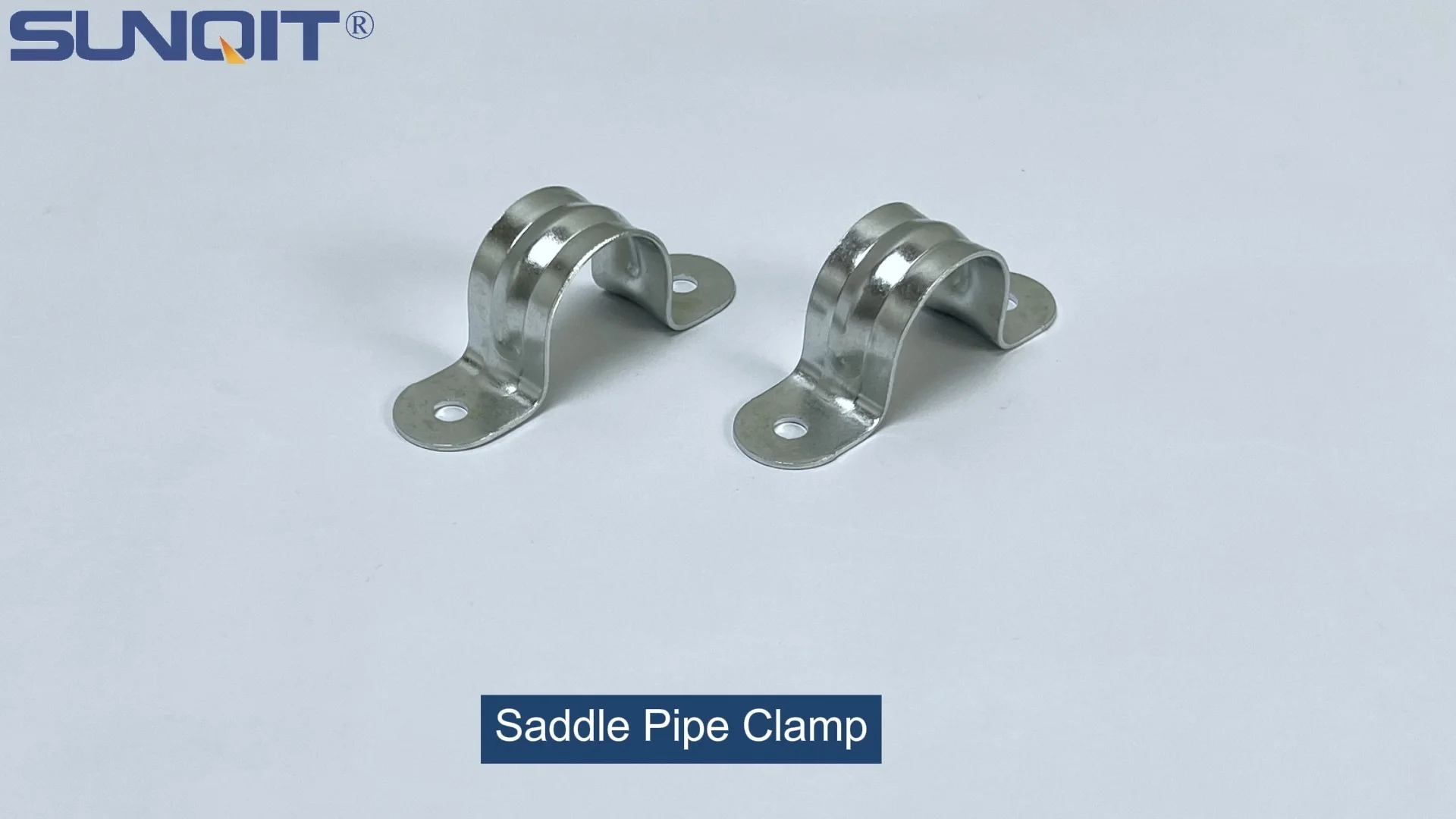
Saddle Pipe Clamp
Saddle pipe clamp, used for board connect with pipe, usually for table top installation.
In the fast-paced world of manufacturing, where efficiency, flexibility, and waste reduction are paramount, lean manufacturing has emerged as a guiding philosophy for businesses striving to stay competitive. At its core, lean manufacturing is about streamlining processes, eliminating unnecessary steps, and creating systems that adapt quickly to changing demands. But behind every successful lean system lies a network of physical tools and components that bring these principles to life. One such unsung hero is the saddle pipe clamp—a small but critical part that plays a big role in holding lean systems together, quite literally. In this article, we'll dive deep into how saddle pipe clamps function, their integration with lean pipes and joints, and why they're indispensable for building the flexible, durable workbenches and material handling setups that power modern lean operations.
Understanding Lean Manufacturing: More Than Just a Buzzword
Before we zoom in on saddle pipe clamps, let's take a moment to ground ourselves in what lean manufacturing really means. Born from the Toyota Production System (TPS) in the mid-20th century, lean is often summarized by the "five S" principles: Sort, Set in Order, Shine, Standardize, and Sustain. But it's more than just tidying up the shop floor. Lean is about creating value for the customer by minimizing waste—whether that's wasted time, materials, or space. To do this, lean systems rely on modular, adaptable infrastructure that can be reconfigured as production needs change. This is where components like lean pipes, joints, and yes, saddle pipe clamps, come into play.
Lean systems are designed to be "just right": not too rigid to stifle innovation, and not too flimsy to compromise safety or efficiency. They need to support everything from assembly workbenches to material flow racks, conveyor systems to turnover trolleys. And at the heart of these systems is the lean pipe—a lightweight, durable tube that serves as the backbone for building custom structures. But a pipe is only as useful as the components that connect it. That's where saddle pipe clamps enter the picture.
What Are Saddle Pipe Clamps, Anyway?
If lean pipes are the bones of a lean system, saddle pipe clamps are the ligaments that hold those bones together. Simply put, a saddle pipe clamp is a fastening device designed to secure two or more lean pipes at specific angles, creating stable connections without the need for welding or complex tools. Unlike fixed joints that lock pipes into a permanent position, saddle clamps are engineered for adjustability—allowing operators to loosen, reposition, and retighten pipes as needed. This flexibility is a cornerstone of lean manufacturing, where the ability to reconfigure a workbench or material rack in minutes (not days) can mean the difference between meeting a tight deadline and falling behind.
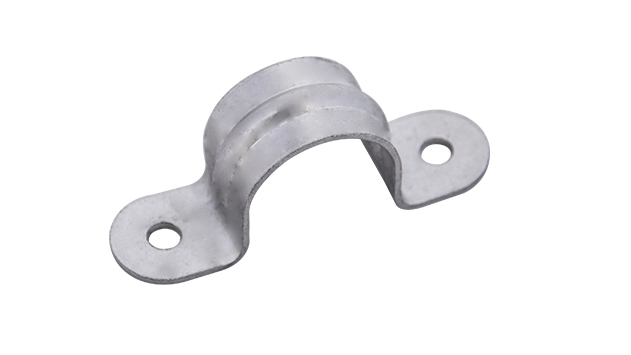
Saddle pipe clamps get their name from their shape: a curved "saddle" that wraps around the outer diameter of a lean pipe, distributing pressure evenly to prevent damage to the pipe's surface (especially important for coated pipes like PE-coated lean pipe). Most clamps feature a bolt or screw mechanism that tightens the saddle around the pipe, creating a secure grip. Some are designed for straight connections, while others can handle angles—making them versatile enough to build everything from simple square frames to complex, multi-tiered structures.
Design and Materials: Built for the Shop Floor
Saddle pipe clamps might seem simple, but their design is the result of careful engineering to meet the demands of manufacturing environments. Let's break down their key features:
- Curved Saddle Design: The curved "saddle" portion is contoured to match the outer diameter of standard lean pipes (typically 28mm or 30mm for PE-coated pipes, or smaller diameters for aluminum lean pipes). This ensures maximum contact between the clamp and the pipe, reducing slippage even under heavy loads.
- Adjustable Tension: Most saddle clamps use a hex bolt or wing nut to tighten the saddle. This allows for easy adjustments—no need for specialized tools. A quick turn with a wrench or even a hand can loosen the clamp, reposition the pipe, and retighten it, making on-the-fly modifications a breeze.
- Material Choices: Saddle pipe clamps are commonly made from steel, stainless steel, or die-cast aluminum. Steel clamps are durable and cost-effective, making them ideal for general-purpose use. Stainless steel is preferred in environments where corrosion resistance is key (like food processing or pharmaceutical facilities). Aluminum clamps, on the other hand, are lightweight and often used with aluminum lean pipes to create lightweight, rust-resistant structures.
- Coatings for Protection: Many steel clamps come with a zinc-plated or chrome finish to prevent rust, ensuring they hold up in dusty, humid, or oily shop floor conditions. Some even have plastic coatings to protect the lean pipe's surface from scratches—important for maintaining the pipe's integrity over time.
Saddle Pipe Clamps and Lean Pipes: A Match Made in Lean Heaven
To understand the role of saddle pipe clamps, we need to first talk about their primary partner: the lean pipe. Also known as "flexible pipe" or "production pipe," lean pipe is a hollow tube typically made from steel with a plastic (PE) coating, or more recently, aluminum for lighter applications. Its claim to fame is its versatility—lean pipes can be cut to any length, connected with joints and clamps, and assembled into virtually any structure imaginable. But without the right connectors, this versatility would be useless. Saddle pipe clamps are specifically designed to work with lean pipes, creating connections that are both strong and temporary.
Let's compare saddle pipe clamps to another common connector: the fixed lean pipe joint. Fixed joints are rigid—once you lock two pipes together at a 90-degree angle, for example, they stay that way. They're great for structures that don't need to change, like permanent shelving. But in lean manufacturing, where production lines might switch from assembling smartphones to tablets overnight, rigidity is a liability. Saddle clamps, by contrast, offer "controlled flexibility." They hold pipes securely during normal use but can be (loosened) when a change is needed. This means a workbench built with lean pipes and saddle clamps can be adjusted in height, widened, or even disassembled and rebuilt into a material rack—all without cutting new pipes or buying new parts.
| Feature | Saddle Pipe Clamp | Fixed Lean Pipe Joint |
|---|---|---|
| Adjustability | High—can be loosened and repositioned | Low—permanent once installed |
| Best For | Modular structures (workbenches, temporary racks) | Permanent, static structures (fixed shelving) |
| Installation Time | Fast—no special tools needed | Moderate—may require tightening with a wrench |
| Reusability | High—can be used on multiple pipe configurations | Low—designed for a specific angle/length |
| Load Capacity | Moderate to high (depends on material and size) | High (rigid connection distributes weight evenly) |
This table highlights why saddle pipe clamps are a favorite in lean environments: they strike a balance between stability and adaptability. For example, a manufacturer producing small electronic components might use a workbench assembled with lean pipes and saddle clamps. During the day shift, the workbench is set up with a flat surface and tool holders for assembly. But when the night shift switches to packaging, the same workbench can be reconfigured by loosening the saddle clamps, raising the surface height, and adding a roller track (another lean component) to facilitate smooth material flow. This kind of quick changeover—made possible by saddle clamps—eliminates the need for two separate workbenches, saving space and money.

Building Better Workbenches with Saddle Pipe Clamps
If there's one place where saddle pipe clamps truly shine, it's in the construction of workbenches—the workhorses of the manufacturing floor. A well-designed workbench should be ergonomic (to reduce worker fatigue), sturdy (to support tools and materials), and adaptable (to grow with the job). Saddle pipe clamps make all three possible.
Let's walk through how a typical lean workbench is built using lean pipes, saddle clamps, and other components. First, the frame: four vertical lean pipes serve as legs. Saddle clamps are used to connect horizontal pipes at the top and bottom, creating a rectangular frame. Then, a work surface—often a wooden or metal panel—is placed on top, secured with additional clamps. But here's where the magic happens: if a worker needs the bench to be taller, the saddle clamps on the vertical legs can be loosened, the horizontal pipes slid up, and retightened. If the bench needs to be wider, extra pipes and clamps can be added to extend the frame. Even accessories like tool hooks, shelves, or LED light bars can be attached using saddle clamps—no drilling or welding required.
Consider a scenario in an automotive parts plant. A workbench used to assemble brake components might need to support heavy tools and a large inventory of parts. Using steel lean pipes and heavy-duty saddle clamps (rated for higher loads), the bench can be built with a lower shelf for parts bins and a reinforced top surface. A few months later, when the plant switches to assembling smaller electrical components, the same bench can be stripped down: the lower shelf is removed by loosening the saddle clamps, the legs are shortened, and a lighter work surface is added. The old parts are stored away, ready to be reused if the brake assembly line returns. This kind of reusability is a hallmark of lean manufacturing, and it's only possible with components like saddle pipe clamps that don't damage the pipes when removed.
Safety First: How Saddle Clamps Ensure Stability
You might be wondering: if saddle clamps are adjustable, do they compromise safety? After all, a workbench that shifts or collapses could lead to injuries or damaged products. The answer is a resounding no—when properly installed, saddle pipe clamps are incredibly secure. Their curved design ensures that pressure is distributed evenly around the lean pipe, preventing slippage even under heavy loads. Most clamps also feature a locking mechanism, like a nylon insert in the bolt, that prevents the bolt from loosening due to vibration (a common issue in manufacturing environments with heavy machinery).
Manufacturers also test saddle clamps rigorously for load capacity. A standard steel saddle clamp, for example, can typically support 50-100 kg per connection, depending on the pipe diameter and material. For heavier applications, like workbenches holding industrial equipment, there are heavy-duty saddle clamps with thicker steel and larger bolts. When combined with high-quality lean pipes (which are themselves tested for strength), saddle clamps create structures that meet or exceed safety standards for manufacturing environments.

Beyond Workbenches: Saddle Clamps in Material Handling
While workbenches are a common application, saddle pipe clamps are equally valuable in material handling systems—another cornerstone of lean manufacturing. Lean systems aim to move materials efficiently from one process to the next, minimizing downtime and reducing the risk of errors. This often involves structures like flow racks, conveyor systems, and turnover trolleys—all of which can be built with lean pipes and saddle clamps.
Take flow racks, for example. These are inclined racks with roller tracks that allow materials (like bins of parts) to "flow" from the back to the front, ensuring that the oldest parts are used first (a practice known as "first in, first out," or FIFO). Building a flow rack with lean pipes and saddle clamps is simple: vertical pipes as legs, horizontal pipes as supports, and roller tracks attached using—you guessed it—saddle clamps. If the size of the bins changes, the roller tracks can be repositioned by loosening the clamps and sliding them along the horizontal pipes. No need to buy a new rack; just adjust the existing one.
Turnover trolleys are another example. These are mobile carts used to transport materials between workstations. A basic trolley might have a flat surface supported by four legs with casters (wheels). Using saddle clamps, the height of the surface can be adjusted to match the height of the workbench it's feeding, reducing the need for workers to bend or lift heavy items. If the trolley needs to carry taller loads, extensions can be added to the sides using extra pipes and clamps. And when the trolley isn't in use, it can be disassembled to save space—again, thanks to the adjustability of saddle clamps.
The Bottom Line: Cost Savings and Sustainability
At the end of the day, lean manufacturing is about more than just efficiency—it's about the bottom line. Saddle pipe clamps contribute to cost savings in several ways:
- Reduced Need for New Equipment: Instead of buying a new workbench or rack every time production needs change, existing structures can be reconfigured with saddle clamps.
- Lower Installation Costs: Saddle clamps are easy to install and require no specialized labor (unlike welding, which needs a certified welder).
- Longevity: High-quality saddle clamps are durable and can be reused dozens of times, reducing the need to buy replacements.
Sustainability is another bonus. In an era where businesses are under pressure to reduce their environmental footprint, lean manufacturing's focus on waste reduction aligns perfectly with sustainability goals. Saddle pipe clamps support this by promoting the reuse of materials. Instead of scrapping an old workbench, it's disassembled, and the pipes and clamps are used to build something new. This reduces the demand for raw materials and cuts down on waste sent to landfills. Even the materials used in saddle clamps—like recyclable steel or aluminum—are chosen with sustainability in mind.
Choosing the Right Saddle Pipe Clamp for Your Lean System
Not all saddle pipe clamps are created equal. To get the most out of your lean system, it's important to choose the right clamp for the job. Here are a few factors to consider:
- Pipe Material and Diameter: Make sure the clamp is compatible with your lean pipe. Most clamps are designed for standard diameters (28mm, 30mm), but aluminum lean pipes might have smaller diameters (like 20mm or 25mm), requiring smaller clamps.
- Load Capacity: Check the clamp's load rating. If you're building a workbench that will hold heavy tools, opt for a heavy-duty clamp with a higher weight limit.
- Environment: In humid or corrosive environments (like food processing), stainless steel clamps are a better choice than standard steel. For cleanrooms, aluminum clamps with smooth surfaces are easier to sanitize.
- Ease of Use: Look for clamps with ergonomic features, like wing nuts, that can be tightened by hand—this speeds up installation and adjustments.
It's also worth working with a reputable lean pipe supplier who can help you select the right components. A good supplier will not only provide high-quality saddle clamps but also offer guidance on how to design structures that maximize flexibility and safety. They might even have case studies or sample configurations to inspire your own lean system designs.
The Future of Saddle Pipe Clamps: Innovations in Lean Manufacturing
As manufacturing continues to evolve—with trends like Industry 4.0, automation, and customization driving change—so too will the components that support lean systems. Saddle pipe clamps are no exception. One emerging trend is the use of smart clamps with built-in sensors that monitor tension. These clamps can alert maintenance teams if they start to loosen, preventing accidents before they happen. Another trend is the development of lightweight, high-strength materials—like carbon fiber composites—to reduce the weight of clamps, making them easier to handle while maintaining load capacity.
Aluminum lean pipes are also growing in popularity, thanks to their rust resistance and lighter weight compared to steel. This is driving demand for saddle clamps designed specifically for aluminum pipes, with softer saddle materials to prevent scratching the aluminum surface. We're also seeing more modular clamp designs that can connect pipes at multiple angles (not just 90 or 180 degrees), opening up new possibilities for complex structures.
Conclusion: Small Part, Big Impact
In the grand scheme of lean manufacturing, saddle pipe clamps might seem like a minor detail. But as we've explored, they're far from insignificant. These simple, adjustable connectors are the glue that holds lean systems together, enabling the flexibility, reusability, and efficiency that make lean manufacturing so powerful. From workbenches that adapt to changing production needs to material racks that can be reconfigured in minutes, saddle pipe clamps empower manufacturers to do more with less—less time, less money, and less waste.
So the next time you walk through a manufacturing plant and see a workbench, a flow rack, or a turnover trolley, take a closer look. Chances are, you'll spot a saddle pipe clamp quietly doing its job—connecting pipes, supporting loads, and making lean manufacturing a reality. It's a reminder that in the world of lean, success often lies in the details. And when it comes to details, the saddle pipe clamp is one that truly delivers.