- Company Articles
- Products and Technology
- Product knowledge
- The Role of Swivel Stem Caster Wheels with Brake in Flexible Workstations

The Role of Swivel Stem Caster Wheels with Brake in Flexible Workstations
Related Product
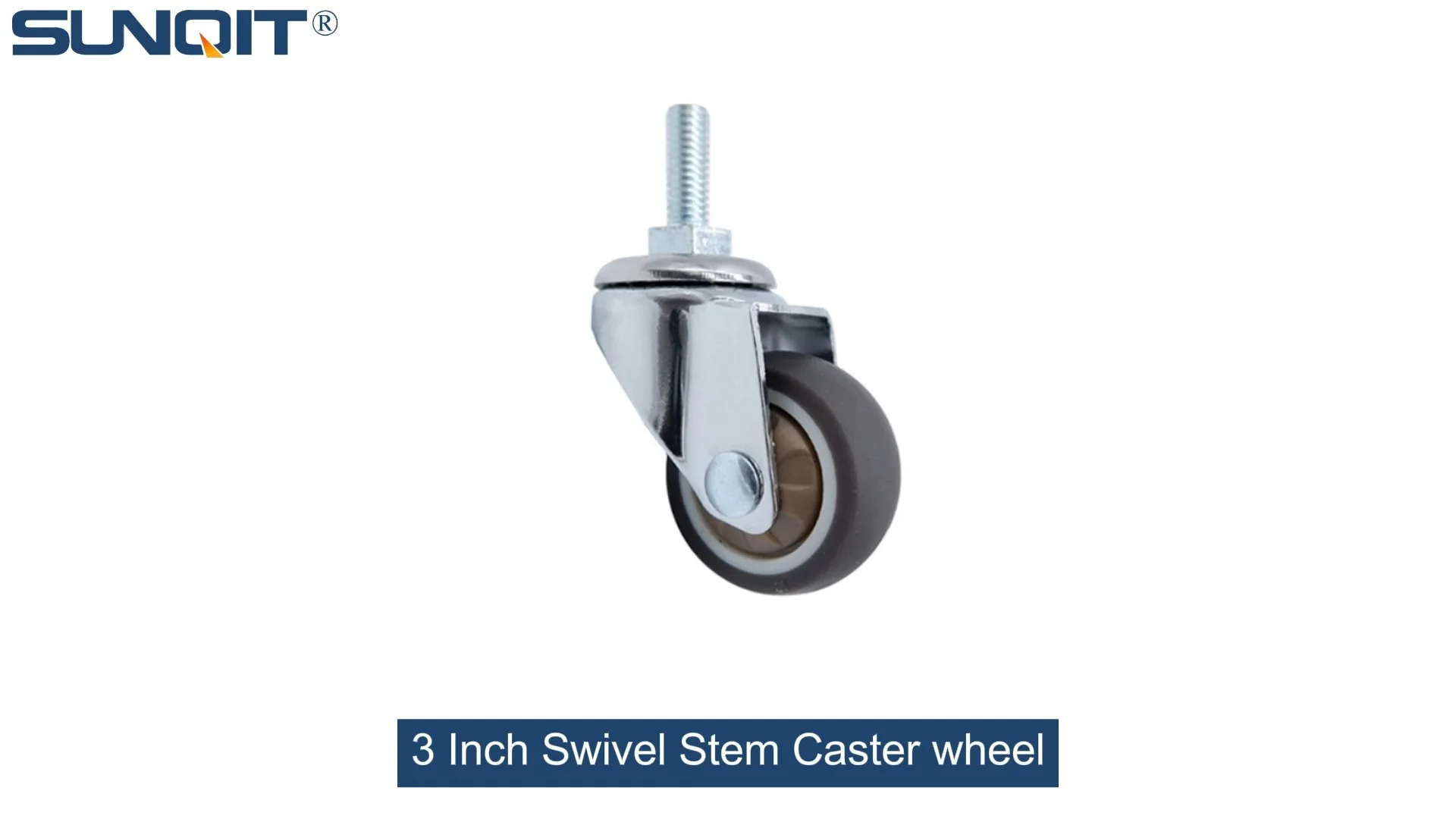
Swivel Stem Caster wheel
360 Degree Swivel Stem Caster. Threaded-post mount design, castors diameter 3 inch.Each swivel caster wheels loading 70KGS. Heavy enough and widely suit for carts, chairs, cabinet, flow rack, workbench, turnover rolley.
In today's fast-paced manufacturing and warehousing environments, the idea of a "one-size-fits-all" workstation has become as outdated as the assembly lines of the mid-20th century. Modern operations demand flexibility—spaces that can shift, adapt, and reconfigure at a moment's notice to keep up with changing production needs, team collaborations, and even seasonal demands. At the heart of this flexibility lies a seemingly small but mighty component: the swivel stem caster wheel with brake. These unassuming wheels aren't just about moving things around; they're about empowering workers, streamlining workflows, and turning static spaces into dynamic hubs of productivity. Let's dive into why these casters matter, how they transform workbenches and turnover trolleys, and why they're indispensable in any lean system worth its salt.
What Are Swivel Stem Caster Wheels with Brake, Anyway?
First things first: let's break down the name. "Swivel stem caster wheels with brake" might sound like a mouthful, but each part tells you something crucial about how they work. Starting with the basics: a caster is essentially a wheel mounted on a fork or bracket that allows 360-degree rotation. The "stem" part refers to how the caster attaches to a piece of equipment—instead of a plate that bolts on, there's a cylindrical stem (think of a thick metal rod) that inserts into a pre-drilled hole or sleeve on the bottom of a workbench, trolley, or rack. This stem mount is key for versatility; it's often more compact than plate mounts, making it ideal for equipment where space is at a premium.
Then there's the "swivel" feature. Unlike rigid casters, which only roll forward and backward, swivel casters can pivot on their axis, letting you maneuver the equipment in any direction—even tight corners or narrow aisles. This is a game-changer in busy facilities where navigating around other workers, machinery, or inventory is part of the daily grind. But what really elevates these casters from "useful" to "essential" is the "with brake" part. The brake mechanism, usually a foot-operated lever or pedal, locks either the wheel itself or the swivel motion (or both) to keep the equipment stationary when needed. No more chasing a runaway trolley down the aisle or struggling to keep a workbench steady during precision tasks.
Now, let's talk materials. These casters aren't one-size-fits-all in build, either. The wheels might be made of rubber, polyurethane, nylon, or even steel, depending on the environment. Rubber and polyurethane are popular for indoor use because they're gentle on floors (no scuff marks on warehouse concrete or factory tile) and absorb shocks, which is easier on both the equipment and the person pushing it. Steel wheels, on the other hand, are tough enough for heavy loads or outdoor use but can be noisy and harder on floors. The stem is typically steel, coated to resist rust, and the brake components are often made of durable plastics or metals to withstand frequent use.
| Feature | Benefit |
|---|---|
| 360° Swivel Action | Maneuver in tight spaces, navigate around obstacles with ease |
| Stem Mount Design | Compact attachment, fits into smaller equipment bases without bulky plates |
| Foot-Operated Brake | Quick, hands-free locking/unlocking; keeps equipment stable during use |
| Variety of Wheel Materials | Choose rubber (floor-friendly), polyurethane (durable), or steel (heavy-duty) for specific needs |
From Static to Dynamic: How Casters Transform the Humble Workbench
Think about the last time you worked at a desk that was bolted to the floor. Frustrating, right? If you needed to collaborate with a colleague, you had to either drag your chair over or ask them to come to you. Now imagine that desk is a heavy workbench in a factory, cluttered with tools, parts, and maybe even a soldering iron or assembly jig. Moving it used to mean recruiting a couple of coworkers, grunting, and hoping you didn't scratch the floor—or worse, drop something. Enter swivel stem caster wheels with brake: suddenly, that same workbench becomes a mobile workstation that can glide across the floor with minimal effort, then lock securely in place when you're ready to focus.
Let's take an example from the electronics industry. In a plant that assembles circuit boards, workers often switch between different stages of production: soldering, testing, quality control. A fixed workbench ties a worker to one spot, meaning parts have to be brought to them, or they have to carry delicate components across the floor (risking damage or delays). But with a workbench mounted on swivel stem casters with brake, the worker can wheel their entire setup to the next station. Need to consult with the testing team? Roll over, lock the brakes, and collaborate without missing a beat. Done? Unlock, roll back, and lock again. It's simple, but it cuts out wasted steps—exactly the kind of efficiency that makes lean systems thrive.
And it's not just about movement. The brake is crucial here. When you're soldering a tiny component, the last thing you need is the workbench shifting under you. A firm brake ensures stability, reducing the risk of mistakes or injuries. Even better, many modern brakes lock both the wheel and the swivel, so the workbench won't drift or pivot accidentally. That peace of mind lets workers focus on the task, not on keeping their workspace steady.
Workbenches also come in all shapes and sizes—from single-deck models without casters (like the "workbench e" mentioned in product lists) to larger setups with shelves, drawers, and tool racks. Adding swivel stem casters to these isn't just an afterthought; it's a design choice that prioritizes adaptability. A warehouse might start with a few mobile workbenches and quickly realize they can reconfigure the entire floor layout based on daily orders. One day, it's a line for packing small items; the next, a U-shape for team-based assembly. That kind of flexibility is gold in industries where demand fluctuates or product lines change frequently.

Turnover Trolley and Rack: Casters as the Backbone of Material Flow
If workbenches are where the magic happens, turnover trolleys and racks are the unsung heroes that keep the magic supplied. These are the carts and shelves that ferry raw materials, finished products, and tools between stations. In a busy facility, a slow or unwieldy trolley can bottleneck the entire operation. That's why swivel stem caster wheels with brake are a game-changer here, too.
Consider a "material rack b (3 row and 3 floor)" from a typical supplier list. It's designed to hold multiple layers of parts, maybe for automotive assembly. Without casters, moving this rack would require a forklift or a team of people—both slow and potentially risky around other workers. But with swivel stem casters, even a fully loaded rack can be moved by one person. The swivel action makes it easy to navigate around pallets or machinery, and the brake lets the user lock the rack in place right at the assembly line, so parts are within arm's reach.
Turnover trolleys, which are often used for transporting goods between storage and production, benefit even more. Imagine a trolley loaded with fragile components—say, glass panels for smartphones. A rigid caster might get stuck on a floor imperfection, jostling the load. A swivel caster with a polyurethane wheel, though, glides over small bumps, keeping the load stable. And when the trolley reaches its destination, the brake ensures it doesn't roll away while someone unloads it. This isn't just about speed; it's about reducing waste (fewer broken parts) and keeping workers safe (no chasing runaway trolleys).
In lean system terms, material flow is all about getting the right parts to the right place at the right time—without excess inventory or delays. Turnover trolleys with swivel stem casters with brake make this possible by turning material transport into a seamless, worker-driven process. Instead of waiting for a forklift driver, a line worker can grab a trolley, fetch what they need, and return—all in a fraction of the time. It's empowerment at its finest: workers have control over their workflow, and the system runs more smoothly because of it.
Another angle: ergonomics. Pushing a heavy trolley with rigid casters requires more force, which can lead to strain injuries over time. Swivel casters reduce the effort needed to maneuver, even with heavy loads. The American College of Occupational and Environmental Medicine estimates that musculoskeletal disorders (MSDs) cost U.S. businesses billions annually in workers' compensation and lost productivity. By making trolleys easier to push and control, these casters aren't just improving efficiency—they're protecting workers' health, too. That's a win-win for any company that values its team.

Why Lean Systems Can't Afford to Ignore These Casters
Lean manufacturing isn't just a buzzword; it's a philosophy centered on eliminating waste, optimizing flow, and continuous improvement. At its core, lean is about creating more value with less effort—and that's exactly where swivel stem caster wheels with brake shine. Let's break down how they align with key lean principles:
1. Eliminating Waste (Muda)
In lean terms, "waste" includes unnecessary movement, waiting, and transportation. A fixed workstation or immobile trolley forces workers to move more than they should (walking to fetch parts), wait for equipment (like forklifts), or transport items inefficiently (carrying instead of rolling). Swivel stem casters cut through this by making the workstation or trolley mobile. Workers move less, wait less, and transport items with minimal effort—all of which reduce muda.
2. Optimizing Flow (Value Stream Mapping)
Value stream mapping (VSM) is a lean tool that maps out every step of a product's journey from raw material to customer. Bottlenecks often show up where flow is interrupted—like a workstation that can't keep up because it's stuck in one spot. Mobile workbenches and trolleys smooth out these bottlenecks by allowing the workflow to adapt. If one station is backed up, others can shift to help. It's like water flowing around rocks in a stream—instead of stopping, it finds the path of least resistance.
3. Respect for People
Lean isn't just about processes; it's about people. A system that makes workers struggle with heavy, unwieldy equipment isn't respecting their time or well-being. Swivel stem casters reduce physical strain, making jobs easier and more enjoyable. Happy, healthy workers are more productive, more engaged, and more likely to contribute ideas for improvement—all of which strengthen the lean culture.
Let's look at a real-world example. A furniture manufacturer implemented lean principles but struggled with their assembly line. Workers were tied to fixed workbenches, and large pieces (like table tops) had to be carried between stations, leading to delays and occasional drops. They switched to workbenches and turnover trolleys with swivel stem casters with brake. The results? A 30% reduction in time spent moving materials, a 15% drop in product damage, and workers reporting less fatigue at the end of shifts. It wasn't a fancy new machine or a software upgrade—it was better mobility, enabled by simple casters.
Lean also emphasizes "just-in-time" production, where parts arrive exactly when they're needed. Immobile storage racks can lead to overstocking (to avoid running out), which ties up capital and space. But with mobile turnover trolleys, materials can be delivered precisely to the assembly line as needed. A trolley loaded with chair legs arrives at the upholstery station just as the frames are ready—no excess, no delay. That's lean in action, and it's made possible by casters that let materials flow on demand.

What to Look for When Choosing Swivel Stem Casters with Brake
Not all casters are created equal, and choosing the right ones for your workstation or trolley is key to getting the benefits we've discussed. Here are the top factors to consider:
Load Capacity
This is non-negotiable. A caster rated for 200 lbs won't hold up if you're putting a 500-lb workbench on it. Always check the total weight of the equipment plus the maximum load it will carry, then choose casters with a capacity that exceeds that (to be safe). Most suppliers list load capacity per caster, so remember to multiply by the number of casters on your setup (usually 4 for a workbench or trolley).
Wheel Material
As we touched on earlier, wheel material matters for floor protection, noise, and durability. Rubber wheels are soft and quiet, making them great for indoor floors like tile or polished concrete (they won't scratch). Polyurethane is a step up in durability, handling heavier loads and resisting chemicals or oils (common in manufacturing). Steel wheels are tough but noisy and can damage softer floors—best for rough surfaces or outdoor use.
Brake Type
Not all brakes are the same. Some only lock the wheel (preventing rolling), while others lock both the wheel and the swivel (preventing rolling and pivoting). For workbenches or precision tasks, dual-locking brakes are better—they offer maximum stability. Foot-operated brakes are standard, but look for ones that are easy to engage and release, even with work boots on. A brake that's hard to press can lead to workers skipping it, defeating the purpose.
Stem Size and Compatibility
Stems come in different diameters and lengths. You'll need to match the stem size to the hole or sleeve in your workbench or trolley frame. Common stem diameters are 3/8", 1/2", or M12 (metric), and lengths range from 1" to 3" or more. If you're retrofitting an existing setup, measure the hole size carefully—an ill-fitting stem will be wobbly and unsafe.
Environmental Factors
Will the casters be used in a wet area? Look for rust-resistant materials like stainless steel stems. In cleanrooms or food processing, non-marking, easy-to-clean wheels are a must. For cold environments, check that the wheel material won't harden or crack (some rubbers become brittle in the cold). The more you align the caster with your environment, the longer it will last.
Keeping Your Casters Rolling: Simple Maintenance Tips
Even the best casters need a little TLC to keep performing.,,.Here's how to keep them in top shape:
- Clean regularly: Dirt, debris, or metal shavings can get stuck in the swivel joint or around the wheel, making movement stiff. Wipe the casters down with a damp cloth weekly, and use a brush to dislodge any stubborn gunk.
- Lubricate the swivel joint: Every few months, apply a few drops of lubricating oil (like 3-in-1 or silicone spray) to the swivel bearing. This keeps the caster turning smoothly and prevents rust.
- Check the brake: Test the brake regularly to make sure it engages fully and releases cleanly. If it's sticking, clean the brake mechanism with a cloth and lubricate lightly if needed.
- Tighten loose stems: Over time, stems can loosen in their mounts. Give them a gentle twist periodically to ensure they're secure—no wobbling!
- replace worn wheels: If a wheel starts to crack, flatten, or doesn't roll smoothly, replace it immediately. A worn wheel can throw off the balance of the workstation or trolley and cause uneven wear on other casters.
These small steps can extend the life of your casters from months to years, saving you money and avoiding downtime.
The Future of Flexible Workstations: Casters as a Foundation
As workplaces evolve—with more focus on collaboration, automation, and agile manufacturing—the demand for flexible workstations will only grow. Swivel stem caster wheels with brake might seem like a small part of this puzzle, but they're a foundational one. They enable the kind of adaptability that modern facilities need to stay competitive.
We're already seeing innovations in caster design, too. Some manufacturers are adding smart features, like sensors that alert maintenance when a caster needs lubrication or a brake is wearing out. Others are experimenting with eco-friendly materials, like recycled polyurethane wheels, to align with sustainability goals. And as more workplaces adopt "modular" setups—where workstations can be quickly reconfigured for different tasks—casters that are easy to swap or adjust will become even more valuable.
But at the end of the day, the best caster innovations will still focus on the human element. They'll make work easier, safer, and more efficient for the people on the factory floor, in the warehouse, or in the lab. Because a lean system isn't just about processes—it's about people. And when people have the right tools to do their jobs well, everyone wins: workers, companies, and customers.
Wrapping Up: Small Wheels, Big Impact
Swivel stem caster wheels with brake might not get the same attention as high-tech machinery or flashy software, but they're the unsung heroes of flexible workstations. They turn static workbenches into mobile hubs,,.Whether you're setting up a new facility or upgrading an old one, don't overlook these small but powerful components. They're not just wheels—they're a investment in efficiency, safety, and the future of work.
So the next time you walk through a factory, warehouse, or workshop, take a look at the workbenches and trolleys. Chances are, the ones that are keeping the operation running smoothly are sitting on swivel stem casters with brake. And now, you'll know exactly why they're there.