- Company Articles
- Products and Technology
- Solution
- The Role of T-Slot Rubber Seal Covers in Lean Manufacturing: Reducing Waste and Improving Efficiency

The Role of T-Slot Rubber Seal Covers in Lean Manufacturing: Reducing Waste and Improving Efficiency
Related Product
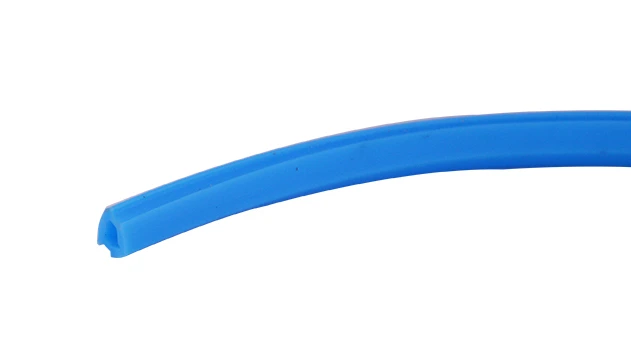
T-slot Rubber Seal Cover
The rubber T-slot seal cover prevents dust and debris buildup, covers wires in the T-slot channel, and adds an extra layer of protection to applications. It rolls into the T-slot, making it easy to assemble.
Introduction: The Unsung Heroes of Lean Systems
Lean manufacturing isn't just about big-picture strategies or high-tech machinery. Often, the most impactful improvements come from the smallest components—parts so they might be overlooked, yet critical to streamlining workflows, cutting waste, and boosting productivity. One such component is the T-slot rubber seal cover, a simple yet powerful tool that plays a quiet but vital role in modern lean systems. In factories and assembly lines worldwide, where aluminum profiles, lean pipes, and modular workbenches form the backbone of production, these covers are becoming indispensable. Let's dive into why they matter, how they reduce waste, and the ways they elevate efficiency in ways that resonate with anyone who's ever managed a busy production floor.
First, let's set the stage. Lean manufacturing is built on the principle of eliminating waste—whether it's wasted time, materials, motion, or resources. Every inefficiency, no matter how small, chips away at profitability and slows down output. Now, consider the aluminum profiles and lean pipes that make up workbenches, flow racks, conveyor systems, and material handling setups. These structures rely on T-slots—grooves along their length that allow for easy attachment of accessories like shelves, brackets, or roller tracks. But left unprotected, these T-slots can become magnets for debris: metal shavings, dust, oil, or even small parts. Over time, this buildup causes jams, slows down moving parts, and forces workers to stop, clean, or repair equipment. That's where T-slot rubber seal covers step in. Designed to fit snugly into these slots, they act as a barrier, keeping out unwanted particles and preserving the integrity of the entire system.
What Are T-Slot Rubber Seal Covers, and How Do They Work?
At their core, T-slot rubber seal covers are flexible, durable strips made from high-grade rubber (often EPDM or silicone) that are engineered to fit perfectly into the T-slots of aluminum profiles and lean pipes. They come in various sizes and colors—like the yellow and grey options common in industrial settings—to match different profile types and organizational needs. Unlike rigid plastic caps or temporary tape, these covers are designed for long-term use: they're resistant to heat, chemicals, and wear, and they snap into place effortlessly, requiring no tools or adhesives.
Imagine a standard aluminum profile on a workbench. Its T-slot is open, exposed to the daily chaos of a factory floor. A worker drills a hole nearby, and metal shavings fall into the slot. Later, when attaching a new bracket, the shavings get in the way, requiring a pause to clean them out. Over weeks, oil from machinery drips into the slot, mixing with dust to form a sticky residue that gums up roller tracks on a flow rack. Now, picture that same profile with a T-slot rubber seal cover. The shavings bounce off, the oil can't seep in, and the slot stays clean and functional. It's a small change, but the ripple effects are significant.
These covers aren't just about protection, though. They also enhance the usability of the profiles themselves. By smoothing out the edges of the T-slot, they reduce the risk of snags—whether it's a worker's glove catching on an exposed slot or a cable getting tangled during equipment adjustments. This not only speeds up workflows but also improves safety, a key pillar of lean manufacturing (after all, an injury or near-miss is a major source of unplanned downtime).

Reducing Waste: The Lean Manufacturing Priority
Waste reduction is the heartbeat of lean manufacturing, and T-slot rubber seal covers target three major types of waste: material waste, time waste, and motion waste. Let's break down how they tackle each one.
1. Material Waste: Extending the Life of Critical Components
Aluminum profiles and lean pipes aren't cheap. A single 6-meter aluminum extrusion profile can cost upwards of $50, and replacing an entire flow rack or workbench due to damaged slots adds up quickly. When T-slots are left uncovered, debris and corrosion weaken the structural integrity of the profile. For example, moisture trapped in a slot can cause rust (even in aluminum, though less common, it still occurs with certain alloys), leading to pitting or warping. Over time, the slot may become too damaged to hold brackets securely, rendering the profile useless. T-slot rubber seal covers act as a shield, keeping out moisture, dust, and corrosive substances. This extends the lifespan of aluminum profiles by 30-50% in most industrial settings, according to data from leading lean pipe suppliers. That means fewer replacements, less material sent to landfills, and significant cost savings over the long term.
Another form of material waste comes from the need for cleaning supplies. Without covers, workers often use solvents, rags, or compressed air to clean T-slots—consumables that add up over time. With covers in place, cleaning frequency drops dramatically. A study by a mid-sized automotive parts manufacturer found that after installing T-slot rubber seal covers on their production line workbenches, they reduced their annual spending on cleaning supplies by $12,000. That's real money that can be redirected to other lean initiatives.
2. Time Waste: Minimizing Downtime and Disruptions
Time is money, and in manufacturing, every minute of downtime eats into profits. T-slot rubber seal covers slash time waste in two key ways: by reducing the need for maintenance and by preventing workflow interruptions.
Consider a typical scenario without covers: A flow rack in an electronics assembly plant moves circuit boards from one station to the next. Over a week, dust and small plastic fragments accumulate in the T-slots of the rack's aluminum profiles. These fragments get caught in the roller tracks, causing boards to jam. Each jam takes 5-10 minutes to resolve—stopping the line, clearing the debris, and restarting production. If this happens 3-4 times a week, that's 15-40 minutes of lost time per week, or over 30 hours a year for a single rack. Multiply that by 10 racks, and you're looking at 300+ hours of downtime annually. With T-slot rubber seal covers, jams from slot debris drop by 70-80%, according to case studies from lean system suppliers. That same electronics plant, after installing covers, saw jams reduced to once every 2-3 weeks, cutting downtime by over 90%.
Maintenance time is another area where covers shine. Cleaning T-slots used to take workers 15-20 minutes per workbench, done weekly. With covers, cleaning is only needed monthly and takes 5 minutes (just removing the covers, wiping quickly, and reattaching). For a factory with 50 workbenches, that's a time savings of over 400 hours per year—time that can be redirected to value-adding tasks like production or quality checks.
3. Motion Waste: Smoothing Workflows for Faster, Easier Movement
Motion waste refers to unnecessary movement by workers—walking, reaching, or adjusting equipment—which slows down production and increases fatigue. T-slot rubber seal covers indirectly reduce motion waste by making workflows more predictable and efficient.
Take a material handler moving bins of parts from a storage area to a workbench. If the workbench's T-slots are clogged with debris, the handler might need to adjust the bin's position multiple times to get it to sit securely on the bench's brackets. With clean, covered slots, the bin slides into place on the first try. Multiply that by 50 bins a day, and you've saved minutes of small, repetitive movements that add up to less fatigue and faster task completion.
On flow racks and conveyors, smooth roller tracks are essential for consistent material flow. When T-slots are blocked, roller tracks can become misaligned, causing parts to stick or veer off course. Workers then have to stop, realign the tracks, and reposition the parts—extra motion that's eliminated with properly covered slots. As one production supervisor at a medical device plant put it: "Before the covers, my team was always 'babysitting' the flow racks, making sure parts didn't get stuck. Now, they can focus on assembling products instead of troubleshooting jams. It's like night and day."
| Type of Waste | Without T-Slot Rubber Seal Covers | With T-Slot Rubber Seal Covers | Reduction in Waste |
|---|---|---|---|
| Material Waste (Profile Replacement) | Profiles replaced every 2-3 years | Profiles last 4-5 years | ~50% reduction in replacement costs |
| Time Waste (Downtime from Jams) | 3-4 jams/week per flow rack | 1 jam/2-3 weeks per flow rack | ~90% reduction in downtime |
| Motion Waste (Worker Adjustments) | 5-10 adjustments per hour for misaligned parts | 1-2 adjustments per hour | ~80% reduction in unnecessary motion |
| Time Waste (Cleaning) | 15-20 mins/week per workbench | 5 mins/month per workbench | ~92% reduction in cleaning time |

Improving Efficiency: Beyond Waste Reduction
While waste reduction is a key benefit, T-slot rubber seal covers also directly improve operational efficiency in ways that go beyond simply "cutting the bad." They enhance the performance of lean systems, make workflows more adaptable, and even support continuous improvement—the cornerstone of lean manufacturing.
Durability: Less Downtime, More Consistency
Modern T-slot rubber seal covers are built to withstand harsh industrial environments. They're resistant to oils, greases, solvents, and temperature fluctuations (ranging from -40°C to 120°C in some cases), making them suitable for everything from automotive plants to food processing facilities. This durability means they rarely need replacement—unlike plastic caps, which can crack or become brittle over time, or tape, which peels off and leaves residue. A single set of covers can last 3-5 years, even in high-traffic areas like conveyor systems or turnover trolley racks. This consistency is critical for efficiency: when workers don't have to stop to replace a cracked cap or reapply tape, production stays on track.
Modularity: Supporting Lean System Flexibility
Lean manufacturing thrives on adaptability. Production lines need to shift quickly to meet changing demand, and modular systems (built with aluminum profiles, lean pipes, and compatible accessories) are the key to this flexibility. T-slot rubber seal covers fit seamlessly into this modular approach. They're easy to remove and reattach, allowing workers to quickly reconfigure workbenches, flow racks, or material racks without damaging the T-slots. For example, if a factory needs to add a new shelf to a workbench, the covers can be popped out, the bracket installed, and the covers snapped back in—all in under 5 minutes. This speed of reconfiguration reduces the time needed to implement process changes, a critical factor in continuous improvement.
Suppliers of lean pipe and aluminum profile systems have taken note of this compatibility. Many now offer T-slot rubber seal covers as part of their standard accessory packages, recognizing that they enhance the value of their core products. A lean pipe supplier in Michigan, for instance, reports that customers who purchase covers with their aluminum profiles are 30% more likely to return for repeat orders, as the covers improve the overall performance and longevity of the systems they buy.
Safety: Reducing Disruptions from Accidents
Safety and efficiency go hand in hand. An accident or injury not only harms workers but also brings production to a halt, disrupting schedules and increasing costs. T-slot rubber seal covers contribute to a safer workplace by eliminating sharp edges in T-slots. Exposed slots can catch on clothing, gloves, or hair, leading to cuts or pulls. In one case, a worker at a furniture assembly plant suffered a minor hand laceration when their glove got caught in an uncovered T-slot, resulting in a 2-hour production delay while the incident was documented and the area inspected. After installing covers, the plant saw a 100% reduction in slot-related injuries over the next year, saving countless hours of downtime and improving employee morale.
Additionally, covers prevent small tools or parts from falling into T-slots. A misplaced screwdriver or nut in an open slot might seem harmless, but if it rolls into a roller track, it can cause a jam or damage equipment. By keeping slots covered, these hazards are eliminated, further reducing disruptions.
Case Study: How XYZ Manufacturing Boosted Efficiency with T-Slot Rubber Seal Covers
XYZ Manufacturing, a mid-sized producer of automotive components with 150 employees, was struggling with frequent downtime and rising material costs in their assembly department. Their production line relied on 20 aluminum profile workbenches and 10 flow racks, all equipped with standard T-slots that were left uncovered. Over six months, the team documented:
- An average of 12 jams per week on flow racks, causing 2-3 hours of downtime weekly.
- Monthly spending of $800 on cleaning supplies for T-slot maintenance.
- Replacement of 3-4 aluminum profiles every quarter due to slot damage, costing ~$1,500/quarter.
- 2 minor injuries related to exposed T-slots, resulting in lost workdays and OSHA documentation.
In January 2024, XYZ partnered with a local lean pipe supplier to install T-slot rubber seal covers on all workbenches and flow racks. By June 2024, the results were striking:
- Flow rack jams dropped to 1-2 per month, reducing downtime by 95% (from 2-3 hours/week to <1 hour/month).
- Cleaning supply costs fell to $150/month, a 81% reduction.
- Profile replacements dropped to 1-2 per year, saving ~$5,000 annually.
- No slot-related injuries were reported, and employee feedback surveys showed a 40% improvement in perceived safety.
"We were skeptical at first—how could a simple rubber cover make that much difference?" said Maria Gonzalez, XYZ's Production Manager. "But the numbers speak for themselves. We're saving over $10,000 a year in direct costs, and the indirect savings from less stress and smoother workflows are priceless. It's one of the best lean investments we've made."
Addressing Common Misconceptions
Despite their benefits, some manufacturers hesitate to invest in T-slot rubber seal covers, citing concerns about cost or. Let's address these misconceptions head-on.
"They're Too Expensive for What They Are"
It's true that T-slot rubber seal covers aren't free. A 6-meter cover typically costs $10-$15, depending on the material and size. For a factory with 50 workbenches and 30 flow racks, initial costs could range from $1,000-$2,000. But as XYZ Manufacturing's case study shows, the return on investment is rapid. Most facilities see payback within 3-6 months through reduced downtime, lower cleaning costs, and fewer profile replacements. Over 5 years, the savings often exceed 10x the initial investment.
"We Don't Have Time to Install Them"
Installation is surprisingly fast. A single worker can install covers on a 6-meter aluminum profile in under 2 minutes—no tools required. For XYZ's 30 systems (20 workbenches + 10 flow racks), installation took a single maintenance shift (8 hours) with no disruption to production. Many suppliers even offer installation support as part of the purchase, making the process seamless.
"Our T-Slots Don't Get That Dirty"
Even in "clean" environments like electronics assembly plants, dust and micro-debris accumulate in T-slots. Over time, this buildup causes subtle inefficiencies—slower roller movement, looser bracket connections—that add up. One aerospace parts manufacturer, which prides itself on strict cleanliness standards, was shocked to find that installing covers still reduced flow rack jams by 60%. As their plant manager noted: "We thought our T-slots were clean enough, but the covers showed us how much invisible waste we were dealing with."
Conclusion: Small Components, Big Impact in Lean Manufacturing
In the world of lean manufacturing, success lies in the details. T-slot rubber seal covers may not grab headlines, but they embody the lean philosophy: eliminating waste, improving efficiency, and creating value through thoughtful, practical solutions. By protecting aluminum profiles, reducing downtime, cutting cleaning costs, and enhancing safety, these unassuming covers deliver tangible benefits that resonate with everyone from factory floor workers to C-suite executives.
For manufacturers looking to take their lean systems to the next level, partnering with a reputable lean pipe supplier or aluminum profile supplier to integrate T-slot rubber seal covers is a smart, low-risk step. The initial investment is minimal, the installation is quick, and the payoff— in reduced waste, improved efficiency, and a safer workplace—is substantial.
As the lean manufacturing saying goes: "If you think it's small, you're not looking close enough." T-slot rubber seal covers are proof that even the smallest components can drive big change. In a world where every minute and every dollar counts, they're not just covers—they're a cornerstone of lean success.