- Company Articles
- Products and Technology
- Product knowledge
- The Role of Three Way Aluminum Pipe Joints in Lean Pipe Systems

The Role of Three Way Aluminum Pipe Joints in Lean Pipe Systems
Related Product
Three Way Aluminum Pipe Joint
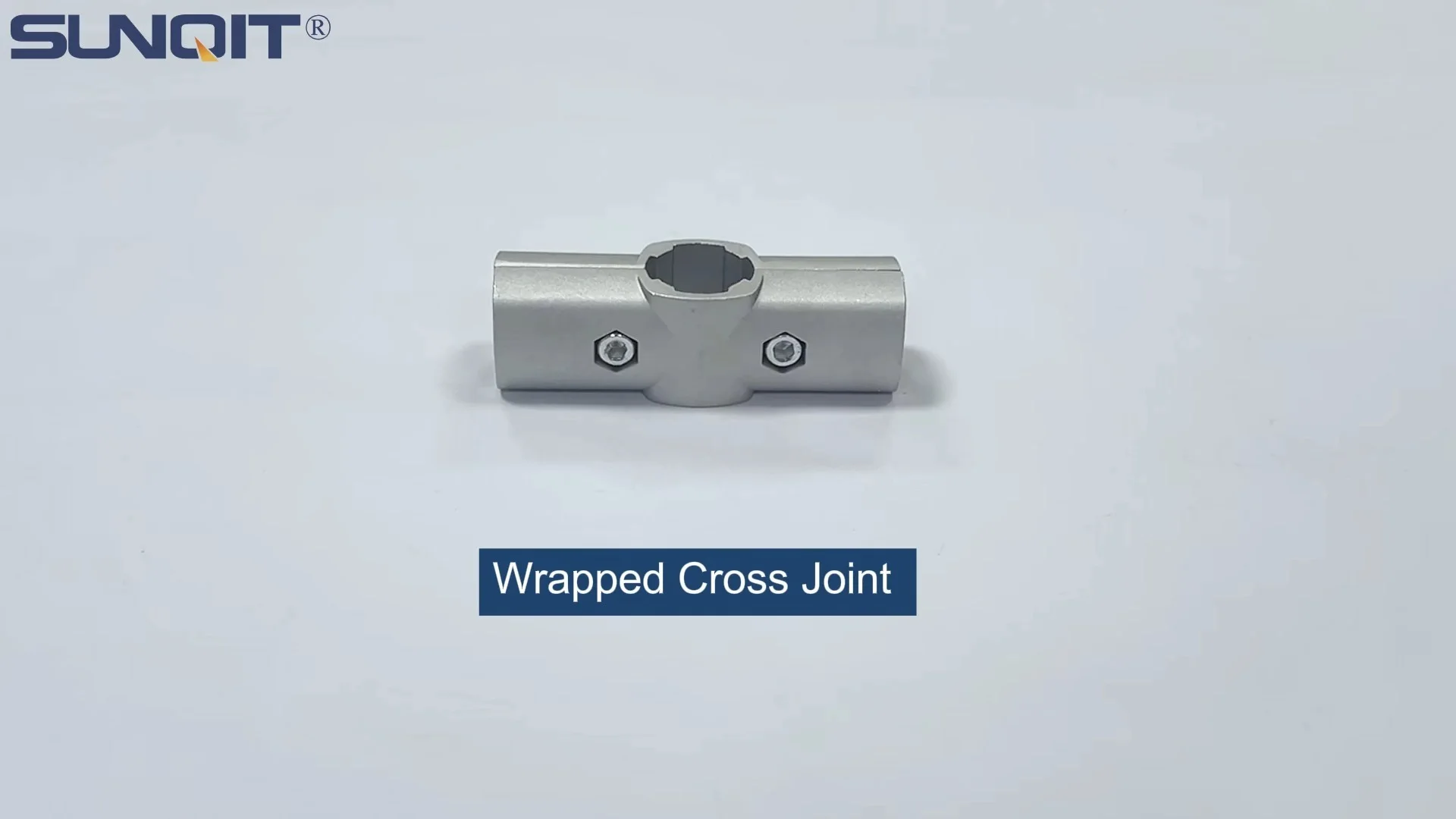
Aluminum 3 way pipe joint for 28mm aluminum pipe connection in 3 direction.
The Role of Three Way Aluminum Pipe Joints in Lean Pipe Systems
In the fast-paced world of manufacturing and production, where efficiency is king and adaptability is queen, the backbone of any successful operation often lies in the infrastructure that supports it. Lean manufacturing, a philosophy centered on minimizing waste and maximizing value, has revolutionized how facilities operate—but its success hinges on more than just processes. It relies on tools and systems that can keep up with constant change. Enter the lean pipe system: a modular, flexible framework built from pipes, joints, and accessories that can be reconfigured in hours, not weeks. And at the heart of this system, quietly holding it all together (quite literally), is the three way aluminum pipe joint. Often overlooked, this small but mighty component is the unsung hero that turns rigid workspaces into dynamic, responsive environments. Let's dive into why it matters, how it works, and the impact it has on everything from assembly lines to warehouse organization.
Understanding Lean Pipe Systems: Beyond the Basics
Before we zoom in on the three way joint, let's first ground ourselves in what a lean pipe system is—and why it's become a staple in modern facilities. At its core, a lean pipe system is a collection of modular components designed to create custom workspaces, material handling solutions, and storage structures. Unlike traditional fixed infrastructure (think welded steel racks or bolted-down workbenches), these systems are built to evolve. Need to rearrange an assembly line for a new product? Adjust the height of a workbench to fit a taller operator? Add a new shelf to a flow rack to accommodate larger parts? With a lean pipe system, these changes are not just possible—they're straightforward, often requiring nothing more than a few hand tools and a basic understanding of how the components fit together.
The magic of these systems lies in their simplicity. Most lean pipe systems today rely on aluminum pipes (or aluminum lean pipes, as they're often called) and a variety of joints, brackets, and accessories. Aluminum is the material of choice here for good reason: it's lightweight enough to make assembly and reconfiguration easy, yet strong enough to support heavy loads. It's also resistant to corrosion, which is a boon in environments where moisture or chemicals might be present, and it's recyclable, aligning with the sustainability goals many companies now prioritize. When you pair these aluminum pipes with the right joints, you get a system that can be shaped into almost anything: workbenches, flow racks, turnover trolleys, material carts—the list goes on.
But for all this flexibility to work, the joints that connect the pipes must be reliable, versatile, and easy to use. This is where the three way aluminum pipe joint steps into the spotlight. While two-way joints connect straight sections and four-way joints handle intersections, the three way joint is the Swiss Army knife of the bunch. It allows for connections in three directions, opening up a world of design possibilities that would be impossible with simpler joints. Whether you're building a corner shelf, a T-shaped workbench extension, or a multi-level flow rack, the three way joint is often the component that makes those designs structurally sound and easy to assemble.
Anatomy of a Three Way Aluminum Pipe Joint: Design That Delivers
Let's get up close and personal with the three way aluminum pipe joint. What exactly is it, and how does it work? At first glance, it might look like a small, unassuming piece of metal—but don't let its size fool you. This joint is engineered with precision to balance three critical needs: strength, flexibility, and ease of use.
Most three way aluminum pipe joints are cast from aluminum alloy, a material chosen for its combination of strength and lightweight properties. The basic design features three openings (or ports) where aluminum pipes can be inserted, typically oriented at 90-degree angles to each other, though some models allow for adjustment to other angles (like 45 degrees) depending on the application. Each port is lined with a rubber or plastic grip that holds the pipe securely in place once inserted, eliminating the need for welding or permanent fasteners. To lock the pipe into the joint, many designs use a setscrew—a small screw that, when tightened, presses against the pipe, creating a firm hold. This setscrew mechanism is key: it allows for quick assembly (just insert the pipe and tighten the screw) and just as quick disassembly (loosen the screw, pull out the pipe), making reconfiguration a breeze.
But the design doesn't stop there. Quality three way joints often include additional features to enhance their functionality. For example, some have rounded edges to prevent damage to pipes or injury to workers during assembly. Others are coated with a corrosion-resistant finish to extend their lifespan, especially in humid or industrial environments. Some even have reinforced stress points—areas where the joint is most likely to bear weight—to ensure they can handle heavy loads without bending or breaking. These small details might seem minor, but they add up to a joint that's not just functional, but durable and safe.
One of the most underrated aspects of the three way joint's design is its compatibility with other aluminum pipe accessories. From caster wheels that add mobility to roller tracks that facilitate smooth material flow, these joints are designed to work seamlessly with the rest of the lean pipe ecosystem. This compatibility is crucial because it means you're not locked into a single brand or system—you can mix and match components to create exactly what you need, whether that's a mobile workbench with a custom shelf or a flow rack with adjustable levels.
Applications in the Real World: Where Three Way Joints Shine
To truly appreciate the value of three way aluminum pipe joints, let's look at how they're used in everyday operations. These joints aren't just theoretical—they're the workhorses behind some of the most common (and most critical) structures in manufacturing, warehousing, and logistics. Let's walk through a few key applications.
Workbenches: The Foundation of Productivity
Workbenches are the heart of any assembly or packaging operation, and a well-designed workbench can make a world of difference in operator comfort and efficiency. With a lean pipe system, workbenches are no longer one-size-fits-all. Using three way joints, you can customize the height, width, and depth of the bench to fit your operators and tasks. For example, a workbench E (single deck, without casters) might start as a simple flat surface, but with three way joints, you can add side shelves for tools, overhead racks for documentation, or even a lower shelf for storing bins of parts. The three way joints allow these additions to be placed exactly where they're needed—no wasted space, no awkward reaching. And if a new task requires a different setup? Simply loosen the joints, remove the shelves, and reattach them in a new configuration. It's that easy.
Flow Racks: Keeping Materials Moving
Flow racks are another area where three way joints prove their worth. These racks are designed to use gravity to move materials from the back (where they're stocked) to the front (where they're picked), reducing the time and effort operators spend retrieving parts. Building an effective flow rack requires precise alignment of levels, and three way joints are instrumental in making that happen. For instance, a material rack B (3 rows and 3 floors) might use three way joints to connect the vertical supports to the horizontal rails that hold the roller tracks. By adjusting the angle of the joints, you can set the perfect incline for the roller tracks, ensuring materials glide smoothly without sliding too quickly. Three way joints also make it easy to add or remove levels as needed—say, if you start stocking smaller parts that don't require a full shelf, you can add a middle level using a few joints and extra pipes. This flexibility ensures the flow rack grows with your inventory, rather than becoming obsolete when your needs change.
Turnover Trolleys: Mobility with Stability
Turnover trolleys are essential for moving materials between workstations, and their design demands both mobility and stability. A wobbly trolley can damage parts, slow down operations, or even cause accidents. Three way joints help solve this problem by creating a rigid frame that can support heavy loads while remaining lightweight enough to push around. For example, the base of a trolley might use three way joints to connect the vertical pipes (which support the shelves) to the horizontal pipes (which form the frame). By distributing the weight evenly across these joints, the trolley remains stable even when fully loaded. And because the joints are easy to disassemble, you can modify the trolley if needed—adding a higher shelf to accommodate taller bins, or removing a shelf to make space for bulkier items. This adaptability is why turnover trolleys built with lean pipe systems are so popular: they're not just carts—they're mobile, customizable platforms that keep materials moving efficiently.
Why Three Way Joints Stand Out: A Comparison
You might be wondering: with so many types of joints available (two-way, four-way, swivel, fixed), why is the three way aluminum pipe joint so indispensable? The answer lies in its unique combination of versatility, simplicity, and strength. To illustrate this, let's compare it to a few other common joint types using a quick table.
| Joint Type | Key Function | Best For | Limitations | Three Way Advantage |
|---|---|---|---|---|
| Two-Way Joint | Connects two pipes in a straight line or at a fixed angle (e.g., 90 degrees) | Straight sections of racks or workbenches | Limited to two directions; can't create branches or T-shapes | Enables branching, adding shelves, or creating corners without extra parts |
| Four-Way Joint | Connects four pipes, typically in a cross shape (up, down, left, right) | Central support structures or multi-directional intersections | Bulky; overkill for simple T-shapes or corners; may add unnecessary weight | More compact and lightweight for most common branching needs |
| Swivel Joint | Allows pipes to rotate relative to each other (e.g., for adjustable shelves) | Angled or rotating components (e.g., tilting work surfaces) | Less stable under heavy loads; more complex to lock in place | Offers fixed, secure connections while still allowing for multi-directional design |
As the table shows, while other joints have their place, the three way joint strikes a balance that makes it incredibly versatile. It's simple enough for everyday use but flexible enough to handle complex designs. It's strong enough for heavy loads but lightweight enough for easy reconfiguration. And perhaps most importantly, it's cost-effective: instead of buying multiple specialized joints for different tasks, you can rely on three way joints for most branching and corner needs, reducing both your parts inventory and your overall costs.
The Ecosystem: Three Way Joints and Aluminum Profile Accessories
No component in a lean pipe system exists in a vacuum, and three way aluminum pipe joints are no exception. Their true power is unlocked when paired with the right aluminum profile accessories. These accessories—things like roller tracks, caster wheels, end caps, and brackets—extend the functionality of the joints, turning basic pipes and joints into fully realized solutions. Let's take a closer look at how this ecosystem works.
Consider roller tracks, for example. Roller tracks are essential for flow racks and material slides, allowing parts to glide from one point to another with minimal effort. To attach a roller track to a lean pipe frame, you might use a roller track placon mount—a small bracket that connects the track to the aluminum profile (or pipe). Three way joints play a key role here by providing the structural support for the frame that holds the placon mounts. Without a sturdy frame (built with three way joints), the roller track would wobble, and parts might get stuck or fall off. By combining joints, pipes, and placon mounts, you create a system where materials flow smoothly and reliably.
Caster wheels are another accessory that pairs perfectly with three way joints. Adding casters to a workbench or trolley turns it from a stationary structure into a mobile one, which is a game-changer for flexibility. To attach casters, you'd typically use a castor installation base—a plate that bolts to the bottom of the frame. Three way joints help here by reinforcing the corners of the frame, ensuring the weight of the structure and its contents is evenly distributed across the casters. This prevents the frame from bending or the casters from breaking under heavy loads. It's a small detail, but it's what makes mobile lean pipe structures safe and durable.
Even smaller accessories, like end caps, rely on the stability provided by three way joints. End caps are placed on the ends of aluminum pipes to prevent sharp edges and protect workers from injury. While they might seem trivial, they're an important safety feature. And because the pipes are held securely in place by three way joints, the end caps stay put—no worrying about them falling off during use or reconfiguration. This attention to detail is what makes lean pipe systems so reliable: every component, from the joints to the end caps, is designed to work together seamlessly.
Installation and Maintenance: Keeping Systems Strong
One of the biggest advantages of three way aluminum pipe joints is how easy they are to work with—but that doesn't mean there aren't best practices to follow. Proper installation and maintenance ensure your lean pipe system remains safe, stable, and functional for years to come. Let's break down the basics.
When installing three way joints, the first step is to ensure the pipes are clean and free of debris. Even small dirt particles can prevent the joint from gripping the pipe properly, leading to a loose connection. Once the pipes are clean, insert them into the joint ports, making sure they're pushed in all the way (most joints have a mark or stop to indicate the correct depth). Then, tighten the setscrews using a hex key—snug, but not so tight that you strip the screw or damage the pipe. It's a good idea to check the tightness of the screws periodically, as vibrations from daily use can cause them to loosen over time. A quick once-over with a hex key every few weeks is usually enough to keep everything secure.
When reconfiguring a system, take the time to disassemble it properly. Never force a pipe out of a joint—loosen the setscrew completely first. Forcing a pipe can bend the joint or damage the pipe's surface, weakening future connections. If a joint becomes stuck (which can happen if it's been in place for a long time), a little lubricant (like WD-40) on the setscrew can help loosen it. And when storing joints and pipes, keep them in a dry, clean area to prevent corrosion—aluminum is resistant to rust, but it's not impervious, especially if exposed to saltwater or harsh chemicals.
Maintenance is equally straightforward. Wipe down joints with a damp cloth occasionally to remove dust and grime. If you notice any signs of damage—like a cracked joint or a stripped setscrew—replace the joint immediately. Using a damaged joint is a safety risk, as it may fail under load. The good news is that replacement joints are relatively inexpensive, so keeping a few spares on hand is a smart investment. By following these simple steps, you can ensure your three way joints (and your entire lean pipe system) stay in top shape, ready to adapt to whatever your operation throws at them.
Sustainability and Cost: The Long-Term Payoff
In today's business landscape, sustainability and cost-effectiveness are more than just buzzwords—they're key factors in long-term success. Here again, three way aluminum pipe joints deliver. Let's start with sustainability. Aluminum is one of the most recyclable materials on the planet, with nearly 75% of all aluminum ever produced still in use today. When a lean pipe system is no longer needed (or when a joint wears out), the aluminum can be recycled, reducing waste and minimizing the environmental impact. Compare that to traditional steel infrastructure, which is often difficult to recycle and may end up in a landfill when it's no longer useful. By choosing aluminum-based systems, companies can reduce their carbon footprint while still getting a durable, functional solution.
From a cost perspective, lean pipe systems (and three way joints) offer significant savings over time. Traditional fixed infrastructure requires upfront investment in custom fabrication, and any changes down the line mean more fabrication costs, downtime, and labor. With lean pipe systems, the initial investment is lower, and reconfiguration costs are minimal—often just the cost of a few extra pipes or joints, plus the labor of your existing team. Over the life of the system, these savings add up. For example, a company that reconfigures its assembly line twice a year could save tens of thousands of dollars in fabrication costs by using lean pipe systems instead of traditional steel. And because the systems are so easy to modify, there's less downtime—meaning operations stay productive, and revenue isn't lost to lengthy retooling.
There's also the human cost to consider. Happy, comfortable operators are more productive, and lean pipe systems (built with three way joints) allow for ergonomic customization. Adjusting a workbench height to reduce back strain, adding a shelf at eye level to minimize reaching, or creating a more efficient layout to reduce walking time—these changes might seem small, but they have a big impact on operator satisfaction and retention. And when operators are happy, they're more engaged, which leads to better quality work and fewer errors. It's a win-win: the company saves money, and the operators work in a safer, more comfortable environment.
Looking Ahead: The Future of Lean Pipe Systems
As manufacturing and logistics continue to evolve—with trends like automation, Industry 4.0, and on-demand production gaining steam—the role of lean pipe systems (and three way joints) is only set to grow. These systems are uniquely positioned to support the flexibility required by modern operations. For example, as more companies adopt collaborative robots (cobots), they'll need workspaces that can easily integrate cobot stations with human workbenches. Three way joints make this integration simple: add a new section to the workbench, adjust the height to match the cobot's arm, and you're ready to go. No need for custom fabrication or long lead times.
We're also seeing advancements in the materials and design of three way joints themselves. Some manufacturers are experimenting with reinforced alloys to increase load capacity, while others are adding features like quick-release levers to make reconfiguration even faster. There's even talk of "smart joints" embedded with sensors that can alert maintenance teams when a connection is loose or a joint is wearing out. While these innovations are still in the early stages, they point to a future where lean pipe systems are not just flexible, but intelligent—adapting not just to physical changes, but to data-driven insights about how the system is being used.
At the end of the day, though, the core value of the three way aluminum pipe joint will remain the same: it's a simple, reliable component that empowers companies to build the infrastructure they need, when they need it. In a world where change is the only constant, that's a value that's hard to overstate.
Wrapping Up: The Quiet Hero of Lean Operations
Three way aluminum pipe joints might not be the most glamorous components in a manufacturing facility, but they are undoubtedly some of the most important. They're the unsung heroes that turn ordinary pipes into extraordinary systems—systems that adapt, grow, and evolve with your business. From workbenches that keep operators comfortable to flow racks that keep materials moving, these joints are the glue that holds lean operations together.
So the next time you walk through a manufacturing plant, a warehouse, or a distribution center, take a moment to look at the workbenches, the racks, the trolleys. Chances are, many of them are built with lean pipe systems—and at the corners, the intersections, the branches, you'll find three way aluminum pipe joints, quietly doing their job. They might not get the attention of flashy new machines or high-tech software, but without them, the flexible, efficient, and sustainable operations we strive for today would be a lot harder to achieve.
In the end, that's the role of the three way aluminum pipe joint: to make the complex simple, the rigid flexible, and the ordinary extraordinary. And in the world of lean manufacturing, that's nothing short of essential.