- Company Articles
- Products and Technology
- Product knowledge
- The Role of Three Way Lean Pipe Joint Chrome in Modular Workbench Design

The Role of Three Way Lean Pipe Joint Chrome in Modular Workbench Design
Related Product
Three Way Lean Pipe Joint Chrome
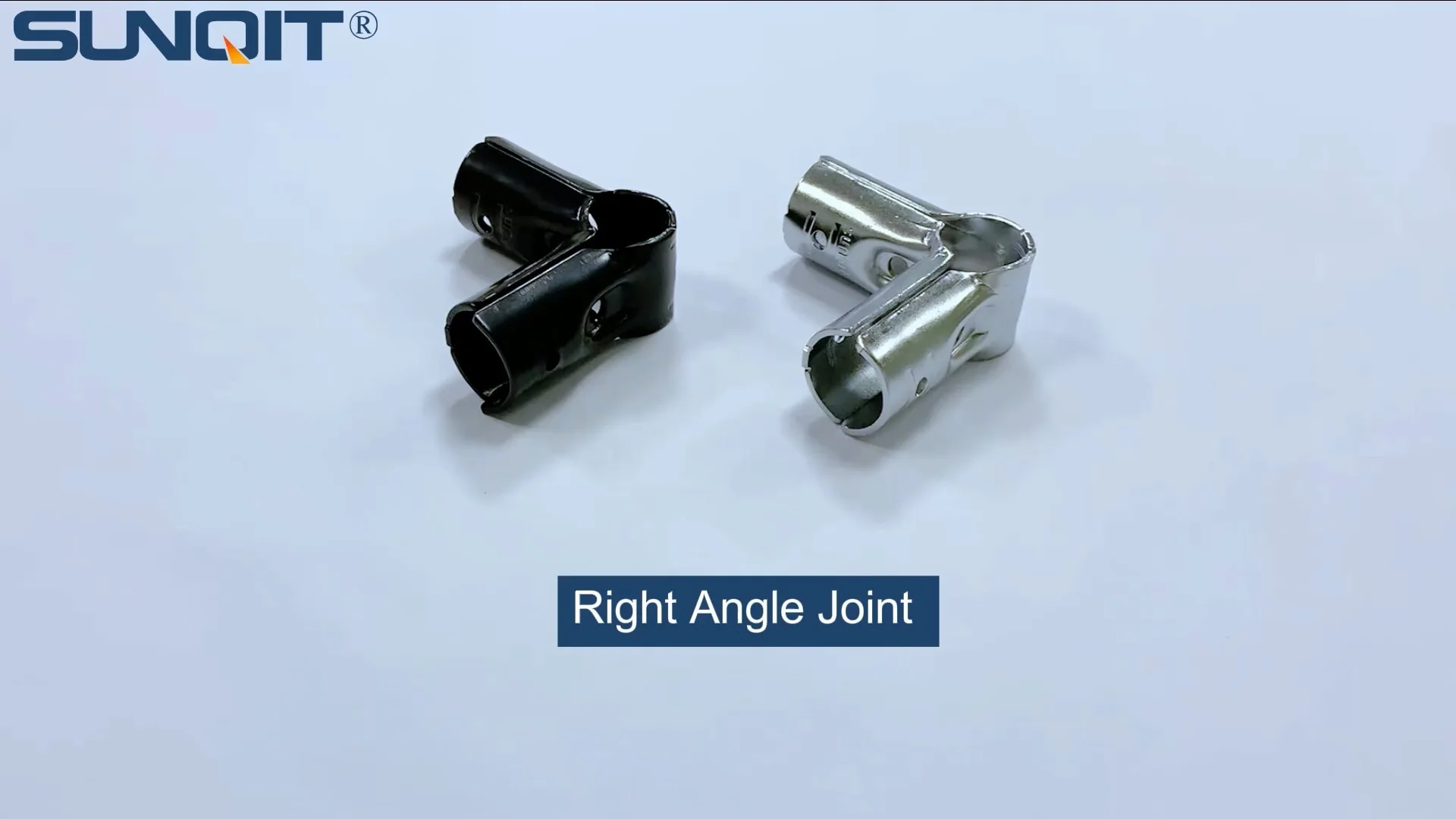
Three way lean pipe joint for 3 pcs 28MM lean pipe connection in straight angle, which used widely in workbench, flow rack, hand trolley frame connection.
Walk into any modern manufacturing facility, warehouse, or assembly line today, and you'll likely notice a common thread: workbenches that don't just sit there—they adapt. A workbench might start as a simple flat surface for assembling circuit boards in the morning, then transform into a dual-level station with tool racks by afternoon, and by week's end, get reconfigured to accommodate a new batch of larger components. This flexibility isn't magic; it's the result of modular design, and at the heart of that design lies a small but mighty component: the three way lean pipe joint chrome.
In an era where lean manufacturing isn't just a buzzword but a survival strategy, the ability to optimize space, reduce waste, and adapt to changing production needs is non-negotiable. Modular workbenches, built with lean principles in mind, have become the backbone of this approach. And while materials like aluminum profiles and lean pipes get plenty of attention, it's the joints that hold the system together—literally and figuratively. The three way lean pipe joint chrome, in particular, stands out as a unsung hero, enabling the kind of flexibility and durability that modern workplaces demand.
This article dives into the world of modular workbench design, exploring how the three way lean pipe joint chrome fits into the larger lean system ecosystem, its unique advantages, and why it's become a staple for manufacturers, from small workshops to Fortune 500 plants. We'll also touch on its integration with other components like aluminum profiles and flow racks, and how it contributes to creating workspaces that aren't just functional, but future-ready.
Understanding Modular Workbenches: Beyond the Static Surface
Gone are the days of heavy, fixed workbenches bolted to the floor, designed for a single task and impossible to modify without a wrench and a team of workers. Today's modular workbenches are more like building blocks—systems of pipes, joints, and accessories that can be assembled, disassembled, and reconfigured in hours (or even minutes) to meet new needs. This shift isn't just about convenience; it's about aligning with the core principles of lean manufacturing: eliminating waste, optimizing flow, and prioritizing continuous improvement.
At their most basic, modular workbenches consist of a frame (typically made of lean pipes or aluminum profiles), a work surface (like a wooden or aluminum honeycomb panel), and accessories (tool hooks, shelves, flow racks, etc.). What makes them "modular" is the ability to swap out these components or add new ones without rebuilding the entire structure. Need to raise the height for ergonomic reasons? Swap out the legs. Want to add a side shelf for tools? Attach it to the frame with a few joints. Suddenly, a workbench that once handled small electronics can now accommodate larger machinery, all without replacing the entire setup.
This adaptability is critical in industries where product lines change frequently—think automotive parts, consumer electronics, or medical device manufacturing. A study by the Manufacturing Extension Partnership (MEP) found that companies using modular workbenches reduced reconfiguration time by up to 70% compared to traditional setups, directly cutting downtime and boosting productivity. But none of this would be possible without reliable, versatile joints.
Lean Systems and the Need for "Smart" Components
Lean manufacturing, at its core, is about creating more value with less waste. That means minimizing everything from excess inventory to unnecessary movement of workers and materials. Modular workbenches are a physical manifestation of this philosophy, but they're only as effective as the components that make them up. Enter the lean pipe system—a collection of pipes, joints, and accessories designed to build lightweight, flexible structures that support lean goals.
Lean pipes (also called "lean tubes") are typically made of steel with a plastic coating (PE coated lean pipe) or stainless steel, offering a balance of strength and affordability. But pipes alone can't form complex structures; they need joints to connect them at various angles. This is where components like the three way lean pipe joint chrome come into play. Unlike basic two-way joints that only connect pipes in a straight line or at 90 degrees, three way joints allow for connections in three directions—opening up a world of design possibilities.
Imagine a small electronics manufacturer that produces both smartphones and tablets. Their assembly line for smartphones might require a compact workbench with a lower shelf for parts bins, while the tablet line needs a taller setup with overhead tool racks. With three way joints, they can use the same base pipes and simply adjust the configuration: adding a vertical pipe for the overhead rack, or a horizontal branch for the parts bin shelf. No need to buy new frames—just reposition the joints. That's lean in action: maximizing resource use and minimizing waste.

Three Way Lean Pipe Joint Chrome: What It Is and Why It Matters
Anatomy of a Workhorse Component
The three way lean pipe joint chrome is exactly what its name suggests: a joint designed to connect three lean pipes at once, with a chrome-plated finish. Let's break that down. First, the "three way" design: unlike two-way joints (which connect two pipes) or four-way joints (which connect four), three way joints have three connection points, allowing pipes to branch off in different directions—typically 90 degrees apart, but some models allow for adjustable angles. This makes them ideal for building T-shapes, Y-shapes, or even more complex structures like corner shelves or multi-level frames.
Then there's the "chrome" plating. Chrome isn't just for aesthetics (though it does give the joint a sleek, professional look). Chrome plating adds a layer of protection against corrosion, rust, and wear—critical in factory environments where joints are exposed to moisture, oils, or chemicals. It also makes the joint easier to clean, ensuring that dirt and grime don't build up and compromise the connection over time. For manufacturers operating in industries with strict cleanliness standards (like food processing or medical device assembly), this is a game-changer.
Under the chrome, the joint itself is usually made of die-cast zinc alloy or steel, chosen for their strength and durability. Most three way joints feature a clamping mechanism—typically a setscrew or a bolt—that tightens around the pipes, creating a secure connection without welding. This "no-weld" design is key to modularity: loosen the screw, reposition the pipe, retighten, and you're done. No special tools, no waiting for welds to cool, no permanent changes.
The Benefits That Set It Apart
So why choose a three way lean pipe joint chrome over other joint types? Let's start with flexibility. In modular workbench design, flexibility means being able to add, remove, or reposition components without rebuilding the entire structure. Three way joints excel here because they let you branch pipes in multiple directions, creating everything from simple shelves to elaborate multi-tiered workstations. For example, a lean pipe workbench might use three way joints to attach a vertical pipe for a monitor arm, a horizontal pipe for a tool rail, and a diagonal pipe for stability—all from a single joint.
Durability is another standout feature. Chrome plating significantly extends the joint's lifespan by resisting corrosion. In a busy factory, joints are subjected to constant stress: workers lean on the bench, tools are placed on shelves, and materials are loaded onto flow racks. A cheap plastic joint might crack under the pressure, but a chrome-plated steel or zinc alloy joint can handle repeated use and heavy loads. Many manufacturers rate their three way chrome joints for loads up to 50kg per connection, making them suitable for everything from light assembly to heavier tasks like automotive part fitting.
Cost-effectiveness is a hidden benefit, too. While chrome-plated joints might cost slightly more upfront than unplated or plastic alternatives, their longevity means fewer replacements over time. A factory that replaces plastic joints every 6–12 months will quickly see those costs add up, whereas chrome joints can last 3–5 years (or longer with proper maintenance). When you factor in the downtime saved by not having to repair or replace broken joints, the investment in chrome pays off.

Designing with Three Way Joints: From Simple to Complex
To truly appreciate the role of three way lean pipe joint chrome in modular workbench design, let's walk through some common applications. These examples show how this small component enables big design possibilities.
Basic Workbench Frames: Stability Meets Simplicity
Even a standard lean pipe workbench relies on three way joints for stability. A typical workbench frame has four vertical legs, connected by horizontal pipes at the top and bottom (to form a rectangle). But to prevent wobbling, diagonal bracing is often added—connecting the top of one leg to the bottom of the opposite leg. This diagonal pipe needs to connect to both the vertical leg and the horizontal pipe, which is where a three way joint comes in. By attaching the diagonal pipe to the three way joint (which is already connected to the vertical and horizontal pipes), the frame gains rigidity without extra parts.
Multi-Level Shelving: Maximizing Vertical Space
Vertical space is often underutilized in workshops, but three way joints make it easy to build upward. For example, a workbench might have a main surface at waist height, then a second shelf above it for storing frequently used tools, and a lower shelf for parts bins. To build this, you'd use three way joints on the vertical legs: one joint at waist height (for the main surface), another halfway up (for the upper shelf), and a third near the bottom (for the lower shelf). Each joint connects the vertical leg to the horizontal pipes of the shelf, creating a sturdy, tiered structure.
What if you need to adjust the height of a shelf later? No problem—just loosen the joint's setscrew, slide it up or down the vertical pipe, and retighten. This is impossible with welded frames, where shelf heights are fixed. With three way joints, your workbench grows with your needs.
Integrating Accessories: From Flow Racks to Tool Rails
Modular workbenches aren't just about surfaces—they're about integrating accessories that streamline workflow. Flow racks, for example, are essential for "kanban" systems, where materials flow from storage to the workbench as needed. A flow rack attached to a workbench might consist of sloped roller tracks (like 38 aluminum roller track yellow) that let bins glide down to the worker, reducing the need to reach for parts. To attach this flow rack to the workbench, you'd use three way joints: one arm connects to the workbench frame, another to the flow rack's vertical support, and a third to a diagonal brace for stability.
Tool rails are another common accessory. A horizontal pipe mounted under the upper shelf, with hooks for tools, keeps everything within arm's reach. Three way joints connect this tool rail to the shelf's vertical supports, ensuring it stays secure even when tools are hung and removed repeatedly.
Comparing Joint Types: Why Three Way Chrome Stands Out
Not all lean pipe joints are created equal. To understand why three way lean pipe joint chrome is so valuable, it helps to compare it to other common joint types. Below is a table breaking down key differences in design, applications, and durability:
| Joint Type | Connection Points | Typical Applications | Load Capacity (Per Connection) | Durability Features | Best For |
|---|---|---|---|---|---|
| Two Way Lean Pipe Joint | 2 (straight or 90°) | Basic frames, straight shelves, horizontal/vertical pipes | Up to 40kg | Steel/zinc alloy, some with plating | Simple, linear structures |
| Three Way Lean Pipe Joint Chrome | 3 (90° or adjustable angles) | Multi-level shelves, T/Y-shaped structures, flow rack attachments | Up to 50kg | Chrome plating (corrosion resistance), steel/zinc alloy core | Complex, adaptable workbenches |
| Four Way Lean Pipe Joint | 4 (cross-shaped) | Central support structures, multi-directional frames | Up to 45kg | Steel/zinc alloy, some with plating | Symmetrical, high-stability setups |
| Plastic Lean Pipe Joint | 2–4 (varies) | Light-duty applications, temporary setups | Up to 25kg | Plastic (low corrosion resistance, prone to cracking) | Low-cost, short-term use |
As the table shows, three way chrome joints strike a balance between flexibility, load capacity, and durability that's hard to beat. Their three connection points make them more versatile than two-way joints, while their chrome plating gives them an edge in longevity over plastic or unplated metal joints. For manufacturers investing in modular systems for the long haul, this combination is invaluable.
Integration with Aluminum Profiles: A Hybrid Approach
While lean pipes are excellent for lightweight, cost-effective structures, some applications demand greater rigidity—for example, workbenches supporting heavy machinery or precision tools. This is where aluminum profiles come into play. Aluminum profiles (like 4040 or 3030 EU standard aluminum profile) are extruded aluminum beams with T-slots, allowing for easy attachment of accessories without drilling or welding. When combined with three way lean pipe joint chrome, they create hybrid systems that leverage the best of both worlds: the flexibility of lean pipes and the strength of aluminum.
For example, a workbench might use aluminum profiles for the main frame (to support heavy loads) and lean pipes for accessories like tool rails or side shelves (to keep costs down and flexibility high). To connect the lean pipe tool rail to the aluminum profile frame, you'd use a three way chrome joint: one arm clamps to the aluminum profile (using aluminum profile accessories like T-slot nuts), another to the lean pipe, and a third to a brace for stability. This hybrid design ensures the bench is strong where it needs to be and adaptable where it counts.
Aluminum profiles also pair well with three way joints when building height-adjustable workbenches. By using aluminum guide rails (like aluminum guide rail a) and adjustable clamps, the workbench surface can be raised or lowered, with three way joints securing the surface to the guide rails. This is critical for ergonomics, as workers of different heights can adjust the bench to avoid strain—a key part of lean systems that prioritize worker well-being.
Installation and Maintenance: Keeping Your Joints (and Workbench) in Top Shape
One of the biggest advantages of three way lean pipe joint chrome is how easy it is to install and maintain. Unlike welded joints, which require skilled labor and specialized equipment, these joints can be assembled by anyone with a hex key (Allen wrench). Here's a quick guide to installation:
- Prepare the pipes: Cut lean pipes to the desired length (if needed) and ensure ends are clean and straight.
- Position the joint: Slide the joint onto one pipe, then align the second and third pipes with the remaining connection points.
- Tighten the setscrews: Use a hex key to tighten the setscrews on each connection point. Be careful not to overtighten—this can strip the threads or damage the pipe coating.
- Test stability: Gently shake the structure to ensure all connections are secure. If there's wobble, check that the setscrews are tight and pipes are properly aligned.
Maintenance is equally straightforward. Chrome-plated joints should be wiped down periodically with a damp cloth to remove dirt and oils, which can corrode the surface over time. If a joint becomes loose (common after repeated use), simply retighten the setscrews. For joints that are difficult to adjust (due to debris or rust), a small amount of lubricant (like WD-40) on the setscrew threads can help.
One thing to avoid: using excessive force when repositioning joints. While the chrome plating is durable, it can scratch if pipes are forced into place. Always loosen setscrews fully before moving a joint, and align pipes carefully to prevent scraping.
Real-World Impact: How Three Way Chrome Joints Transform Workspaces
To put it all into perspective, let's look at a real-world example. A mid-sized automotive parts manufacturer was struggling with inefficiencies in their assembly line. Their workbenches were fixed, so when they introduced a new part (a larger sensor), they had to buy entirely new benches—costing $15,000 and taking two weeks to install. Downtime during installation led to missed deadlines, and the old benches sat unused, wasting space.
After switching to modular workbenches with three way lean pipe joint chrome, the company saw dramatic changes. When they introduced a new part, they reconfigured existing benches in a single day by adding vertical extensions (using three way joints) and adjusting the height of shelves. They repurposed the old benches for a new sub-assembly line, eliminating waste. Within six months, the savings from reduced downtime and avoided bench purchases totaled over $40,000. Workers also reported less fatigue, as they could adjust the bench height and tool positions to fit their needs—boosting productivity by 12%.
This isn't an isolated case. From small machine shops to large aerospace plants, the three way lean pipe joint chrome is quietly enabling these kinds of transformations. It's not just a component; it's a tool for continuous improvement—the cornerstone of lean systems.
The Future of Modular Workbenches: What's Next for Three Way Joints?
As manufacturing evolves, so too will modular workbench design. The rise of "Industry 4.0" (smart manufacturing) is bringing new demands: workbenches that integrate with IoT devices (like sensors to track tool usage), or that can be reconfigured automatically via robotics. While three way lean pipe joint chrome might seem low-tech compared to these innovations, it will remain a critical foundation. Why? Because even smart systems need physical flexibility. A workbench with IoT sensors still needs to adapt to new tools or part sizes, and that requires adaptable joints.
We may also see advances in joint design, such as lighter materials (like aluminum instead of steel) or built-in quick-release mechanisms for even faster reconfiguration. But the core value of three way joints—versatility, durability, and simplicity—will endure. Chrome plating may also evolve, with newer coatings offering even better corrosion resistance or antimicrobial properties for medical and food industries.
Perhaps most importantly, as sustainability becomes a priority, modular systems built with reusable components like three way joints will play a key role in reducing waste. Instead of discarding entire workbenches, manufacturers can reuse pipes and joints, cutting down on scrap metal and raw material use. It's lean manufacturing at its greenest.
Conclusion: The Small Component That Powers Big Change
In the grand scheme of manufacturing, the three way lean pipe joint chrome might seem. It's small, often overlooked, and rarely the star of the show. But as we've explored, it's the glue that holds modular workbench design together—enabling the flexibility, durability, and efficiency that modern lean systems demand. From supporting multi-level shelves to integrating flow racks and aluminum profiles, this simple joint empowers manufacturers to adapt, innovate, and thrive in a fast-changing world.
Whether you're a small business owner setting up your first assembly line or a plant manager looking to optimize an existing workflow, the three way lean pipe joint chrome is more than just a part—it's an investment in your ability to grow. It's a reminder that in lean manufacturing, the smallest components often make the biggest difference. So the next time you walk into a workshop and marvel at how adaptable the workbenches are, take a closer look at the joints holding them together. Chances are, you'll find a three way lean pipe joint chrome, quietly doing its job: building the future of manufacturing, one connection at a time.