- Company Articles
- Products and Technology
- Product knowledge
- The Role of Turning Angle Code 2020 in Lean Material Rack B Safety

The Role of Turning Angle Code 2020 in Lean Material Rack B Safety
Related Product
Urning Angle Code 2020
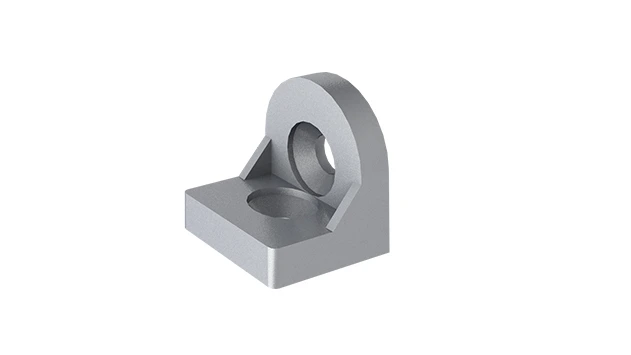
The turning angle aluminum profile connector provides a 90 degree hidden corner connection. 2020 it is means this size is used for 20 series aluminum profile.The corner code comes with set screws that allow for quick, easy connections.
The Role of Turning Angle Code 2020 in Lean Material Rack B Safety
In the fast-paced world of manufacturing and warehousing, efficiency isn't just a buzzword—it's the backbone of daily operations. Every tool, every piece of equipment, and every small component plays a part in keeping the workflow smooth, products moving, and teams productive. But if there's one thing that sits even higher than efficiency on the priority list, it's safety. After all, what good is a well-oiled production line if the structures supporting it put workers and inventory at risk?
Today, we're going to zoom in on a seemingly small but critically important component: the Turning Angle Code 2020 . Specifically, we'll explore how this unassuming piece of hardware plays a starring role in keeping one of the most common workhorses of lean environments safe and reliable: the Material Rack B (3 row and 3 floor) . Whether you're deep into lean manufacturing or just starting to optimize your material handling systems, understanding how these two pieces work together can save you from costly accidents, downtime, and headaches down the line.
Lean Systems and the Unsung Heroes of Material Handling
First, let's set the stage with a quick refresher on lean systems . At their core, lean systems are all about eliminating waste—whether that's wasted time, space, or resources. Material racks, like Material Rack B, are central to this mission. They organize inventory, keep parts within arm's reach of assembly lines, and turn cluttered warehouses into streamlined hubs where everything has a place.
Material Rack B, with its 3 rows and 3 floors, is a popular choice for good reason. It's versatile enough to hold everything from small electronic components to larger mechanical parts, and its modular design fits perfectly into the lean philosophy of adaptability. But here's the thing: a rack is only as good as its weakest link. Without proper reinforcement, even the sturdiest-looking rack can become a hazard over time—especially when it's loaded day in and day out, moved, or adjusted to fit new needs.

Material Rack B: More Than Just Metal and Shelves
Let's take a closer look at Material Rack B. Picture it: three horizontal shelves (or "floors") stacked vertically, each divided into three parallel rows. This setup is ideal for categorizing parts—maybe row 1 for screws and bolts, row 2 for circuit boards, row 3 for housings, with each floor dedicated to a different stage of production. It's compact, which saves space, and open, which makes grabbing what you need quick and easy.
But what holds it all together? Typically, the frame is built from aluminum profiles —lightweight, strong, and resistant to rust, which is a big plus in busy environments where spills or humidity might be a factor. Aluminum profiles are also designed with T-slots, those handy grooves along their length that let you attach accessories like shelves, brackets, and yes—angle codes—without welding or drilling new holes. This modularity is what makes Material Rack B so flexible, but it also means the connections between profiles are critical. A loose bracket or a weak joint isn't just a minor annoyance; it's a ticking time bomb.

Why Safety in Material Racks Matters (More Than You Might Think)
Before we dive into the Turning Angle Code 2020, let's talk about why rack safety is non-negotiable. Imagine this: It's a Tuesday afternoon, and your warehouse team is restocking Material Rack B. The top floor is loaded with heavy plastic bins full of metal parts—maybe 40 pounds per bin, three bins per row. That's 360 pounds on just the top shelf. Now, what if the corner where the vertical and horizontal profiles meet is starting to bend? Maybe it was never properly reinforced, or the bracket holding it together has worn down from months of use. Suddenly, with one more bin added, there's a loud creak, the shelf dips, and the whole row comes crashing down. Parts scatter, the rack is damaged, and worst of all, someone could have been standing there.
That scenario isn't just dramatic—it's real. According to OSHA, nearly 25% of warehouse injuries involve falling objects or collapsing storage structures, and many of these incidents trace back to inadequate structural support. Beyond the human cost, there's the financial hit: damaged inventory, halted production, repair costs, and potential fines. So when we talk about components like the Turning Angle Code 2020, we're not just talking about "parts"—we're talking about safeguards that protect your team, your bottom line, and your ability to keep operations running.
Meet the Turning Angle Code 2020: Small Part, Big Responsibility
Now, let's get up close with the star of the show: the Turning Angle Code 2020. If you've ever assembled furniture or built a shelving unit, you're probably familiar with angle brackets—the L-shaped pieces that reinforce corners. The Turning Angle Code 2020 is like the industrial-strength, precision-engineered cousin of those household brackets. Made from high-grade aluminum alloy (matching the aluminum profiles it connects), it's designed to fit snugly into the T-slots of 2020 series aluminum profiles (hence the "2020" in its name).
But it's not just a simple bracket. The "turning" in its name refers to its ability to connect profiles at a 90-degree angle while allowing for slight adjustments during installation—think of it as a flexible yet firm handshake between two perpendicular pieces of aluminum. It typically features pre-drilled holes that align with the T-slots, making it easy to secure with screws or bolts without guesswork. And because it's made of aluminum, it's lightweight enough not to add unnecessary bulk to the rack, but strong enough to handle the stresses of daily use.
What Makes It Different from Generic Angle Brackets?
You might be wondering: Can't I just use any old angle bracket here? Why splurge on a specialized Turning Angle Code 2020? The answer lies in precision and compatibility. Generic brackets might fit loosely, require drilling custom holes (which weakens the aluminum profile), or fail to distribute weight evenly. The Turning Angle Code 2020, on the other hand, is engineered specifically for 2020 aluminum profiles—the same profiles that form the frame of Material Rack B. This means a perfect fit, minimal play between components, and a connection that's designed to last.
Think of it like buying shoes: A generic size might "work," but a shoe tailored to your foot will be more comfortable, supportive, and less likely to cause blisters. The same logic applies here—precision matters, especially when safety is on the line.
How Turning Angle Code 2020 Enhances Material Rack B Safety
Now, let's get to the heart of the matter: How exactly does the Turning Angle Code 2020 make Material Rack B safer? Let's break it down into four key areas where this small component makes a big difference.
1. Reinforcing Structural Integrity at Critical Corners
Material Rack B's 3-row, 3-floor design means there are a lot of corners—everywhere a vertical profile meets a horizontal shelf, and every time a horizontal profile splits into rows. These corners are stress points. Every time you load a shelf, the weight pushes down on the horizontal profiles, which in turn pull on the vertical supports. Over time, this constant stress can cause the profiles to flex, warp, or even separate at the joints.
Enter the Turning Angle Code 2020. By clamping down on both the vertical and horizontal profiles at these corners, it acts like a mechanical anchor. It distributes the stress of the load across a wider area, preventing the T-slots from deforming and the profiles from pulling apart. Without it, the connection relies solely on the screws or bolts holding the profiles together—a setup that's far more likely to loosen over time, especially with repeated loading and unloading.
To put it in perspective: Imagine holding two sticks together at a right angle with just a rubber band. Over time, the rubber band stretches, and the sticks slip. Now wrap a sturdy bracket around the corner and secure it with screws—the sticks stay put, even if you pull on them. That's the Turning Angle Code 2020 in action.
2. Ensuring Even Load Distribution Across All Floors
Material Rack B is designed to hold a lot of weight, but that weight needs to be spread out evenly. If one shelf is overloaded or the weight isn't centered, it can create a "tipping" force that strains the rack's base and corners. The Turning Angle Code 2020 helps here by ensuring that each floor's weight is transferred directly to the vertical supports, rather than pooling at the joints.
Let's do some quick math. Suppose each of Material Rack B's 3 floors holds 150 pounds (50 pounds per row). That's 450 pounds total. Without proper corner reinforcement, the horizontal profiles might sag in the middle, causing the load to shift toward the edges of the shelf. This not only risks damaging the products on the shelf but also puts extra pressure on the outermost vertical profiles, increasing the chance of the rack leaning or collapsing.
With Turning Angle Code 2020s securing each corner, the weight is channeled straight down through the vertical profiles to the rack's base. The angle codes act as "weight bridges," ensuring that no single joint bears more than its share. This even distribution is key to keeping the rack stable, even when loaded to its maximum capacity.
3. Maintaining Precision Alignment for Safe Access
Safety isn't just about preventing collapses—it's also about making sure workers can access the rack without risk. A rack with misaligned shelves or rows is a hazard waiting to happen. Shelves that aren't level might cause products to slide off, while rows that are crooked can make it hard to retrieve items without knocking others over.
The Turning Angle Code 2020 plays a quiet but crucial role in alignment. Because it's designed to fit precisely into 2020 aluminum profiles, it ensures that horizontal and vertical pieces meet at exactly 90 degrees. During installation, this precision helps keep all three floors level and all three rows straight. Even better, if the rack needs to be reconfigured (say, adjusting a shelf height to fit taller bins), the angle code allows for minor adjustments while still maintaining that critical right angle.
Consider a scenario where a Material Rack B was assembled without Turning Angle Code 2020s. Over time, the corners might "creep"—one shelf tilts slightly, another row drifts off-center. A worker reaching for a bin on the top shelf might overbalance, or a product might roll off an uneven surface and onto someone below. With angle codes in place, the rack stays true to its original alignment, making every interaction with it safer and more predictable.
4. Compatibility with Aluminum Profile Accessories
Material Rack B isn't just a standalone structure—it's part of a larger ecosystem of aluminum profile accessories that enhance its functionality. From shelf dividers to label holders to ESD (electrostatic discharge) mats, these accessories are what turn a basic rack into a customized tool for your specific needs. The Turning Angle Code 2020 plays well with this ecosystem, and that compatibility adds another layer of safety.
For example, if you add a wire mesh shelf to prevent small parts from falling through, the shelf brackets need to attach securely to the rack's horizontal profiles. The angle codes ensure the horizontal profiles are stable and rigid, so the shelf brackets don't wiggle or loosen. Similarly, if you install casters to make the rack mobile (a common upgrade for lean systems), the angle codes at the base help distribute the rack's weight evenly on the casters, preventing tipping when moving it across the floor.
In short, the Turning Angle Code 2020 doesn't just protect the rack itself—it protects all the accessories that make the rack useful. It's the foundation that lets you build safely upward, adding features without compromising stability.
| Safety Aspect | Without Turning Angle Code 2020 | With Turning Angle Code 2020 |
|---|---|---|
| Structural Integrity at Corners | Joints prone to loosening; profiles may warp or separate over time. | Stress distributed evenly; joints remain tight and profiles stay aligned. |
| Load Distribution | Weight at joints; risk of shelf sagging or rack tipping. | Weight channeled to vertical supports; even distribution across all floors. |
| Shelf/Row Alignment | High chance of misalignment; uneven shelves increase product slippage risk. | Precise 90-degree angles maintained; shelves stay level, rows stay straight. |
| Compatibility with Accessories | Accessories may loosen or fail due to unstable profile connections. | Stable base for accessories; brackets, shelves, and casters remain secure. |
| Long-Term Durability | Frequent need for repairs; shorter lifespan due to joint wear. | Reduced maintenance; rack retains structural integrity for years. |
Real-World Impact: Case Studies in Safety
To really drive home how important the Turning Angle Code 2020 is, let's look at two real-world scenarios (based on common industry experiences) where its presence—or absence—made all the difference.
Case Study 1: The Cost of Cutting Corners
A mid-sized electronics manufacturer recently expanded its production line and purchased five new Material Rack B units to store circuit boards and small components. To save costs, the purchasing team opted for generic angle brackets instead of the recommended Turning Angle Code 2020s. The racks were assembled quickly, and production began.
Six months later, problems started. Workers reported that the top shelves of the racks were "wobbly," and a few circuit board bins had fallen off, damaging the components inside. A maintenance inspection revealed that the generic brackets had loosened significantly—some had even bent at the corners. The horizontal profiles had started to bow under the weight, and the vertical supports were leaning slightly. The company had to shut down the line for two days to replace all the brackets with Turning Angle Code 2020s, costing them thousands in lost production and damaged inventory.
The lesson? Saving a few dollars on brackets ended up costing exponentially more in the long run. The Turning Angle Code 2020s not only fixed the immediate issues but also prevented future problems, making the investment well worth it.
Case Study 2: Safety as a Foundation for Growth
A automotive parts supplier, focused on lean principles, installed 20 Material Rack B units in their warehouse—all equipped with Turning Angle Code 2020s from the start. Over three years, they expanded their operations, increasing the load on each rack by 30% (adding heavier metal components) and even retrofitting some racks with casters to make them mobile. Despite this increased use, annual safety inspections showed zero structural issues. The racks remained stable, shelves stayed level, and there were no incidents of falling products or rack damage.
When asked about their secret to maintaining safety while scaling, the warehouse manager pointed to the small details: "We don't skip on components like the angle codes. They're cheap insurance compared to the cost of an accident. Plus, knowing the racks are solid lets the team focus on their work instead of worrying about whether the shelves will hold."
Best Practices: Getting the Most Out of Turning Angle Code 2020
Now that we've covered why the Turning Angle Code 2020 is so important, let's talk about how to use it effectively. Even the best component won't work if it's installed incorrectly or ignored during maintenance. Here are a few best practices to keep in mind:
1. Don't Skimp on Quantity
Every corner matters. It might be tempting to skip an angle code here or there to save time or money, but even one missing bracket can create a weak spot. For Material Rack B, a good rule of thumb is to install a Turning Angle Code 2020 at every vertical-horizontal joint—for a 3-floor rack, that's typically 4 corners per floor (one at each end of the horizontal shelf), totaling 12 angle codes per rack. It's a small number, but each one pulls its weight.
2. Use the Right Hardware
The angle code is only as strong as the screws or bolts holding it in place. Always use the hardware recommended by the manufacturer—typically M5 or M6 bolts designed for T-slot profiles. Avoid over-tightening (which can strip the T-slots) or under-tightening (which leaves the joint loose). A torque wrench can help ensure you hit the sweet spot.
3. Inspect Regularly
Add Turning Angle Code 2020s to your regular maintenance checklist. Every month or so, check that they're tight, free of corrosion, and not bent or cracked. If you notice any damage, replace the angle code immediately—don't wait for a bigger problem to develop. This is especially important if the rack is moved frequently or loaded near its maximum capacity.
4. Train Your Team
Make sure everyone who assembles or works with Material Rack B understands the role of the Turning Angle Code 2020. Explain why it's there, how to install it correctly, and what to look for if something's wrong. A team that knows the "why" behind a component is more likely to take the time to do it right.
Conclusion: Small Components, Big Safety Wins
In the grand scheme of lean manufacturing and material handling, the Turning Angle Code 2020 might seem like a tiny piece of the puzzle. But as we've explored, it's a piece that holds everything together—literally and figuratively. By reinforcing corners, distributing loads, maintaining alignment, and working seamlessly with aluminum profile accessories, it ensures that Material Rack B (3 row and 3 floor) does its job safely, day in and day out.
At the end of the day, lean systems are about more than just efficiency—they're about creating workplaces where teams can thrive without fear of accidents or disruptions. The Turning Angle Code 2020 is a testament to that: by investing in the right components, even the smallest ones, you're investing in the safety of your team, the integrity of your products, and the long-term success of your operations.
So the next time you walk past a Material Rack B in your warehouse or factory, take a second to look at those corners. If you see a Turning Angle Code 2020 holding things together, you'll know it's not just a bracket—it's a silent guardian, working hard to keep your lean system running safely and smoothly. And that's a detail worth celebrating.