- Company Articles
- Products and Technology
- Product knowledge
- The Role of Turning Angle Code 3030 in Flexible Production Lines

The Role of Turning Angle Code 3030 in Flexible Production Lines
Related Product
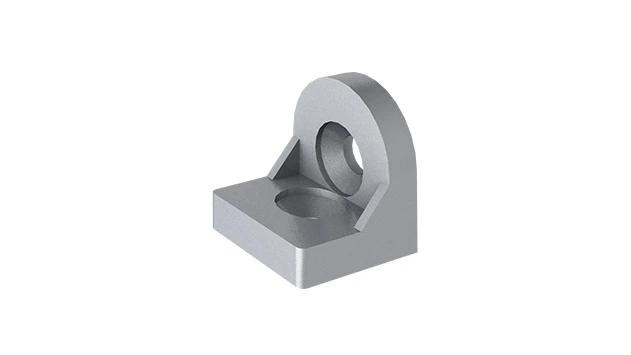
Turning Angle Code 3030
The turning angle aluminum profile connector provides a 90 degree hidden corner connection. 3030 it is means this size is used for 30 series aluminum profile.The corner code comes with set screws that allow for quick, easy connections.
In the fast-paced world of modern manufacturing, where consumer demands shift overnight and product lifecycles grow shorter by the year, one challenge looms larger than most: adaptability. Factories, whether churning out electronics, automotive parts, or medical devices, can no longer rely on rigid, one-size-fits-all production lines. The cost of retooling, the delay in responding to market trends, and the inefficiency of fixed systems have pushed manufacturers toward a new paradigm: flexible production lines. These dynamic setups promise quick reconfiguration, reduced downtime, and the ability to pivot between products with minimal hassle. Yet, behind this flexibility lies a network of unsung components—small, often overlooked parts that hold the entire system together. Among these, the Turning Angle Code 3030 stands out as a quiet workhorse, enabling the modularity and strength that make flexible manufacturing possible.
The Rise of Flexible Manufacturing: Why Rigidity No Longer Works
To understand the importance of components like the Turning Angle Code 3030, it's first crucial to grasp why flexible production lines have become non-negotiable. Consider a mid-sized electronics manufacturer five years ago: their assembly line was built around a single product, say, a basic smartphone. The workstations were welded steel, the conveyor belts bolted to the floor, and every tool holder fixed in place. When a new model with a larger screen arrived, the entire line needed to be torn down and rebuilt—a process that took weeks, cost thousands, and left the factory idle. Today, that same manufacturer can't afford such delays. Customers want personalized features, competitors launch new models monthly, and profit margins demand efficiency at every step.
Flexible production lines solve this by prioritizing modularity. Instead of permanent structures, they use lightweight, reconfigurable components that can be rearranged like building blocks. Need to add a testing station? Swap out a shelf for a workbench. Adjust the height of a conveyor to accommodate taller products? Loosen a few fasteners and reposition. This agility isn't just about speed—it's about survival. Small businesses, in particular, rely on this flexibility to compete with industry giants, while large corporations use it to test new product lines without disrupting existing operations. At the heart of this system are aluminum profiles and their accompanying accessories, which form the "skeleton" of modular setups. And within that skeleton, angle codes—specifically the Turning Angle Code 3030—act as the joints, connecting pieces with precision and strength.
Aluminum Profiles: The Backbone of Modular Systems
Before diving into the specifics of the Turning Angle Code 3030, let's zoom out to its "partner in crime": the 3030 aluminum profile. If flexible production lines are the body, aluminum profiles are the bones—lightweight, strong, and infinitely adaptable. These extruded aluminum bars, typically 30mm by 30mm in cross-section (hence "3030"), feature T-shaped slots running along their length. These slots are the key to their versatility: they allow accessories like nuts, bolts, and connectors to slide into place and lock securely, no welding required. Unlike steel, aluminum is corrosion-resistant, easy to handle (even for workers without heavy machinery), and recyclable, making it both practical and sustainable.
3030 aluminum profiles are everywhere in modern factories: they form the frames of workbenches, the sides of material racks, the rails of conveyors, and the supports of assembly stations. Their popularity stems from their balance of strength and weight—they can support heavy loads (think: power tools, bulky components) without weighing down the system, making reconfiguration a one-person job. But a profile alone is just a stick of metal. To build something useful, you need to connect multiple profiles at angles—90 degrees for a square frame, 45 degrees for a diagonal brace, or 135 degrees for a corner shelf. This is where angle codes come in. Designed to fit snugly into the T-slots of aluminum profiles, angle codes bridge the gap between pieces, turning individual bars into stable, functional structures.

Turning Angle Code 3030: Design, Material, and Mechanics
The Turning Angle Code 3030 is a small but critical accessory engineered specifically for 3030 aluminum profiles. At first glance, it might look like a simple metal bracket, but its design is the result of careful engineering to balance strength, ease of use, and versatility. Let's break down its key features:
Material: Strength Meets Durability
Most Turning Angle Code 3030 components are made from 6063-T5 aluminum alloy, a material chosen for its exceptional properties. 6063 aluminum is lightweight (about a third the density of steel) but surprisingly strong, with a tensile strength of 180 MPa—more than enough to support the loads of typical factory equipment. The "T5" designation refers to its heat treatment, which enhances its hardness and resistance to deformation. This means the angle code can withstand repeated tightening and loosening (a common part of reconfiguration) without bending or stripping. Additionally, aluminum's natural resistance to rust ensures the code won't corrode in humid factory environments or when exposed to coolants and cleaning agents—unlike steel, which would require constant painting or coating.
Design: Precision for a Secure Fit
The Turning Angle Code 3030 is shaped like a right angle (90 degrees), with two arms that align perfectly with the 30mm width of the 3030 profile. Each arm features pre-drilled holes, usually for M5 or M6 screws, which thread into T-slot nuts hidden inside the profile's T-slots. This design creates a "clamping" effect: as the screw tightens, the T-slot nut is drawn upward, pressing the angle code firmly against the profile. The result is a joint that's both secure and removable—no welding, no adhesives, just mechanical pressure. Some models include additional features, like rounded edges to prevent worker injury or reinforced corners for extra load capacity, but the core principle remains the same: simple, effective connection.
What sets the Turning Angle Code 3030 apart from generic angle brackets is its precision. The arms are milled to fit the profile's T-slots exactly, eliminating wobble or play in the joint. This tight tolerance is crucial for stability—imagine a workbench built with loose-fitting brackets: tools would shake, parts would slide, and the entire structure might wobble under load. With the Turning Angle Code 3030, the connection is rigid, ensuring that even heavy equipment stays steady during operation.
Versatility: More Than Just 90 Degrees
While the name suggests a focus on 90-degree angles, many Turning Angle Code 3030 variants are designed for flexibility. Some models can be adjusted to 45 or 135 degrees, using slotted holes instead of fixed ones, allowing for angled connections. Others feature swivel joints, enabling rotation around the profile axis—a useful feature for building foldable workbenches or adjustable shelves. This adaptability means the same angle code can be used in multiple scenarios: from square frames to diagonal braces, from static racks to mobile trolleys. For manufacturers, this versatility reduces the need to stock dozens of specialized brackets, simplifying inventory and cutting costs.

Applications: Where Turning Angle Code 3030 Shines
To truly appreciate the Turning Angle Code 3030, let's look at its real-world applications. In factories, warehouses, and workshops, this small component plays a role in nearly every modular structure, from the simplest workbench to complex assembly lines. Here are three key use cases:
1. Workbenches: The Heart of the Assembly Line
Workbenches are the most visible application of modular systems, and the Turning Angle Code 3030 is integral to their design. A typical factory workbench might consist of four vertical 3030 profiles (the legs), connected at the top and bottom by horizontal profiles (the frame), with a plywood or aluminum honeycomb panel for the surface. The corners where the vertical and horizontal profiles meet? That's where the Turning Angle Code 3030 comes in. By securing each joint, it ensures the bench is stable enough to support tools, parts bins, and even heavy machinery like soldering stations or 3D printers.
But the magic is in the reconfiguration. Suppose a worker needs a shelf above the bench to hold frequently used components. Instead of ordering a custom shelf, they can cut two short 3030 profiles, attach them to the vertical legs using Turning Angle Code 3030 brackets, and mount a panel on top—all in under an hour. If the next shift requires more table space, the shelf can be removed just as easily. This flexibility reduces clutter, adapts to different tasks, and keeps workers productive. In lean manufacturing terms, it's a classic example of "kaizen" (continuous improvement)—small, incremental changes that add up to big efficiency gains.
2. Material Racks: Organizing Inventory with Ease
Material racks, like the "Material Rack B (3 row and 3 floor)" common in warehouses, rely on the Turning Angle Code 3030 to create sturdy, adjustable storage. These racks are built from vertical 3030 profiles, with horizontal profiles forming the shelves. Each shelf is supported by angle codes, which attach to the vertical posts at predetermined heights. Need to store taller boxes? Loosen the screws on the angle codes, slide them up, and retighten—no need to disassemble the entire rack. This adjustability is critical in environments where inventory sizes vary, from small electronic components to bulky packaging materials.
The Turning Angle Code 3030 also ensures the rack can handle heavy loads. A single 3030 profile, when properly braced with angle codes, can support up to 200 kg per shelf—more than enough for most industrial materials. For even heavier items, manufacturers can double up on profiles or use reinforced angle codes, but the core principle remains the same: strength through modular connection.
3. Mobile Trolleys: Flexibility Beyond the Fixed Line
Not all modular structures stay in one place. Mobile trolleys, used to transport parts between stations, depend on the Turning Angle Code 3030 for both strength and mobility. These trolleys feature a frame of 3030 profiles, connected by angle codes, with casters (wheels) mounted to the base. The angle codes ensure the frame doesn't flex when loaded, preventing parts from shifting during transport. They also allow for easy customization: adding a handle, a tool tray, or dividers to separate components—all by attaching new profiles with angle codes.
Consider a medical device manufacturer: their trolleys carry delicate instruments, so stability is non-negotiable. Using 3030 profiles and Turning Angle Code 3030 brackets, they build trolleys with padded shelves, secure latches, and smooth-rolling casters. When a new instrument is introduced, they simply reconfigure the trolley's interior using the same angle codes—no need to buy a new trolley. This not only saves money but also reduces waste, aligning with sustainability goals.
Comparing Angle Codes: Why 3030 Stands Out
While the Turning Angle Code 3030 is widely used, it's not the only angle code on the market. Profiles come in different sizes—20mm x 20mm (2020), 40mm x 40mm (4040), even 80mm x 80mm (8080)—and each has its own angle code. So why choose 3030? The answer lies in its balance of size, strength, and versatility. To illustrate, let's compare the Turning Angle Code 3030 with two common alternatives: the 2020 and 4040 angle codes.
| Feature | Turning Angle Code 2020 | Turning Angle Code 3030 | Turning Angle Code 4040 |
|---|---|---|---|
| Profile Compatibility | 20mm x 20mm aluminum profiles | 30mm x 30mm aluminum profiles | 40mm x 40mm aluminum profiles |
| Max Load Capacity (per joint) | 50-80 kg | 150-200 kg | 300-400 kg |
| Common Applications | Small shelving, light-duty workbenches, display racks | Medium workbenches, material racks, mobile trolleys | Heavy-duty assembly lines, industrial storage, machine frames |
| Weight (per unit) | 50-80 grams | 120-150 grams | 200-250 grams |
| Cost (approximate) | $1.50-$2.50 | $2.00-$3.50 | $3.00-$5.00 |
As the table shows, the 3030 angle code hits the sweet spot for most mid-sized applications. It's strong enough to handle typical factory loads without being as heavy or expensive as the 4040 code, yet more robust than the 2020 code, which is better suited for lightweight tasks. For small manufacturers or workshops, this balance makes the 3030 system the most cost-effective choice—providing enough strength for daily use while keeping material and labor costs low.
Aluminum Profile Accessories: Complementing the Angle Code
The Turning Angle Code 3030 rarely works alone. It's part of a ecosystem of aluminum profile accessories that enhance its functionality. T-slot nuts, for example, are essential: these small, sliding nuts fit into the profile's T-slots, providing a threaded hole for the angle code's screws. Without them, the angle code couldn't clamp securely. Then there are end caps—plastic or aluminum covers that snap onto the ends of profiles, preventing dust buildup and protecting workers from sharp edges. Even simple components like rubber leveling feet, which attach to the bottom of vertical profiles via angle codes, play a role, ensuring workbenches stay stable on uneven floors.
Another key accessory is the T-slot rubber seal cover, a flexible strip that fits into the T-slots when they're not in use. This prevents debris from clogging the slots, making it easier to insert nuts and connectors later. For manufacturers that reconfigure their lines frequently, this small detail saves time—no more picking dirt out of slots with a screwdriver before attaching a new angle code. Together, these accessories turn a collection of profiles and angle codes into a seamless, user-friendly system.
Lean Systems: Waste Reduction Through Modularity
At its core, the Turning Angle Code 3030 aligns with the principles of lean manufacturing—a philosophy focused on eliminating waste (muda) and maximizing value. Lean systems aim to reduce seven types of waste: overproduction, waiting, transportation, overprocessing, inventory, motion, and defects. Modular components like the Turning Angle Code 3030 address several of these directly.
Take "motion waste," for example: the unnecessary movement of workers as they reach for tools or parts. A poorly designed workstation might force an assembler to stretch across the bench, wasting time and increasing fatigue. With the Turning Angle Code 3030, the workstation can be reconfigured to place tools within arm's reach, cutting motion waste and boosting productivity. Similarly, "waiting waste"—idle time while workers wait for equipment—drops when lines can be reconfigured in hours instead of weeks. Even "inventory waste" is reduced, as manufacturers no longer need to stockpile specialized brackets for every possible setup; a few boxes of 3030 angle codes and profiles cover most needs.
Perhaps most importantly, modular systems support "continuous improvement" (kaizen). Workers on the factory floor, who know the process best, can suggest small changes—adding a shelf, adjusting a conveyor angle—and implement them immediately using angle codes and profiles. This empowers employees, fosters innovation, and creates a culture of ownership over the production line. In this way, the Turning Angle Code 3030 isn't just a mechanical component; it's a tool for cultural change.
Real-World Impact: A Small Manufacturer's Success Story
To bring this to life, let's meet Maria, the production manager at a small electronics company that assembles smart home devices. A year ago, Maria's factory relied on fixed steel workbenches and custom-built shelving. When a major client ordered a new sensor model with a different shape, the assembly line ground to a halt for three weeks while the line was rebuilt. The delay cost the company a key contract, and Maria knew something had to change.
Today, Maria's factory runs on 3030 aluminum profiles and Turning Angle Code 3030 brackets. Last month, when the same client requested a updated sensor—this time with a larger battery pack—Maria didn't panic. She gathered her team, sketched a new workstation design, and by the end of the day, they'd reconfigured three workbenches. Using Turning Angle Code 3030 brackets, they added extra support for the larger battery trays, adjusted the height of the conveyor to align with the new assembly steps, and even built a small testing shelf above the line. The entire process took six hours, and production resumed the next morning. The client was impressed, the team felt proud of their quick response, and Maria avoided the stress of another shutdown.
This story isn't unique. Across industries, manufacturers are discovering that modular components like the Turning Angle Code 3030 don't just improve efficiency—they transform how teams work. They turn rigid, frustrating processes into flexible, empowering ones, where adaptability is built into the system.
Future Trends: What's Next for Modular Components?
As flexible manufacturing continues to evolve, so too will the components that power it. The Turning Angle Code 3030, for instance, may soon integrate with smart technologies. Imagine angle codes with built-in sensors that monitor load capacity, alerting workers if a shelf is overloaded. Or profiles with embedded RFID tags, allowing factories to track components and reconfigure lines automatically via software. Material science will also play a role: new aluminum alloys could make angle codes lighter and stronger, while recycled materials might reduce environmental impact.
Another trend is the rise of "click-and-connect" systems, where angle codes and profiles snap together without tools, further speeding up reconfiguration. For small businesses or workshops with limited technical expertise, this could lower the barrier to entry, making flexible manufacturing accessible to even more producers. Whatever the future holds, one thing is clear: the need for adaptable, modular systems will only grow, and components like the Turning Angle Code 3030 will remain at the center of that evolution.
Conclusion: The Quiet Hero of Flexible Manufacturing
In the grand scheme of manufacturing, the Turning Angle Code 3030 is easy to overlook. It's small, unassuming, and rarely mentioned in boardroom discussions about innovation. Yet, without it, the flexible production lines that drive modern manufacturing would collapse. It's the connective tissue that turns aluminum profiles into workbenches, racks, and assembly lines. It's the reason a small electronics factory can pivot to a new product in a day, or a warehouse can reorganize its inventory without hiring contractors. It's the embodiment of lean principles—simple, efficient, and focused on value.
For workers on the factory floor, the Turning Angle Code 3030 represents something even more personal: control. It turns a static workspace into one they can shape, adapt, and improve. It reduces frustration, speeds up tasks, and makes their jobs a little easier. In a world where change is constant, that sense of control is invaluable. So the next time you walk through a factory, take a closer look at the workbenches, the racks, the trolleys. Chances are, you'll spot the Turning Angle Code 3030—quietly holding it all together, and quietly changing the way we make things.