- Company Articles
- Products and Technology
- Product knowledge
- The Role of Turning Angle Code 4040 in Sustainable Lean Manufacturing

The Role of Turning Angle Code 4040 in Sustainable Lean Manufacturing
Related Product
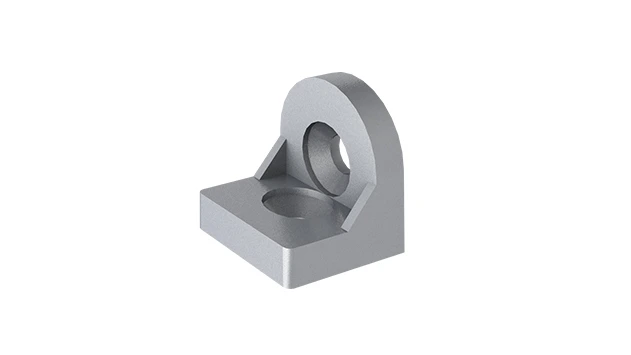
Turning Angle Code 4040
The turning angle aluminum profile connector provides a 90 degree hidden corner connection. 4040 it is means this size is used for 40 series aluminum profile.The corner code comes with set screws that allow for quick, easy connections.
How a Small Component Drives Big Change in Efficiency and Environmental Responsibility
Walk into any modern manufacturing facility today, and you'll likely notice a quiet revolution happening on the factory floor. It's not just about machines whirring faster or products rolling off the line quicker—though those are part of it. It's about a deeper shift: the marriage of lean manufacturing principles, which aim to eliminate waste and boost efficiency, with sustainability goals that prioritize the health of our planet. In this intersection, components often play outsized roles. One such unsung hero? The Turning Angle Code 4040 .
At first glance, it might seem like just another piece of hardware. But for manufacturers striving to build flexible, waste-free, and eco-conscious operations, the Turning Angle Code 4040 is far more than that. It's a linchpin that connects aluminum profiles, streamlines assembly, and ensures that lean systems aren't just efficient—they're built to last, adapt, and minimize environmental impact. Let's dive into how this small but mighty component is reshaping the future of manufacturing.
What Even Is a Turning Angle Code 4040?
If you've ever seen a modular workbench, a flow rack, or a material handling trolley in a factory, chances are it's built with aluminum profiles—those sleek, T-slot extruded beams that form the backbone of modern industrial setups. The most common of these is the 4040 aluminum profile , named for its 40mm x 40mm cross-section. But profiles alone can't create a functional system; they need connectors to hold them together at angles, and that's where the Turning Angle Code 4040 comes in.
Simply put, the Turning Angle Code 4040 is a precision-engineered connector designed to join 4040 aluminum profiles at 90-degree angles (though some variants accommodate other angles, too). Made from high-grade aluminum alloy, it's lightweight yet surprisingly strong, with a design that allows for quick assembly and disassembly. Unlike clunky welds or permanent bolts, this little component lets workers snap profiles together, adjust angles, and reconfigure systems with minimal tools—all while maintaining structural integrity.
Think of it as the "hinge" of the lean manufacturing world. Without it, building a flexible lean system would be like trying to build a house with only nails and no screws—possible, but messy, time-consuming, and nearly impossible to modify later.
The Design Magic: Why This Connector Stands Out
What makes the Turning Angle Code 4040 so special? Let's break down its design features, because they're the key to its role in sustainable lean manufacturing:
- Tool-Free (or Minimal-Tool) Assembly: Most variants use a simple set screw or cam lever to lock onto the T-slot of 4040 profiles. No welding torches, no heavy drills—just a hex key or even a hand twist. This cuts assembly time by up to 70% compared to traditional methods, which means less labor, less energy use, and fewer production delays.
- Reusability by Design: Unlike welded joints, which are permanent and often damaged when disassembled, the Turning Angle Code 4040 can be removed and reused dozens of times. Scratched? Bent? Rarely—aluminum's durability means it holds up to repeated use. This reusability is a cornerstone of sustainability; instead of scrapping an entire workbench when a production line changes, you can take it apart and rebuild it with the same components.
- Compatibility with Everything : It plays well with other aluminum profile accessories , from end caps to cable management clips. Pair it with a 4040 aluminum profile end cap to smooth sharp edges (and prevent workplace injuries), or add a bracket for a tool holder—all without modifying the connector itself. This modularity means systems can evolve without needing new parts.
- Strength Without the Weight: Aluminum is lighter than steel but still strong enough to support heavy loads—think toolboxes, conveyor belts, or even small machinery. The Turning Angle Code 4040 distributes weight evenly across the profile's T-slots, so you don't need overbuilt connectors (which would add unnecessary material and cost).
In short, its design checks every box for lean manufacturing: it eliminates waste (time, labor, materials), boosts flexibility, and ensures that systems can adapt to changing needs—all while keeping environmental impact in mind.

Building Lean Systems That Actually Work for Your Team
Let's get practical: How does the Turning Angle Code 4040 actually make a difference on the factory floor? Let's take a common scenario: a electronics manufacturer that needs to assemble smartphones. Their production line requires workbenches, material racks, and conveyor tracks—all of which need to be reconfigured every few months when a new phone model launches.
In the "old days," this would mean hiring welders to build custom steel workbenches, which would take weeks to fabricate. When the next model came out, those workbenches would either be hacked apart (creating metal waste) or stored in a warehouse (wasting space). With the Turning Angle Code 4040 and 4040 aluminum profiles, the process is night and day:
- Day 1: Assembly: Workers use Turning Angle Code 4040 connectors to build workbenches in hours, not weeks. They attach shelves, tool hooks, and even ESD mats (for static control) using compatible aluminum profile accessories. No welding fumes, no heavy lifting—just a few hex keys and a team of two.
- Month 6: Reconfiguration: When the new phone model requires taller workbenches, the team doesn't build new ones. They disassemble the old workbenches, adjust the height by adding/removing profile sections, and reattach the Turning Angle Code 4040 connectors. The whole process takes a day instead of a week.
- Year 2: Repurposing: When the factory expands, the old workbenches are taken apart again and turned into material racks for the shipping department. The Turning Angle Code 4040 connectors are reused, and only a few new profiles are needed to extend the racks. No waste, no extra cost.
This isn't just efficiency—it's lean manufacturing in action. By reducing setup time, eliminating waste from custom fabrication, and allowing infinite reconfiguration, the Turning Angle Code makes it possible for teams to focus on what matters: making products, not building infrastructure.

Sustainability: It's Not Just "Green" Marketing
Sustainability in manufacturing often gets reduced to buzzwords like "carbon footprint" or "recycling," but at its core, it's about reducing waste —and that's where the Turning Angle Code 4040 truly shines. Let's break down its environmental impact:
1. Less Material Waste
Traditional manufacturing setups rely on custom-cut steel or wood, which generates scraps. A welder might cut a steel beam 2 inches too short, rendering it useless. With aluminum profiles and Turning Angle Code 4040 connectors, components are pre-cut to standard lengths, and the modular design means you only use what you need. No more "oops, we cut that too short" moments—and no more metal or wood scraps ending up in landfills.
2. Lower Energy Use
Welding steel requires high heat, which guzzles electricity. Assembling with Turning Angle Code 4040? It's tool-free or uses basic hand tools, so energy consumption drops dramatically. Plus, aluminum production uses 95% less energy than steel production (thanks to recycling), and since the Turning Angle Code is made from recycled aluminum (in many cases), its lifecycle carbon footprint is a fraction of traditional connectors.
3. The Circular Economy in Action
When a manufacturer using welded steel workbenches goes out of business, those workbenches are usually scrapped. With aluminum profiles and Turning Angle Code 4040 connectors, they're sold, donated, or repurposed. Aluminum is 100% recyclable, and even if the connectors are damaged, the metal can be melted down and reused—no waste, no loss of material quality.
One factory in Germany reported a 40% reduction in waste and a 25% drop in energy costs after switching to aluminum profile systems with Turning Angle Code 4040 connectors. That's not just good for the planet—it's good for the bottom line, too.
Traditional vs. Turning Angle Code 4040: A Quick Comparison
| Aspect | Traditional Methods (Welding/Bolts) | Turning Angle Code 4040 |
|---|---|---|
| Assembly Time | 8-12 hours for a workbench (requires skilled labor) | 1-2 hours for a workbench (basic training suffice) |
| Reusability | Low (permanent joints; disassembly damages components) | High (can be reused 50+ times with no loss of strength) |
| Material Waste | High (scrap metal from cutting/welding) | Low (precision-fit; minimal offcuts) |
| Flexibility | Fixed (changes require rebuilding from scratch) | Adjustable (reconfigure angles/heights in minutes) |
| Long-Term Cost | High (replacement + labor costs add up) | Low (one-time purchase, reusable indefinitely) |
The Future: Small Components, Big Impact
As manufacturers face pressure to do more with less—less time, less money, less environmental harm—the Turning Angle Code 4040 is poised to become even more critical. Here's why:
1. The Rise of "Batch-of-One" Manufacturing: With consumer demand for customized products, factories need to switch between tiny production runs quickly. The Turning Angle Code 4040 makes it possible to build mini-assembly lines for 10 units as easily as 10,000—no waste, no delays.
2. Sustainability Regulations: Governments worldwide are cracking down on manufacturing waste, with fines for excess landfill use and incentives for recycling. Using reusable components like the Turning Angle Code 4040 isn't just "green"—it's compliance.
3. The Skills Gap: Skilled welders are in short supply, but the Turning Angle Code 4040 requires minimal training. Factories can train new workers in hours, not months, keeping production moving even with labor shortages.
Final Thoughts: Small Parts, Big Dreams
At the end of the day, the Turning Angle Code 4040 is more than a connector. It's a symbol of how manufacturing is evolving—away from wasteful, rigid processes and toward systems that are efficient, adaptable, and kind to the planet. It proves that sustainability and lean manufacturing don't have to be trade-offs; with the right tools, they can reinforce each other.
So the next time you walk through a factory and see a sleek aluminum workbench or a nimble conveyor system, take a closer look. Chances are, there's a Turning Angle Code 4040 holding it all together—quietly, efficiently, and sustainably. And in a world that needs more solutions than problems, that's something worth celebrating.