- Company Articles
- Products and Technology
- Product knowledge
- The Role of Two Way Aluminum Pipe Joints in Building Flexible Workstations

The Role of Two Way Aluminum Pipe Joints in Building Flexible Workstations
Related Product
Two Way Aluminum Pipe Joint
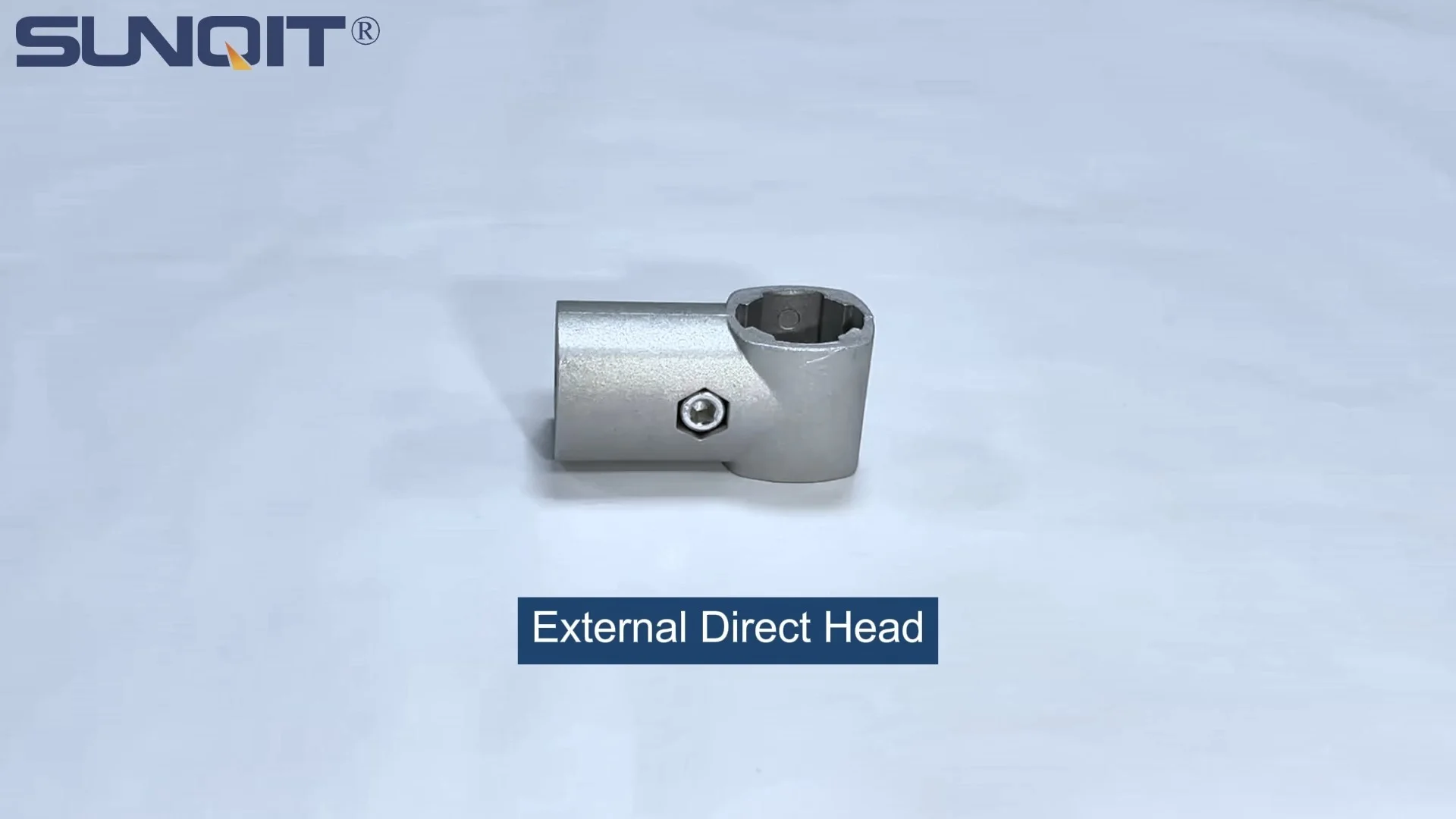
Aluminum 2 way pipe joint for 28mm aluminum pipe connection in 2 direction.
Introduction: The Need for Agility in Modern Workspaces
In today's fast-paced manufacturing and production environments, the ability to adapt quickly isn't just a competitive advantage—it's a necessity. Traditional workstations, often built with welded steel or fixed wooden structures, were designed for stability but not for change. They worked well when production lines ran the same product for years, but in an era where customer demands shift overnight and product lifecycles shrink, rigidity has become a liability. Enter the era of flexible workstations: modular, reconfigurable setups that can evolve with your needs. At the heart of this revolution lies a humble yet powerful component: the two way aluminum pipe joint.
Aluminum pipe systems, paired with innovative joints and accessories, have transformed how we think about workspace design. Lightweight, durable, and infinitely customizable, these systems empower teams to build, modify, and expand workstations without the need for specialized tools or permanent construction. And among the many types of joints that make this possible, the two way aluminum pipe joint stands out as a cornerstone of flexibility. Whether you're assembling a simple workbench for small-part assembly or a complex material flow rack for a warehouse, these joints are the silent workhorses that hold everything together—literally and figuratively.
Understanding Two Way Aluminum Pipe Joints: More Than Just a Connector
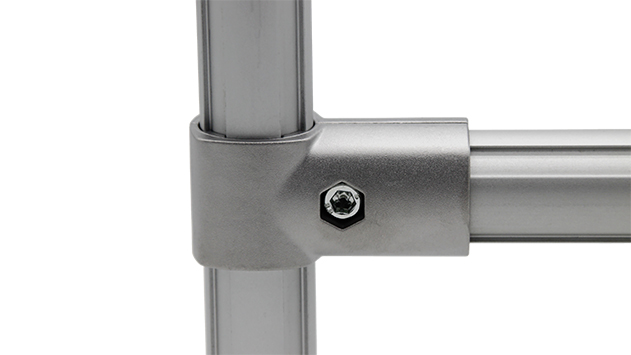
At first glance, a two way aluminum pipe joint might seem like a simple piece of hardware: a small, often L-shaped or T-shaped component designed to link two aluminum pipes. But its simplicity is deceptive. These joints are engineered to balance strength, precision, and adaptability—three qualities that are non-negotiable in dynamic work environments. Let's break down what makes them unique.
First, material matters. Most two way joints are made from high-grade aluminum alloy, chosen for its winning combination of lightness and strength. Unlike steel, aluminum won't rust, making it ideal for use in humid or industrial settings where corrosion is a concern. It's also significantly lighter than steel, which means assemblies built with aluminum joints are easier to move, reposition, and reconfigure—no need for heavy machinery or extra manpower.
The design of the joint itself is equally important. Unlike traditional welded connections, which are permanent and require skilled labor, two way aluminum pipe joints use a friction-based or bolted locking mechanism to secure pipes in place. This means you can assemble a workstation in minutes using just a hex key or even by hand, depending on the joint type. For example, some joints feature internal threads that tighten around the pipe when a bolt is turned, creating a secure grip without damaging the pipe's surface. Others use a cam-lock design, where a simple twist locks the pipes into position. This "tool-light" assembly is a game-changer for teams that need to iterate quickly—no more waiting for a welder or spending hours dismantling old structures.
But perhaps the most critical feature of two way joints is their versatility in angles. While the name "two way" suggests they connect two pipes, many models allow for adjustments beyond the standard 90-degree angle. Some can pivot to 45 degrees, 30 degrees, or even custom angles, giving designers the freedom to create workstations that fit odd spaces or unique workflow requirements. Imagine needing a workbench with a sloped surface for easier access to tools—with a two way joint that can tilt, you can adjust the angle of the top shelf without replacing the entire frame. That's the kind of flexibility that turns static workspaces into dynamic, team-centric environments.
The Building Blocks: Aluminum Profiles, Accessories, and the Ecosystem of Flexibility
A two way aluminum pipe joint is only as effective as the system it's part of. To build truly flexible workstations, you need a ecosystem of components that work together seamlessly: aluminum pipes (or profiles), accessories like end caps and brackets, and complementary tools that enhance functionality. Let's explore how these pieces come together, with a focus on two key players: aluminum profile accessories and aluminum guide rail A.
Aluminum profiles are the "bones" of any workstation. These are typically extruded aluminum tubes with a hollow core and, in many cases, T-slots along their length. The T-slots are a genius addition: they allow you to attach accessories—like shelves, tool hooks, or monitors—anywhere along the profile, not just at fixed intervals. For example, a 4040 aluminum profile (named for its 40mm x 40mm cross-section) is a popular choice for workbench frames, thanks to its balance of rigidity and weight. When paired with two way joints, these profiles form the structure of the workstation, whether it's a standing desk, a packing station, or a material rack.
Aluminum profile accessories are the "muscles" that add functionality to the frame. Think of them as the finishing touches that turn a basic pipe structure into a fully equipped workspace. End caps, for instance, cover the ends of profiles to prevent sharp edges and debris from collecting inside. Brackets let you mount shelves or bins to the T-slots, while hinges add mobility—like a fold-down table extension for extra workspace. Even small details, like rubber feet or leveling pads, play a role, ensuring the workstation stays stable on uneven floors.
Then there's aluminum guide rail A, a specialized accessory that deserves a spotlight. Guide rails are used to create smooth, low-friction surfaces for sliding components—think of the tracks on a drawer or the runners on a material flow rack. Aluminum guide rail A is often designed with a U-shaped channel that fits over the T-slot of an aluminum profile, creating a seamless path for rollers, slides, or even conveyor belts. When combined with two way joints, guide rails enable the creation of dynamic workstations where materials can flow effortlessly from one station to the next. For example, a picking workstation in a warehouse might use aluminum guide rail A to mount a roller track, allowing bins of parts to glide smoothly toward the operator—reducing bending, reaching, and fatigue.
The magic happens when all these components—pipes, two way joints, profiles, accessories, and guide rails—work in harmony. Unlike traditional workstations, which are built from pre-cut, fixed-length materials, aluminum pipe systems are modular by design. You can mix and match parts to create exactly what you need, then take it apart and start over when your needs change. It's like building with an advanced set of Erector blocks, but for grown-ups—and with real-world applications that boost productivity and morale.

Flexibility in Action: Assembling a Workbench with Two Way Joints
To truly appreciate the role of two way aluminum pipe joints, let's walk through a practical example: building a basic workbench, one of the most common workstation types in manufacturing, labs, and workshops. We'll see how these joints simplify the process and enable endless customization.
Step 1: Plan the design. Let's say we need a workbench that's 120cm long, 60cm deep, and 85cm high—standard dimensions for assembly work. We'll use 28mm diameter aluminum pipes for the frame (lightweight but sturdy enough for most tasks) and 4040 aluminum profiles for the tabletop supports. We'll also add a lower shelf for storage and a back rail with hooks for tools.
Step 2: Assemble the frame. Start with the four vertical legs: cut four pipes to 85cm. Then, connect the top of the legs using two way joints to form the rectangular frame of the tabletop. Here's where the joint's angle flexibility comes in: if we want the legs to angle slightly outward for stability (a common design choice), we can use two way joints with a 5-degree outward tilt instead of a strict 90-degree angle. No need to bend pipes or weld—just adjust the joint and tighten.
Step 3: Add the lower shelf. Using shorter pipes (60cm for the depth, 120cm for the length), connect the legs halfway up using two way joints. This creates a second rectangular frame, which will support the shelf. Again, the joints allow for quick adjustments: if we later decide the shelf is too high, we can loosen the joints, slide the pipes down, and retighten—no disassembly required.
Step 4: Mount the tabletop. Lay 4040 aluminum profiles across the top frame, securing them to the pipes using T-slot brackets (another type of aluminum profile accessory). Then, attach a plywood or aluminum honeycomb panel to the profiles to create the work surface. If we need the tabletop to be ESD-safe (for electronics assembly), we can swap in an ESD-rated panel—no need to rebuild the entire frame.
Step 5: Add functionality with aluminum guide rail A. Along the back edge of the tabletop, mount aluminum guide rail A using T-slot bolts. Then, attach sliding tool holders or a small parts bin to the rail. Now, tools can slide from left to right as the operator moves, keeping everything within arm's reach. If the operator prefers the tools on the side instead of the back? Just loosen the guide rail's brackets, rotate the rail 90 degrees, and retighten. Done.
In under an hour, we've built a fully functional workbench—one that's sturdy enough to support tools and parts, lightweight enough to move with a few people, and adaptable enough to grow with our needs. And at every step, the two way aluminum pipe joint was the key. Without it, we'd be stuck with welded steel legs (permanent, heavy) or wooden frames (prone to warping, hard to modify). With it, we have a workstation that's as flexible as the team using it.

Comparing Traditional vs. Aluminum Pipe Workstations: The Numbers Speak
To put the benefits of two way aluminum pipe joints into perspective, let's compare a traditional welded steel workbench with one built using aluminum pipes and two way joints. The table below highlights key differences in cost, assembly time, flexibility, and durability—factors that directly impact your bottom line.
| Feature | Traditional Welded Steel Workbench | Aluminum Pipe Workbench (with Two Way Joints) |
|---|---|---|
| Assembly Time | 4–6 hours (requires skilled welder) | 30–60 minutes (no special skills needed) |
| Weight | 150–200 kg (difficult to move) | 30–50 kg (easily repositioned by 2 people) |
| Customization | Permanent; modifications require cutting/welding | Unlimited; reconfigure joints/pipes in minutes |
| Cost (Initial) | Higher (materials + labor) | Lower (no labor for welding; reusable parts) |
| Cost (Long-Term) | High (replace entire bench if needs change) | Low (reuse pipes/joints for new configurations) |
| Durability | High (but prone to rust if not painted) | High (aluminum resists corrosion; joints maintain grip over time) |
The data is clear: aluminum pipe workstations, built with two way joints, offer significant advantages in speed, cost, and adaptability. For example, the 4–6 hour assembly time for a steel workbench translates to lost productivity—time that could be spent building products, not building workstations. And when your needs change (e.g., you need to add a shelf or lower the height), the steel bench becomes a sunk cost, while the aluminum bench can be reconfigured with parts you already own.
Real-World Applications: Where Two Way Joints Shine
Two way aluminum pipe joints aren't just for workbenches—their versatility makes them indispensable across industries. Let's look at a few real-world scenarios where these joints have made a tangible difference.
Electronics Manufacturing: In a factory assembling smartphones, production lines change frequently to accommodate new models. A workstation built with two way joints can be quickly modified to hold different tooling or test equipment. For example, when a new phone model with a larger screen is introduced, operators can adjust the height of the assembly jig by loosening the two way joints, sliding the pipes up, and retightening—all without stopping the line for hours.
Warehouse Logistics: Material flow racks are critical for keeping inventory organized and accessible. Using two way joints, warehouses can build racks with adjustable shelving heights to fit everything from small parts bins to large cartons. If a new product line requires taller shelves, the joints allow for quick reconfiguration—no need to buy new racks or waste space with one-size-fits-all solutions.
Automotive Repair Shops: Mechanics need workstations that can adapt to different vehicle models. A mobile tool cart built with aluminum pipes and two way joints can be customized with tool holders, parts bins, and even a small work surface. When working on a compact car, the cart can be made narrower to fit in tight spaces; for a truck, it can be widened to hold larger tools. The lightweight design means it can be rolled around the shop with ease.
Medical Labs: Labs require sterile, easy-to-clean workspaces. Aluminum's corrosion resistance makes it ideal for this environment, and two way joints allow for the quick removal of shelves or accessories for deep cleaning. For example, a lab bench used for sample preparation can have its shelves detached, sanitized, and reattached in minutes—reducing downtime between shifts.
Maintenance and Longevity: Making Your Investment Last
One common concern with modular systems is durability: "If it's easy to take apart, will it hold up over time?" With two way aluminum pipe joints, the answer is a resounding yes—provided you follow basic maintenance practices. Aluminum is naturally resistant to corrosion, but like any material, it benefits from occasional care. Wiping down joints with a damp cloth to remove dust and debris prevents buildup that could affect the locking mechanism. For bolted joints, checking and retightening the bolts every few months ensures a secure fit—though in most cases, the friction or cam-lock design will keep pipes stable for years.
Another advantage of aluminum systems is their reusability. Unlike wooden workbenches that warp or steel ones that rust, aluminum pipes and joints can be disassembled, stored, and reused indefinitely. Even if a pipe gets dented or a joint wears out, replacement parts are affordable and easy to source. This "long tail" of usability means your initial investment in two way joints and aluminum profiles will pay off for years—not just in the first workstation, but in the second, third, and beyond.
Conclusion: Building the Workspaces of Tomorrow, Today
In a world where change is the only constant, flexibility isn't a luxury—it's survival. Two way aluminum pipe joints may seem like small components, but they're the foundation upon which agile workspaces are built. By enabling quick assembly, easy reconfiguration, and long-term durability, these joints empower teams to adapt, innovate, and thrive in dynamic environments. Whether you're a small manufacturer looking to scale up or a large warehouse aiming to optimize workflows, the message is clear: when it comes to workstations, rigid is out, and flexible is in. And at the heart of that flexibility? The humble two way aluminum pipe joint.
So the next time you walk into a workshop, factory, or lab and see a sleek, adaptable workstation, take a closer look. Chances are, you'll spot the telltale signs of aluminum pipes and two way joints—quietly holding everything together, and quietly changing the way we work.