- Company Articles
- Products and Technology
- Product knowledge
- The Role of Two Way Aluminum Pipe Joints in Reducing Production Waste

The Role of Two Way Aluminum Pipe Joints in Reducing Production Waste
Related Product
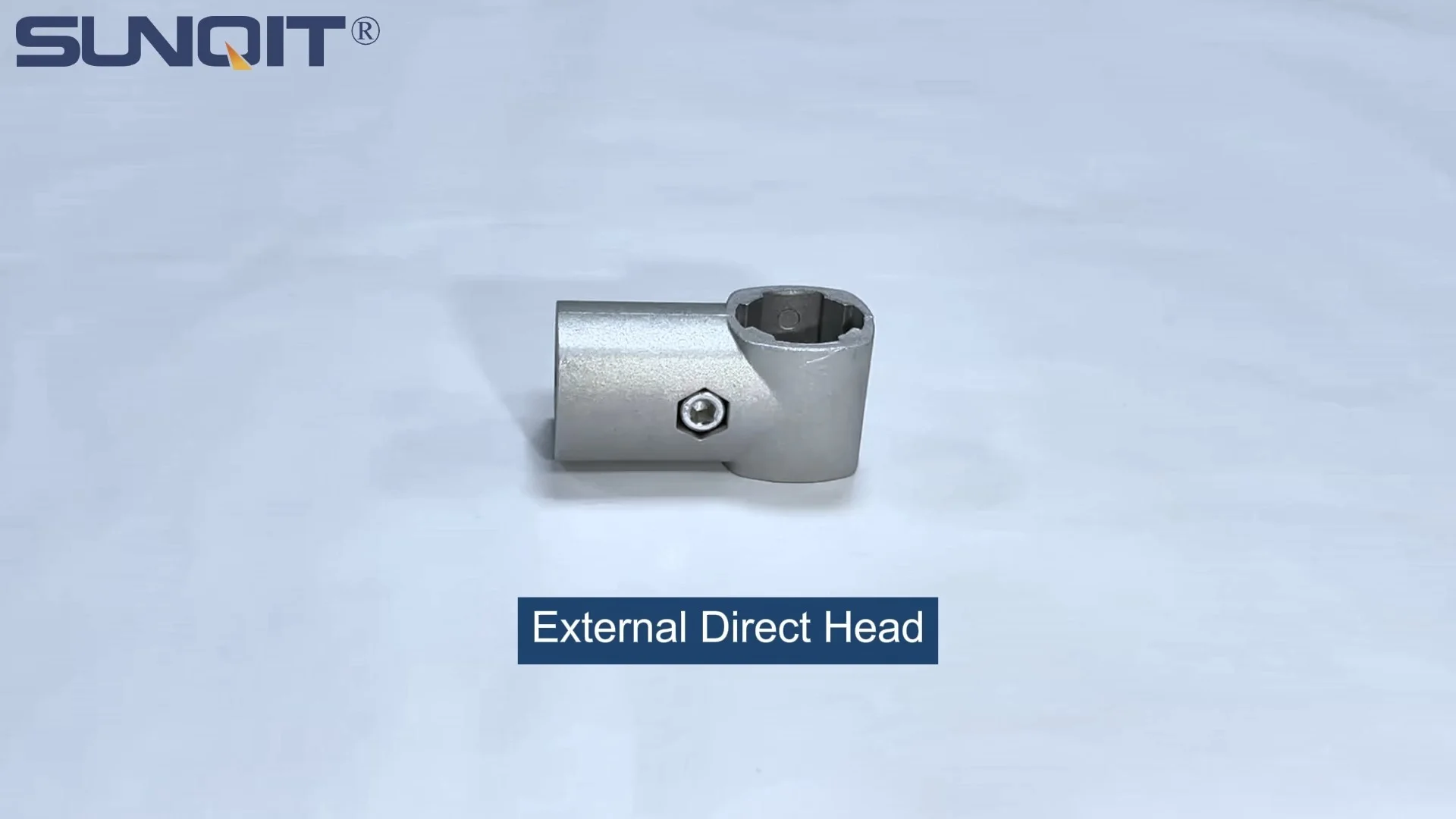
Two Way Aluminum Pipe Joint
Aluminum 2 way pipe joint for 28mm aluminum pipe connection in 2 direction.
How a Simple Component Transforms Lean Systems and Drives Sustainable Manufacturing
Introduction: The Hidden Cost of Production Waste
Walk into any manufacturing facility, and you'll likely see the buzz of activity: machines humming, workers moving materials, products taking shape. But beneath this busy surface, there's often a quieter, costlier reality: waste. Not just the obvious scraps of metal or plastic, but the hidden waste of time lost to inefficient workflows, labor spent reworking faulty assemblies, and money tied up in rigid equipment that can't adapt to changing needs. For manufacturers today, reducing this waste isn't just a goal—it's a necessity. In an era of slim margins and growing pressure to operate sustainably, every minute, every material, and every dollar counts.
Enter lean system principles—a philosophy built on eliminating waste ("muda") in all its forms. From overproduction to unnecessary motion, lean manufacturing teaches us to see waste where others see "just how things are done." But lean isn't just about (ideas); it's about tools. The right tools can turn abstract principles into tangible results, making workflows smoother, processes more flexible, and operations more efficient. Among these tools, one component stands out for its simplicity and impact: the two way aluminum pipe joint. At first glance, it might seem unassuming—a small, lightweight connector that joins aluminum pipes. But dig deeper, and you'll find it's a linchpin in reducing production waste, empowering manufacturers to build, adapt, and optimize their systems with minimal effort and maximum efficiency.
Understanding Lean Systems: The Fight Against "Muda"
Before we dive into the role of two way aluminum pipe joints, let's ground ourselves in what lean systems aim to achieve. Developed from Toyota's production system in the mid-20th century, lean manufacturing identifies seven core types of waste, or "muda," that plague operations:
- Overproduction : Making more than needed, leading to excess inventory and storage costs.
- Waiting : Idle time for workers or machines due to unbalanced workflows.
- Transport : Unnecessary movement of materials between workstations.
- Overprocessing : Doing more work than required (e.g., painting parts that won't be seen).
- Inventory : Excess raw materials, work-in-progress, or finished goods.
- Motion : Unnecessary movement of workers (e.g., reaching for tools across a cluttered workbench ).
- Defects : Products that don't meet quality standards, requiring rework or scrapping.
The goal of any lean system is to root out these wastes, streamlining processes so that every action adds value. But here's the catch: lean isn't a one-time fix. It's an ongoing journey of improvement, which means systems need to evolve. A workstation that works perfectly for today's product might become obsolete when a new model launches. A material storage rack that once fit neatly in a corner might now block a more efficient workflow. This is where rigidity becomes a silent killer of lean goals. Fixed, welded steel structures, custom-built workbenches, and inflexible conveyor systems—these might seem sturdy, but they trap manufacturers in outdated processes, creating waste by resisting change.
What Are Two Way Aluminum Pipe Joints? A Closer Look
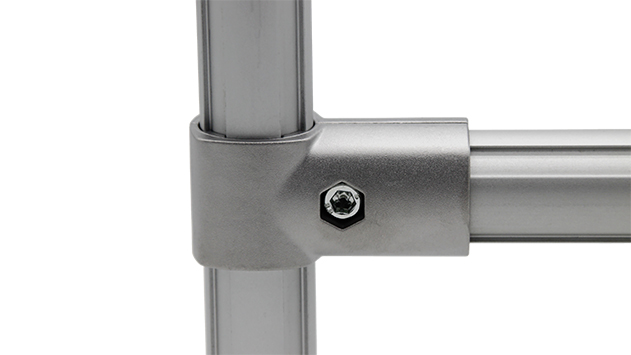
At their core, two way aluminum pipe joints are connectors designed to link aluminum pipes (or aluminum profile s) at a 90-degree angle, forming the building blocks of modular structures. Unlike traditional steel joints, which often require welding, drilling, or specialized tools, these joints are engineered for simplicity: they clamp onto pipes with bolts or set screws, creating a secure hold without permanent modifications. Made from lightweight, corrosion-resistant aluminum, they're durable enough to withstand the rigors of factory floors but lightweight enough to be handled by a single worker.
But what truly sets them apart is their versatility. Two way joints are part of a broader ecosystem of aluminum profile accessories, including T-joints, elbow joints, and flanges, that allow manufacturers to build everything from simple workbenches to complex flow rack s. Imagine a set of building blocks for adults—each joint and pipe is a component that can be mixed, matched, and reconfigured to solve new problems. Need a taller workbench for a new assembly task? Swap out shorter pipes for longer ones. Want to add a shelf to a flow rack to store smaller parts? Attach a few joints and a crossbar. No welding, no waiting for custom fabrication, no waste from scrapping the old structure.
The magic lies in their design. Most two way aluminum joints feature a hollow, cylindrical body with two perpendicular ports, each sized to fit standard aluminum pipes (typically 28mm or 40mm in diameter). Inside each port, a set of grooves or teeth grip the pipe when tightened, ensuring a stable connection that can support heavy loads—think toolboxes, bins of components, or even small machinery. Some models include swivel mechanisms, allowing pipes to rotate slightly for angled assemblies, while others have built-in slots for attaching accessories like tool hooks or label holders. This adaptability makes them far more than just connectors; they're the "glue" that holds lean systems together.

Key Benefits: How Two Way Aluminum Pipe Joints Cut Waste
To understand why two way aluminum pipe joints are so effective at reducing waste, let's break down their impact across four critical areas: flexibility, durability, cost, and labor efficiency. Each of these areas directly targets one or more types of lean waste, turning a simple component into a powerful tool for improvement.
1. Flexibility: Adapting Without Waste
One of the biggest sources of waste in manufacturing is "overprocessing" and "waiting" caused by rigid equipment. A custom-welded steel workbench, for example, might take days to build and cost thousands of dollars. If the product line changes six months later, that workbench becomes a liability—either it's repurposed (poorly) at the cost of time and labor, or it's scrapped, sending materials to the landfill and money down the drain. Two way aluminum pipe joints eliminate this waste by enabling modular design .
Consider a scenario: A electronics manufacturer launches a new smartphone model with a larger screen, requiring workers to use bigger tools and more components. With a traditional steel workbench, they'd need to order a new custom bench, wait weeks for delivery, and spend hours installing it. With an aluminum pipe workbench built using two way joints, they can reconfigure the existing setup in hours: loosen the joints, replace shorter pipes with longer ones, add a second shelf for tools, and tighten everything back up. The old components aren't wasted—they're stored for future use, ready to be repurposed for the next project. This flexibility turns "waiting" into "doing," reducing downtime and ensuring the production line adapts as quickly as the market does.
2. Durability: Less Waste, Longer Lifespan
Waste isn't just about inefficiency—it's also about replacement. A plastic joint might crack under heavy loads, a steel joint might rust in a humid factory, and both would need frequent replacement, creating material waste and downtime. Two way aluminum pipe joints, by contrast, are built to last. Aluminum's natural resistance to corrosion means they stand up to oils, coolants, and moisture without rusting. Their clamping mechanism, when properly maintained, retains its grip over thousands of adjustments, avoiding the looseness that leads to wobbly structures and defects in assembly.
Take a flow rack in a automotive parts facility, where heavy engine components slide down roller tracks all day. A steel joint here might start to rust after a year, weakening its hold and requiring replacement. An aluminum joint, however, stays strong, reducing the need for repairs and the waste of replacing parts. Over time, this durability translates to lower total cost of ownership—and less waste sent to landfills.
3. Cost-Effectiveness: Waste Less, Save More
At first glance, aluminum components might seem pricier than plastic or low-grade steel. But lean thinking teaches us to look at the "total cost of ownership," not just the upfront price. Let's crunch the numbers: A set of two way aluminum joints and aluminum pipes to build a workbench might cost $300. A custom-welded steel workbench could cost $800. But when the steel bench becomes obsolete in a year, it's scrapped, and you spend another $800 on a new one. The aluminum bench? You reconfigure it with $50 in new pipes, and it's good for the next project. Over five years, the steel benches cost $4,000, while the aluminum setup costs $500 (initial) + $250 (reconfigurations) = $750. That's a 81% savings—and that's before accounting for the labor and downtime saved by avoiding custom fabrication.
Additionally, aluminum is 100% recyclable, meaning even when a joint or pipe finally reaches the end of its life, it can be melted down and reused, reducing the environmental impact of manufacturing waste. For companies aiming to meet sustainability goals, this is more than a cost-saver—it's a selling point for eco-conscious customers.
4. Ease of Assembly: Reducing Labor Waste
Welding a steel structure requires skilled labor, specialized equipment, and time. Even assembling a basic steel workbench might take two workers a full day, with the risk of errors (e.g., misaligned holes, weak welds) that lead to rework—a classic case of "defects" waste. Two way aluminum pipe joints eliminate this by simplifying assembly to a few basic steps: measure the pipes, slide them into the joints, tighten the screws, and you're done. No welding, no drilling, no specialized training.
A recent case study from a medical device manufacturer found that switching to aluminum pipe workbenches (using two way joints) reduced assembly time for new workstations by 70%. What once took 8 hours now takes 2.5 hours, freeing workers to focus on value-adding tasks like quality control or process improvement. Fewer errors also mean less rework—no more grinding down misaligned welds or replacing bent steel parts. In short, labor waste is cut, and productivity soars.

Real-World Impact: Workbenches, Flow Racks, and Beyond
To see two way aluminum pipe joints in action, look no further than two staples of manufacturing facilities: workbenches and flow racks. These everyday structures are hotbeds for waste when poorly designed, but with modular aluminum components, they become engines of efficiency.
Workbenches: From Static to Dynamic
A typical factory workbench is a static platform—fixed height, fixed shelves, fixed everything. But workers come in different heights, tasks require different tools, and products vary in size. A workbench that's too low forces workers to hunch, causing fatigue and errors (motion waste). One that's too high makes it hard to reach tools, leading to delays (waiting waste). With two way aluminum pipe joints, workbenches become adjustable. Need a taller bench for a worker who's 6'4"? Loosen the joints, add longer legs, retighten. Want to add a pegboard for tool storage? Attach a crossbar with a few T-joints. The result? A workstation tailored to the worker, reducing fatigue, speeding up tasks, and cutting down on motion waste.
Flow Racks: Smoothing Material Flow
Flow racks are designed to move materials from storage to assembly lines efficiently, but rigid steel racks often create bottlenecks. If a new product requires wider bins, or if the production line is rearranged, the rack becomes a barrier. Two way aluminum joints solve this by letting manufacturers build flow racks that adapt. For example, a food packaging plant recently reconfigured their flow racks (using aluminum pipes, two way joints, and roller tracks) to accommodate taller boxes during a holiday rush. The entire process took 3 hours, and the same rack was reverted to its original setup afterward. No new rack, no waste—just a system that bends, not breaks, with demand.
Traditional vs. Two Way Aluminum Joints: A Comparison
Still not convinced? Let's put two way aluminum pipe joints head-to-head with traditional steel joints in a side-by-side comparison:
| Feature | Traditional Steel Joints | Two Way Aluminum Pipe Joints |
|---|---|---|
| Flexibility | Fixed; requires welding to modify. Changes take days/weeks. | Modular; reconfigurable in hours. Pipes and joints can be reused. |
| Assembly Time | 8–10 hours for a basic workbench (welding, finishing). | 2–3 hours for the same workbench (no welding). |
| Durability | Prone to rust; welds weaken over time with stress. | Corrosion-resistant; clamping mechanism retains strength with adjustments. |
| Cost (5-Year Lifespan) | $4,000 (3 replacements + labor). | $750 (1 initial setup + reconfigurations). |
| Waste Impact | High: Scrapped structures, welding fumes, frequent replacements. | Low: Reusable components, recyclable materials, minimal labor waste. |
Conclusion: Small Joints, Big Impact
Two way aluminum pipe joints might not grab headlines like high-tech robots or AI-driven analytics, but they're a quiet revolution in lean manufacturing. By enabling flexible, durable, cost-effective, and easy-to-assemble structures, they attack waste at its roots—whether it's the waste of rigid equipment, the waste of labor in complex assembly, or the waste of materials in short-lived structures. In doing so, they empower manufacturers to build lean systems that don't just eliminate waste today, but adapt to prevent waste tomorrow.
For companies ready to embrace lean principles, the message is clear: don't overlook the small components. Sometimes, the most powerful tools are the ones that let you build, rebuild, and improve—one joint at a time. As the old saying goes, "A chain is only as strong as its weakest link." In lean manufacturing, two way aluminum pipe joints aren't the weakest link—they're the ones making the whole chain stronger, more flexible, and more sustainable.