- Company Articles
- Products and Technology
- Product knowledge
- The Role of Vertical Lean Pipe Joints in 5S Workplace Organization

The Role of Vertical Lean Pipe Joints in 5S Workplace Organization
Related Product
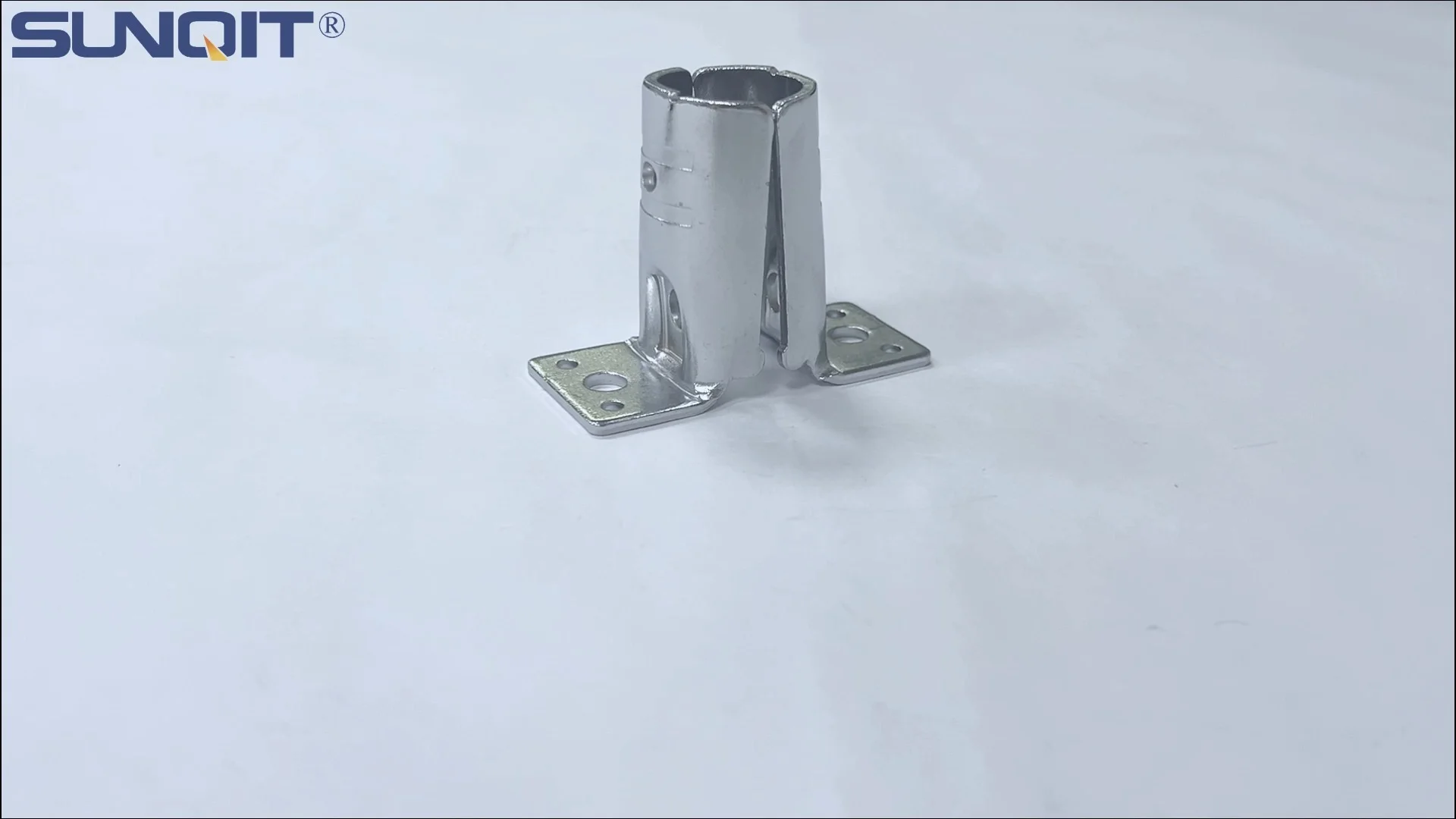
Vertical Lean Pipe Joint
Vertical lean pipe joint is used for 28mm lean pipe fixed on ground and keep it stable.
The Role of Vertical Lean Pipe Joints in 5S Workplace Organization
Walk into any busy manufacturing facility, warehouse, or assembly plant, and you'll likely notice two types of workspaces: the ones that hum with efficiency—tools within arm's reach, materials flowing smoothly, workers moving with purpose—and the ones that feel like a daily battle. In the latter, tools vanish into cluttered drawers, materials pile up on the floor, and every task seems to require a detour around chaos. The difference often comes down to one powerful methodology: 5S. But even the best 5S plans can fall flat without the right tools to bring them to life. Today, we're shining a light on an unsung hero of workplace organization: the
vertical lean pipe joint
. This small but mighty component is quietly revolutionizing how teams implement 5S, turning disorganized workbenches and jumbled flow racks into models of efficiency. Let's dive in.
Understanding 5S: The Foundation of a Thriving Workplace
Before we get to the star of the show, let's make sure we're all on the same page about 5S. Born in Japan, this methodology isn't just about "cleaning up"—it's a systematic approach to creating workspaces that are safe, productive, and sustainable. The five S's stand for Sort (Seiri), Set in Order (Seiton), Shine (Seiso), Standardize (Seiketsu), and Sustain (Shitsuke). Together, they form a cycle that transforms chaos into order, and order into habit.
Sort means separating what's needed from what's not—tossing broken tools, recycling obsolete materials, and keeping only the essentials. Set in Order is about arranging those essentials so they're easy to find and use: tools at eye level, materials near the point of use, everything with a "home." Shine is maintaining cleanliness, not just for appearance, but to spot issues like leaks or wear early. Standardize turns good practices into routines, so everyone does things the same way. Sustain ensures the system sticks, even as teams change and demands evolve.
The challenge? Many workplaces struggle with the "Set in Order" and "Sustain" stages. Traditional fixed shelves, rigid workbenches, and one-size-fits-all racks can't keep up with shifting needs. A workbench that works for assembling small electronics might become useless when the team switches to larger components. That's where modular solutions come in—and at the heart of those solutions is the
lean system
of pipes, joints, and accessories. And within that system, vertical lean pipe joints are the linchpin that adds flexibility, adaptability, and precision.
Meet the Vertical Lean Pipe Joint: Small Component, Big Impact
What Is a Vertical Lean Pipe Joint, Anyway?
Picture this: You're standing in front of a
lean pipe workbench
. The surface is clear, tools hang neatly from hooks above, and bins of screws and washers are stacked in color-coded shelves to the side. Look closer at how those shelves and hooks are attached—chances are, they're connected by small, often metallic joints that link horizontal and vertical pipes. That's a vertical lean pipe joint.
At its core, a vertical lean pipe joint is a connector designed to join lean pipes (hollow tubes, often made of steel or
aluminum lean pipe
) at 90-degree angles, creating sturdy, vertical supports for shelves, tool holders, bins, and more. But it's not just a static connector. Unlike welded or glued joints, vertical lean pipe joints are modular—they can be adjusted, repositioned, or removed entirely without special tools. Tighten a bolt, and they hold firm under the weight of tools or materials. Loosen it, and you can reconfigure the entire setup in minutes.
This flexibility is game-changing. Traditional workbenches or
flow racks
are built to fixed specifications. If your team starts using larger tools, you either live with the mismatch or buy a whole new setup. With vertical lean pipe joints, you simply adjust the height of the shelves or add a new crossbar. It's like building with adult Legos—only these "blocks" support heavy loads and stand up to the wear and tear of industrial environments.
Why Vertical? The Science of Ergonomics and Accessibility
You might be wondering, "Why vertical? Can't I just use horizontal joints?" Horizontal joints have their place, but vertical joints are uniquely suited to the "Set in Order" principle of 5S. Think about how we interact with our workspaces: most of us stand or sit at a workbench, with our hands and eyes focused on a horizontal surface. To reach tools or materials, we naturally look up, down, left, or right—but rarely behind us or far to the side. Vertical joints let you build upward, utilizing the often-wasted vertical space above and around the workbench.
For example, a vertical joint can support a shelf 18 inches above the workbench surface, perfect for storing frequently used tools within arm's reach. Another joint a few inches higher might hold a small parts bin, while a third near the top could suspend a power strip to eliminate tangled cords. By using vertical space, you free up the workbench surface for actual work, not storage. And because the joints are adjustable, you can position these elements at the exact height that works for your team—no more stooping to reach a low shelf or stretching to grab a tool that's too high. It's ergonomics meets adaptability, and it makes a world of difference in how smoothly a workspace functions.
How Vertical Lean Pipe Joints Supercharge Each Stage of 5S
1. Sort: Cutting Clutter by Design
The first S—Sort—is all about ruthless decluttering. It's about asking, "Do we really need this here, right now?" But even after you've sorted out the unnecessary items, you're left with the essentials. The problem? Without a clear way to organize those essentials, clutter creeps back in. Vertical lean pipe joints help prevent that by giving every necessary item a defined, visible home.
Let's take a real-world example: Maria, a supervisor at a small electronics assembly plant, was struggling with her team's workbenches. After a Sort session, they'd removed broken tools and outdated manuals, but the remaining tools (screwdrivers, pliers, wire cutters) still ended up scattered across the bench by mid-shift. "We'd sort on Monday, and by Wednesday, it was chaos again," she recalls. The solution? Maria's team installed vertical lean pipe joints along the back edge of each workbench, adding hooks and small baskets at different heights. Suddenly, every tool had a designated hook—screwdrivers on the left, pliers on the right—and small parts bins sat in vertical shelves above. "Now, when someone finishes using a tool, they don't just toss it on the bench—they hang it back up. It's visible if something's missing, so we catch clutter before it starts," Maria says.
Vertical joints turn "Sort" from a one-time event into an ongoing process. By creating dedicated, vertical storage spaces, they make it obvious when an item is out of place, keeping the workspace clutter-free longer.
2. Set in Order: Everything in Its Place, and a Place for Everything
If Sort is about removing the unnecessary, Set in Order is about arranging the necessary for maximum efficiency. The goal? Reduce "search time"—the minutes lost each day hunting for tools, materials, or documents. Studies show that workers can spend up to 20% of their day searching for items; vertical lean pipe joints slash that number by putting everything within sight and reach.
Consider a
flow rack
in a warehouse picking area. Traditional flow racks have fixed shelves, so if you start storing taller boxes, you either cram them in (risking damage) or leave empty space above (wasting potential). With vertical lean pipe joints, you can adjust each shelf's height in minutes. Need to make room for bulkier items? Loosen the joints, slide the shelf up a few inches, and retighten. The same logic applies to lean pipe workbenches: a vertical joint can support a pegboard for hand tools at eye level, a bin rail for small parts at waist height, and a cable management tray near the bottom to keep cords from tangling on the floor.
John, a warehouse manager, noticed his team was spending extra time bending to reach items on the bottom shelf of their flow racks. "We were storing heavy boxes there to keep the top shelves light, but it was killing productivity—workers were straining their backs, and picking times were slow," he says. By installing vertical lean pipe joints, John's team raised the bottom shelf by 6 inches, aligning it with the average worker's hip height. "Picking times dropped by 15% in the first week, and we haven't had a back injury report since," he notes. That's Set in Order done right—using vertical joints to align storage with human movement, not the other way around.
3. Shine: Cleanliness That's Easy to Maintain
Shine isn't just about wiping down surfaces—it's about creating a workspace where dirt, spills, or wear are immediately visible, so problems can be fixed before they escalate. Vertical lean pipe joints support Shine in two key ways: by reducing nooks and crannies where dust and debris collect, and by making cleaning easier.
Traditional workbenches with welded shelves or fixed bins have hard-to-reach gaps between surfaces. Over time, these gaps become magnets for dust, crumbs, and small parts that fall through. Vertical lean pipe joints, on the other hand, create clean, open structures. Since the joints are attached with bolts (not welds), there are fewer hidden spaces for grime to build up. And because the entire setup is modular, you can remove a shelf or bin entirely if it needs a deep clean, then pop it back in.
Take a maintenance team at a food packaging plant, where cleanliness is non-negotiable. Their old workbenches had wooden shelves with gaps where food particles would get trapped, leading to frequent sanitization delays. After switching to a lean pipe setup with vertical joints, they replaced the wooden shelves with smooth, easy-to-wipe aluminum panels. "Now, we can spray down the entire workbench in minutes—no more picking crumbs out of cracks," says the team lead. "And because the vertical joints are metal, they don't warp or absorb moisture like wood, so we're meeting our hygiene standards with half the effort."
4. Standardize: Consistency Across the Board
Standardize is where 5S moves from "good idea" to "way of life." It's about documenting the best practices from Sort, Set in Order, and Shine, then ensuring everyone follows them. But standardization falls apart if each workbench or flow rack is a one-off creation. Vertical lean pipe joints solve this by making it easy to replicate successful setups across the entire facility.
Imagine you've optimized one lean pipe workbench in the assembly area—tools at 42 inches, bins at 30 inches, cable tray at 6 inches. With vertical lean pipe joints, you can measure those dimensions, write them down, and then replicate that exact setup on every other workbench in the area. No more "Bob's bench is organized, but Sue's is a mess" scenarios. Every joint is tightened to the same torque, every shelf is at the same height, and every tool hook is in the same position.
This consistency isn't just about aesthetics—it reduces training time for new employees. If a worker moves from one station to another, they don't have to relearn where everything is stored. It also makes audits easier: managers can quickly spot if a shelf has been moved out of standard position or a joint is loose. "Before vertical joints, each team would build their workbenches however they wanted," says Lisa, a operations director at a automotive parts plant. "Now, we have a standard template, and it's cut our onboarding time for new hires by 30%. Everyone knows exactly where to find what they need, no matter which station they're at."
5. Sustain: Building Habits That Outlast the Hype
The final S—Sustain—is often the hardest. It's one thing to organize a workspace; it's another to keep it organized month after month, even as projects change, new team members join, and deadlines loom. Vertical lean pipe joints excel here because they make it easy to adapt without abandoning the system.
Let's say your team switches from assembling small circuit boards to larger components. Suddenly, the tool hooks that worked for tiny screwdrivers are too small for the new power tools. With traditional workbenches, you'd either (and risk damage) or start from scratch. With vertical lean pipe joints, you just swap out the hooks for larger ones or reposition the vertical supports to make room. The system evolves with your needs, so there's no incentive to "throw out the rulebook" when things change.
Mike, a production manager, experienced this firsthand when his plant introduced a new product line. "We were worried the 5S system we'd spent months building would collapse under the new demands," he admits. "But with our lean pipe setup, we just adjusted the vertical joints to raise the shelves by 12 inches, added a few more crossbars for the larger tools, and kept right on going. The team didn't skip a beat, and the workspace stayed organized. That's the power of sustain—when the system bends, it doesn't break."
Beyond 5S: Other Ways Vertical Lean Pipe Joints Add Value
Cost-Effective: Save Money While Boosting Efficiency
Let's talk numbers—because at the end of the day, every improvement needs to justify its cost. Vertical lean pipe joints are surprisingly affordable, especially compared to custom-built workbenches or flow racks. A single joint costs a fraction of what you'd pay for a welded steel shelf, and since they're reusable, you can repurpose them when your needs change.
Consider this: A traditional fixed flow rack might cost $500 and last 5 years before it becomes obsolete. A lean pipe flow rack with vertical joints costs around $300 upfront, and when you need to reconfigure it, you just buy a few extra pipes and joints (another $50-$100) instead of a whole new rack. Over time, the savings add up. Plus, the productivity gains—less time searching for tools, fewer injuries, faster training—often pay for the initial investment within months.
Durable: Built to Handle the Toughest Environments
Industrial workspaces are tough on equipment—spills, heavy loads, constant use. Vertical lean pipe joints are built to withstand it all. Most are made from high-grade steel or aluminum, with powder-coated finishes that resist rust and scratches. The bolts are often reinforced to prevent stripping, even after repeated adjustments.
Take aluminum lean pipe joints, for example. Aluminum is lightweight but surprisingly strong, making it ideal for workbenches that need to be moved occasionally. It's also resistant to corrosion, which is a big plus in humid or wet environments (like food processing or automotive plants where cleaning with water is common). Steel joints, on the other hand, are better for heavy-duty applications—think flow racks holding hundreds of pounds of materials. Either way, you're getting a component that will outlast most traditional furniture.
Traditional vs. Vertical Lean Pipe Joint Solutions: A Quick Comparison
| Feature | Traditional Fixed Shelving/Racks | Vertical Lean Pipe Joint Setups |
|---|---|---|
| Flexibility | Fixed dimensions; cannot be adjusted without modification | Adjustable height, width, and configuration in minutes |
| Initial Cost | Higher ($400-$800 per unit) | Lower ($200-$400 per unit) |
| Long-Term Cost | High (must replace entire unit when needs change) | Low (reuse joints and pipes; only add new components as needed) |
| Installation Time | Hours (requires tools, possibly professional installation) | Minutes (no special tools needed; team members can install) |
| Ergonomics | One-size-fits-all; may not suit all workers | Customizable to individual worker heights and preferences |
| Sustainability | Often ends up in landfill when obsolete | Reusable and recyclable; reduces waste |
Getting Started: How to Implement Vertical Lean Pipe Joints in Your Workspace
Ready to bring vertical lean pipe joints to your facility? Here's a quick, step-by-step guide to get you started:
1. Assess Your Current Workspace:
Walk through each area (assembly lines, workbenches, flow racks) and note pain points. Where is clutter accumulating? Where are workers wasting time searching for items? These are your priority spots.
2. Involve Your Team:
The best 5S solutions are designed with the people who use the workspace every day. Ask your team what they need—higher shelves, more hooks, better cable management—and incorporate their feedback into the design.
3. Start Small:
Don't try to reconfigure the entire facility at once. Pick one workbench or flow rack, install vertical lean pipe joints, and test the setup for a week. Adjust based on what works, then roll out to other areas.
4. Document and Standardize:
Once you've optimized a setup, take photos, measure dimensions, and create a "blueprint" for other teams to follow. This ensures consistency across the facility.
5. Train and Celebrate:
Show your team how to adjust the joints, add new components, and maintain the system. Celebrate small wins—like a 10% reduction in search time—to keep motivation high.
Conclusion: Your Workspace Is a Reflection of Your Team—Invest in the Right Tools
At the end of the day, a well-organized workspace isn't just about efficiency—it's about respect. It shows your team that you value their time, their safety, and their ability to do their best work. 5S is the roadmap to that respect, but vertical lean pipe joints are the vehicle that gets you there. They turn abstract principles into tangible, adjustable, and sustainable solutions.
Whether you're struggling with cluttered lean pipe workbenches, rigid flow racks, or a lean system that just won't stick, vertical lean pipe joints offer a simple, affordable way forward. They're proof that sometimes, the biggest improvements come from the smallest components. So why wait? Grab a few joints, gather your team, and start building a workspace that works as hard as you do. Your future self (and your bottom line) will thank you.