- Company Articles
- Products and Technology
- Product knowledge
- The Science Behind 2040 Aluminum Profile End Cap Design

The Science Behind 2040 Aluminum Profile End Cap Design
Related Product
2040 Aluminum Profile End Cap
The aluminum profile end cap adds a finishing touch to your project and closes off profile ends to limit dust and debris buildup, also it can avaid some scratch for material and labor during the assemble work.
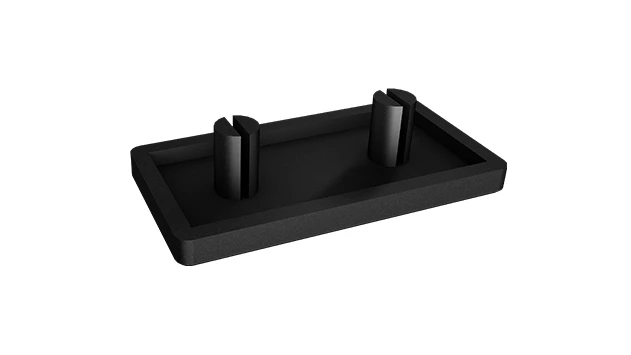
Walk into any modern manufacturing facility, workshop, or even a high-tech lab, and you'll likely spot a common workhorse: aluminum profiles. These sleek, versatile structures form the backbone of everything from workbenches and material racks to conveyor systems and automated machinery. Among the countless aluminum profiles available, the 2040 aluminum profile stands out as a workhorse, prized for its balance of strength, lightweight design, and adaptability. But what often goes unnoticed—yet plays a critical role in its performance—is the humble end cap. In this article, we'll pull back the curtain on the science, engineering, and human-centric thinking that goes into designing 2040 aluminum profile end caps, and why these small components make a big difference in real-world applications.
Aluminum Profiles: The Backbone of Modern Workspaces
Before diving into end caps, let's first appreciate the star of the show: the aluminum extrusion profile. Aluminum profiles are created through a process called extrusion, where heated aluminum billets are forced through a die to create consistent, custom cross-sections. This method allows for intricate designs—from simple rectangles to complex shapes with T-slots, grooves, and channels—making them ideal for building modular, customizable structures.
The 2040 aluminum profile, in particular, has become a staple in industries like manufacturing, electronics, and logistics. Its name refers to its cross-sectional dimensions: 20mm in width and 40mm in height. This size strikes a perfect balance: it's sturdy enough to support tools, materials, and even small machinery, yet lightweight enough to be easily assembled and reconfigured. Whether you're building a workbench for assembly line workers, a shelving unit for warehouse storage, or a frame for a conveyor system, the 2040 profile offers the versatility to adapt to almost any need.
But here's the thing: an aluminum profile is only as good as its components. T-slots, connectors, and brackets get a lot of attention, but today, we're focusing on a component that's often overlooked but absolutely essential: the end cap. Think of it as the "final touch" that turns a functional profile into a safe, durable, and polished solution.
What Are 2040 Aluminum Profile End Caps, and Why Do They Matter?
At first glance, an end cap might seem like a simple piece of plastic or rubber that plugs the open ends of an aluminum profile. But that's a bit like calling a smartphone case "just a piece of plastic"—it's technically true, but it misses the depth of its purpose. End caps are engineered to solve specific problems, enhance usability, and extend the lifespan of the aluminum profile systems they protect.
Let's start with the basics: aluminum profiles, by nature, have open ends. Without end caps, these ends are sharp, unfinished, and prone to collecting dust, debris, or moisture. Imagine a workbench built with 2040 profiles—without end caps, the open ends could scratch a worker's arm as they reach across the bench, or trap metal shavings that later fall into sensitive equipment. In a food processing facility, those open ends might even harbor bacteria. End caps seal these openings, turning a potential hazard into a smooth, safe surface.
But their role goes beyond safety. End caps also protect the internal structure of the profile. Aluminum, while corrosion-resistant, isn't impervious. Moisture, dust, or chemicals can seep into open ends, leading to internal oxidation or degradation over time. A well-designed end cap acts as a barrier, keeping these elements out and preserving the profile's integrity. This is especially critical in environments like automotive factories, where oil and coolants are common, or in outdoor settings where rain and humidity are factors.
Aesthetics matter too. In professional settings—whether a lab, a showroom, or a customer-facing workshop—unfinished profile ends can make a setup look unpolished. End caps give the structure a clean, cohesive look, signaling attention to detail and quality. This might seem trivial, but in industries where presentation impacts client trust (think custom machinery or medical device manufacturing), those small touches add up.

The Science of Design: What Goes Into a 2040 End Cap?
Designing a 2040 aluminum profile end cap is a masterclass in balancing form and function. Engineers don't just "wing it"—they rely on material science, ergonomics, and real-world testing to create a component that works seamlessly with the 2040 profile and the environments it's used in. Let's break down the key design considerations.
Material Selection: More Than Just "Plastic"
The first decision in end cap design is choosing the right material. While many end caps look like simple plastic, the choice of material directly impacts performance. Let's compare the most common options:
- Polypropylene (PP): A go-to for general-purpose end caps, PP is lightweight, durable, and resistant to chemicals and moisture. It's also cost-effective, making it ideal for high-volume applications like workbenches or material racks. PP end caps often have a slight flex, allowing for a snug snap-fit onto the profile.
- Thermoplastic Elastomers (TPE): For applications where grip or cushioning is needed, TPE is a popular choice. It has rubber-like properties, making it non-slip and shock-absorbent. This is useful in settings where tools or parts might be placed near the profile ends, reducing the risk of slipping or impact damage.
- Nylon: When strength is paramount, nylon end caps shine. Nylon has high tensile strength and heat resistance, making it suitable for high-temperature environments like foundries or industrial ovens. It's also less prone to cracking under stress, a key feature for heavy-duty setups.
- ESD-Safe Materials: In electronics manufacturing, static electricity can damage sensitive components. ESD (Electrostatic Discharge)-safe end caps are made with conductive additives that dissipate static, protecting both the equipment and the products being assembled.
The 2040 profile's dimensions (20mm x 40mm) also influence material choice. The end cap must fit precisely—too loose, and it falls off; too tight, and installation becomes a struggle. Engineers use material testing to ensure the end cap's thermal expansion rate matches the aluminum profile, preventing warping or loosening in temperature fluctuations.
Dimensions and Fit: The "Tolerance Dance"
If you've ever tried to fit a square peg into a round hole, you know how frustrating a poor fit can be. For 2040 end caps, precision is everything. The end cap's inner dimensions must match the 2040 profile's outer dimensions exactly, accounting for manufacturing tolerances in both the profile and the end cap.
Aluminum extrusion profiles, including 2040, have standard tolerances—small variations in width or height due to the extrusion process. A well-designed end cap accounts for these variations with a "compression fit" or "snap-fit" design. For example, some end caps have tiny ribs or tabs on the inner surface that compress slightly when inserted, creating friction that holds them in place without being too tight. Others use a lip that catches on the profile's inner edge, ensuring a secure fit even with minor tolerance variations.
Engineers also consider insertion force: how much pressure is needed to push the end cap onto the profile. Too little, and it might pop off during handling; too much, and workers will struggle to install it, leading to frustration and potential damage to the profile or end cap. This is tested rigorously in labs, with prototypes being installed and removed hundreds of times to find the sweet spot.
Safety First: Rounded Edges and Beyond
In any workspace, safety is non-negotiable. End caps play a critical role here by eliminating sharp edges. Aluminum profiles, even after extrusion, can have burrs or sharp corners at the cut ends. An end cap with rounded, smooth edges covers these hazards, reducing the risk of cuts, scrapes, or snagged clothing.
But safety design goes further. Some end caps are designed with "grip zones"—textured surfaces that make them easier to remove when reconfiguring a setup. Others have beveled edges that guide hands away from the profile's edge, even if someone brushes against it quickly. In environments with heavy foot traffic (like warehouses), these features can drastically reduce workplace accidents.
Environmental Resistance: Built to Last
A 2040 profile might end up in a desert-like warehouse, a humid coastal factory, or a cold storage unit. End caps must perform consistently across these conditions. Engineers test end caps for:
- Temperature resistance: Can the end cap withstand extreme heat (up to 80°C in some factories) or cold (down to -20°C in freezers) without cracking, warping, or losing its grip?
- Chemical resistance: Will exposure to oils, solvents, or cleaning agents cause the material to degrade or discolor?
- UV stability: For outdoor use (e.g., outdoor workbenches or agricultural machinery), end caps must resist fading or becoming brittle under sunlight.
For example, in marine applications, where saltwater is a constant threat, end caps might be made with UV-stabilized PP or even stainless steel (though plastic is more common for weight and cost reasons). In chemical plants, nylon or TPE with chemical-resistant additives is preferred.

End Caps in Action: Real-World Applications
To truly appreciate the design science of 2040 end caps, let's look at how they perform in everyday scenarios. These small components might not grab headlines, but they're quietly making workspaces safer, more efficient, and more durable.
Workbenches: Where Comfort Meets Productivity
Walk into any manufacturing plant, and you'll likely find rows of aluminum workbenches—many built with 2040 profiles. These workbenches are where assembly line workers spend hours each day, handling parts, using tools, and leaning over the surface. Here, end caps are indispensable.
Consider an aluminum workbench A, a common model used in electronics assembly. Its frame is constructed with 2040 profiles, and the end caps on the front and side rails prevent workers from scraping their forearms as they reach across the bench. The rounded edges of the end caps also reduce fatigue—no more sharp corners digging into elbows during long shifts. Additionally, the end caps seal the profile ends, preventing dust and small screws from falling into the T-slots, which could jam the brackets used to attach tools or shelves.
In some cases, workbenches use aluminum profile rubber strips along the edges for added cushioning. The end caps work in tandem with these strips, creating a seamless, protective barrier around the entire bench. It's a small detail, but it turns a functional workspace into one that prioritizes worker well-being.
Material Racks: Protecting Inventory and Infrastructure
Material racks, like the "material rack B (3 row and 3 floor)" often seen in warehouses, rely on 2040 profiles for their vertical supports and horizontal beams. Here, end caps serve a dual purpose: protecting the profiles and the items stored on them.
Imagine a rack storing fragile electronic components. Without end caps, the sharp ends of the 2040 beams could scratch or puncture the packaging of these components. Soft TPE end caps act as a buffer, preventing damage during loading and unloading. They also keep dust and debris from collecting in the profile ends, which could otherwise spread to the stored items over time.
In high-traffic warehouses, racks are often bumped by forklifts or pallet jacks. A sturdy PP end cap can absorb minor impacts, reducing the risk of dents or bending in the profile ends. This might not seem like much, but over time, it extends the rack's lifespan, reducing replacement costs.
Conveyor Systems: Keeping the Flow Smooth
Conveyor systems are the arteries of manufacturing, moving parts from one station to the next. Many use 2040 profiles as part of their frame or guide rails. End caps here are critical for maintaining smooth operation.
For example, in a roller conveyor, the 2040 profiles might form the side guides that keep products centered. End caps on these guides prevent items from catching on sharp edges as they enter or exit the conveyor. In high-speed systems, even a tiny snag could cause jams, leading to production delays. The precision fit of the end caps ensures there are no gaps or protrusions to disrupt the flow.
Additionally, conveyor systems often operate in environments with lubricants or cleaning agents. Chemical-resistant end caps (like nylon or PP) prevent these substances from seeping into the profiles, protecting the internal structure and ensuring the conveyor remains stable and reliable.
A Closer Look: Comparing 2040 End Cap Designs
Not all end caps are created equal. Depending on the application, different designs offer unique benefits. Below is a comparison of common 2040 aluminum profile end cap designs, highlighting their materials, features, and ideal uses.
| Design Type | Material | Key Features | Best For |
|---|---|---|---|
| Standard Snap-Fit | Polypropylene (PP) | Snug, friction-based fit; smooth, rounded edges; cost-effective | General-purpose workbenches, material racks, indoor setups |
| Anti-Slip TPE | Thermoplastic Elastomer (TPE) | Rubber-like texture; non-slip surface; shock-absorbent | Workbenches with tools, mobile carts, areas with frequent handling |
| ESD-Safe | Carbon-filled PP or TPE | Dissipates static electricity; meets ESD standards (ANSI/ESD S20.20) | Electronics manufacturing, cleanrooms, semiconductor labs |
| Decorative/Color-Coded | Colored PP or ABS | Custom colors (red, blue, green); matches brand or zone coding | Showrooms, customer-facing workspaces, zone-organized factories |
| Weather-Resistant | UV-stabilized PP or Nylon | Resists sun, rain, and temperature extremes; durable in outdoor use | Outdoor workbenches, agricultural machinery, construction sites |
Testing and Quality: Ensuring End Caps Deliver
A great design on paper means nothing if it fails in the real world. That's why manufacturers subject 2040 end caps to rigorous testing before they ever reach a customer. Let's take a peek into the lab to see what these tests entail.
Fit Testing: The "No Wiggle Room" Test
Fit is so critical that it gets its own dedicated test. Engineers take samples of 2040 profiles (from different production batches, to account for tolerances) and test how well the end caps fit. They measure insertion force (how much pressure is needed to push the cap on) and retention force (how much force is required to pull it off). The goal is a cap that's easy to install but stays put under normal use—no "pop-offs" during handling or vibration.
Impact Resistance: Can It Take a Hit?
In busy workspaces, end caps are bound to get bumped. To simulate this, testers use a pendulum impact tester, which swings a weighted arm at the end cap (mounted on a 2040 profile) at varying speeds. The cap must resist cracking, chipping, or dislodging. For industrial end caps, this test often mimics impacts up to 5 joules—roughly the force of a hammer tap.
Environmental Cycling: From Freezers to Furnaces
To ensure end caps perform across environments, they're put through temperature cycling tests. Samples are placed in a chamber that alternates between extreme cold (-40°C) and heat (80°C) for days at a time. After cycling, engineers check for warping, brittleness, or loss of fit. A good end cap should emerge unchanged, ready to handle whatever the workspace throws at it.
Chemical Exposure: Standing Up to the Elements
In factories, end caps might come into contact with oils, greases, solvents, or cleaning agents. Testers immerse end caps in these substances for weeks, then check for swelling, discoloration, or degradation. For example, a PP end cap should resist mineral oil and isopropyl alcohol, while a nylon cap might handle harsher chemicals like acetone.
The Future of End Cap Design: Innovation on the Horizon
As aluminum extrusion profile technology evolves, so too do the components that make them work. End caps are no exception—engineers and designers are already exploring new ways to make them smarter, more sustainable, and more integrated with modern workspaces.
One emerging trend is "smart end caps" with integrated sensors. Imagine an end cap that can detect temperature, vibration, or even structural stress in the profile. This data could be transmitted wirelessly to a dashboard, alerting maintenance teams to potential issues before they become failures. For example, in a conveyor system, a sensor-equipped end cap might detect unusual vibration, indicating a misaligned roller or worn bracket—allowing for proactive repairs.
Sustainability is another focus. As industries move toward greener practices, end cap manufacturers are experimenting with recycled materials (like post-consumer PP) or biodegradable plastics (made from plant-based polymers). These eco-friendly end caps perform as well as traditional ones but have a lower carbon footprint—a win for both functionality and the planet.
Modularity is also key. Future end caps might be designed to work with a range of profiles, not just 2040. Adjustable or snap-on inserts could allow a single end cap to fit 2020, 3030, or 4040 profiles, reducing inventory costs for suppliers and users alike. This flexibility aligns with the trend toward more adaptable, "plug-and-play" workspace solutions.
Conclusion: Small Component, Big Impact
The 2040 aluminum profile end cap is a testament to the idea that great design lies in the details. It's a small component, often overlooked, but it embodies the science of material selection, the art of ergonomic design, and the commitment to making workspaces safer, more efficient, and more durable. From preventing scraped forearms on a workbench to protecting profiles from corrosion in a factory, end caps do the quiet, essential work that keeps industries running smoothly.
Next time you walk into a workshop, a warehouse, or a lab, take a moment to look at the aluminum profiles. Chances are, you'll spot those unassuming end caps—and now, you'll know the thought, engineering, and care that went into creating them. They're proof that even the smallest parts can have the biggest impact.