- Company Articles
- Products and Technology
- Product knowledge
- The Science Behind Aluminum Pipe Adjustable Leveling Feet: How They Work

The Science Behind Aluminum Pipe Adjustable Leveling Feet: How They Work
Related Product
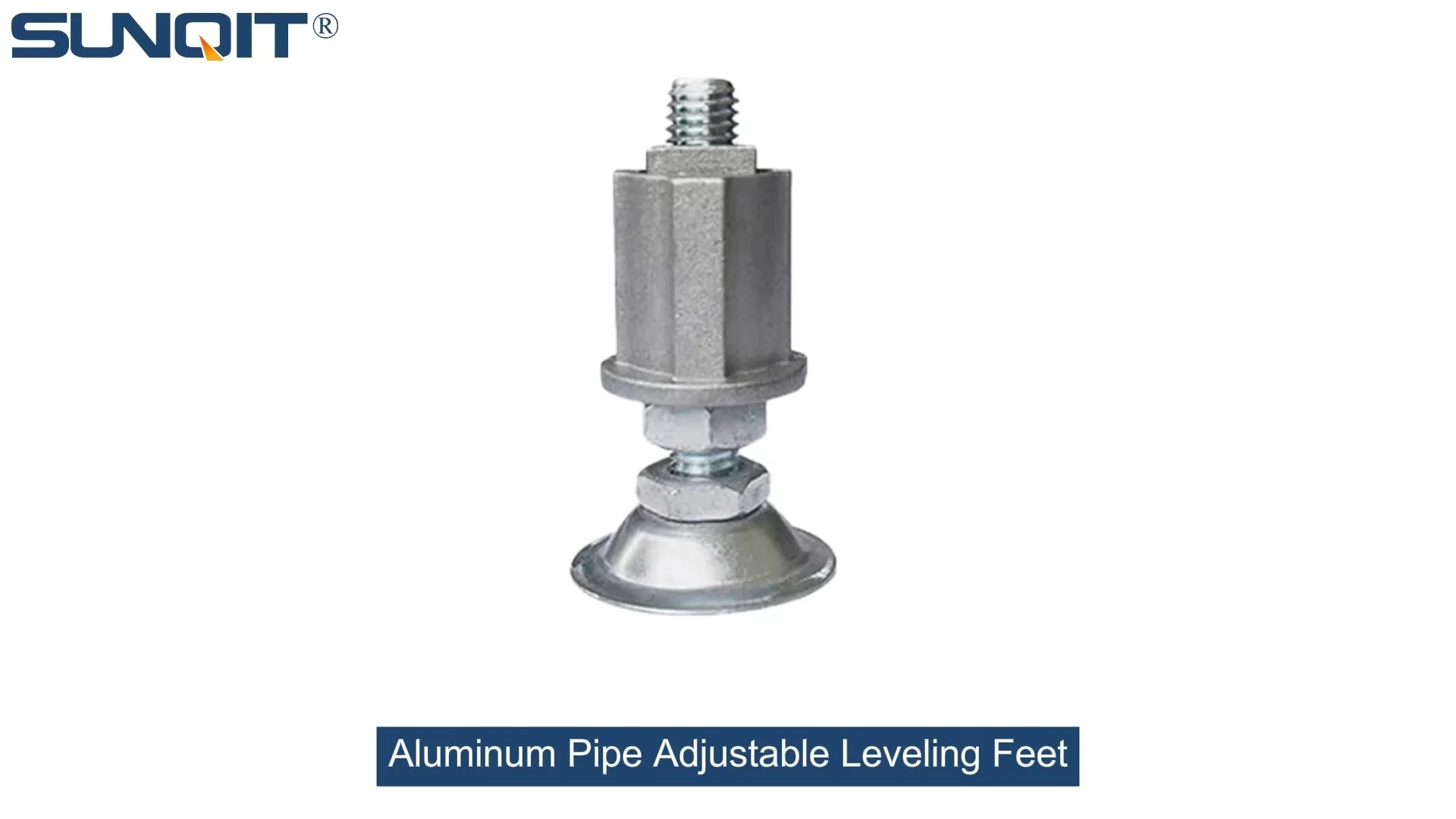
Aluminum Pipe Adjustable Leveling Feet
Aluminum Pipe Adjustable Leveling Feet are designed to keep machines level when placed on uneven or sloped ground. Otherwise known as adjustable equipment feet, they are available to order in a wide variety of size and load capacity combinations.
Introduction: The Unsung Heroes of Workplace Stability
Walk into any busy factory, workshop, or production line, and your eyes might be drawn to the shiny machinery, the hum of conveyor belts, or the precision of assembly work. But if you look a little closer—down at the floor—you'll notice something far less glamorous but infinitely important: the small, unassuming components that keep everything steady. Among these unsung heroes are
adjustable leveling feet
, especially those designed for use with
aluminum pipe
systems. These tiny devices play a massive role in ensuring that workbenches don't wobble, material racks stay upright, and production lines run smoothly, even when the floor beneath them is less than perfect. In this article, we'll dive deep into the science, design, and functionality of aluminum pipe adjustable leveling feet, exploring how they work, why they matter, and why they're a cornerstone of modern lean manufacturing and workspace design.
What Are Aluminum Pipe Adjustable Leveling Feet?
At their core, aluminum pipe adjustable leveling feet are specialized components designed to attach to the bottom of structures—think
workbenches
, production tables, material racks, or even turnover trolleys—made from aluminum pipes or
aluminum lean pipe
systems. Their primary job? To compensate for uneven floors, distribute weight evenly, and prevent unwanted movement or shaking. Unlike fixed feet, which are set at a specific height, adjustable leveling feet can be twisted or turned to raise or lower the structure they support, allowing for precise alignment even on the most irregular surfaces.
What makes them "aluminum pipe" specific? These feet are engineered to integrate seamlessly with aluminum pipe systems, which are prized in manufacturing for their lightweight yet durable nature, modularity, and resistance to corrosion. The feet themselves are often made from aluminum or a combination of aluminum and other materials like rubber or steel, ensuring they match the strength and longevity of the pipes they support. Whether you're setting up a small workshop or a large-scale assembly line, these feet are the quiet guardians that keep your workspace stable, safe, and efficient.
The Core Components: Breaking Down the Design
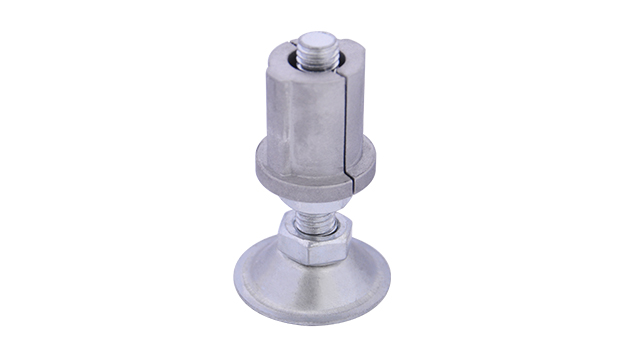
To understand how aluminum pipe adjustable leveling feet work, it helps to first break down their key components. Each foot is a carefully engineered assembly of parts, each with a specific role in ensuring stability and adjustability. Let's take a closer look:
Threaded Rod: The Backbone of Adjustment
The star of the show is the threaded rod—a long, cylindrical shaft with spiral grooves (threads) running along its length. This rod is typically made from steel or aluminum, chosen for its strength and resistance to bending. One end of the rod attaches to the structure (like a workbench leg), while the other end connects to the base plate. The threads allow the rod to rotate within a nut or housing, raising or lowering the structure as it turns. The pitch of the threads (how close together they are) determines how much the height changes with each full rotation; finer threads mean more precise adjustments, while coarser threads allow for quicker height changes.
The star of the show is the threaded rod—a long, cylindrical shaft with spiral grooves (threads) running along its length. This rod is typically made from steel or aluminum, chosen for its strength and resistance to bending. One end of the rod attaches to the structure (like a workbench leg), while the other end connects to the base plate. The threads allow the rod to rotate within a nut or housing, raising or lowering the structure as it turns. The pitch of the threads (how close together they are) determines how much the height changes with each full rotation; finer threads mean more precise adjustments, while coarser threads allow for quicker height changes.
Base Plate: Spreading the Load
At the bottom of the leveling foot is the base plate, a flat, often circular or square piece that sits directly on the floor. Its job is to distribute the weight of the structure over a larger area, reducing the pressure on the floor and preventing the foot from sinking into soft surfaces (like concrete that's slightly uneven or has cracks). Base plates are usually made from rubber, plastic, or metal with a rubber coating. Rubber is a popular choice here because it adds friction, preventing the foot from sliding, and also absorbs vibrations—another bonus for keeping workbenches steady during operation.
At the bottom of the leveling foot is the base plate, a flat, often circular or square piece that sits directly on the floor. Its job is to distribute the weight of the structure over a larger area, reducing the pressure on the floor and preventing the foot from sinking into soft surfaces (like concrete that's slightly uneven or has cracks). Base plates are usually made from rubber, plastic, or metal with a rubber coating. Rubber is a popular choice here because it adds friction, preventing the foot from sliding, and also absorbs vibrations—another bonus for keeping workbenches steady during operation.
Adjustment Mechanism: Fine-Tuning Precision
To make adjusting the height easy, most leveling feet include a hex head, knurled nut, or flat disk at the top of the threaded rod. This allows users to turn the rod with a wrench, pliers, or even just their fingers. Some designs also feature a lock nut: once the desired height is set, tightening the lock nut against the structure prevents the rod from rotating back, keeping the foot securely in place. This is especially important in high-vibration environments, where constant movement could otherwise cause the feet to loosen over time.
To make adjusting the height easy, most leveling feet include a hex head, knurled nut, or flat disk at the top of the threaded rod. This allows users to turn the rod with a wrench, pliers, or even just their fingers. Some designs also feature a lock nut: once the desired height is set, tightening the lock nut against the structure prevents the rod from rotating back, keeping the foot securely in place. This is especially important in high-vibration environments, where constant movement could otherwise cause the feet to loosen over time.
Material Selection: Why Aluminum?
While the threaded rod may be steel (for extra strength), the housing or upper part of the leveling foot is often aluminum. Why? Aluminum is lightweight, which matters when you're building modular systems that need to be moved or reconfigured. It's also resistant to rust and corrosion, making it ideal for factories or workshops where moisture, oils, or chemicals might be present. Plus, aluminum pairs perfectly with aluminum profile systems—common in lean manufacturing setups—ensuring a cohesive, durable build from top to bottom.
While the threaded rod may be steel (for extra strength), the housing or upper part of the leveling foot is often aluminum. Why? Aluminum is lightweight, which matters when you're building modular systems that need to be moved or reconfigured. It's also resistant to rust and corrosion, making it ideal for factories or workshops where moisture, oils, or chemicals might be present. Plus, aluminum pairs perfectly with aluminum profile systems—common in lean manufacturing setups—ensuring a cohesive, durable build from top to bottom.

How They Work: The Mechanics of Stability
Now that we know the parts, let's put them together to see how aluminum pipe adjustable leveling feet actually function. It all starts with an uneven floor—a common issue in older factories, warehouses with cracked concrete, or even new spaces where the subfloor isn't perfectly level. Without leveling feet, a workbench or rack placed on such a floor would rock, tilt, or even tip over, risking damage to equipment, products, or worse, injury to workers.
Here's where the magic happens: when you place the structure (say, a workbench made with aluminum lean pipe) on the floor, you'll notice which legs are (hanging) or which corners are lifting. For each wobbly leg, you grab the adjustment mechanism (the hex head or knurled nut) and rotate the threaded rod. As you turn it clockwise, the rod screws further into the housing, lowering the base plate toward the floor. Turn it counterclockwise, and the rod unscrews, raising the base plate. By adjusting each foot individually, you can level the entire structure, ensuring all four (or more) feet are firmly in contact with the floor.
But it's not just about height—these feet also improve stability through load distribution. The base plate spreads the weight of the structure over a larger area, so even if one part of the floor is weaker, the foot won't sink. And the rubber or non-slip coating on the base plate? That adds friction between the foot and the floor, preventing the structure from sliding around during use. Whether you're hammering on a workbench, loading heavy boxes onto a material rack, or moving a trolley, the leveling feet keep everything grounded.

The Science Behind the Design
Behind the simple act of turning a knob to level a workbench lies some fundamental science—physics, material science, and mechanical engineering all working together. Let's unpack the key scientific principles at play:
Mechanical Advantage: Threads and Torque
The threaded rod is a classic example of a simple machine: the screw. A screw converts rotational motion (turning the rod) into linear motion (raising or lowering the structure). The threads act like an inclined plane wrapped around a cylinder, reducing the amount of force needed to lift the load. For example, if you have a heavy workbench, you don't need to lift it directly—you just twist the leveling foot, and the threads do the work. The mechanical advantage here depends on the thread pitch: finer threads require more rotations to achieve the same height change but need less force to turn, making them easier to adjust by hand. Coarser threads, on the other hand, let you adjust the height quickly but may require more force.
The threaded rod is a classic example of a simple machine: the screw. A screw converts rotational motion (turning the rod) into linear motion (raising or lowering the structure). The threads act like an inclined plane wrapped around a cylinder, reducing the amount of force needed to lift the load. For example, if you have a heavy workbench, you don't need to lift it directly—you just twist the leveling foot, and the threads do the work. The mechanical advantage here depends on the thread pitch: finer threads require more rotations to achieve the same height change but need less force to turn, making them easier to adjust by hand. Coarser threads, on the other hand, let you adjust the height quickly but may require more force.
Friction and Traction: Physics in Action
The base plate's job isn't just to spread weight—it's also to create friction. Friction is the force that resists motion between two surfaces in contact, and it's what keeps the leveling foot from sliding. The formula for friction is simple: F = μN, where F is the frictional force, μ is the coefficient of friction (a measure of how "sticky" the surfaces are), and N is the normal force (the weight pressing the surfaces together). Rubber base plates have a high μ, so even with a moderate N (the weight of the workbench), F is strong enough to prevent sliding. This is crucial in environments where carts move by, machines vibrate, or workers bump into structures—friction keeps everything in place.
The base plate's job isn't just to spread weight—it's also to create friction. Friction is the force that resists motion between two surfaces in contact, and it's what keeps the leveling foot from sliding. The formula for friction is simple: F = μN, where F is the frictional force, μ is the coefficient of friction (a measure of how "sticky" the surfaces are), and N is the normal force (the weight pressing the surfaces together). Rubber base plates have a high μ, so even with a moderate N (the weight of the workbench), F is strong enough to prevent sliding. This is crucial in environments where carts move by, machines vibrate, or workers bump into structures—friction keeps everything in place.
Material Science: Aluminum's Role in Durability
Aluminum's popularity in leveling feet (and aluminum pipe systems) isn't just about weight—it's about material properties. Aluminum has a low density (so it's light) but high strength-to-weight ratio (so it can still support heavy loads). It also forms a thin oxide layer when exposed to air, which protects it from further corrosion—unlike steel, which rusts easily. For leveling feet, this means they'll last longer in damp or messy environments, reducing the need for replacements. Plus, aluminum is malleable, making it easy to machine into complex shapes (like the housing that holds the threaded rod), ensuring a snug, precise fit for all components.
Aluminum's popularity in leveling feet (and aluminum pipe systems) isn't just about weight—it's about material properties. Aluminum has a low density (so it's light) but high strength-to-weight ratio (so it can still support heavy loads). It also forms a thin oxide layer when exposed to air, which protects it from further corrosion—unlike steel, which rusts easily. For leveling feet, this means they'll last longer in damp or messy environments, reducing the need for replacements. Plus, aluminum is malleable, making it easy to machine into complex shapes (like the housing that holds the threaded rod), ensuring a snug, precise fit for all components.
Applications: Where Aluminum Pipe Adjustable Leveling Feet Shine
Aluminum pipe adjustable leveling feet aren't just for show—they're workhorses in a variety of industrial and commercial settings. Let's explore some of their most common applications and why they're indispensable in each:
Workbenches: The Heart of Production
In any workshop, the workbench is where the magic happens—whether it's assembling electronics, packing products, or repairing machinery. A wobbly workbench is more than just annoying; it can lead to mistakes (like misaligning parts), fatigue (from constantly compensating for the tilt), or even accidents (tools sliding off). Adjustable leveling feet ensure the workbench sits perfectly flat, so workers can focus on the task at hand. They're especially useful for custom workbenches built with aluminum lean pipe, where the height might need to be adjusted to match the worker's height or the task (e.g., lowering for seated work, raising for standing).
In any workshop, the workbench is where the magic happens—whether it's assembling electronics, packing products, or repairing machinery. A wobbly workbench is more than just annoying; it can lead to mistakes (like misaligning parts), fatigue (from constantly compensating for the tilt), or even accidents (tools sliding off). Adjustable leveling feet ensure the workbench sits perfectly flat, so workers can focus on the task at hand. They're especially useful for custom workbenches built with aluminum lean pipe, where the height might need to be adjusted to match the worker's height or the task (e.g., lowering for seated work, raising for standing).
Material Racks and Shelving
Material racks—used to store parts, boxes, or raw materials—need to be stable to prevent collapse. Even a slight tilt can cause items to slide off, leading to damage or injury. Adjustable leveling feet let you level racks on uneven floors, ensuring each shelf is horizontal and items stay put. They're also helpful when racks are loaded unevenly: if one side has heavier boxes, the feet can compensate to keep the rack from tipping. For example, a "material rack b (3 row and 3 floor)" (a common design in warehouses) relies on leveling feet to distribute the weight of stacked goods evenly across all four corners.
Material racks—used to store parts, boxes, or raw materials—need to be stable to prevent collapse. Even a slight tilt can cause items to slide off, leading to damage or injury. Adjustable leveling feet let you level racks on uneven floors, ensuring each shelf is horizontal and items stay put. They're also helpful when racks are loaded unevenly: if one side has heavier boxes, the feet can compensate to keep the rack from tipping. For example, a "material rack b (3 row and 3 floor)" (a common design in warehouses) relies on leveling feet to distribute the weight of stacked goods evenly across all four corners.
Assembly Lines and Production Cells
Modern assembly lines are modular, with stations that can be reconfigured as production needs change. Aluminum pipe systems are popular here because they're easy to take apart and rebuild. Adjustable leveling feet make reconfiguration a breeze: when you move a station, you don't have to hunt for shims or blocks to level it—just twist the feet. They also ensure that conveyor belts, roller tracks, and work surfaces align perfectly with adjacent stations, preventing jams or bottlenecks. For example, a roller track used to move parts between stations needs to be level to keep items flowing smoothly; even a small dip could cause parts to get stuck, slowing down the entire line.
Modern assembly lines are modular, with stations that can be reconfigured as production needs change. Aluminum pipe systems are popular here because they're easy to take apart and rebuild. Adjustable leveling feet make reconfiguration a breeze: when you move a station, you don't have to hunt for shims or blocks to level it—just twist the feet. They also ensure that conveyor belts, roller tracks, and work surfaces align perfectly with adjacent stations, preventing jams or bottlenecks. For example, a roller track used to move parts between stations needs to be level to keep items flowing smoothly; even a small dip could cause parts to get stuck, slowing down the entire line.
Turnover Trolleys and Mobile Racks
Not all structures stay in one place. Turnover trolleys—used to transport parts around a factory—often have leveling feet that double as stabilizers. When the trolley is parked, you lower the feet to the floor to prevent it from rolling; when it's time to move, you raise the feet and use the casters. This dual functionality makes trolleys more versatile, ensuring they're both mobile and stable when needed.
Not all structures stay in one place. Turnover trolleys—used to transport parts around a factory—often have leveling feet that double as stabilizers. When the trolley is parked, you lower the feet to the floor to prevent it from rolling; when it's time to move, you raise the feet and use the casters. This dual functionality makes trolleys more versatile, ensuring they're both mobile and stable when needed.
Benefits Over Traditional Leveling Solutions
Before adjustable leveling feet, workers used shims (small pieces of wood, metal, or plastic) to prop up wobbly structures. While shims work in a pinch, they're far from ideal. Let's compare adjustable leveling feet to traditional solutions and see why the former has become the go-to choice:
| Feature | Aluminum Pipe Adjustable Leveling Feet | Traditional Shims | Fixed Rubber/Plastic Feet |
|---|---|---|---|
| Adjustability | Precise height control (often 0-50mm range) | Limited (only as thick as the shim; adding more is messy) | None (fixed height) |
| Stability | High (locks in place with lock nuts; anti-slip base) | Low (can shift or fall out over time) | Medium (no height adjustment; may rock on uneven floors) |
| Durability | Long-lasting (aluminum/rubber resists wear, corrosion) | Short (wood rots, plastic cracks, metal bends) | Medium (rubber wears out; plastic can crack) |
| Ease of Use | Simple (twist to adjust; no tools needed for basic changes) | Time-consuming (requires trial and error; may need to lift heavy structures) | None (set it and forget it—until the floor is uneven) |
| Compatibility with Aluminum Systems | Perfect (designed to attach to aluminum pipes/profiles) | Limited (no secure attachment; can scratch pipes) | Okay (but no adjustability for aluminum's modular setups) |
As the table shows, adjustable leveling feet offer clear advantages: they're more stable, durable, and user-friendly than shims, and more adaptable than fixed feet. For anyone building with aluminum pipe systems—where flexibility and reliability are key—they're not just an accessory; they're a necessity.
Maintenance Tips: Keeping Your Leveling Feet in Top Shape
Like any tool, aluminum pipe adjustable leveling feet work best when properly maintained. Here are some simple tips to ensure they stay functional for years:
Regular Inspection: Spotting Wear Early
Every few months, take a few minutes to check your leveling feet. Look for signs of damage: cracks in the base plate, bent threaded rods, or stripped threads. If the rubber on the base is worn smooth (reducing friction), or if the adjustment mechanism is hard to turn, it might be time for a replacement. Catching issues early prevents bigger problems down the line—like a foot failing and causing a rack to tip.
Every few months, take a few minutes to check your leveling feet. Look for signs of damage: cracks in the base plate, bent threaded rods, or stripped threads. If the rubber on the base is worn smooth (reducing friction), or if the adjustment mechanism is hard to turn, it might be time for a replacement. Catching issues early prevents bigger problems down the line—like a foot failing and causing a rack to tip.
Cleaning: Preventing Debris Buildup
Factories and workshops are dusty, oily places, and debris can get stuck in the threads of the leveling feet, making them hard to adjust. Wipe the threaded rod and adjustment mechanism with a clean cloth regularly, and use a small brush (like a toothbrush) to dislodge any dirt in the threads. For greasy feet, a mild degreaser (avoid harsh chemicals that might damage rubber) can help keep the threads moving freely.
Factories and workshops are dusty, oily places, and debris can get stuck in the threads of the leveling feet, making them hard to adjust. Wipe the threaded rod and adjustment mechanism with a clean cloth regularly, and use a small brush (like a toothbrush) to dislodge any dirt in the threads. For greasy feet, a mild degreaser (avoid harsh chemicals that might damage rubber) can help keep the threads moving freely.
Lubrication: Ensuring Smooth Adjustment
If the threaded rod starts to feel stiff, a little lubrication can go a long way. Apply a small amount of machine oil or silicone spray to the threads (avoid WD-40, which is more of a cleaner than a lubricant). Wipe off excess oil to prevent attracting more dust, and then work the rod back and forth to distribute the lubricant evenly. This keeps adjustments smooth and prevents the threads from seizing up over time.
If the threaded rod starts to feel stiff, a little lubrication can go a long way. Apply a small amount of machine oil or silicone spray to the threads (avoid WD-40, which is more of a cleaner than a lubricant). Wipe off excess oil to prevent attracting more dust, and then work the rod back and forth to distribute the lubricant evenly. This keeps adjustments smooth and prevents the threads from seizing up over time.
Retightening Lock Nuts: Fighting Vibration
In high-vibration environments (like near heavy machinery), lock nuts can loosen over time, causing the leveling feet to adjust unintentionally. Check the lock nuts monthly and tighten them with a wrench if they're loose. This simple step ensures your carefully leveled workbench or rack stays that way, even when the floor is shaking.
In high-vibration environments (like near heavy machinery), lock nuts can loosen over time, causing the leveling feet to adjust unintentionally. Check the lock nuts monthly and tighten them with a wrench if they're loose. This simple step ensures your carefully leveled workbench or rack stays that way, even when the floor is shaking.
Conclusion: Elevating Stability, One Foot at a Time
Aluminum pipe adjustable leveling feet may be small, but their impact on workplace safety, efficiency, and productivity is enormous. By combining clever mechanical design, smart material science, and user-friendly features, they solve a common problem—uneven floors—with elegance and precision. Whether you're building a simple workbench with aluminum lean pipe or a complex assembly line with aluminum profiles, these feet ensure your structures stand tall, stay steady, and adapt to whatever the floor (or your workflow) throws their way.
So the next time you walk into a factory and admire the smooth operation of the production line, or sit at a perfectly level workbench to assemble a part, take a moment to appreciate the adjustable leveling feet beneath you. They're not just pieces of hardware—they're the foundation of a stable, successful workspace. And in the world of lean manufacturing, where every detail matters, that foundation is everything.