- Company Articles
- Products and Technology
- Product knowledge
- The Science Behind Aluminum Side Guard Durability: Material Testing Insights

The Science Behind Aluminum Side Guard Durability: Material Testing Insights
Related Product
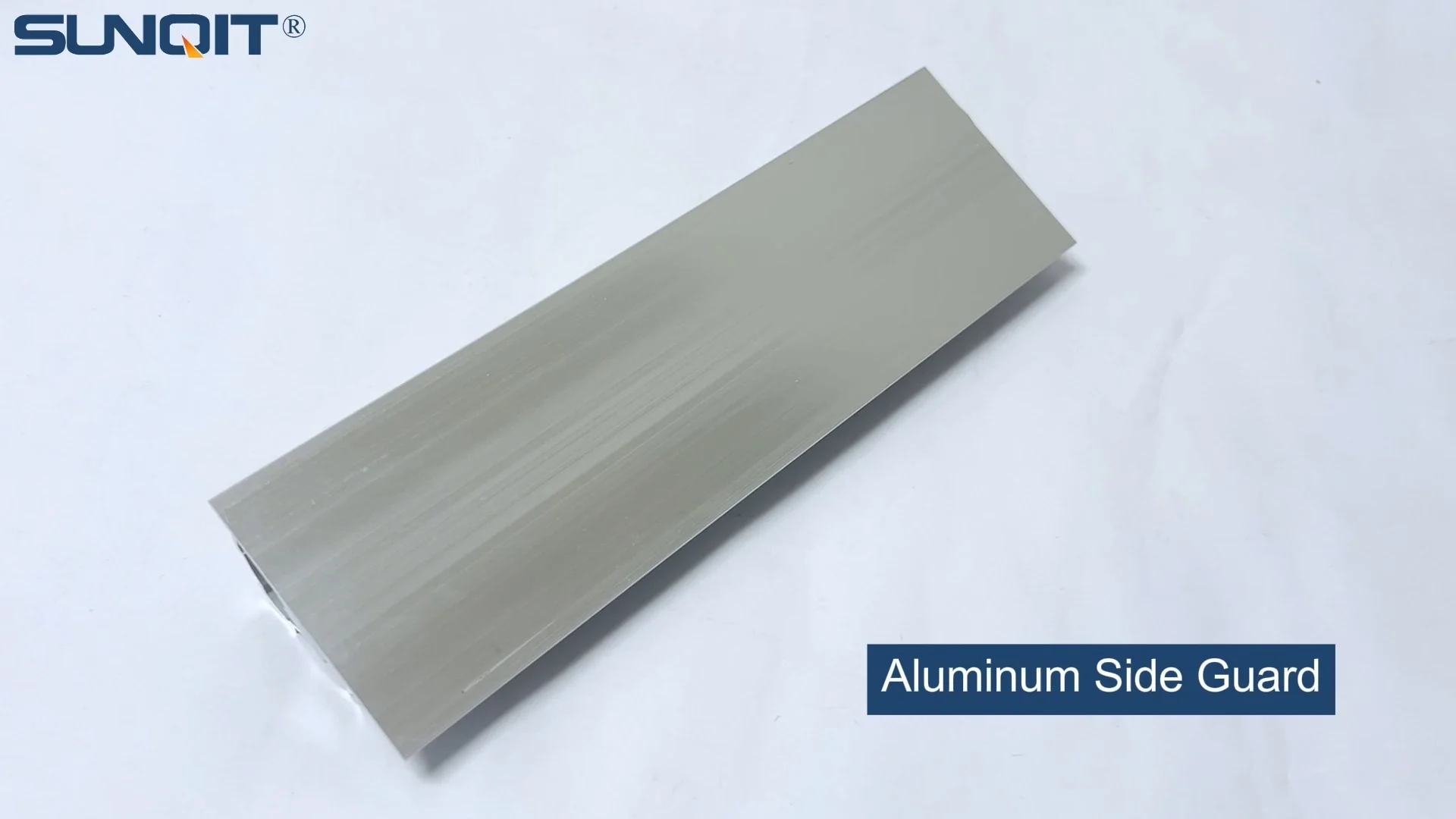
Aluminum Side Guard
Aluminum side guard, it works with a aluminum pipe or a roller track as side guard to prevent material drop,or move to wrong direction.
The Unsung Hero of Manufacturing Floors – Aluminum Side Guards
Walk through any busy manufacturing plant, warehouse, or assembly line, and you'll notice a quiet protector standing sentinel along workbenches, conveyor belts, and material racks: the aluminum side guard. These unassuming barriers might not grab headlines, but they're the backbone of workplace safety and efficiency. Imagine a scenario where a loaded turnover trolley rounds a corner too quickly, or a forklift operator misjudges a turn – without a sturdy side guard, that collision could damage expensive equipment, disrupt production, or worse, injure a worker. In lean system environments, where every second and every square foot counts, side guards don't just prevent chaos; they preserve the rhythm of operations. But what makes some side guards last for years, while others bend or crack after months? The answer lies in the science of materials – specifically, aluminum – and the rigorous testing that ensures durability.
Aluminum side guards are more than just metal strips. They're engineered systems, born from precision aluminum extrusion profiles, reinforced by carefully designed aluminum profile accessories, and tested to withstand the daily grind of industrial life. In this article, we'll peel back the layers of their construction, explore why aluminum is the material of choice, and dive into the testing protocols that separate a flimsy guard from one that becomes a permanent fixture in your facility. Whether you're a plant manager sourcing new equipment, a safety officer auditing workplace hazards, or simply curious about the engineering behind industrial tools, understanding the durability of aluminum side guards is key to building safer, smarter, and more efficient workspaces.
Why Aluminum? The Material Science Behind the Choice
When it comes to industrial side guards, manufacturers have options: steel, plastic, even wood. So why has aluminum – particularly aluminum extrusion profile – become the gold standard? The answer starts with a simple equation: strength + flexibility + longevity = aluminum. Let's break it down.
First, strength-to-weight ratio. Steel is strong, but it's heavy. A steel side guard might offer rigidity, but it adds unnecessary weight to mobile equipment like trolleys or adjustable workbenches, increasing strain on casters and making manual handling more difficult. Aluminum, by contrast, weighs roughly one-third of steel while maintaining impressive tensile strength. This lightweight nature is a game-changer in lean system setups, where equipment is often reconfigured to adapt to new production needs. An aluminum side guard can be moved, adjusted, or reinstalled without requiring a team of workers or specialized tools.
Then there's corrosion resistance. Manufacturing environments are harsh: exposure to oils, coolants, cleaning chemicals, and even humidity can eat away at unprotected metals. Steel rusts; plastic degrades under UV light or chemical exposure. Aluminum, however, forms a natural oxide layer when exposed to air – a thin, invisible shield that prevents further corrosion. For facilities near coastal areas or those using water-based cleaning solutions, this resistance isn't just a convenience; it's a necessity. Unlike steel, which requires painting or coating to survive, aluminum side guards maintain their integrity with minimal maintenance.
Malleability is another ace up aluminum's sleeve. Aluminum extrusion profile is created by forcing heated aluminum through a die, shaping it into precise cross-sections – think channels, angles, or hollow tubes. This process allows engineers to design side guards with built-in reinforcement ribs, custom thicknesses, and even integrated attachment points for accessories like caster wheels or roller tracks. Steel, while strong, is harder to shape into complex profiles without compromising strength, and plastic lacks the structural integrity for heavy-duty use. Aluminum's ability to be extruded into tailored shapes means side guards can be optimized for specific tasks: a thin, lightweight guard for a workbench edge, or a thicker, ribbed design for a high-traffic material rack.
Finally, sustainability plays a role. In an era where companies prioritize eco-friendly practices, aluminum's recyclability is a major plus. Unlike plastic, which often ends up in landfills, or steel, which requires significant energy to recycle, aluminum can be melted down and reused repeatedly without losing quality. For businesses aiming to reduce their carbon footprint, choosing aluminum side guards aligns with both durability and environmental goals.

The Anatomy of Durability: From Aluminum Extrusion to Finished Side Guard
A durable aluminum side guard isn't just a single piece of metal – it's a system of components working in harmony. At its core is the aluminum extrusion profile, the base structure that provides shape and strength. But without the right aluminum profile accessories, even the strongest extrusion would fail. Let's dissect this system, step by step.
The Foundation: Aluminum Extrusion Profile
The extrusion process is where durability begins. Manufacturers start with aluminum billets – solid blocks of aluminum alloy (typically 6061 or 6063, known for their strength and corrosion resistance). These billets are heated to around 500°C, making the metal malleable but not molten, then forced through a steel die under extreme pressure. The die's shape determines the extrusion profile: for side guards, common designs include "U-channel" (a trough shape that wraps around edges) or "L-angle" (a right-angle profile for corner protection). The magic of extrusion is precision – the die ensures consistent thickness, uniform wall strength, and integrated features like T-slots (longitudinal grooves) that let accessories attach without drilling or welding.
For example, a U-channel extrusion for a conveyor side guard might have a 3mm thick base and 2mm thick walls, with a T-slot running along the top edge. This slot allows workers to add plastic roller track guide rails (yellow or grey, depending on visibility needs) or swivel roller balls (1 inch or 0.5 inch) to help materials glide smoothly, all without weakening the guard itself. The extrusion's uniformity is critical: uneven thickness could create weak points prone to bending, while consistent T-slots ensure accessories fit snugly, preventing rattling or loosening over time.
The Reinforcements: Aluminum Profile Accessories
If the extrusion is the skeleton, aluminum profile accessories are the muscles and ligaments holding it all together. Take the internal rotatary aluminum joint, a small but mighty component. When two extrusion profiles meet at a corner, this joint allows 360-degree rotation during installation, ensuring a perfect fit, then locks into place with a setscrew. Unlike welded joints, which can crack under stress, rotatory joints flex slightly under impact, absorbing energy and reducing strain on the extrusion. Another key accessory is the aluminum pipe clamp, which secures the side guard to the main structure (like a workbench or rack). Made from high-strength aluminum alloy, these clamps distribute pressure evenly across the extrusion's T-slot, preventing dents or deformation even when the guard is hit repeatedly.
Even small details matter. Plastic roller track guide rails, often paired with side guards on flow racks, are designed to snap into the extrusion's T-slot and stay put. A yellow guide rail isn't just for visibility; its plastic composition (usually nylon or polypropylene) is impact-resistant, so if a box slides into it, the rail absorbs the shock instead of transferring it to the aluminum extrusion. Similarly, caster accessories like heavy-duty split foot seats, used when side guards are mounted on mobile trolleys, distribute the guard's weight across the trolley's frame, preventing tipping or stress fractures during movement.
The Finishing Touch: Surface Treatments
Once extruded and assembled with accessories, the side guard undergoes surface treatment to boost durability. Anodizing is the most common process: the aluminum is submerged in an electrolyte bath and subjected to an electric current, creating a thick oxide layer on the surface. This layer is harder than the base aluminum, scratch-resistant, and impermeable to moisture – perfect for resisting corrosion in damp or chemical-heavy environments. Some manufacturers add a powder coating over anodizing for color customization (safety yellow, for example) and extra protection against UV rays, which can fade uncoated aluminum over time.

Material Testing 101: Putting Aluminum Side Guards Through the Wringer
A side guard might look tough, but looks can be deceiving. To guarantee durability, manufacturers subject aluminum side guards to a battery of tests, simulating years of industrial abuse in weeks. These tests aren't just box-checking – they're scientific measurements of how the material and design hold up under stress. Let's explore the key tests and what they reveal.
Tensile Strength: How Much Pull Can It Take?
Tensile strength measures a material's resistance to being pulled apart – critical for side guards, which often bear weight or withstand lateral forces (like a trolley ramming into them). Testing involves cutting a sample from the aluminum extrusion profile (to mimic the guard's actual structure) and clamping it into a tensile testing machine. The machine pulls the sample until it stretches, then breaks, recording the force required (measured in megapascals, MPa) and the amount of stretch before failure (percentage elongation).
For example, a 6061 aluminum extrusion typically has a tensile strength of 310 MPa and elongation of 12%, meaning it can stretch 12% of its original length before breaking. Compare that to 6063 aluminum (tensile strength 215 MPa, elongation 8%) – while 6063 is more corrosion-resistant, 6061 is better for high-stress applications like side guards on heavy-duty material racks. A side guard made with 6061 extrusion will bend before breaking, giving visual warning of damage, whereas a weaker material might snap suddenly, increasing safety risks.
Impact Resistance: Surviving the Collision
In a busy facility, collisions are inevitable. Impact resistance testing simulates these accidents to ensure side guards absorb shock without catastrophic failure. The most common method is the Charpy test: a pendulum swings down, striking a notched sample of the extrusion at a set speed (usually 3.5 m/s, mimicking a trolley moving at 12 km/h). The energy absorbed by the sample (measured in joules, J) indicates how well it resists cracking.
| Aluminum Alloy | Test Temperature | Impact Energy (J) | Result |
|---|---|---|---|
| 6061-T6 (Anodized) | 20°C (Room Temp) | 14 J | Sample bends, no fracture |
| 6063-T5 (Powder-Coated) | 20°C (Room Temp) | 9 J | Minor cracking at notch |
| 6061-T6 (Anodized) | -10°C (Cold Storage) | 12 J | Bends, slight deformation |
The table above shows typical results: 6061-T6 outperforms 6063-T5 in impact resistance, even in cold environments (common in food processing or pharmaceutical facilities). A side guard made with 6061 would survive a low-speed collision with minimal damage, while 6063 might crack – a critical difference for long-term durability.
Corrosion Resistance: Battling the Elements
Industrial environments are hostile to metals: humidity, oils, cleaning agents, and even salt air (in coastal facilities) can cause rust and degradation. Salt spray testing is the gold standard here. Samples of the aluminum side guard (including extrusion and accessories like aluminum pipe clamps) are placed in a chamber and sprayed with a 5% saltwater solution at 35°C for 500+ hours. After exposure, testers check for pitting, discoloration, or loss of structural integrity.
Anodized aluminum excels here. The anodized layer acts as a barrier, preventing saltwater from reaching the base metal. In tests, anodized 6061 samples show no pitting after 500 hours, while uncoated aluminum begins to corrode within 200 hours. For facilities using harsh chemicals (like battery manufacturing plants), some manufacturers add a secondary coating, such as PVDF (polyvinylidene fluoride), which boosts corrosion resistance to 1000+ hours of salt spray – ensuring the side guard remains functional for years, not months.
Fatigue Testing: Enduring the Daily Grind
Most side guards don't fail from a single big impact – they fail from thousands of small ones: vibrations from nearby machinery, repeated bumps from passing trolleys, or the weight of materials resting against them. Fatigue testing measures how well a guard withstands these repeated stresses. A sample is mounted in a machine that applies cyclic force (e.g., pushing and pulling, or bending back and forth) at a set frequency (often 10 Hz, mimicking 10 cycles per second) until it cracks.
For example, a side guard on a conveyor belt might undergo 100,000 cycles of 500N force (about 50 kg) – equivalent to 3 hours of constant vibration. A well-designed guard, with aluminum extrusion profile reinforced by parallel aluminum joint a accessories, will survive 1 million+ cycles without cracking. A poorly designed one? It might fail at 100,000 cycles, requiring costly replacements and risking downtime.
Real-World Performance: Case Studies in Lean System Environments
Lab tests are revealing, but real-world performance is the ultimate judge. Let's look at two case studies where aluminum side guards proved their durability in lean system settings – and the measurable impact they had on efficiency and safety.
Case Study 1: Automotive Assembly Plant Reduces Downtime by 40%
A major automotive manufacturer in Michigan was struggling with frequent side guard failures on their transmission assembly line. Their previous guards were made of steel, which was heavy (making reconfiguration difficult) and prone to rusting from coolant spills. They switched to aluminum side guards made with 6061-T6 extrusion profiles, reinforced with internal rotatary aluminum joints and plastic roller track guide rails (yellow, for visibility). The results were striking:
- Reduced maintenance: Steel guards required replacement every 6 months; aluminum guards lasted 3+ years, cutting replacement costs by 80%.
- Faster reconfiguration: Lightweight aluminum (1/3 the weight of steel) allowed workers to adjust guard positions in 15 minutes, vs. 2 hours for steel (which required tools and extra labor).
- Fewer accidents: The yellow plastic guide rails improved visibility, reducing trolley collisions by 35% – and when collisions did happen, the aluminum guards bent instead of breaking, preventing damage to the transmission components (saving $12,000 in repair costs annually).
Case Study 2: Electronics Facility Protects ESD Workstations
An electronics manufacturer in California produces sensitive circuit boards, requiring ESD workstations (electrostatic discharge protection) to prevent static damage. Their old wooden side guards were porous, trapping dust and static, and they frequently cracked under the weight of tools. They upgraded to aluminum side guards with black ESD wheel roller tracks (to dissipate static) and aluminum profile accessories like gusset alp 4040 brackets (for stability). The outcome?
- Static control: The aluminum guards, grounded via the workstation frame, reduced static discharge events from 12 per month to zero, eliminating $50,000 in damaged components.
- Dust resistance: Anodized aluminum is non-porous, so dust wiped off easily – cutting cleaning time by 25% and improving air quality around sensitive components.
- Longevity: After 2 years of daily use, the guards showed no signs of cracking or corrosion, even with frequent exposure to isopropyl alcohol (used to clean workstations).
Beyond Durability: Sustainability and Cost-Efficiency
Durability isn't just about longevity – it's also about value. Aluminum side guards offer a rare win-win: they last longer and reduce long-term costs, all while supporting sustainability goals. Let's break down the numbers.
Consider the upfront cost: aluminum extrusion profiles and accessories are pricier than steel or plastic, but the total cost of ownership (TCO) tells a different story. A steel side guard might cost $50 upfront but needs replacement every 6 months ($100/year). An aluminum guard costs $150 upfront but lasts 5 years ($30/year). Over a decade, steel would cost $200, aluminum $300 – but wait, aluminum is 100% recyclable. When the guard finally reaches the end of its life, it can be melted down and reused, fetching scrap value (about $0.50/lb) – offsetting 10-15% of the initial cost. Steel, while recyclable, has lower scrap value, and plastic guards often end up in landfills, offering no return.
Sustainability adds another layer. Aluminum production from recycled material uses 95% less energy than producing new aluminum from bauxite ore. For companies aiming for net-zero goals, choosing recycled aluminum extrusion profiles for side guards reduces their carbon footprint significantly. A single aluminum side guard made from recycled aluminum saves enough energy to power a laptop for 10 years – a small choice with big environmental impact.
Choosing the Right Supplier: What to Look for in Quality
Even the best materials and designs can fail if sourced from a low-quality supplier. When shopping for aluminum side guards, look for these red flags and green lights:
Red Flags:
- No test certificates: A reputable supplier will provide tensile strength, impact resistance, and corrosion test reports for their aluminum extrusion profiles.
- Inconsistent extrusion: Check for uneven walls, rough edges, or misaligned T-slots – signs of poor die maintenance.
- Generic accessories: Avoid suppliers who use plastic joints instead of aluminum profile accessories; plastic weakens over time, especially in high temperatures.
Green Lights:
- ISO 9001 certification: Ensures consistent quality control in extrusion and assembly.
- Custom extrusion options: A supplier who offers tailored profiles (e.g., thicker walls for high-impact areas) shows engineering expertise.
- On-site testing labs: Suppliers with in-house testing facilities (like salt spray chambers or tensile machines) can verify durability before shipping.
Conclusion: Durability as a Foundation for Safer, Smarter Workspaces
Aluminum side guards are more than just protective barriers – they're a testament to the power of material science and engineering. From the precision of aluminum extrusion profiles to the strength of aluminum profile accessories, every component is designed to endure. Through tensile strength tests, impact simulations, and corrosion trials, manufacturers ensure these guards don't just meet standards – they exceed them, standing up to the chaos of industrial life so your team can focus on what matters: production, innovation, and safety.
In lean system environments, where efficiency and reliability are everything, durability isn't a luxury – it's a necessity. Aluminum side guards deliver that durability, backed by science, tested by rigor, and proven in real-world facilities. So the next time you walk past one of these quiet protectors, take a moment to appreciate the engineering behind it: the alloy selection, the extrusion process, the accessories that hold it together. It's not just metal – it's peace of mind, built to last.