- Company Articles
- Products and Technology
- Product knowledge
- The Science Behind Aluminum Workbench A: Why Aluminum is Ideal for Industrial Workbenches

The Science Behind Aluminum Workbench A: Why Aluminum is Ideal for Industrial Workbenches
Related Product
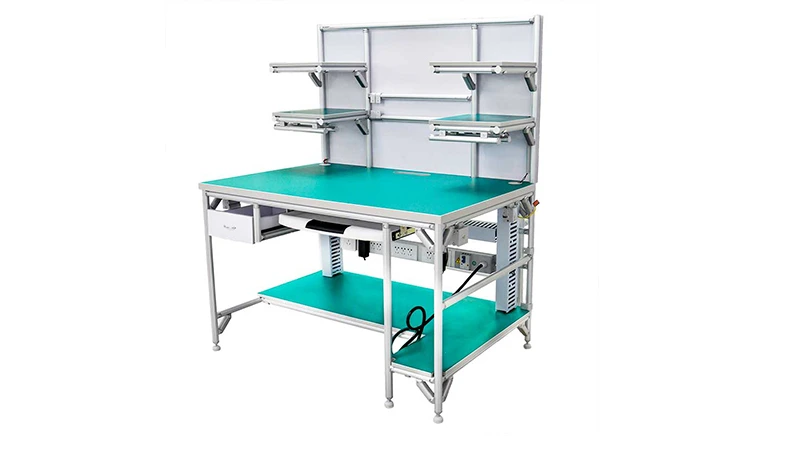
Aluminum Workbench A
Aluminum tube workbench is more flexible and durable, compared with traditional PE/ABS coated steel tube. It is easy to assemble, anti corrosion, rust protection, and recycle use after disassemble.
Exploring the material innovation that powers modern manufacturing efficiency
Introduction: The Unsung Hero of the Factory Floor
Walk into any thriving manufacturing plant, electronics assembly facility, or logistics hub, and you'll quickly spot the unsung heroes keeping operations running smoothly: workbenches. These aren't just tables—they're the command centers where precision meets productivity, where components become products, and where teams collaborate to hit deadlines. But not all workbenches are created equal. In the fast-paced world of modern industry, where adaptability, durability, and efficiency are non-negotiable, one material has risen to the top: aluminum. Specifically, aluminum extrusion profiles have revolutionized how workbenches are designed, built, and utilized. Today, we're diving deep into Aluminum Workbench A—a staple in factories worldwide—to uncover why aluminum isn't just a choice for industrial workbenches, but the ideal choice.
From the moment a workbench is installed, it faces a barrage of demands: heavy tools, constant movement, exposure to oils or chemicals, and the need to reconfigure as production lines evolve. Traditional materials like wood or steel often fall short—wood warps, steel rusts and weighs a ton, and plastic lacks the strength for heavy-duty tasks. Aluminum, though? It's a material engineered by nature and refined by science to tackle these challenges head-on. Let's start by breaking down the properties that make aluminum the backbone of modern industrial workbenches.
The Material Science: Why Aluminum Stands Above the Rest
At its core, aluminum is a marvel of material science. It's the most abundant metal in Earth's crust, but it's the way we process and shape it—especially through extrusion—that unlocks its industrial superpowers. Let's start with the basics: aluminum has a strength-to-weight ratio that's hard to beat. Pound for pound, it's as strong as steel but weighs roughly one-third as much. For a workbench, this means two game-changing benefits: easy mobility and reduced structural strain. Imagine a team needing to shift a workbench to accommodate a new assembly line layout—with aluminum, two people can move it; with steel, you'd need a forklift. That flexibility isn't just convenient; it's a cornerstone of lean system principles, where minimizing waste (including time wasted on reconfiguration) is key.
Then there's corrosion resistance. Aluminum naturally forms a thin oxide layer when exposed to air, acting as a built-in shield against rust and degradation. In factories where spills, humidity, or chemicals are part of daily life, this is a lifesaver. A steel workbench might start showing rust within months; an aluminum one? It'll stay looking and performing like new for years, even in harsh environments. This longevity translates to lower replacement costs and less downtime—music to any operations manager's ears.
Thermal conductivity is another underrated advantage. Aluminum dissipates heat quickly, which matters in settings like electronics assembly, where sensitive components can overheat. A workbench made with aluminum extrusion profiles won't trap heat, keeping both tools and operators cooler. And let's not forget electrical conductivity—important for ESD workbench applications, where static discharge can damage microchips. Aluminum can be grounded to channel static away, making it a safe choice for high-tech manufacturing.

Aluminum Extrusion Profiles: The Building Blocks of Modularity
So, aluminum has the right properties—but how do we turn it into a workbench that meets the unique needs of every factory? That's where aluminum extrusion profiles come in. Extrusion is a manufacturing process where heated aluminum billets are forced through a die, creating long, uniform shapes with consistent cross-sections. Think of it like squeezing toothpaste through a tube—except the result is a precise, strong, and infinitely customizable building block.
For Aluminum Workbench A, these profiles are the skeleton. They come in various sizes and shapes—T-slots, square tubes, angled beams—and each is designed to connect seamlessly with others using aluminum profile accessories like brackets, connectors, and fasteners. This modularity is a game-changer. Unlike a welded steel workbench, which is fixed in shape, an aluminum extrusion workbench can be reconfigured in minutes. Need to add a shelf? Slide a bracket into the T-slot and tighten a screw. Want to adjust the height? Swap out the leg profiles for longer ones. This adaptability is why lean system advocates swear by aluminum workbenches—they grow and change with your workflow, eliminating the need to buy new furniture every time production needs shift.
Let's get specific about Aluminum Workbench A. Its frame uses 40x40mm aluminum extrusion profiles, a popular choice for balance between strength and weight. The T-slots run along all four sides, allowing accessories to be attached anywhere—no pre-drilled holes required. This means you can mount tool holders, LED lights, power strips, or even small conveyor belts directly to the frame. The work surface itself is often an aluminum honeycomb panel, which adds rigidity without extra weight, and it's easy to swap out if it gets scratched or needs to be replaced with a (anti-static) version for ESD-sensitive tasks.
Aluminum profile accessories take this modularity further. Corner brackets reinforce joints, leveling feet keep the workbench stable on uneven floors, and casters (another keyword from our list!) turn it into a mobile workstation. Even the smallest details matter: end caps cover sharp edges for safety, and rubber strips fit into T-slots to hold tools in place. It's a system where every part works together, designed for both functionality and longevity.

Lean System Integration: Workbenches That Adapt to Your Workflow
In today's manufacturing landscape, "lean" isn't just a buzzword—it's a mindset focused on eliminating waste, streamlining processes, and continuous improvement. Aluminum Workbench A isn't just a piece of furniture; it's a tool that enables lean principles. Let's break down how.
First, 5S—Sort, Set in Order, Shine, Standardize, Sustain. A cluttered workbench is a productivity killer, and aluminum extrusion profiles make organization easy. With T-slots and aluminum profile accessories, every tool has a designated spot: screwdrivers hang from hooks, bins slide into rail systems, and manuals tuck into shelf pockets. This "Set in Order" step reduces time wasted searching for tools, turning minutes into hours of saved productivity each week.
Then there's flexibility for cellular manufacturing. In lean systems, production lines are often split into small, self-contained cells, each handling a specific task. Aluminum Workbench A can be grouped into cells, then rearranged when product designs change. For example, if a factory shifts from assembling smartphones to tablets, the workbenches can be reconfigured to accommodate larger components—no need to invest in new infrastructure.
Waste reduction also comes in the form of durability. A well-built aluminum workbench can last 10+ years, whereas wood or plastic might need replacement every 2-3 years. Fewer replacements mean less waste in landfills and lower long-term costs. Plus, aluminum is 100% recyclable, so when it finally reaches the end of its life, it can be melted down and turned into new extrusion profiles—aligning with sustainability goals, another pillar of modern lean systems.
Ergonomics can't be overlooked either. Lean systems prioritize worker well-being, and aluminum workbenches deliver here too. Adjustable height profiles let operators set the bench to their ideal working level, reducing strain on backs and shoulders. Casters make it easy to move the bench to avoid unnecessary walking, and add-ons like footrests or monitor mounts can be attached via T-slots. Happier, healthier workers are more productive—another win for lean efficiency.
Comparing Materials: Why Aluminum Beats Steel, Wood, and Plastic
To truly appreciate aluminum's (advantages), let's compare it to other common workbench materials. The table below breaks down key factors:
| Material | Strength-to-Weight Ratio | Corrosion Resistance | Customization | Cost (Lifetime) | Best For |
|---|---|---|---|---|---|
| Aluminum (Extrusion Profiles) | Excellent (1/3 weight of steel, similar strength) | High (natural oxide layer) | Exceptional (modular with T-slots and accessories) | Moderate upfront, low long-term (durable, recyclable) | Lean systems, electronics, ESD workbench, mobile setups |
| Steel | Good (strong but heavy) | Low (prone to rust without coating) | Limited (welded joints, hard to reconfigure) | Low upfront, high long-term (replacement, coating costs) | Heavy machinery repair, stationary workbenches |
| Wood | Poor (weakens with moisture, warps) | Very Low (absorbs water, rots) | Basic (screws, nails; permanent modifications) | Low upfront, very high long-term (frequent replacement) | Craft workshops, low-stress environments |
| Plastic | Poor (light but lacks strength) | High (resistant to chemicals) | Very Limited (molded shapes, no T-slots) | Low upfront, high long-term (cracks under heavy loads) | Cleanrooms (light use), food processing (non-porous) |
As the table shows, aluminum extrusion profiles strike the perfect balance. Steel is strong but rigid and heavy; wood is cheap but fragile; plastic is lightweight but weak. Aluminum? It's the only material that checks all the boxes: strong, light, corrosion-resistant, customizable, and cost-effective over time. No wonder Aluminum Workbench A is the go-to for factories serious about lean system efficiency.
Real-World Applications: How Aluminum Workbench A Transforms Factories
Let's ground this in real life. Take a mid-sized electronics manufacturer producing circuit boards. Their old setup used steel workbenches—heavy, hard to move, and prone to rust in the humid factory air. When they switched to Aluminum Workbench A, the changes were immediate. First, they reconfigured the production line in a day instead of a week, rearranging workbenches to create U-shaped cells that cut down on worker movement. The T-slots let them add custom tool holders and ESD mats, reducing static-related defects by 30%. And because the benches were lighter, they could install casters, allowing teams to wheel workstations directly to material storage areas, cutting down on walking time by 2 hours per shift.
Another example: a automotive parts supplier. They needed workbenches that could handle heavy tools but also adapt to new part designs. Aluminum extrusion profiles let them add shelves and bins as needed, and the corrosion resistance meant the benches held up even with oil and grease spills. When they expanded production, they simply bought more extrusion profiles and accessories, building new workbenches that matched the existing ones—no need for a complete overhaul.
Even in small workshops, Aluminum Workbench A shines. A local maker space swapped their wooden tables for aluminum extrusion models, and members now customize their workstations with 3D printer mounts, tool racks, and lighting—all attached via T-slots. The benches are lightweight enough to move for group projects but sturdy enough to support metalworking tools. It's a testament to how aluminum's versatility scales from small businesses to large factories.
Durability and Maintenance: Built to Last, Easy to Care For
Industrial workbenches take a beating—there's no getting around it. But Aluminum Workbench A is built to withstand daily wear and tear, and maintaining it is surprisingly simple. Let's start with the frame: aluminum extrusion profiles are inherently strong, with no weak points from welding (unlike steel). The T-slots are precision-machined, so accessories fit snugly and won't loosen over time. Even if a profile gets scratched, the oxide layer reforms quickly, preventing rust from taking hold.
Cleaning is a breeze. Unlike wood, which can stain, or steel, which needs frequent painting, aluminum just needs a wipe with a damp cloth to remove oil, dust, or chemicals. For tougher grime, mild soap and water work—no harsh abrasives needed. The work surface, often an aluminum honeycomb panel or laminate, resists scratches and can be replaced individually if damaged, instead of replacing the entire bench.
Aluminum profile accessories are equally durable. Brackets and connectors are made from hardened aluminum or steel, designed to handle repeated adjustments. Casters with rubber wheels won't mark floors and roll smoothly even with heavy loads. And because the system is modular, replacing a part is as easy as ordering a new bracket or caster—no need to hire a welder or buy a whole new bench.
Over time, aluminum workbenches actually get better. As your needs change, you can add more profiles, swap out accessories, or even repurpose the frame into a new setup (like a material rack or trolley). This adaptability means your initial investment grows with your business, making Aluminum Workbench A a smart long-term choice.
Conclusion: Aluminum Workbench A—More Than a Workbench, a Productivity Partner
At the end of the day, a workbench is more than just a place to set tools. It's the foundation of your workflow, the stage where your team's skills turn materials into products. Aluminum Workbench A, built with aluminum extrusion profiles, aluminum profile accessories, and lean system principles in mind, isn't just a piece of equipment—it's a productivity partner. It's lightweight yet strong, customizable yet durable, and designed to grow with your business.
The science is clear: aluminum's unique properties—strength-to-weight ratio, corrosion resistance, thermal conductivity—make it ideal for industrial use. Extrusion technology turns that potential into reality, creating modular profiles that adapt to any need. And when paired with lean system practices, it becomes a tool for eliminating waste, boosting efficiency, and keeping workers happy and healthy.
So, whether you're running a high-tech electronics plant, a busy automotive shop, or a small maker space, Aluminum Workbench A stands out as the smart choice. It's not just about the material—it's about investing in a system that works as hard as your team does. After all, in manufacturing, every detail matters—and the right workbench can be the difference between meeting deadlines and falling behind, between waste and efficiency, between frustration and success. With aluminum, you're not just building a workbench; you're building a better way to work.