- Company Articles
- Products and Technology
- Product knowledge
- The Science Behind Aluminum Workbench B: Material Strength and Durability

The Science Behind Aluminum Workbench B: Material Strength and Durability
Related Product
Aluminum Workbench B
Aluminum tube workbench is more flexible and durable, compared with traditional PE/ABS coated steel tube. It is easy to assemble, anti corrosion, rust protection, and recycle use after disassemble.
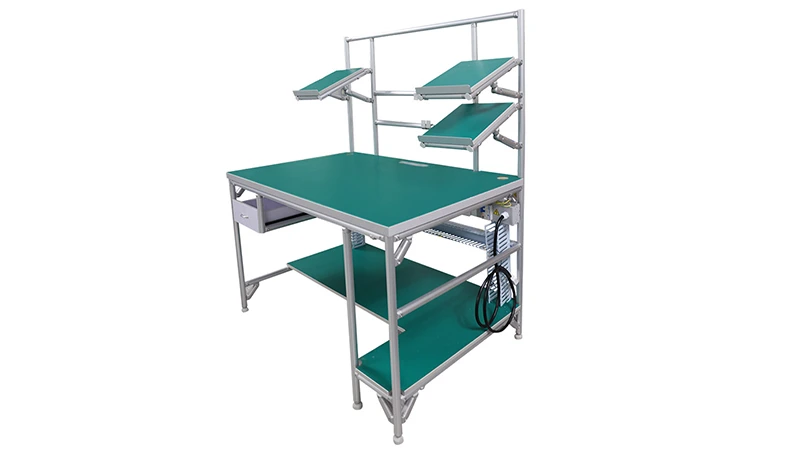
Walk into any workshop, factory floor, or garage, and you'll likely spot a workbench—a silent workhorse holding tools, parts, and the weight of countless projects. But not all workbenches are created equal. Some sag under heavy machinery, others rust after a single spill, and a few? They stand the test of time, becoming as reliable as the hands that use them. Enter Aluminum Workbench B —a name that's been quietly gaining traction among craftsmen, manufacturers, and DIY enthusiasts alike. What makes it different? It's not just the sleek aluminum finish or the modular design. At its core, Aluminum Workbench B is a masterclass in material science, where every curve, joint, and component is engineered for two non-negotiable traits: strength and durability . Let's dive into the science behind why this workbench isn't just a piece of equipment—it's an investment in longevity.
Why Aluminum? The Case for a Modern Workbench Material
When you think of "strong" materials, steel might come to mind first. It's tough, it's heavy, and it's been a workshop staple for decades. But steel has a Achilles' heel: weight. A steel workbench can weigh hundreds of pounds, making it nearly impossible to move if your workflow changes. Wood, on the other hand, feels warm and traditional, but it warps with moisture, dents easily, and requires constant refinishing. So where does aluminum fit in? Aluminum is the Goldilocks of materials—lightweight enough to be mobile, strong enough to handle heavy loads, and resistant to the wear and tear that would break down other materials. For Aluminum Workbench B, this balance isn't accidental. It starts with the material itself: high-grade aluminum, often alloyed with elements like magnesium and silicon to boost strength without sacrificing flexibility.
But aluminum's real superpower? It's a sustainable choice. Unlike steel, which requires intensive mining and energy to produce, aluminum is 100% recyclable, and recycling it uses just 5% of the energy needed to create new aluminum. For workshops aiming to reduce their carbon footprint, this matters. And for the workbench user? It means you're not just buying a tool—you're investing in a material that's built to last, both for your projects and the planet.
Aluminum Extrusion Profile: The Backbone of Strength
At the heart of Aluminum Workbench B lies a critical component: the aluminum extrusion profile . This isn't just a fancy term—it's the reason the workbench can support heavy tools, resist bending, and maintain its shape year after year. So what exactly is an extrusion profile? Imagine squeezing toothpaste from a tube: the paste takes the shape of the tube's opening. Aluminum extrusion works similarly, but on an industrial scale. Heated aluminum billets (solid blocks) are pushed through a steel die with a specific cross-sectional shape—say, a rectangular frame with internal ribs or T-slots. The result? A long, uniform profile with consistent thickness and structural integrity.
For Aluminum Workbench B, the extrusion die is engineered with precision. The profile isn't just a flat sheet of aluminum; it's designed with internal reinforcing ribs that distribute weight evenly. Think of it like the trusses in a bridge—by adding strategic bracing, the profile can withstand more stress without deforming. This design is why you can clamp a 50-pound vice to the edge of Aluminum Workbench B, stack boxes of parts on top, and still not see so much as a hairline bend. The extrusion process also ensures that every section of the workbench is identical, eliminating weak spots that might form in manually welded or cut materials.
But extrusion isn't just about strength—it's about versatility. The T-slots running along the edges of the aluminum extrusion profile are a game-changer. These slots allow you to attach aluminum profile accessories —shelves, tool holders, LED lights, or even custom jigs—without drilling holes or welding. This modularity means the workbench grows with your needs, but it also reinforces the structure. When you bolt an accessory into a T-slot, the force is distributed across the entire profile, not just a single point. It's like adding extra support beams to a building—every accessory becomes part of the workbench's strength, not a liability.

Material Strength: Beyond "Tough Enough"
Strength isn't just about "not breaking"—it's about predictable performance. When you're working on a precision part, the last thing you need is a workbench that flexes under pressure, throwing off your measurements. Aluminum Workbench B's strength is rooted in the science of materials. Let's break it down: aluminum alloys used in extrusion (like 6061 or 6063) have a tensile strength of 200–300 MPa (megapascals), which means they can withstand 200–300 million newtons of force per square meter before breaking. To put that in perspective: a typical steel workbench might have a higher tensile strength (around 400–500 MPa), but it's also three times heavier. Aluminum's strength-to-weight ratio is what makes it special—it offers nearly the same load capacity as steel but at a fraction of the weight, making the workbench easier to move (if needed) and less likely to damage floors over time.
Another key factor is yield strength —the point at which the material starts to bend permanently. Aluminum extrusion profiles for workbenches are designed to have a high yield strength, meaning they can handle temporary overloads (like dropping a heavy tool) without warping. This is thanks to the extrusion process, which aligns the aluminum's grain structure along the length of the profile, making it resistant to bending in the direction of the load. For example, if you place a 200-pound engine block on Aluminum Workbench B, the profile's internal ribs and uniform grain structure work together to spread the weight, ensuring the surface stays flat.
Impact resistance is another area where Aluminum Workbench B shines. Unlike brittle materials like cast iron, aluminum has a degree of flexibility. When struck (say, by a falling wrench), it absorbs the impact rather than cracking. This ductility is a result of the alloying elements—magnesium, for instance, improves aluminum's ability to stretch without breaking. In workshops where accidents happen, this flexibility can mean the difference between a minor scratch and a cracked workbench top.

Durability: Standing Up to Time, Spills, and Sweat
Strength is impressive, but durability is about longevity. A workbench might be strong on day one, but how does it hold up after months of oil spills, chemical splashes, and daily use? Aluminum's natural properties make it a durability champion. Unlike steel, which rusts when exposed to moisture, aluminum forms a thin, invisible layer of aluminum oxide on its surface when it reacts with oxygen. This layer acts as a barrier, preventing further corrosion. Even if the surface is scratched, the oxide layer reforms almost instantly, keeping the workbench safe from rust.
For workshops dealing with harsh chemicals—like automotive garages (oil, brake fluid) or electronics assembly lines (cleaning solvents)—this corrosion resistance is a lifesaver. A steel workbench might start showing rust spots within weeks of exposure to motor oil, but Aluminum Workbench B? It wipes clean with a rag, and the aluminum oxide layer ensures the damage stops at the surface. This isn't just about appearance; corrosion weakens materials over time. By resisting rust, Aluminum Workbench B maintains its structural integrity for years, even in messy environments.
Scratch and wear resistance are also critical. The extrusion process leaves the aluminum profile with a smooth, hard surface, but many manufacturers take it a step further with anodization. Anodizing is an electrochemical process that thickens the aluminum oxide layer, making it even more resistant to scratches and abrasions. Anodized Aluminum Workbench B tops can handle daily use with tools, parts, and even heavy machinery without showing significant wear. Compare that to a wooden workbench, which can get dented or stained permanently, or a plastic workbench, which might crack under heat or heavy loads.
Aluminum Profile Accessories: The Unsung Heroes of Durability
A workbench is only as strong as its weakest link, and for Aluminum Workbench B, those links are the aluminum profile accessories . These small, often overlooked components—brackets, connectors, clamps, and feet—play a huge role in the workbench's overall durability. Let's take a closer look:
- Feet and Levelers: Aluminum Workbench B often comes with adjustable aluminum or rubber feet. These aren't just for leveling the workbench on uneven floors—they also absorb vibrations from power tools, reducing stress on the frame. Rubber feet, in particular, prevent slipping and protect the workbench from scratches when moved.
- Connectors and Brackets: When assembling the workbench, connectors (like corner brackets or T-slot nuts) join the aluminum extrusion profiles. High-quality aluminum connectors are designed to distribute weight evenly across the joints, preventing (loosening) over time. Unlike plastic connectors, which can crack under pressure, aluminum accessories flex slightly with the profile, maintaining a tight fit even after years of use.
- Shelves and Drawers: Shelves attached via T-slot accessories aren't just for storage—they add lateral stability to the workbench, reducing sway when heavy items are placed on the edges. Drawer units, when mounted properly, reinforce the lower frame, making the entire structure stiffer.
The beauty of these accessories is that they're designed to work with the aluminum extrusion profile, not against it. For example, a T-slot nut slides into the extrusion's slot and tightens with a bolt, creating a secure connection that won't strip or loosen. This modular design also means if an accessory wears out (like a rubber foot), it can be easily replaced, extending the workbench's lifespan even further.
How Does It Compare? A Real-World Material Showdown
To truly appreciate Aluminum Workbench B's strength and durability, let's compare it to other common workbench materials. The table below breaks down key factors that matter in a workshop setting:
| Material | Strength (Tensile, MPa) | Weight (kg/m²) | Corrosion Resistance | Maintenance | Lifespan (Years) |
|---|---|---|---|---|---|
| Aluminum Workbench B (Aluminum Extrusion Profile) | 200–300 | 15–20 | Excellent (oxide layer) | Low (wipe clean, replace accessories) | 15–20+ |
| Steel Workbench | 400–500 | 45–50 | Poor (rusts without coating) | High (repaint, treat rust) | 10–15 (with maintenance) |
| Wooden Workbench | 50–100 | 25–30 | Poor (warps, stains) | High (sand, refinish, seal) | 5–10 |
| Plastic Workbench | 30–50 | 8–12 | Good (resists chemicals) | Low (but prone to cracking) | 3–5 |
The data speaks for itself: Aluminum Workbench B offers a balance of strength, low maintenance, and longevity that's hard to beat. It outperforms wood and plastic in nearly every category and matches steel's load capacity while being lighter and easier to care for.
Stories from the Shop Floor: Real Users, Real Durability
Numbers and specs are one thing, but real-world experience tells the true story of a workbench's durability. Take Maria, a small-batch manufacturer of custom metal parts. She switched to Aluminum Workbench B five years ago after her steel workbench rusted through following a coolant spill. "I was skeptical at first—aluminum feels lighter, so I thought it might not hold up," she says. "But five years later, it still looks brand new. I've clamped vices, welded on it, even accidentally spilled acid once, and it just wipes clean. The T-slots let me add shelves and tool holders, so the workspace grows with my business. Best investment I ever made."
Then there's Raj, who runs an auto repair shop. "We used to have wooden workbenches that got beat up within a year—oil stains, dents, you name it. Aluminum Workbench B? It takes a beating. We drop tools, roll engines onto it, and it doesn't budge. And since it's lightweight, we can move it around the shop when we need extra space for a big job. No more struggling with heavy steel benches that scratch the floor."
Why Aluminum Workbench B Is More Than a Workbench—It's a Long-Term Investment
At the end of the day, a workbench is more than just a surface to work on. It's a foundation for productivity, precision, and creativity. Aluminum Workbench B stands out because it's built on a foundation of science: the strength of aluminum extrusion profiles, the durability of corrosion-resistant materials, and the versatility of aluminum profile accessories. It's lightweight yet strong, easy to maintain yet built to last, and flexible enough to adapt to any workshop's needs.
Whether you're a hobbyist in a garage or a manufacturer running a production line, choosing a workbench that can keep up with you is critical. Aluminum Workbench B doesn't just meet that standard—it sets it. So the next time you're in the market for a workbench, remember: it's not just about what it looks like today, but how it will perform tomorrow, next year, and a decade from now. Aluminum Workbench B isn't just a purchase—it's an investment in the work you do and the future you're building.