- Company Articles
- Products and Technology
- Product knowledge
- The Science Behind Anti-Slip Design in Adjustable Leveling Feet

The Science Behind Anti-Slip Design in Adjustable Leveling Feet
Related Product
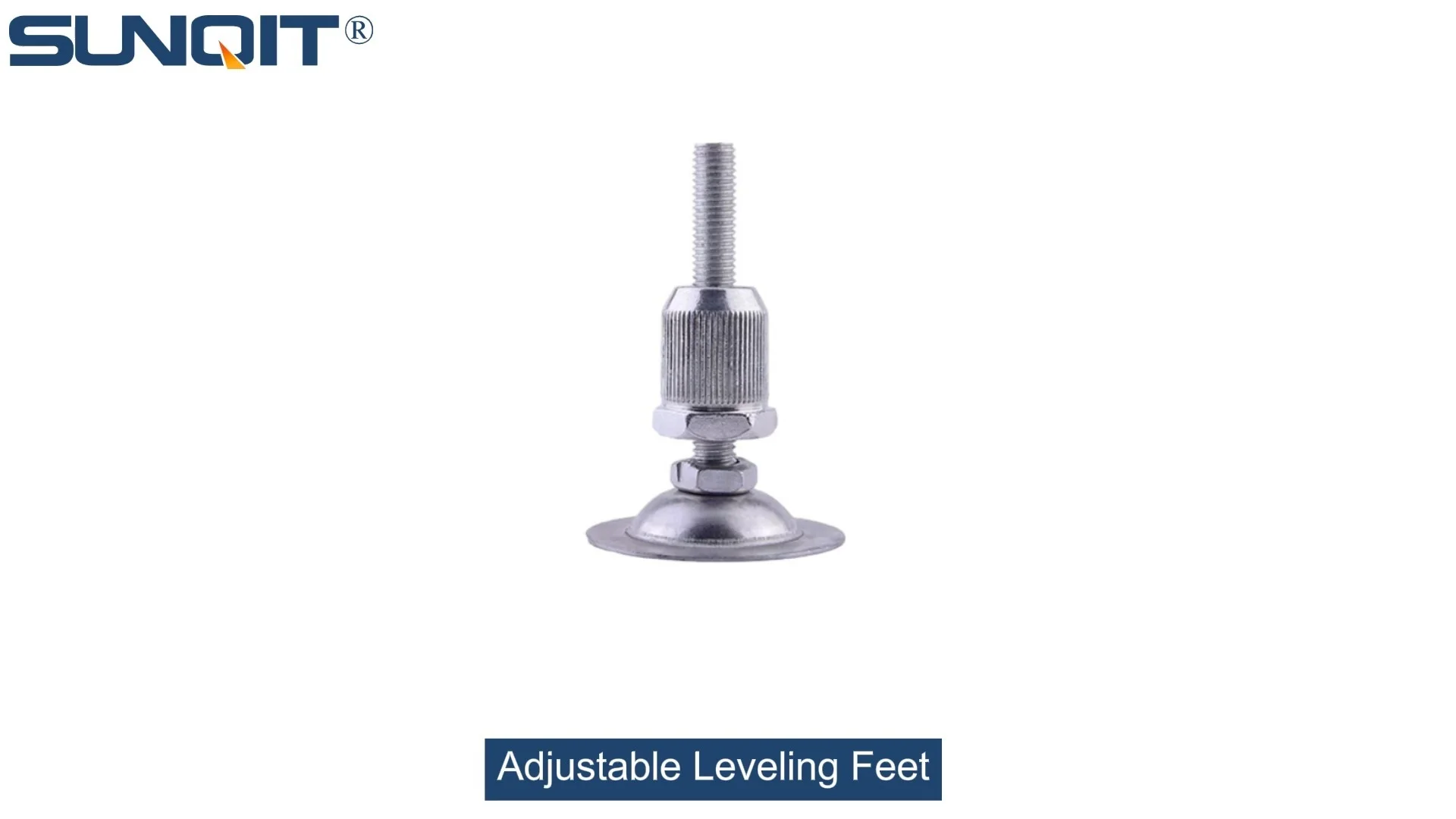
Adjustable Leveling Feet
Adjustable leveling feet are designed to keep machines level when placed on uneven or sloped ground. Otherwise known as adjustable equipment feet, they are available to order in a wide variety of size and load capacity combinations.
Walk into any busy workshop, manufacturing plant, or even a home garage, and you'll likely spot a common unsung hero: the adjustable leveling foot. Tucked beneath workbenches, assembly lines, and equipment racks, these small but mighty components do more than just "level" surfaces—they're the silent guardians of stability, precision, and safety. But not all leveling feet are created equal. The ones that truly stand out (pun intended) are those with anti-slip design, a feature that transforms a simple "height adjuster" into a critical tool for preventing accidents, reducing errors, and extending the life of equipment. Let's dive into the science behind these unassuming yet vital components, and why they matter far more than you might think.
What Are Adjustable Leveling Feet, Anyway?
First, let's get back to basics. Adjustable leveling feet are mechanical components attached to the base of furniture, machinery, or structures to compensate for uneven floors. They typically consist of a threaded stem (which screws into the equipment) and a base (which touches the floor), with a mechanism to rotate the stem and raise or lower the base. Simple enough, right? But when you add "anti-slip" to the mix, things get interesting. Anti-slip leveling feet are engineered to not just adjust height, but to grip the floor, preventing the equipment from sliding, shifting, or wobbling—even under heavy loads, vibrations, or oily conditions.
Think about a workbench in a factory. If its feet don't grip, a sudden jolt from a power tool could send it sliding an inch or two. That might not sound like much, but in precision manufacturing—where parts need to align within fractions of a millimeter—an inch is a disaster. Or consider a lab bench holding sensitive equipment: a slip could ruin an experiment, or worse, break expensive tools. Even in a home workshop, a wobbly table saw with slippery feet is an accident waiting to happen. Anti-slip adjustable leveling feet aren't just "nice to have"; they're the difference between smooth operations and costly, dangerous mishaps.
Why Anti-Slip Matters: The Hidden Risks of Slippery Feet
To understand why anti-slip design is critical, let's talk about what happens when leveling feet don't grip. Slippage can lead to three major issues: safety hazards, operational inefficiencies, and equipment damage.
Safety First: The most obvious risk is injury. A workbench that slides unexpectedly can cause tools to fall, workers to trip, or hands to slip into moving parts. In industries like automotive manufacturing, where assembly lines hum with activity, a single sliding trolley or workstation could trigger a chain reaction of accidents. Even in quieter settings, like a hospital lab, a microscope table that shifts could lead to spills of hazardous materials. Anti-slip feet act as a first line of defense, keeping equipment anchored and people safe.
Precision and Productivity: In fields where accuracy is everything—think aerospace engineering, electronics assembly, or medical device manufacturing—even minor movement can throw off measurements. A CNC machine that shifts by 0.1mm might produce parts that don't fit, leading to wasted materials, rework, and missed deadlines. Over time, these inefficiencies add up, costing companies thousands of dollars. Anti-slip leveling feet ensure that equipment stays "locked in place," so every cut, drill, or test is consistent and reliable.
Equipment Longevity: Wobbling or sliding equipment doesn't just harm products—it harms itself. When a machine shifts repeatedly, it puts stress on bolts, welds, and joints, leading to premature wear and tear. Vibrations from an unstable workbench can loosen screws or damage internal components, turning a small annoyance into a major repair bill. Anti-slip feet reduce this stress by keeping the equipment stable, extending its lifespan and lowering maintenance costs.

The Science of Grip: Materials That Stick (Literally)
At the heart of anti-slip design is material science. The base of the leveling foot—the part that touches the floor—is where the magic happens. Manufacturers have spent decades testing different materials to find the perfect balance of grip, durability, and resistance to wear, chemicals, and temperature extremes. Let's break down the top contenders:
| Material | Durometer (Shore A)* | Coefficient of Friction (Dry Concrete) | Best For | Challenges |
|---|---|---|---|---|
| Natural Rubber | 60-80 | 0.8-1.0 | General-purpose, dry environments | Degrades in oil, UV light, and high temperatures |
| Polyurethane (PU) | 70-90 | 0.7-0.9 | Heavy loads, oily/fatty environments | Stiffer than rubber; less grip on very smooth floors |
| Neoprene | 65-85 | 0.6-0.8 | Chemical resistance, outdoor use | Lower friction than rubber; more expensive |
| Nitrile Rubber | 70-85 | 0.7-0.9 | Oil, gasoline, and solvent exposure | Hardens in cold temperatures |
*Durometer measures hardness; lower numbers = softer, more flexible material.
The star of the show here is the coefficient of friction (COF) —a measurement of how much resistance a material offers against sliding. A higher COF means better grip. For example, natural rubber, with a COF of 0.8-1.0 on dry concrete, feels "sticky" because it creates more friction. But rubber's Achilles' heel? Oil. In a factory with hydraulic leaks or machine oil on the floor, rubber can become slippery. That's where polyurethane (PU) shines: its molecular structure resists oil absorption, maintaining grip even when the floor is greasy. Neoprene, on the other hand, is a champion for chemical resistance—ideal for labs or workshops with harsh solvents.
But material alone isn't enough. The shape of the base also plays a role. A larger base spreads the load over more surface area, increasing friction (remember: friction = force × COF, so more area = more force transferred to the floor). That's why heavy-duty anti-slip feet often have wide, flat bases. Some even have concave or convex shapes to "cup" the floor, especially on uneven surfaces. Imagine trying to balance a book on a marble vs. a suction cup—the cup grips better because it conforms to the surface. The same principle applies here.

Tread Patterns: Nature's Inspiration for Grip
If materials are the "what," tread patterns are the "how." Just like car tires use tread to channel water and improve traction, anti-slip leveling feet use patterns to enhance grip, especially in wet or dirty conditions. Let's look at the most common designs and the science behind them:
Herringbone Patterns: These V-shaped grooves are a classic for a reason. They channel liquids (like oil or water) away from the contact area, preventing the foot from "floating" on a film of liquid. The angled ridges also bite into rough surfaces, like concrete, creating micro-anchors that resist sliding. Think of it as tiny "claws" for the floor.
Diamond or Grid Patterns: Small, intersecting lines create hundreds of tiny contact points. Even if one area is slippery, others can still grip. This is great for uneven floors, where some parts of the base might not touch the ground— the grid ensures at least some tread is always in contact.
Siping: Microscopic slits (like those in winter tires) that allow the material to flex and conform to the floor's texture. Siping is especially useful on smooth floors, where the foot needs to "hug" the surface rather than dig into it. It's like adding tiny hinges to the base, letting it adapt to minor bumps or dips.
Fun fact: Many tread patterns are inspired by nature. Geckos use millions of tiny hairs to stick to walls; similarly, some high-end anti-slip feet use micro-textures (too small to see with the naked eye) to increase surface area and friction. It's biomimicry at its most practical.

Mechanical Engineering: Keeping Grip Under Pressure
Materials and tread patterns are critical, but there's another layer to anti-slip design: the mechanical connection between the stem and the base. Even the grippiest material won't help if the base rotates or detaches when you adjust the height. That's why anti-slip feet often have locked joints —mechanisms that prevent the base from spinning independently of the stem. Some use ball-and-socket joints to allow the base to tilt (adapting to uneven floors) while keeping the tread in full contact. Others have nylon washers or rubber O-rings to add friction between the stem and base, ensuring that once you set the height, the base stays put.
Load distribution is another key factor. When you place a heavy object on a workbench, the weight pushes down on the leveling feet. If the foot isn't designed to handle that load, the base might deform, reducing contact area and grip. Engineers calculate the "compressive strength" of the base material to ensure it doesn't flatten or crack under pressure. For example, a workbench holding 500kg might need feet with a base made of high-density polyurethane, which resists deformation better than rubber.
Testing, Testing: How Do We Know Anti-Slip Works?
You can't just claim a leveling foot is "anti-slip"—you have to prove it. Manufacturers use rigorous testing to measure grip, durability, and performance under real-world conditions. The most common test is measuring the coefficient of friction (COF) using a device like a tribometer, which drags the foot across different surfaces (concrete, tile, metal) and calculates how much force is needed to make it slide. A COF of 0.5 or higher is generally considered "anti-slip" for industrial use, but in high-risk settings (like hospitals), the bar is set higher—sometimes 0.8 or more.
Other tests include: abrasion resistance (how well the tread holds up after thousands of slides), chemical exposure (soaking the foot in oil, acid, or solvent and re-testing grip), and temperature cycling (freezing and heating the foot to see if the material becomes brittle or loses elasticity). Only after passing these tests do feet earn the "anti-slip" label.
Beyond the Workbench: Where Anti-Slip Feet Shine
While workbenches are a common application, anti-slip adjustable leveling feet pop up in more places than you'd expect. Let's explore a few:
Medical Equipment: Operating tables, MRI machines, and lab centrifuges all rely on anti-slip feet to stay stable. A single shift during surgery could have life-threatening consequences, so these feet are often made of hypoallergenic, easy-to-sterilize materials like silicone.
Food Processing: In kitchens or food factories, floors are often wet or greasy. Anti-slip feet on mixers, conveyors, and prep tables prevent contamination (no one wants a sliding meat grinder spilling product) and reduce slip-and-fall risks for workers.
Retail Displays: Ever noticed how heavy (racks) in stores don't slide when customers bump into them? That's thanks to anti-slip feet. They also keep displays level, so products don't topple off shelves.
And Yes, Workbenches: The classic example, but worth repeating. A well-equipped workbench isn't just a table—it's a hub of productivity. Pairing anti-slip leveling feet with other components like caster and accessories (casters for mobility, feet for stability) lets workers move the bench when needed and lock it down when in use. It's the best of both worlds: flexibility and security.
The Future of Anti-Slip: Innovation in the Smallest Parts
As technology advances, so do anti-slip leveling feet. Here are a few trends to watch:
Eco-Friendly Materials: Manufacturers are experimenting with plant-based rubbers or recycled polyurethanes to reduce environmental impact, without sacrificing grip. Imagine a leveling foot made from recycled tires—sustainable and slip-resistant.
Smart Feet: Some companies are adding sensors to leveling feet that detect slippage and alert workers via apps. If a foot starts to lose grip, the sensor sends a notification, preventing accidents before they happen.
Self-Cleaning Treads: Tread patterns that shed dirt and debris automatically, reducing the need for manual cleaning. Think of it like a cat's tongue—always ready to grip, no matter how dusty the floor.
Final Thoughts: Small Parts, Big Impact
Anti-slip adjustable leveling feet might not be the most glamorous technology, but they're a perfect example of how "small" innovations drive big results. They keep workers safe, products precise, and equipment running longer—all by doing one simple thing: gripping the floor. The next time you walk into a workshop, lab, or factory, take a second to look down. Chances are, the stability you take for granted is thanks to these unsung heroes of the industrial world. And if you're in the market for new equipment? Don't just ask about "adjustable feet"—ask about anti-slip ones. Your tools, your team, and your bottom line will thank you.