- Company Articles
- Products and Technology
- Product knowledge
- The Science Behind Chrome Plating on Parallel Lean Pipe Joints

The Science Behind Chrome Plating on Parallel Lean Pipe Joints
Related Product
Parallel Lean Pipe Joint
Parallel lean pipe joint used for 2 pcs 28MM lean pipe connection in parallel direction to enhance frame structure, usually for heavy payload requirement for workbench. flow rack, hand trolley.
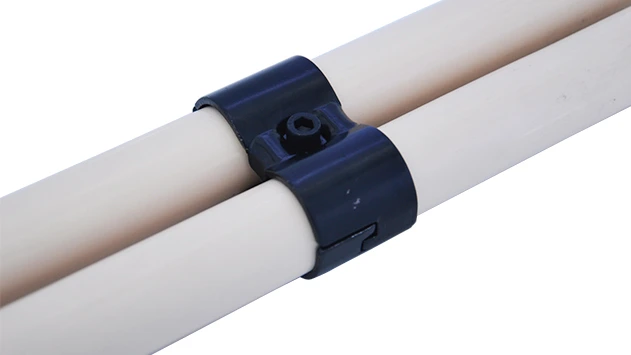
In the world of lean manufacturing, where every second and every component counts, there's a quiet workhorse that keeps production lines moving, workbenches stable, and material flows efficient: the lean pipe joint . These unassuming connectors are the backbone of modular systems, allowing factories to build, adapt, and reconfigure everything from assembly stations to material racks with ease. But not all joints are created equal. Among the various types, the parallel lean pipe joint chrome stands out for its durability, shine, and ability to withstand the harsh conditions of industrial environments. Today, we're diving deep into the science behind what makes these chrome-plated joints so essential—and why they're more than just a pretty finish.
What Are Parallel Lean Pipe Joints, Anyway?
Before we get to the chrome plating, let's make sure we're all on the same page about what a parallel lean pipe joint is. In lean systems, pipes (often made of steel, aluminum, or even plastic) are connected using joints to form structures like workbenches, trolleys, or flow racks. A "parallel" joint, as the name suggests, is designed to connect two pipes that run parallel to each other—think of the horizontal supports under a workbench or the side rails of a material trolley. These joints need to be strong enough to hold weight, flexible enough to adjust when layouts change, and resistant enough to handle daily wear and tear.
Imagine a typical factory floor: workers are moving parts, machines are vibrating, cleaning solutions are sprayed, and humidity levels can fluctuate. A flimsy joint here could mean a wobbly workbench, a collapsed material rack, or worse—delays in production. That's where the design of parallel lean pipe joints matters. They're usually made of metal (like steel) and feature a clamp-like structure that tightens around the pipes, creating a secure bond without welding. But even the sturdiest steel can struggle in tough environments. That's where chrome plating comes in.
The Basics of Chrome Plating: More Than Just Shine
Chrome plating is a process that deposits a thin layer of chromium onto a metal surface, and it's been around for over a century. You've probably seen it on car bumpers, kitchen faucets, or tools—those pieces that have a mirror-like finish and seem to resist rust. But chrome plating isn't just about looks. At its core, it's a science of protection and performance.
Chromium is a chemical element with some impressive properties: it's hard (harder than steel, in fact), resistant to corrosion, and has a low coefficient of friction (meaning things slide off it easily). When applied as a plating, it forms a barrier between the underlying metal (like the steel of a lean pipe joint) and the outside world. This barrier is what makes chrome-plated joints so durable in factories, where exposure to moisture, oils, and chemicals is a daily occurrence.
But not all chrome plating is the same. There are two main types: decorative chrome (which is what gives that shiny finish) and hard chrome (a thicker, tougher layer used for wear resistance). For parallel lean pipe joints, we're usually dealing with a mix of both—enough decorative plating to keep the joint looking clean and professional, and enough hard plating to ensure it can handle the physical stress of being tightened, adjusted, and loaded with weight day in and day out.

The Chrome Plating Process: A Step-by-Step Breakdown
Plating chromium onto a lean pipe joint isn't as simple as dipping it in a bucket of shiny liquid. It's a precise, multi-step process that requires careful chemistry and attention to detail. Let's walk through the key stages:
1. Cleaning: The Foundation of a Good Plating
First things first: the joint needs to be spotless . Any dirt, oil, or rust on the surface will prevent the chromium from adhering properly, leading to peeling or uneven plating later. So, the joint goes through a series of cleaning steps: degreasing with solvents to remove oils, alkaline cleaning to break down grime, and acid pickling to dissolve any rust or oxidation. Think of it like prepping a wall before painting—if you skip the cleaning, the paint (or in this case, the chrome) won't stick.
2. Etching: Creating a "Rough" Surface for Adhesion
Even after cleaning, metal surfaces are often too smooth for plating to grip. That's where etching comes in. The joint is dipped in a weak acid solution (like sulfuric or hydrochloric acid) to create tiny pits and grooves on the surface. These micro-roughnesses give the chromium something to "hold onto," ensuring a strong bond between the plating and the base metal. It's like Velcro—without the hooks (the etched pits), the loops (the chromium) can't stick.
3. Electroplating: The Science of Depositing Chromium
Now comes the star of the show: electroplating. The cleaned and etched joint is suspended in a bath of chromic acid solution (a mix of chromium trioxide and sulfuric acid) along with other metal parts. An electric current is passed through the bath, with the joint acting as the cathode (negative electrode) and a lead plate as the anode (positive electrode). When the current flows, chromium ions in the solution are attracted to the joint, where they gain electrons and deposit onto the surface as solid chromium metal. This is where the thickness of the plating is controlled—leave the joint in longer, and you get a thicker layer (good for hard chrome applications); take it out sooner, and you get a thinner, shinier layer (decorative chrome).
4. Rinsing and Finishing: Polishing the Perfect Shine
Once the plating reaches the desired thickness, the joint is removed from the bath and rinsed thoroughly to remove any leftover acid. Then, it's polished to enhance that iconic chrome shine. Some joints might also undergo a final passivation step to further boost corrosion resistance, especially if they'll be used in high-moisture environments. The result? A joint that's not just strong, but also reflective enough to catch the light—though in a factory, that shine serves a practical purpose too: it makes it easier to spot dirt or damage, keeping work areas cleaner and safer.

Why Chrome Plating Matters for Lean Systems
So, we know how chrome plating works—but why does it matter for lean pipe joints specifically? Let's break down the benefits, from performance to practicality:
Corrosion Resistance: Fighting Rust in Humid Factories
Factories are tough on metal. Between steam from cleaning, condensation from coolants, and even the occasional spill of oil or chemicals, unprotected steel joints would start rusting in no time. Rust isn't just unsightly—it weakens the metal, making joints loose and structures unstable. Chrome plating acts as a barrier, preventing water and oxygen from reaching the underlying steel. In tests, chrome-plated joints have been shown to resist corrosion up to 10 times longer than unplated steel joints in high-humidity environments. For factories in coastal areas, where salt air can accelerate rust, this protection is even more critical.
Wear Resistance: Standing Up to Constant Adjustment
One of the best things about lean systems is their flexibility. A workbench that's used for assembling small electronics today might be reconfigured into a material rack for heavy parts tomorrow. That means joints are constantly being loosened, tightened, and moved. All that friction can wear down unplated metal, causing threads to strip or clamps to slip. But chromium is one of the hardest metals around (it ranks 8.5 on the Mohs hardness scale, just below diamonds). A chrome-plated joint can handle hundreds—even thousands—of adjustments without showing significant wear, ensuring that your modular structures stay tight and reliable for years.
Aesthetic Appeal: Keeping Workspaces Clean and Professional
Okay, we can't ignore the shine. In lean manufacturing, a clean workspace isn't just about looks—it's about efficiency. A messy, rusty workbench can slow down workers, make it harder to find tools, and even affect morale. Chrome-plated joints add a sleek, uniform look to structures, making them easier to clean and maintain. Plus, that reflective surface can brighten up dim factory corners by bouncing light around, reducing the need for extra lighting. It's a small detail, but in a fast-paced environment, small details add up.
Comparing Chrome-Plated Joints with Stainless Steel Pipe Series
You might be wondering: if corrosion resistance is so important, why not just use stainless steel joints? After all, the stainless steel pipe series is known for its rust-resistant properties. It's a fair question—and the answer lies in balancing performance, cost, and flexibility.
Stainless steel is indeed corrosion-resistant, thanks to its chromium content (usually 10-30%). But it's also heavier and more expensive than plain steel. For large structures, like heavy-duty material racks, stainless steel might make sense. But for most modular lean systems, where weight and cost matter, chrome-plated steel joints offer a better trade-off. They're lighter than stainless steel, cheaper to produce, and the chrome plating gives them corrosion resistance that's comparable in many industrial settings—all while maintaining the flexibility to adjust and reconfigure as needed.
To put it in perspective, let's look at a quick comparison:
| Feature | Parallel Lean Pipe Joint Chrome | Stainless Steel Pipe Series Joints |
|---|---|---|
| Corrosion Resistance | Excellent (chrome barrier + steel core) | Superior (chromium alloyed into steel) |
| Weight | Lighter (plain steel core) | Heavier (denser stainless steel) |
| Cost | More affordable (plating adds minimal cost) | More expensive (stainless steel material cost) |
| Flexibility | High (easy to machine and adjust) | Medium (harder to machine, less malleable) |
| Shine/Aesthetics | High (mirror-like finish) | Medium (matte or brushed finish) |
As you can see, chrome-plated joints excel in scenarios where cost, weight, and flexibility are priorities—like most lean manufacturing setups. Stainless steel still has its place, but for the average factory floor, the parallel lean pipe joint chrome is the practical choice.
Real-World Applications: From Workbenches to Assembly Lines
Let's get concrete. Where exactly do these chrome-plated joints shine in the real world? One of the most common places is the humble workbench . A typical lean workbench is built using pipes and joints, with a flat surface for assembling parts. The parallel joints here are critical—they hold the legs and crossbars in place, ensuring the bench doesn't wobble when a worker leans on it or sets down heavy tools. Chrome-plated joints here resist the inevitable spills of lubricants or cleaning fluids, and their smooth surface makes wiping down the bench at the end of the shift a breeze.
Another application is material flow racks, where parts need to glide from storage to the assembly line. These racks use inclined roller tracks, supported by—you guessed it—lean pipe joints. The joints here are under constant stress, as the weight of the materials shifts and vibrates. Chrome plating ensures that the joints don't wear down from the vibration, keeping the rack stable and preventing parts from getting stuck or falling off.
Even in cleanrooms, where precision is everything (think semiconductor manufacturing or medical device assembly), chrome-plated joints are preferred. Their non-porous surface doesn't trap dust, and they can withstand the frequent, harsh cleaning required to maintain sterile conditions. In these environments, even a tiny speck of dirt can ruin a product, so having joints that are easy to sanitize is a must.
Challenges and Innovations in Chrome Plating Technology
Of course, no technology is without its challenges. Chrome plating, while effective, has historically faced criticism for its environmental impact. The chromic acid used in the plating bath is toxic, and improper disposal can harm ecosystems. But the industry has come a long way in recent years. Modern plating facilities use closed-loop systems that recycle the acid, reducing waste by up to 95%. There are also ongoing efforts to develop "green" chrome plating alternatives, like trivalent chromium plating (which uses a less toxic form of chromium) that offers similar performance with lower environmental risk.
Another challenge is ensuring consistent plating thickness, especially on complex joint shapes. Parallel lean pipe joints often have grooves, threads, and tight corners where plating can be uneven. To solve this, manufacturers now use computer-controlled plating baths that adjust the current and position of the joint in real time, ensuring every nook and cranny gets an even layer of chrome. This not only improves performance but also reduces waste by avoiding over-plating.
Conclusion: The Unsung Hero of Lean Manufacturing
At the end of the day, the parallel lean pipe joint chrome might not be the most glamorous component in a factory, but it's undoubtedly one of the most essential. Its chrome plating isn't just about looking good—it's a carefully engineered layer of protection that keeps lean systems running smoothly, safely, and efficiently. From resisting corrosion in humid workshops to standing up to the constant adjustments of modular workbenches, these joints embody the spirit of lean manufacturing: doing more with less, and doing it better.
So the next time you walk through a factory, take a moment to look at the workbenches, the material racks, and the assembly lines. Chances are, you'll spot those shiny chrome joints holding everything together. And now, you'll know the science—and the story—behind that shine.