- Company Articles
- Products and Technology
- Product knowledge
- The Science Behind M10*56 Rubber Leveling Feet's Anti-Slip Design

The Science Behind M10*56 Rubber Leveling Feet's Anti-Slip Design
Related Product
M10*56 Rubber Leveling Feet
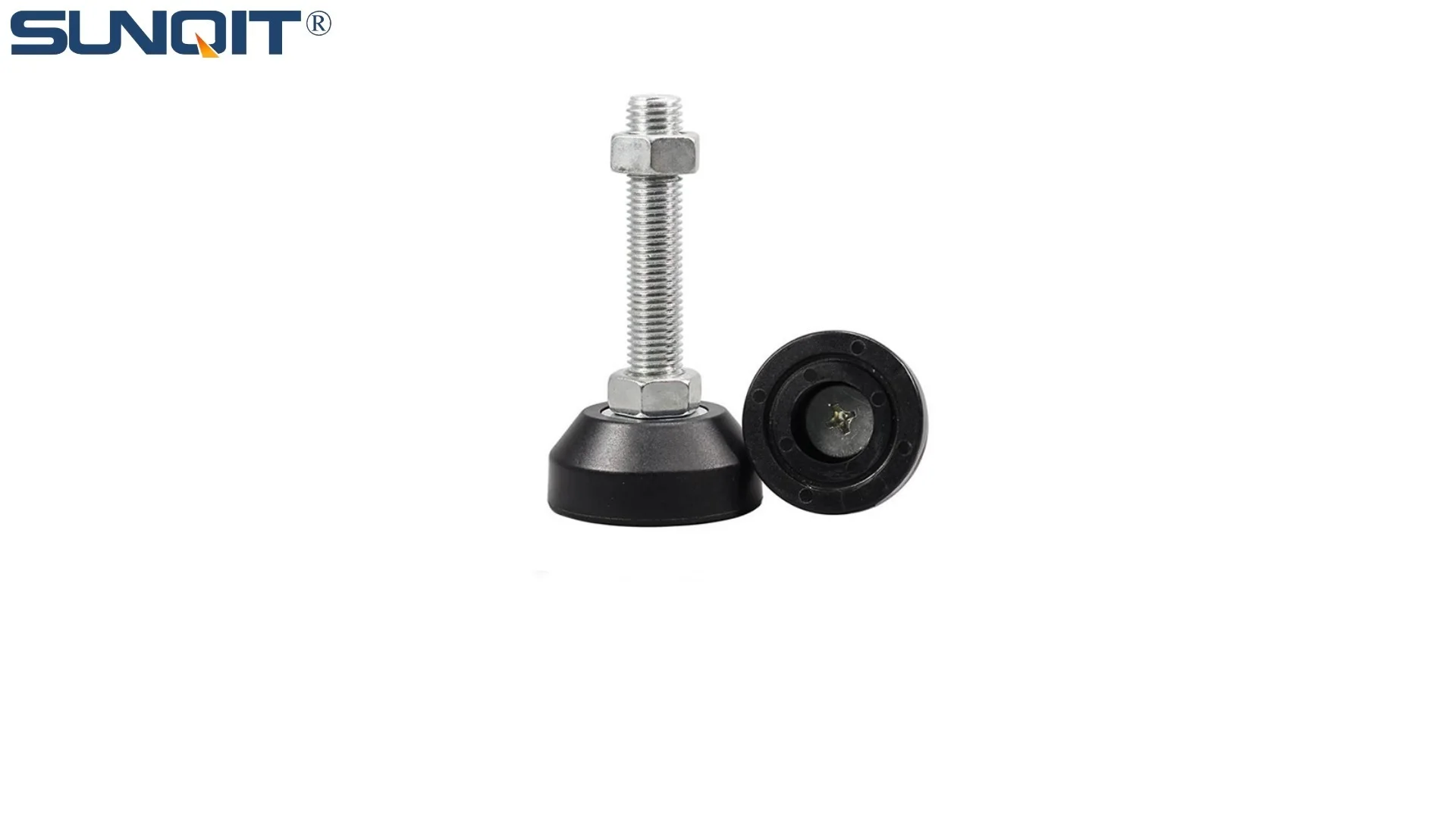
Adjustable leveling feet are designed to keep machines level when placed on uneven or sloped ground. Otherwise known as adjustable equipment feet, they are available to order in a wide variety of size and load capacity combinations.
Picture this: You're in a busy factory, hunched over a workbench, assembling small electronic components. The hum of machinery fills the air, and your focus is laser-sharp—until the workbench suddenly shifts. A screw rolls off the table, and you curse under your breath, reaching down to steady the wobbly surface. Sound familiar? If you've ever worked in manufacturing, warehousing, or even a home workshop, you know the frustration of unstable workspaces. That's where heroes like M10*56 rubber leveling feet come in. These small but mighty components are the unsung guardians of stability, and their anti-slip design is more science than serendipity. Let's dive into what makes these feet so effective, and why they're a game-changer for anyone who values a steady workspace.
What Even Are M10*56 Rubber Leveling Feet?
Before we get into the science, let's make sure we're all on the same page. M10*56 rubber leveling feet are adjustable support components typically used to stabilize equipment like workbenches, conveyor systems, or material racks. The "M10*56" refers to their (specifications): M10 is the metric thread size (10mm diameter), and 56mm is the length of the threaded rod. At the bottom, there's a rubber pad that makes contact with the floor. Simple enough, right? But don't let their simplicity fool you—every part of their design, from the thread pitch to the rubber compound, is engineered to solve one big problem: slippage.
Think about it: When you're working on a lean pipe workbench, for example, the last thing you need is for the bench to slide around as you load materials or apply pressure during assembly. Even a tiny shift can throw off measurements, damage parts, or worse, cause accidents. That's why anti-slip design isn't just a "nice-to-have"—it's a safety and productivity necessity. And M10*56 rubber leveling feet excel at this, thanks to a clever mix of material science and mechanical engineering.
The Science of Anti-Slip: It All Starts with the Rubber
Let's start with the star of the show: the rubber pad. Not all rubber is created equal, and the type used in M10*56 leveling feet is carefully chosen for its friction-generating properties. Most manufacturers use a synthetic rubber compound, often a blend of styrene-butadiene rubber (SBR) or nitrile rubber, mixed with additives like carbon black or silica. Why? Because these compounds strike the perfect balance between hardness and elasticity—two traits that are critical for anti-slip performance.
Hardness is measured using the Shore A scale, where lower numbers mean softer rubber. For leveling feet, the ideal hardness is usually between 60-70 Shore A. If the rubber is too soft (below 60), it might wear down quickly under heavy loads; too hard (above 70), and it loses the ability to conform to uneven floor surfaces. When the rubber pad presses against the floor, its slight elasticity allows it to "grip" by filling in tiny cracks and imperfections in the surface. This is called "conformability," and it's a key factor in increasing friction.
Friction, of course, is what prevents slipping. There are two types of friction at play here: static friction (the force that keeps an object from moving when you push it) and dynamic friction (the force that resists movement once it's started). Anti-slip design aims to maximize static friction, because once an object starts sliding, dynamic friction takes over, and it's much harder to stop. The rubber pad's texture also plays a role here. Many M10*56 feet have a grooved or dimpled surface on the rubber pad, which increases the contact area with the floor. More contact area means more friction—simple as that.
But rubber alone isn't enough. The rubber pad must also be securely bonded to the metal base of the leveling foot. If it detaches, the anti-slip properties go out the window. Manufacturers use adhesives or vulcanization (a process that chemically bonds rubber to metal) to ensure the pad stays put, even under heavy loads or temperature changes. This bonding process is critical—imagine if the rubber pad fell off mid-shift! You'd be back to that wobbly workbench in no time.

Design Engineering: It's Not Just a "Stick-on Pad"
While the rubber pad gets a lot of attention, the rest of the M10*56 leveling foot's design is just as important for anti-slip performance. Let's break down the components:
The Threaded Rod: The M10*56 threaded rod isn't just for adjusting height (though that's a big part of it). The thread pitch (the distance between threads) affects how securely the foot locks into place once adjusted. A finer thread (more threads per inch) allows for precise height tuning, which helps distribute weight evenly across all four feet of a workbench. When weight is distributed evenly, there's less stress on individual feet, reducing the chance of one foot slipping or sinking into the floor.
The Metal Base: The rubber pad is attached to a metal base, usually made of steel or aluminum. This base acts as a bridge between the threaded rod and the rubber pad, distributing the load from the equipment down to the floor. A larger base diameter (typically 50-60mm for M10*56 feet) spreads the weight over a wider area, which lowers the pressure per square inch on the floor. Why does that matter? Because if the pressure is too high, the rubber pad could deform or even "dig in" to soft floors (like concrete with cracks), increasing the risk of slippage. A wider base prevents this by keeping the pressure manageable.
The Shape of the Pad: Most M10*56 rubber pads are slightly concave (curved inward) or flat with a beveled edge. Concave pads are designed to "cup" the floor, which helps maintain contact even if the floor is slightly uneven. Beveled edges, on the other hand, prevent the pad from catching on debris or floor seams, which could cause the foot to shift. Some manufacturers even use a "dish" shape, where the center of the pad is slightly lower than the edges. This design ensures that the entire pad makes contact with the floor, not just the edges, maximizing friction.

Testing the Grip: How Do We Know It Works?
You might be thinking, "Okay, that all sounds good, but how do we prove these feet are anti-slip?" Great question. Manufacturers don't just guess—they test rigorously. Let's look at some common tests that M10*56 rubber leveling feet undergo before hitting the market:
Coefficient of Friction (COF) Testing: COF is a numerical value that measures how much friction exists between two surfaces. A higher COF means more friction (better anti-slip). To test COF, engineers place a sample of the rubber pad on a test floor (like concrete or tile) and pull it with a force gauge. The COF is calculated by dividing the pulling force by the weight of the sample. For M10*56 feet, a COF of 0.6 or higher on dry concrete is considered excellent—meaning it would take a significant force to make the foot slip.
Load Testing: Equipment like conveyor systems or heavy-duty workbenches can weigh hundreds of kilograms. Leveling feet need to maintain their anti-slip properties even under maximum load. In load tests, feet are subjected to weights far beyond their rated capacity (often 1.5x or 2x the maximum load) for extended periods (hours or days). Engineers check for signs of rubber deformation, thread stripping, or slippage. If a foot holds up, it's deemed ready for real-world use.
Environmental Testing: Factories and workshops aren't always clean, dry places. Floors can be oily, dusty, or wet (from spills or humidity). M10*56 feet are tested in these conditions, too. For example, engineers might spray the rubber pad with oil or water and then measure COF again. A good anti-slip design will maintain a high COF even in slightly wet or oily environments (though, let's be real—no foot is 100% slip-proof on a pool of oil!).
Abrasion Resistance: Over time, the rubber pad will wear down from contact with the floor. Abrasion resistance tests involve rubbing the pad against a rough surface (like sandpaper) for thousands of cycles and measuring how much rubber is lost. Feet with high abrasion resistance will maintain their anti-slip properties longer, saving you from frequent replacements.

Real-World Applications: Where M10*56 Feet Shine
Now that we understand the science, let's talk about where these feet actually get used. Their versatility is part of their appeal, but they're especially popular in settings where stability is non-negotiable:
Lean Pipe Workbenches: Lean pipe workbenches are modular, customizable workstations used in manufacturing and assembly lines. They're often built using aluminum profile frames and can be adjusted to fit different tasks. M10*56 leveling feet are a staple here because they allow workers to level the bench on uneven factory floors, ensuring that tools, parts, and assemblies stay put during use. Without them, the bench might rock as workers lean on it, leading to errors or wasted time.
Conveyor Systems: Conveyors move materials from one station to another, and if they're not level, products can slide off or jam. M10*56 feet are used to stabilize conveyor frames, especially in curved or inclined sections where gravity could cause slippage. The anti-slip rubber ensures the conveyor stays anchored, even when loaded with heavy boxes or parts.
Material Racks and Trolleys: Material racks (like the "material rack b (3 row and 3 floor)" you might see in warehouses) and turnover trolleys need to stay stable when loaded with inventory. A slipping rack could topple, damaging goods or injuring workers. M10*56 feet provide a secure base, even when the rack is moved (yes, some trolleys use leveling feet alongside caster wheels—lock the casters, lower the feet, and you've got a stable storage unit).
ESD Workstations: ESD (electrostatic discharge) workstations are used in electronics manufacturing to prevent static electricity from damaging sensitive components. These workstations often have metal frames and require precise leveling to keep ESD mats and tools aligned. M10*56 feet with conductive rubber (a variant that dissipates static) are ideal here—they stabilize the workstation and protect against ESD.
How Do They Compare to Other Leveling Feet?
M10*56 rubber leveling feet aren't the only game in town. There are plastic feet, metal feet, and even felt feet. So why choose rubber? Let's compare:
| Type of Leveling Foot | Material | Coefficient of Friction (Dry Concrete) | Max Load Capacity | Best For |
|---|---|---|---|---|
| M10*56 Rubber | Synthetic rubber blend | 0.6-0.8 | 500-1000 kg (per foot) | Heavy equipment, workbenches, conveyors |
| Plastic (Nylon) | Hard nylon | 0.3-0.4 | 300-500 kg | Lightweight shelving, office furniture |
| Metal (Steel/Aluminum) | Bare metal or painted | 0.4-0.5 | 1000+ kg | Ultra-heavy machinery (but prone to scratching floors) |
| Felt | Felt pad | 0.5-0.6 | 100-200 kg | Delicate floors (wood, tile) in light use |
As you can see, rubber feet strike the best balance between friction, load capacity, and versatility. Plastic feet are cheaper but slip more easily. Metal feet can handle heavy loads but are slippery and might scratch floors. Felt feet are gentle on floors but wear out quickly and can't handle heavy weights. For most industrial and workshop settings, M10*56 rubber leveling feet are the sweet spot.
Installation Tips: Getting the Most Out of Your Feet
Even the best leveling feet won't work if installed poorly. Here are a few tips to ensure your M10*56 rubber leveling feet deliver maximum anti-slip performance:
Clean the Floor: Before installing, sweep or vacuum the area where the feet will sit. Dirt, debris, or small rocks under the rubber pad can reduce contact area and cause slippage. A quick clean goes a long way.
Level Evenly: When adjusting the feet, use a spirit level to ensure the equipment is perfectly horizontal. If one foot is higher than the others, most of the weight will rest on that foot, increasing the risk of slippage. Take the time to adjust all feet so they bear equal weight.
Don't Over-Tighten: It's tempting to crank the threaded rod as tight as possible, but over-tightening can warp the equipment frame or damage the threads. Tighten until the foot is snug and the equipment is stable—no need to use a wrench unless specified by the manufacturer.
Check Regularly: Over time, feet can loosen from vibrations (common in factories) or wear down. Inspect them monthly: look for cracks in the rubber pad, loose threads, or signs of uneven wear. replace any feet that show damage—better safe than sorry.
Pair with Casters Wisely: Many workbenches and trolleys use a mix of casters (for mobility) and leveling feet (for stability). When moving the equipment, raise the leveling feet so the casters touch the floor. When stationary, lower the feet and lock the casters. This prevents the casters from rolling and the feet from slipping.
The Bottom Line: Stability = Productivity + Safety
At the end of the day, M10*56 rubber leveling feet are more than just "feet." They're a testament to how small, well-engineered components can have a big impact on workplace efficiency and safety. By combining high-friction rubber compounds, smart load distribution, and rigorous testing, these feet solve the age-old problem of unstable workspaces—one anti-slip pad at a time.
So the next time you're assembling a lean pipe workbench, setting up a conveyor, or just fixing a wobbly shelf, spare a thought for the M10*56 rubber leveling feet holding it all together. They might not get the glory, but they're the quiet heroes keeping your workspace steady, your parts in place, and your productivity on track. And isn't that worth celebrating?