- Company Articles
- Products and Technology
- Product knowledge
- The Ultimate Guide to 60 Aluminum Roller Track White: From Design to Deployment

The Ultimate Guide to 60 Aluminum Roller Track White: From Design to Deployment
Related Product
60 Aluminum Roller Track White
Modular system roller tracks aluminum gravity roller tracks are an excellent solution for transporting materials within industrial environments, warehouses and distribution centres.
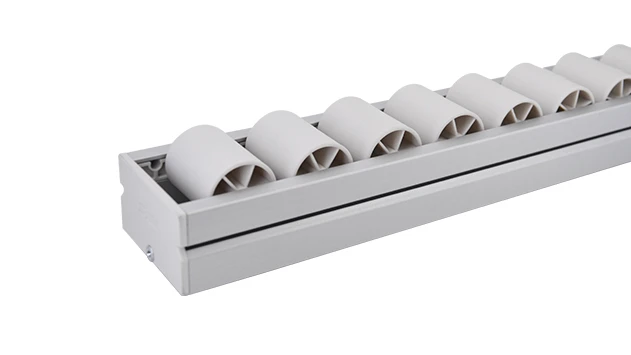
If you're deep into lean manufacturing or work in industries like 3C assembly, medical equipment production, or warehousing, you've probably heard of roller tracks—small but mighty components that keep materials moving smoothly across production lines and storage systems. Among the many options available, the
60 Aluminum Roller Track White
stands out for its unique blend of durability, versatility, and practicality. It's not just a piece of metal; it's a core part of lean systems that help businesses cut waste, boost efficiency, and adapt quickly to changing production needs.
In this guide, we'll walk you through everything you need to know about this track—from its key features and design considerations to step-by-step deployment and real-world applications. Whether you're building a new flow rack, upgrading a conveyor system, or designing a custom workstation, this guide will give you the insights to make the right choices.
1. Core Features & Benefits of 60 Aluminum Roller Track White
Before diving into design and deployment, let's break down why this track is a favorite among manufacturing professionals:
a. Lightweight Yet Durable Material
Made from 60-series aluminum alloy, this track balances strength and weight perfectly. Aluminum's high strength-to-weight ratio means it can handle heavy loads (up to 60 kg per meter, depending on the roller spacing) without adding unnecessary bulk to your system. This makes it easy to install, reconfigure, and move—critical for lean systems that prioritize flexibility.
b. Clean, Scratch-Resistant White Finish
The white surface isn't just for looks. It's typically treated with anodization or a special coating that resists scratches, stains, and corrosion. This makes it ideal for industries where cleanliness is non-negotiable—like medical equipment manufacturing, 3C assembly (where tiny debris can ruin delicate components), or food processing (though always check for food-grade certifications if needed). The white color also makes it easier to spot dirt or missing parts, helping maintain a hygienic workspace.
c. Smooth, Low-Friction Rollers
The rollers on this track are designed for minimal friction, ensuring materials slide or roll smoothly without jams. Each roller is precision-engineered to rotate freely, even under load. This reduces the effort needed to move items—whether you're pushing a box along a conveyor or letting parts slide down a flow rack to your workstation.
d. Seamless Compatibility with Lean Components
One of the biggest advantages of this track is its compatibility with other lean system parts. It works seamlessly with
aluminum profiles
(like 60x60 or 40x60 profiles), roller track connectors (such as placon mounts), end supports with stops, and even casters if you need a mobile system. This means you can integrate it into existing flow racks, conveyors, or workstations without starting from scratch.
e. Sustainable & Cost-Effective
As part of a lean system, this track aligns with the principles of waste reduction and continuous improvement. Aluminum is 100% recyclable, and the track is designed to be reused—if your production line changes, you can disassemble it and reconfigure it in a new layout instead of buying new parts. This not only saves money over time but also reduces your environmental footprint.
2. Key Design Considerations for 60 Aluminum Roller Track White
Designing a system with this track requires careful planning to ensure it meets your production needs. Here are the most important factors to consider:
a. Load Requirements
First, calculate the maximum load your track will need to handle. This includes the weight of the materials you're moving plus any safety margin (we recommend 20-30% extra to avoid overloading). For example, if you're moving boxes of 15 kg each and expect 4 boxes on a 2-meter track, the load per meter is (15*4)/2 =30 kg/m. Choose a track with a load capacity of at least 36 kg/m to account for the safety margin.
b. Application Type
The way you use the track will shape its design:
Flow Rack:
For picking parts, the track should be angled slightly (5-10 degrees) to let items slide down by gravity. You'll also need end supports with stops to prevent items from falling off the end.
Conveyor System:
For moving products between stations, the track should be straight (or curved, if needed) and level. If it's a powered conveyor, you'll need to integrate motors or belts—though this track is often used in manual conveyors for small parts.
c. Space & Layout
Measure the space where you'll install the track. Consider the length (how long does the track need to be?), width (does it fit between your existing equipment?), and height (is it at an ergonomic level for workers?). For flow racks, you'll need to plan the number of tracks per shelf and the spacing between them to fit your materials.
d. Compatibility with Existing Components
If you're integrating the track into an existing system, check that it works with your current
aluminum profiles
and connectors. For example, if your frame uses 40x40 profiles, make sure the roller track placon mounts are compatible with 40-series slots. If not, you may need adapter parts to bridge the gap.
e. Ergonomics
Ergonomics is key to keeping workers safe and productive. The track should be at a height that allows workers to reach materials without bending or stretching too much. For flow racks, the top shelf should be no higher than shoulder level, and the bottom shelf no lower than knee level. For conveyors, the track should be at waist level for manual handling.
3. Step-by-Step Deployment Guide for 60 Aluminum Roller Track White
Now that you've designed your system, it's time to deploy it. Follow these steps for a smooth installation:
a. Pre-Installation Prep
Gather Tools:
You'll need an Allen wrench set, tape measure, spirit level, pencil, and a rubber mallet (for adjusting parts without damaging them).
Check Parts:
Verify that you have all the necessary components—track sections, roller track connectors (like placon mounts), end supports, bolts, and nuts.
Measure & Mark:
Use the tape measure to mark the positions where you'll attach the track to your aluminum profile frame. Make sure the marks are straight and aligned with your design.
b. Assembly Process
Attach Connectors:
insert the roller track placon mounts into the T-slots of your aluminum profiles. Tighten the screws with an Allen wrench until they're secure but not over-tightened (you may need to adjust them later).
Install Track Sections:
Place the 60 aluminum roller track white onto the connectors. Align the track with the marks you made earlier. Use the spirit level to ensure it's straight (for conveyors) or at the correct angle (for flow racks).
Secure Track:
Tighten the bolts that hold the track to the connectors. For flow racks, adjust the angle by loosening the connectors and tilting the track until it's right—then re-tighten.
Add End Supports:
Attach end supports with stops to the ends of the track. This prevents materials from falling off and keeps them in place.
c. Integration into Lean Systems
Flow Rack Integration:
If you're building a flow rack, attach multiple track sections to each shelf. Make sure the tracks are spaced evenly to fit your boxes or bins. Test the flow by placing a few items on the top track—they should slide down smoothly to the picking end.
Conveyor Integration:
For a manual conveyor, connect track sections end-to-end. Use connector plates to join them securely. If it's a powered conveyor, you'll need to add motors, belts, or chains (consult your supplier for specific instructions).
Workstation Integration:
Attach the track to your workstation frame. For example, you can add a track to the side of your workbench to feed parts directly to your workspace—reducing the time you spend reaching for materials.
d. Post-Deployment Checks & Maintenance
Test the System:
Once installed, test the track with actual materials. Check for jams, misalignment, or uneven sliding. Adjust the track angle or connectors if needed.
Regular Maintenance:
To keep the track in top shape:
Clean it weekly with a mild detergent and a soft cloth—avoid harsh chemicals that can damage the white finish.
Lubricate the rollers every 3 months with a light oil (like silicone oil) to keep them rotating smoothly.
Check for loose bolts or connectors monthly—tighten them if necessary.
Troubleshooting:
Jammed Rollers: Remove the track section and clean the rollers with a brush to remove debris. If the rollers are still stuck, lubricate them.
Uneven Sliding: Adjust the track angle or check for misaligned connectors. Use a spirit level to ensure the track is straight.
Scratches on Surface: For minor scratches, use a polishing cloth to buff them out. For deeper scratches, contact your supplier for repair options.
4. Comparison of Roller Track Types
To help you choose the right track for your needs, here's a comparison of the 60 Aluminum Roller Track White with other common types:
| Track Type | Material | Color | Load Capacity (per meter) | Best Applications | Compatibility |
|---|---|---|---|---|---|
| 60 Aluminum Roller Track White | 60-series aluminum | White | Up to 60 kg | Medical, 3C assembly, flow racks, clean workstations | 60/40-series aluminum profiles, roller track connectors |
| 40 Steel Roller Track Yellow | Steel | Yellow | Up to 100 kg | Heavy-duty conveyors, automotive manufacturing | Steel frames, heavy-duty connectors |
| 38 Aluminum Roller Track Black ESD | 38-series aluminum | Black | Up to 40 kg | ESD-sensitive environments (electronics, semiconductors) | 38-series aluminum profiles, ESD connectors |
| 60 Steel Roller Track Green | Steel | Green | Up to 80 kg | Warehousing, bulk material handling | Steel profiles, standard connectors |
5. Real-World Applications of 60 Aluminum Roller Track White
Let's look at how businesses are using this track to improve their operations:
a. 3C Assembly Line
A smartphone manufacturer uses the 60 aluminum roller track white in their assembly workstations. Each workstation has a track attached to the side, feeding small components like screws, connectors, and screens directly to the assembly worker. The white color helps workers spot any missing parts or debris quickly, reducing the risk of defects. The track is also integrated into a flow rack system that supplies finished components to the next station—cutting down on material handling time by 30%.
b. Medical Equipment Manufacturing
A medical device company uses this track in their cleanroom production line. The white finish is easy to sanitize, and the aluminum material is non-corrosive—critical for manufacturing sterile equipment like syringes or surgical tools. The track is used in a conveyor system that moves parts between sterilization and packaging stations, ensuring a smooth, contamination-free process.
c. Warehousing & Logistics
A third-party logistics provider uses the track in their flow racks for picking small parts. The track's angle allows items to slide down to the picking end, so workers don't have to reach into the back of the shelf. The white color makes it easy to identify different SKUs (since they use color-coded bins), reducing picking errors by 25%. The track's lightweight design also makes it easy to reconfigure the racks when their inventory changes.
d. Automotive Component Production
An automotive parts manufacturer uses the track in their workstation setup. Each workstation has a track that feeds metal components to the worker, who assembles them into larger parts. The aluminum track is durable enough to handle the weight of the metal components, and the white finish helps keep the workspace clean. The track is also reusable—when the production line changes to a new component, the track is disassembled and reconfigured for the new setup.
6. Choosing the Right Supplier for 60 Aluminum Roller Track White
The quality of your track depends on your supplier. Here are the key factors to look for:
Expertise in Lean Systems:
Choose a supplier that understands lean manufacturing principles. They should be able to help you design a system that aligns with your lean goals—like waste reduction and continuous improvement.
Customization Options:
Every production line is unique. Look for a supplier that offers custom lengths, roller spacing, and finish options (like food-grade coatings) to fit your specific needs.
Quality Certifications:
Check if the supplier has ISO 9001 or other quality certifications. This ensures that their products meet international standards for quality and reliability.
Wholesale Availability:
If you need large quantities, choose a supplier that offers wholesale pricing. This can save you money and ensure consistent supply for your production line.
After-Sales Support:
A good supplier should offer after-sales support—like installation guidance, maintenance tips, and repair services. This is critical if you run into issues with your track later on.
7. Conclusion
The 60 Aluminum Roller Track White is more than just a component—it's a versatile tool that can transform your production line into a lean, efficient system. Its lightweight design, clean white finish, and compatibility with other lean components make it ideal for a wide range of industries, from medical to 3C assembly. By following the design and deployment steps in this guide, you can install a system that boosts productivity, reduces waste, and adapts to your changing needs. Remember to choose a reliable supplier that understands your lean goals, and don't forget to maintain your track regularly to keep it in top shape. With the right setup, this track will be a valuable asset to your business for years to come.