- Company Articles
- Products and Technology
- Product knowledge
- The Ultimate Guide to External Straight Aluminum Joints: Types & Specifications

The Ultimate Guide to External Straight Aluminum Joints: Types & Specifications
Related Product
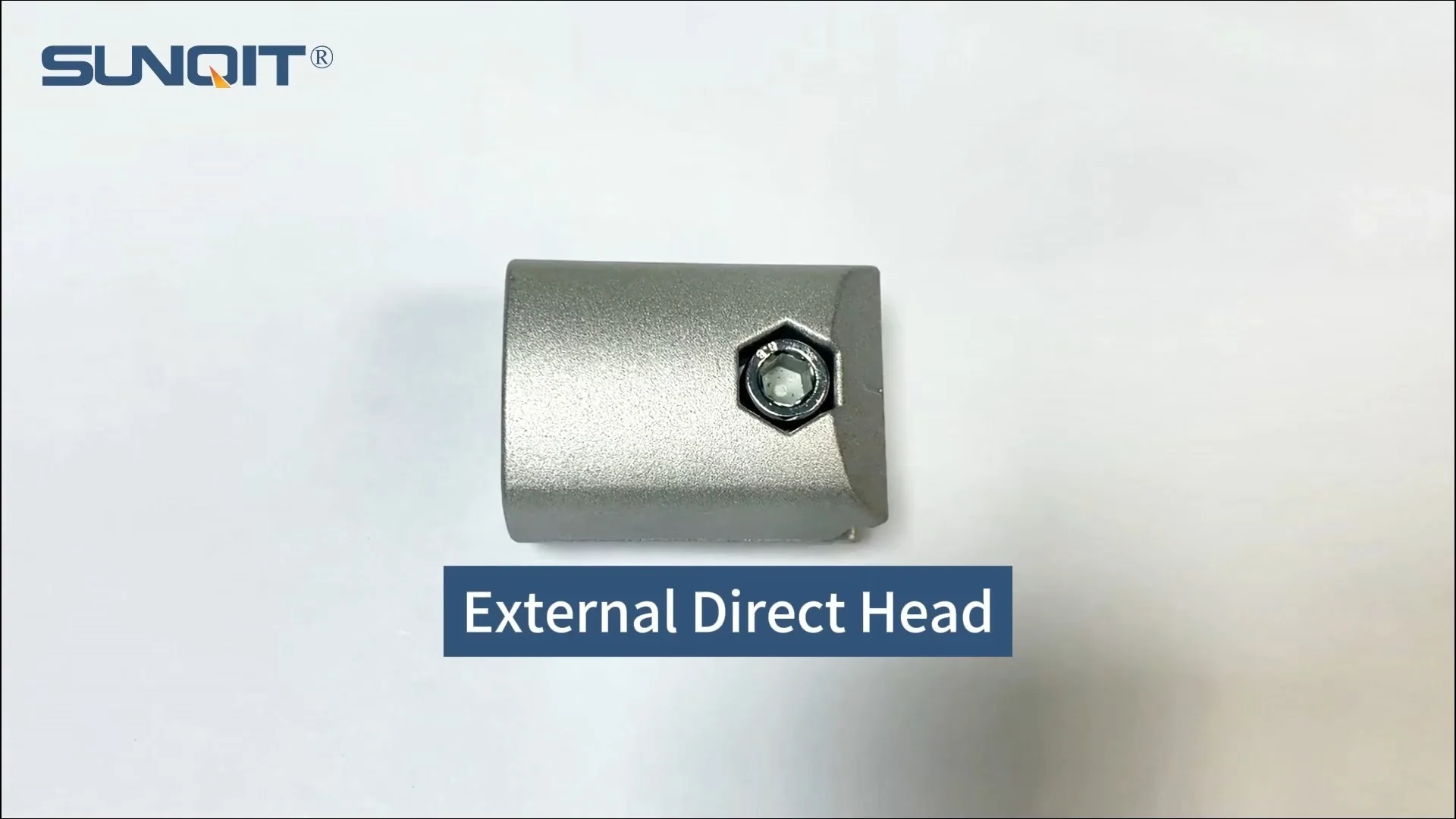
External Straight Aluminum Joint
Aluminum pipe joint outside connection used for two pcs 28pcs aluminum pipe connection in straight angle,it connects two pcs pipe from outside.
Introduction: The Backbone of Aluminum Profile Structures
When it comes to building sturdy, flexible structures with aluminum profiles—whether it's a workbench on the factory floor, a material rack in a warehouse, or a conveyor system in a logistics hub—the unsung heroes holding everything together are the joints. Among these, external straight aluminum joints stand out for their simplicity, reliability, and versatility. These small but critical components are the reason aluminum profile systems can be assembled quickly, adjusted easily, and trusted to withstand daily wear and tear in demanding environments.
In industries where efficiency and durability matter most—think manufacturing, automotive, electronics, and lean system setups—choosing the right joint isn't just a detail; it's a decision that impacts safety, productivity, and long-term cost-effectiveness. This guide dives deep into external straight aluminum joints, breaking down their types, specifications, applications, and how to select the perfect one for your project. Whether you're a seasoned engineer or a small business owner setting up your first production line, by the end, you'll know exactly why these joints are indispensable and how to make them work hardest for you.
What Are External Straight Aluminum Joints?
Let's start with the basics: external straight aluminum joints are hardware components designed to connect two or more aluminum profiles in a straight line. Unlike internal joints, which fit inside the profile's T-slot, these joints attach to the exterior of the profiles, making them easy to access during installation and adjustment. Think of them as the "bridge" that links profile sections, ensuring the structure stays aligned and stable under load.
Crafted typically from high-grade aluminum alloys (and sometimes stainless steel for specialized environments), these joints are engineered to balance strength and lightweight performance. They come in various designs, but all share a core purpose: to create a secure, rigid connection between straight sections of aluminum extrusion profiles. Whether you're extending a conveyor track, building a multi-level material rack, or reinforcing a workbench frame, external straight joints are the go-to choice for linear connections.

Key Features That Make External Straight Aluminum Joints Essential
What sets external straight aluminum joints apart from other fasteners? Let's break down their standout features:
- (Compatibility): Designed to work seamlessly with standard aluminum extrusion profiles, including common sizes like 2020, 3030, 4040, and 4080. This means you can mix and match joints with profiles from most suppliers without worrying about fit issues.
- (Strength-to-Weight Ratio): Aluminum alloy construction offers impressive load-bearing capacity without adding unnecessary weight, which is crucial for mobile structures like turnover trolleys or adjustable workbenches.
- (Corrosion Resistance): Most joints come with anodized or powder-coated finishes, protecting against rust and wear—even in humid or industrial environments.
- (Ease of Installation): No specialized tools required; a simple hex key is often enough to tighten the joint into place. This speeds up assembly and reduces downtime during setup or modifications.
- (Adjustability): Many models allow for minor alignment tweaks after installation, which is a lifesaver when dealing with slight variations in profile cuts or uneven surfaces.
Pro Tip:
Always check the joint's compatibility with your aluminum profile's T-slot size and wall thickness. A joint that's too small for the profile may fail under load, while one that's too large won't grip securely.

Types of External Straight Aluminum Joints: Finding Your Perfect Match
External straight aluminum joints aren't one-size-fits-all. They come in several variations to suit different profile sizes, load requirements, and application needs. Here's a breakdown of the most common types:
(By Compatible Profile Size)
The most straightforward way to categorize these joints is by the aluminum profile size they're designed for. Common options include:- 20 (20-Series): For smaller profiles like 2020 or 2040, often used in lightweight structures such as electronics assembly workbenches or small material racks.
- 30 (30-Series): Ideal for medium-duty applications with 3030 or 3060 profiles, such as workbench frames or static material racks (like material rack B with 3 rows and 3 floors).
- 40 (40-Series): Heavy-duty joints for 4040, 4080, or larger profiles, built to handle high loads in industrial settings like automotive production lines or heavy equipment stands.
(By Material Variant)
While aluminum alloy is standard, some joints are available in specialized materials for unique environments:- (Stainless Steel Series): For food processing, pharmaceutical, or cleanroom applications where hygiene and corrosion resistance are non-negotiable.
- (High-Strength Aluminum Alloy): Heat-treated variants for extreme load conditions, such as supporting heavy machinery on assembly lines.
(By Connection Type)
Not all straight joints are fixed—some offer flexibility for dynamic structures:- (Fixed): Creates a rigid, non-movable connection, perfect for permanent structures like workbench frames.
- (Adjustable): Features slotted holes or movable components, allowing for minor length or angle adjustments post-installation. Useful for conveyor systems or racks that need periodic reconfiguration.
Real-World Example:
A manufacturer of ESD workstations might use 30-series fixed external straight joints to ensure the bench top stays level and grounded, while a logistics company could opt for adjustable 40-series joints on their roller track systems to accommodate different package sizes.

(Specifications Explained): What the Numbers Mean
Understanding a joint's specifications is key to choosing the right one. Here's a breakdown of the most important specs you'll encounter:
(Dimensions)
This includes the joint's length, width, and height, as well as the distance between mounting holes. For example, a joint designed for 4040 profiles might measure 80mm in length, with holes spaced 40mm apart to align with the profile's T-slot pattern.(Load Capacity)
Usually listed in kilograms (kg) or pounds (lbs), this indicates the maximum weight the joint can support when properly installed. A standard 30-series joint might handle 200-300kg, while a heavy-duty 40-series model could support 500kg or more. Always factor in dynamic loads (e.g., if the structure will be moved) and overestimate slightly to avoid failure.(Thread Size)
The size of the bolts used to secure the joint to the profile (e.g., M5, M6). This must match the T-slot nut size in your aluminum profile to ensure a tight fit. Most joints include pre-threaded holes or come with compatible bolts, but it's worth double-checking.(Finish)
Options include:- (Anodized): A thin, durable layer that enhances corrosion resistance and gives a sleek, matte finish (common colors: silver, black).
- (Powder-Coated): Thicker, more colorful finish for added protection in harsh environments (e.g., yellow for high-visibility in warehouses).
- (Brushed Stainless Steel): For aesthetic or cleanroom applications, offering a polished, fingerprint-resistant surface.
(Weight)
Important for mobile structures like trolleys, where every gram counts toward maneuverability. Aluminum joints typically weigh 50-200 grams, depending on size and material.(Specifications Comparison Table)
To put this all into perspective, here's a comparison of popular external straight aluminum joint models:| (Model) | (Compatible Profile) | (Max Load Capacity) | (Thread Size) | (Material) | (Finish) | (Typical Application) |
|---|---|---|---|---|---|---|
| EJ-2020 | 2020, 2040 | 150 kg | M5 | 6063 Aluminum Alloy | Anodized Silver | (Small Workbenches) |
| EJ-3030 | 3030, 3060 | 300 kg | M6 | 6061 Aluminum Alloy | Anodized Black | B (Material Rack B) |
| EJ-4040-HD | 4040, 4080 | 600 kg | M8 | High-Strength Aluminum | Powder-Coated Grey | (Heavy-Duty Roller Tracks) |
| EJ-SS-3030 | 3030 | 250 kg | M6 | 304 Stainless Steel | Brushed | (Cleanroom Material Racks) |
Applications Across Industries: Where External Straight Joints Shine
External straight aluminum joints are versatile workhorses, finding their way into countless industries. Here are some of the most common applications:
(Manufacturing)
In factories, these joints are the building blocks of assembly lines, workbenches, and machine guards. For example:- (Production Line Workbenches): Used to connect aluminum profiles into sturdy, customizable work surfaces (like Workbench E, single deck without casters) that hold tools, fixtures, and components.
- (Material Racks): Supporting shelves in racks like Material Rack B (3 rows, 3 floors), ensuring parts are organized and easily accessible to workers.
- (Safety Guards): Creating barriers around machinery with lightweight but strong aluminum profiles, secured by external straight joints for quick installation and removal during maintenance.
(Logistics & Warehousing)
Lean systems rely on efficient material flow, and external straight joints play a key role here:- (Flow Racks): Connecting roller tracks (like 40 Steel Roller Track with yellow wheels) to form gravity-fed racks, where products slide forward as items are removed.
- (Turnover Trolleys): Building lightweight yet durable trolley frames that can carry heavy loads without bending or breaking.
- (Conveyor Systems): Linking sections of roller track or belt conveyors, ensuring smooth product movement along the line.
(Electronics & Semiconductor)
In environments where static control is critical, ESD workstations and racks depend on stable joints to maintain grounding:- ESD (ESD Workstations): Securing conductive aluminum profiles to create static-safe work areas, with joints that won't interfere with ESD grounding paths.
- (Component Storage Racks): Supporting delicate electronic parts with vibration-resistant joints that prevent accidental spills or damage.
(Automotive Industry)
From assembly lines to parts storage, automotive plants demand ruggedness:- (Tool Racks): Holding heavy power tools and equipment with high-load joints that withstand constant use.
- (Assembly Fixtures): Creating custom jigs and fixtures for vehicle parts, where precision alignment (enabled by rigid joints) is critical.
(How to Choose the Right External Straight Aluminum Joint)
Selecting the right joint isn't just about matching sizes—it's about understanding your project's unique needs. Here's a step-by-step guide to making the best choice:
1: (Step 1: Identify Your Profile Size)
Start by checking the size of your aluminum extrusion profile (e.g., 3030, 4040). The joint must be designed for this specific size to ensure a snug fit. If you're unsure, measure the profile's width and height (in mm) or check the supplier's specs.2: (Step 2: Calculate Load Requirements)
Estimate the maximum weight the joint will need to support. This includes the weight of the structure itself plus any materials, tools, or products placed on it. Always add a 20-30% safety margin to account for dynamic loads (e.g., items being placed or moved on the structure).3: (Step 3: Consider the Environment)
- (Corrosive Environments): Choose stainless steel or anodized aluminum joints for areas with moisture, chemicals, or salt (e.g., food processing, coastal locations).
- (Cleanrooms): Opt for smooth, easy-to-clean finishes like brushed stainless steel to avoid dust buildup.
- ESD (ESD-Sensitive Areas): Ensure joints are made from conductive materials (or compatible with ESD coatings) to maintain static control.
4: (Step 4: Evaluate Installation & Adjustment Needs)
- (Permanent Structures): Fixed joints are more cost-effective and secure.
- (Frequent Reconfiguration): Adjustable joints save time during modifications.
- (Installation Space): External joints require clearance around the profile; ensure there's enough room to tighten bolts without obstructions.
5: (Step 5: Verify Supplier Reliability)
Not all joints are created equal. Choose a reputable lean pipe supplier or aluminum profile accessories manufacturer with a track record of quality. Look for certifications (e.g., ISO 9001) and customer reviews to ensure consistency in specs and performance.
Common Mistake to Avoid:
Underestimating load capacity to save costs is a recipe for failure. A joint that buckles under stress can damage equipment, injure workers, or lead to costly downtime. Invest in the right joint upfront—it's cheaper than replacing a failed structure later.
(Installation Guide: How to Secure External Straight Aluminum Joints)
Installing external straight aluminum joints is straightforward, but attention to detail ensures a secure, long-lasting connection. Follow these steps:
(Tools Needed)
- (Hex key set) – (matching thread size)
- (Tape measure)
- (Pencil) – (for marking positions)
- (File or sandpaper) – (to deburr profile edges)
- (Level) – / (to ensure alignment)
- (Thread locker) – (optional, for high-vibration environments)
(Installation Steps)
- (Prepare the Profiles): Cut aluminum profiles to the desired length using a miter saw or hacksaw. Use a file or sandpaper to remove burrs from cut edges—sharp edges can damage the joint or cause injury.
- (Mark Connection Points): Measure and mark where the joint will attach to each profile. For straight lines, use a straightedge to ensure alignment; misaligned marks will lead to a crooked structure.
- T (insert T-Slot Nuts): Slide T-slot nuts into the profile's T-slot at the marked positions. For best results, use spring-loaded nuts that stay in place during installation.
- (Position the Joint): Align the joint's mounting holes with the T-slot nuts in both profiles. Ensure the joint sits flush against the profile surfaces—gaps can weaken the connection.
- (Tighten the Bolts): insert bolts through the joint's holes and into the T-slot nuts. Use the hex key to tighten until snug, but avoid over-tightening—this can strip threads or warp the profile. A good rule of thumb: tighten until you feel resistance, then give a 1/4-turn more.
- (Check Alignment): Use a level to confirm the structure is straight. If adjustments are needed, loosen the bolts slightly, realign, and retighten.
- (Apply Thread Locker – Optional): For joints in vibrating environments (e.g., near machinery), add a drop of thread locker to the bolts to prevent loosening over time.
(Pro Installation Tips)
- (Dry-Fit First): Before tightening bolts fully, dry-fit the joint and profiles to check alignment. It's easier to adjust now than after everything is secured.
- (Tighten Bolts Symmetrically): If the joint has multiple bolts, tighten them in a crisscross pattern (like tightening lug nuts on a car) to ensure even pressure.
- (Inspect After Installation): Give the structure a gentle shake to test stability. If it wobbles, check for loose bolts or misaligned profiles.
(Maintenance & Care: Keeping Joints in Top Shape)
With proper care, external straight aluminum joints can last for years—even in tough industrial environments. Here's how to maintain them:
(Regular Inspection)
- (Frequency): Inspect joints monthly in high-use areas (e.g., assembly lines) and quarterly in low-traffic areas (e.g., storage racks).
- (What to Look For): Loose bolts, cracks in the joint body, corrosion, or signs of wear (e.g., stripped threads).
- (Action to Take): Tighten loose bolts immediately. replace joints with cracks or stripped threads—they can't be repaired safely.
(Cleaning)
- (Routine Cleaning): Wipe joints with a dry cloth to remove dust and debris. For greasy or oily environments, use a mild detergent and water, then dry thoroughly to prevent corrosion.
- (Cleaners to Avoid): Harsh chemicals like bleach or abrasive scrubbers can damage anodized finishes. Stick to pH-neutral cleaners.
(Corrosion Protection)
- (Humid Environments): Apply a thin coat of anti-corrosion spray (e.g., WD-40 Specialist Long-Term Corrosion Inhibitor) every 6 months.
- (Coastal/High-Salt Areas): Opt for stainless steel joints or anodized aluminum with a thick coating (minimum 10µm).
(When to replace a Joint)
Even well-maintained joints eventually wear out. replace yours if:- Bolts no longer tighten securely (stripped threads).
- The joint body is cracked or bent.
- Corrosion has eaten through the finish and pitted the metal.
- The structure feels unstable despite tight bolts (sign of internal damage).
(Comparing External Straight Joints to Other Joint Types)
External straight joints are just one option in the world of aluminum profile connections. Here's how they stack up against other common joint types:
vs. (External Straight vs. Internal Straight Joints)
- (External Joints): Mount on the outside of profiles, easier to access and install. Better for structures where aesthetics are less critical, or where future adjustments are needed.
- (Internal Joints): Fit inside the profile's T-slot, creating a clean, flush finish. Ideal for visible structures like display racks but harder to install and adjust.
vs. 90 (External Straight vs. 90-Degree Angle Joints)
- (Straight Joints): For linear connections (e.g., extending a workbench lengthwise).
- 90 (90-Degree Joints): For corner connections (e.g., joining workbench legs to the top frame). These are not interchangeable with straight joints.
vs. (External Straight vs. Flexible Joints)
- (Straight Joints): Rigid, fixed connections for stable structures.
- (Flexible Joints): Allow for rotation or pivoting (e.g., conveyor corners). Useful for dynamic systems but weaker than straight joints under static loads.
Key Takeaway:
External straight joints excel at creating strong, accessible linear connections. For corners, use angle joints; for hidden connections, use internal joints; and for movement, use flexible joints. Most projects will use a mix of joint types!
(Common Challenges & Solutions)
Even with careful selection and installation, issues can arise. Here's how to troubleshoot common problems:
1: (Challenge 1: Loose Bolts)
(Cause): Vibration from machinery or frequent use can loosen bolts over time. (Solution): Use thread locker on bolts during installation. For existing joints, retighten and add thread locker if needed.2: (Challenge 2: Corrosion)
(Cause): Exposure to moisture, chemicals, or salt. (Solution): Switch to stainless steel joints or apply anti-corrosion coating. Ensure joints are dried thoroughly after cleaning.3: (Challenge 3: Misaligned Profiles)
(Cause): Incorrect marking during installation or warped profiles. (Solution): Loosen bolts, realign profiles using a straightedge, and retighten. For warped profiles, replace the affected section.4: (Challenge 4: Bending Under Overload)
(Cause): Using a joint with insufficient load capacity. (Solution): replace with a higher-load joint and reinforce the structure with additional supports if needed.(Future Trends in Aluminum Joint Technology)
As industries push for lighter, stronger, and more sustainable structures, aluminum joint technology is evolving too. Here are the trends to watch:
(Lightweight Materials)
New aluminum alloys (e.g., Scandium-reinforced aluminum) offer higher strength at lower weights, allowing joints to support heavier loads without adding bulk. This is especially valuable for aerospace and electric vehicle manufacturing.(Smart Connections)
Embedded sensors in joints could soon monitor load, temperature, and vibration in real time, alerting maintenance teams to loose or failing connections before they cause issues. Imagine a workbench that texts you when a joint needs tightening!3D (3D-Printed Custom Joints)
For unique profiles or specialized applications, 3D printing with high-performance plastics or metal alloys allows for on-demand, custom-shaped joints—reducing lead times and costs for small-batch projects.(Eco-Friendly Finishes)
Water-based anodizing and powder-coating processes are replacing solvent-based methods, reducing environmental impact while maintaining durability. Look for suppliers using these green technologies.(Modular Designs)
Joints that can adapt to multiple profile sizes or convert between straight and angle connections (via interchangeable components) will make systems more flexible and cost-effective, especially for small businesses.: , (Conclusion: Small Joints, Big Impact)
External straight aluminum joints may be small, but their role in building strong, reliable aluminum profile structures is enormous. From workbenches to conveyor systems, these joints are the quiet force that keeps operations running smoothly in factories, warehouses, and workshops worldwide.
By understanding their types, specifications, and applications, you can choose the right joint for your project—ensuring safety, efficiency, and longevity. Remember: investing in quality joints from a reputable supplier (like a trusted lean pipe supplier or aluminum profile accessories manufacturer) pays off in fewer repairs, less downtime, and greater peace of mind.
Whether you're assembling a simple material rack or a complex production line, let external straight aluminum joints be the foundation of your success. With the knowledge from this guide, you're ready to build better, stronger, and smarter.