- Company Articles
- Products and Technology
- Product knowledge
- The Ultimate Guide to Lean Pipe Clamp B: From Basics to Advanced Applications

The Ultimate Guide to Lean Pipe Clamp B: From Basics to Advanced Applications
Related Product
Lean Pipe Clamp
Lean pipe clamp is used for rack system hang monitor or other panel for workbenck, flowrack in production daily use.
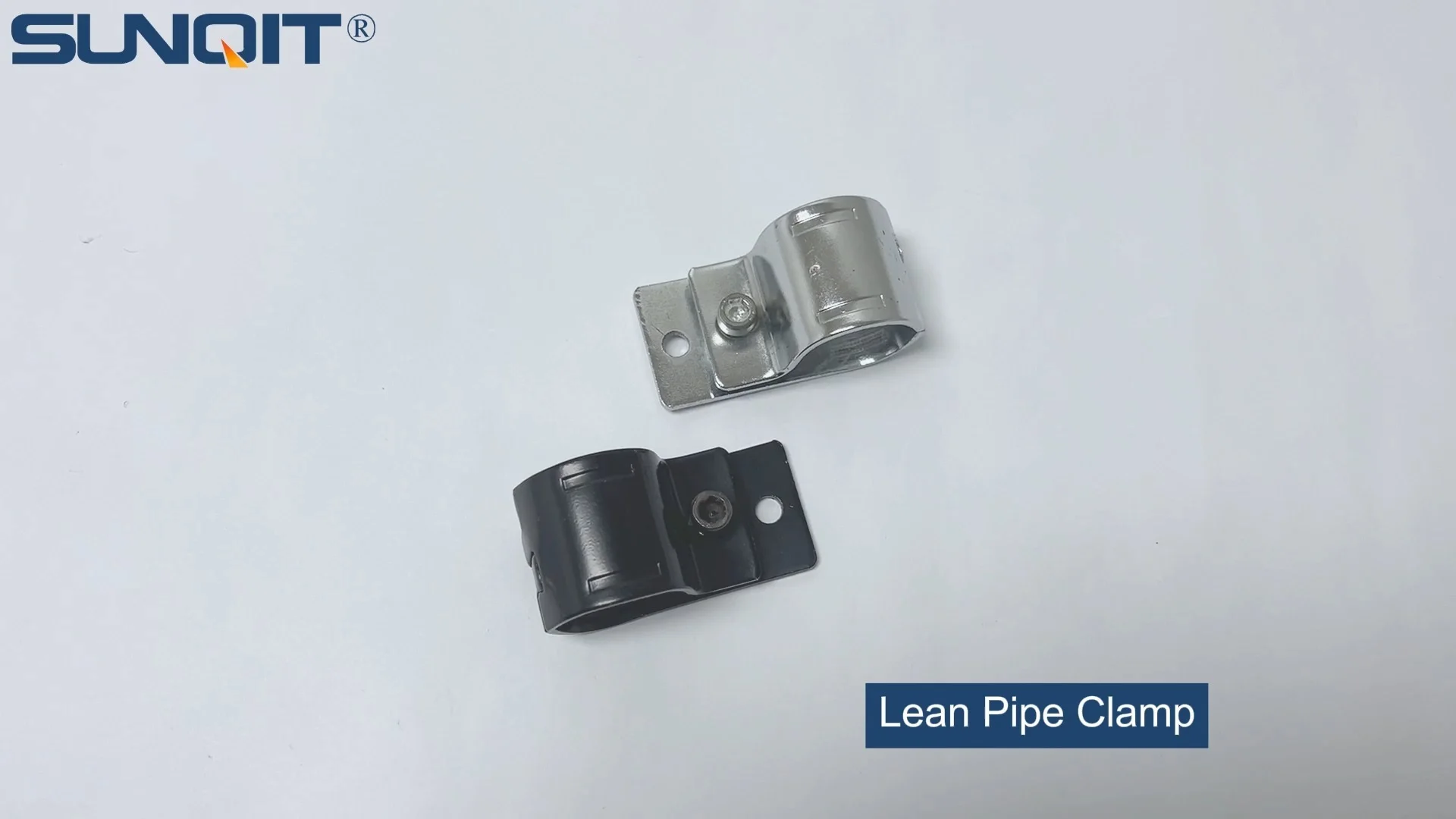
In the fast-paced world of manufacturing, where efficiency and adaptability can make or break a business, the smallest components often play the biggest roles. Think about it: a single loose bolt can halt a production line, while a well-designed connector can turn a disorganized workspace into a streamlined hub of productivity. Today, we're diving into one such unsung hero: the Lean Pipe Clamp B. Whether you're setting up a new assembly station, revamping a warehouse, or simply curious about the backbone of lean manufacturing systems, this guide will walk you through everything—from what Lean Pipe Clamp B is, to how it transforms workbenches, flow racks, and entire production lines. Let's get started.
Chapter 1: What is Lean Pipe Clamp B? The Basics You Need to Know
Let's start with the fundamentals. Lean Pipe Clamp B is more than just a "clamp"—it's a precision-engineered connector designed to bring modular lean systems to life. Picture this: you're building a workstation. You have lengths of lean pipe (those sturdy, often PE-coated tubes), a workbench top, and maybe some shelves. But how do you hold it all together? That's where Clamp B steps in. It's the silent force that turns individual pipes into stable, functional structures—workbenches, material racks, trolleys, and more.
Materials and Construction: Built to Last
Not all clamps are created equal, and Lean Pipe Clamp B stands out for its durability. Most are made from high-grade steel, often zinc-plated or coated to resist corrosion—a must in busy factories where moisture, oil, or dust can take a toll. Some variants even use reinforced plastic components for lightweight applications, but the core design remains focused on strength. Why steel? Because when you're supporting heavy tools, boxes of parts, or even assembly equipment, you need a clamp that won't bend or loosen over time.
Design Features: What Makes Clamp B Unique?
So, what sets "Clamp B" apart from other lean pipe clamps? While exact specs can vary by manufacturer, Clamp B is typically recognized for its versatile grip and ease of installation . Unlike rigid, fixed-angle clamps, many Clamp B models feature a two-piece design with adjustable jaws. Imagine a clamp that can wrap around a lean pipe, then tighten securely with a simple bolt or lever—no special tools required. Some even allow for 360-degree rotation before locking, letting you angle pipes exactly where you need them. This flexibility is key in lean manufacturing, where workspaces are rarely "one-size-fits-all."
Another standout feature? The clamping mechanism itself. Many Clamp B models use a "tooth" or "groove" design that bites into the pipe's surface when tightened, preventing slippage. This is crucial for safety—imagine a workbench shelf holding 50kg of components; a loose clamp here isn't just inefficient, it's dangerous. Clamp B's grip ensures that once it's locked, it stays locked, even under constant vibration or movement.
Chapter 2: Lean Pipe Clamp B and Lean Pipe: A Match Made in Manufacturing Heaven
You can't talk about Lean Pipe Clamp B without talking about its partner in crime: lean pipe. These two are inseparable, like peanut butter and jelly, or bolts and nuts. So, what exactly is lean pipe, and how does Clamp B bring out its best?
Lean Pipe 101: The Backbone of Modular Systems
Lean pipe—also called "lean tube"—is a hollow tube, usually made of steel, aluminum, or stainless steel, often coated with polyethylene (PE) for a smooth, scratch-resistant finish. It comes in standard diameters (common sizes include 28mm or 30mm) and lengths, making it easy to cut, connect, and reconfigure. The magic of lean pipe lies in its simplicity: it's affordable, lightweight, and strong enough to handle most manufacturing tasks. But alone, it's just a tube. Pair it with Clamp B, and suddenly it becomes a building block for almost anything.
How They Work Together: The Assembly Dance
Let's break down the assembly process, step by step. Say you're building a simple frame for a lean pipe workbench. You'll need four vertical pipes (legs) and several horizontal pipes (for the top and lower shelves). Here's where Clamp B shines:
1. Position the pipes: Hold a horizontal pipe against a vertical one at a 90-degree angle—this will be the corner of your workbench. 2. Add Clamp B: Slide the clamp over the joint where the two pipes meet. Most Clamp B models have two "arms" that wrap around each pipe, with a gap to insert a bolt or lever. 3. Tighten and secure: Use a wrench or hand tool to tighten the bolt. As you turn, the clamp's jaws squeeze the pipes, creating a firm, stable connection. Some clamps even have a "click" or resistance point to let you know it's tight enough—no guesswork needed. 4. Repeat and adjust: Add Clamp B to all joints, then stand back. If you need to tweak the angle (maybe the shelf is slightly uneven), loosen the clamp, adjust, and retighten. Done.
The beauty here is modularity. Unlike welded frames, which are permanent and hard to modify, Clamp B and lean pipe let you disassemble, reconfigure, or expand your setup in minutes. Need to raise the workbench height? Swap out the vertical pipes for longer ones. Want to add a side shelf? Just add more pipes and Clamp B. It's manufacturing on your terms.

Chapter 3: Real-World Applications: Where Lean Pipe Clamp B Shines
Now that we know what Lean Pipe Clamp B is and how it works with lean pipe, let's explore where it actually gets used. Spoiler: it's everywhere. From small workshops to Fortune 500 factories, Clamp B is the glue that holds lean systems together. Below are three of its most common (and impactful) applications.
Application 1: Lean Pipe Workbenches – The Heart of the Workshop
Walk into any assembly line, and you'll likely see a lean pipe workbench. These aren't your average tables—they're custom-built to fit the task at hand, with tool holders, bins, and even integrated ESD (electrostatic discharge) features for sensitive electronics. And at the core of every sturdy workbench? Lean Pipe Clamp B.
Here's how it comes together: vertical pipes (legs) are connected to horizontal pipes (the frame) using Clamp B, creating a rectangle. Cross-braces (diagonal pipes) add stability, secured with more Clamp Bs. Then, the worktop—often an aluminum honeycomb panel or plywood—is placed on top, with brackets (also attached via Clamp B) to keep it from sliding. The result? A workbench that's strong enough to hold drills, soldering irons, and bins of parts, yet light enough to move (if you add casters) and easy to reconfigure as tasks change.
One factory we worked with recently used Clamp B to build workbenches for their smartphone assembly line. By angling some pipes (thanks to Clamp B's rotational design), they added small shelves for screws and microchips, reducing the time workers spent reaching for tools. Productivity jumped by 15% in the first month alone.
Application 2: Flow Racks – Keeping Materials Moving
In warehouses and distribution centers, stagnant materials are the enemy of efficiency. That's where flow racks (also called "gravity racks") come in—they use inclined rollers to let boxes or bins slide forward as items are removed, ensuring first-in, first-out (FIFO) inventory and easy access. And yes, Lean Pipe Clamp B is critical here too.
A typical flow rack has side rails (made of lean pipe) that slope downward, with roller tracks (like plastic or steel rollers) mounted between them. Clamp B is used to secure the side rails to vertical supports, ensuring the entire structure stays stable even when loaded with heavy boxes. It also holds the roller tracks in place—no more wobbly rails or misaligned rollers that jam.
For example, a food packaging plant we consulted for needed a flow rack to hold bags of flour. They used 3-row, 3-floor material racks (sound familiar? That's a common setup) with Clamp B securing the aluminum guide rails. The result? Workers no longer had to bend or stretch to reach flour bags—they simply slid forward, reducing strain and speeding up packaging times.
Application 3: Turnover Trolleys – Mobile Material Handling
Imagine trying to move a cart full of heavy components across a factory floor. If the cart is rickety or unstable, you risk spills, injuries, or delays. Enter turnover trolleys—modular carts built with lean pipe and Clamp B, designed to carry materials safely and efficiently.
Clamp B plays two key roles here: first, it connects the trolley's frame (vertical and horizontal pipes) to create a rigid base. Second, it secures accessories like shelves, bins, or even caster wheels (those swiveling wheels that make the trolley mobile). Without strong clamps, the trolley could wobble or collapse under load—but with Clamp B, it's steady enough to carry 200kg+ without a hitch.
A automotive parts supplier we worked with used Clamp B to build custom trolleys for engine components. By adding fold-down sides (connected via Clamp B hinges), they could load parts in the warehouse, fold the sides down to save space during transport, then unfold at the assembly line. Simple, but game-changing.

Chapter 3: Advanced Applications – Taking Clamp B to the Next Level
So far, we've covered the basics: what Clamp B is, how it works with lean pipe, and its role in workbenches, flow racks, and trolleys. But the real power of Lean Pipe Clamp B lies in its ability to adapt to complex, custom setups. Let's explore how it elevates advanced manufacturing systems.
Integrating with Aluminum Profiles for Heavy-Duty Use
While lean pipe is great for most applications, some setups need extra strength—think heavy machinery mounts or industrial workbenches. That's where aluminum profiles (extruded aluminum beams with T-slots) come in. And guess what? Lean Pipe Clamp B can connect lean pipe to aluminum profiles, bridging the gap between flexibility and durability.
For example, a aerospace manufacturer needed a workbench to hold precision tools and a small CNC machine. They used aluminum profiles for the main frame (for rigidity) and lean pipe for adjustable shelves (for flexibility). Clamp B was the connector: one arm clamped to the aluminum profile's T-slot, the other to the lean pipe, creating a hybrid system that was both strong and adaptable.
ESD Workstations: Protecting Sensitive Electronics
In electronics manufacturing, static electricity can fry circuit boards faster than you can say "short circuit." That's why ESD (electrostatic discharge) workstations are non-negotiable. These workbenches use conductive materials to ground static, protecting sensitive components. And yes, Clamp B plays a role here too—often with a twist.
ESD-safe Clamp B models are coated with conductive materials (like carbon-infused plastic) that channel static away from the workstation. When paired with ESD lean pipe (also conductive), they create a grounded system that keeps workers and components safe. A semiconductor plant we advised used these clamps to build ESD workstations for chip assembly, reducing static-related defects by 30%.

Chapter 4: Choosing the Right Lean Pipe Clamp B – Tips for Buyers
Now that you're sold on the power of Lean Pipe Clamp B, how do you choose the right one? With so many suppliers and variations, it's easy to feel overwhelmed. Here's what to look for, whether you're buying in bulk or just need a few clamps for a DIY project.
1. Start with the Supplier: Not All Suppliers Are Equal
Your lean pipe supplier isn't just a vendor—they're a partner in your efficiency. Look for suppliers with a track record of quality: check reviews, ask for material certifications (like ISO 9001), and inquire about their testing processes. A good supplier will also offer samples, so you can test Clamp B's grip and durability before buying in bulk. Avoid "cheap" clamps from unknown suppliers—they might save you money upfront, but bent jaws or weak bolts will cost you in repairs and downtime later.
2. Match the Clamp to Your Pipe
This might sound obvious, but it's easy to mix up pipe diameters. Most Clamp B models are designed for specific pipe sizes (e.g., 28mm or 30mm). If your lean pipe is 30mm, a 28mm clamp will slip; too large, and it won't grip. Check the product specs, and if in doubt, ask your supplier to confirm compatibility.
3. Consider the Environment
Will your clamp be used in a damp warehouse? A dusty factory? A cleanroom? For wet or corrosive environments, go for stainless steel or zinc-plated Clamp B. For cleanrooms, look for smooth, easy-to-clean finishes. If you're working with food or pharmaceuticals, ensure the clamp is food-grade (no sharp edges or crevices where bacteria can hide).
| Clamp Type | Best For | Material | Key Feature |
|---|---|---|---|
| Standard Lean Pipe Clamp B | General workbenches, flow racks | Zinc-plated steel | Adjustable grip, easy installation |
| ESD-Safe Clamp B | Electronics assembly, cleanrooms | Conductive plastic/steel | Static grounding |
| Stainless Steel Clamp B | Wet environments, food processing | 304/316 stainless steel | Corrosion resistance |
Chapter 5: Maintenance and Longevity – Keeping Your Clamps (and Systems) Strong
Even the best tools need care, and Lean Pipe Clamp B is no exception. With a little maintenance, your clamps will last for years, keeping your workbenches and racks stable and safe. Here's how to do it:
Regular Inspections: Catch Issues Early
Make it a habit to check Clamp B connections monthly (or weekly for high-use systems). Look for:
-
Loose bolts:
Tighten with a wrench if they're wobbly.
-
Rust or corrosion:
Clean with a wire brush and apply anti-rust spray if needed.
-
Bent jaws:
If the clamp won't grip properly, replace it—bent clamps can't be fixed.
-
Worn threads:
If the bolt spins without tightening, the threads are stripped. replace the clamp.
Cleaning: Keep Them Debris-Free
Dust, oil, and grime can build up in clamp jaws, weakening their grip. Wipe down Clamp B with a damp cloth monthly, and use a small brush (like a toothbrush) to clean out crevices. For greasy environments, a mild degreaser (avoid harsh chemicals that can damage coatings) will do the trick.
replace When Needed: Don't Wait for Failure
Clamps are affordable—don't risk a system collapse to save a few dollars. If a clamp is damaged, replace it immediately. Most suppliers offer bulk discounts, so stock up on spares for quick swaps.
Conclusion: Lean Pipe Clamp B – Small Part, Big Impact
As we wrap up, let's circle back to where we started: the idea that small components drive big results. Lean Pipe Clamp B might not be the most glamorous tool in your factory, but it's the reason your workbench stays stable, your flow rack keeps materials moving, and your team can adapt to new challenges in minutes. It's the connector that turns "good enough" workspaces into
great
ones—spaces that boost productivity, reduce waste, and make every day on the job a little smoother.
So, whether you're a manufacturer building your first lean system, a warehouse manager optimizing storage, or a hobbyist DIY'ing a garage workspace, remember this: invest in quality Clamp B, partner with a reliable lean pipe supplier, and don't underestimate the power of a well-connected system. The future of manufacturing is lean, modular, and adaptable—and Lean Pipe Clamp B is leading the way.