- Company Articles
- Products and Technology
- Product knowledge
- The Ultimate Guide to M10*56 Rubber Leveling Feet Functions in Manufacturing

The Ultimate Guide to M10*56 Rubber Leveling Feet Functions in Manufacturing
Related Product
M10*56 Rubber Leveling Feet
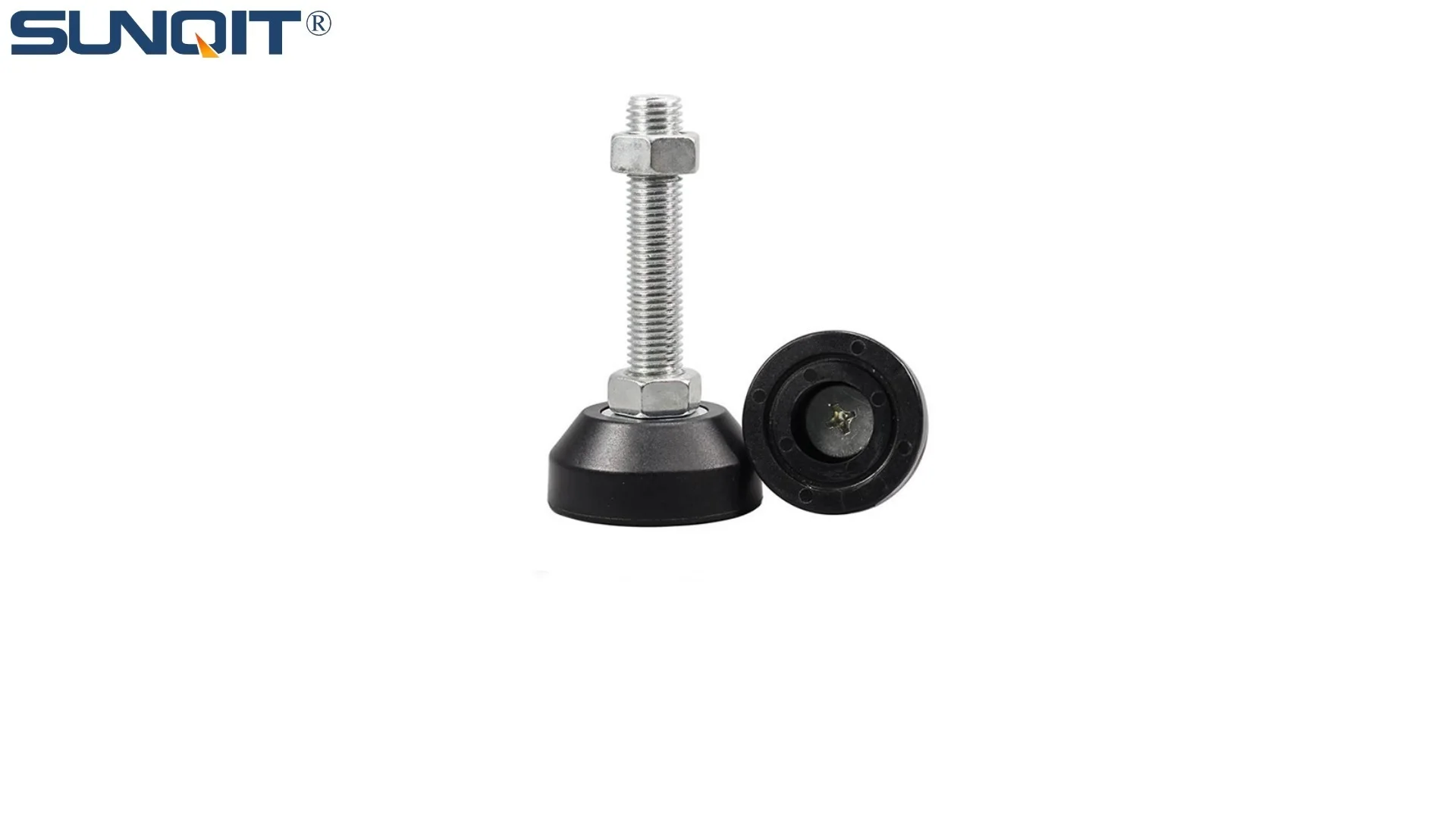
Adjustable leveling feet are designed to keep machines level when placed on uneven or sloped ground. Otherwise known as adjustable equipment feet, they are available to order in a wide variety of size and load capacity combinations.
Walk into any manufacturing facility, and your eyes might be drawn to the big machines—the conveyor belts humming, the robotic arms precision-moving parts, the towering material racks stacked with components. But if you look closer, you'll notice the unsung heroes holding it all together: the small, unassuming parts that keep everything stable, aligned, and efficient. Among these, M10*56 rubber leveling feet stand out as a quiet workhorse. They might not get the same attention as a high-speed conveyor or a sleek lean pipe workbench, but without them, even the most advanced setups can wobble, misalign, or worse—compromise safety and productivity. In this guide, we'll dive deep into what makes these tiny components so critical, how they work, and why they're indispensable in modern manufacturing.
What Are M10*56 Rubber Leveling Feet, Anyway?
Let's start with the basics. M10*56 rubber leveling feet are adjustable support components designed to stabilize equipment on uneven surfaces. The "M10" refers to the metric thread size of the metal stem (10mm in diameter), while "56" indicates the stem length (56mm from the mounting base to the tip of the thread). At first glance, they look simple: a metal stem with a threaded end, topped with a rubber pad. But that simplicity is deceptive—every part is engineered for a specific purpose.
The stem is typically made of carbon steel or stainless steel, chosen for strength and resistance to bending under load. The rubber pad, usually 60–70 Shore A durometer (a measure of hardness), is soft enough to grip uneven floors but firm enough to support heavy weights. Together, they form a component that can bear up to 500kg per foot, adjust for floor irregularities, absorb vibrations, and prevent slipping—all while staying under a workbench or material rack.
Think of them as the "feet" of your manufacturing setup. Just as a person needs stable footing to stand straight, your workbench, assembly line, or material rack needs these feet to stay steady. And when paired with other accessories like caster and accessories (casters for mobility, leveling feet for stability), they become part of a dynamic system that balances movement and rigidity—key for lean manufacturing, where efficiency and flexibility go hand in hand.
Breaking Down the Components: What Makes Them Tick?
To understand why M10*56 rubber leveling feet work so well, let's break them down into their core parts. Each element plays a role in stability, adjustability, and durability—three non-negotiables in manufacturing.
1. The Threaded Stem: Precision in Adjustment
The metal stem is the backbone of the leveling foot. Its threaded design allows you to twist it up or down, raising or lowering the equipment it supports. The M10 thread is coarse enough to make adjustments quick (no need for tiny turns) but fine enough to dial in precision—critical when you're trying to level a workbench to within millimeters for tasks like electronics assembly. The 56mm length is intentional, too: it provides enough range to compensate for common floor unevenness (think 1–cm dips in concrete) without being so long that the stem bends under heavy loads.
2. The Rubber Pad: Grip, Vibration, and Protection
The rubber pad at the bottom is where the magic happens. Made from high-density rubber (often 60 Shore A, a balance of softness and firmness), it does three key things: grips the floor to prevent sliding (even on smooth concrete), absorbs vibrations (important for sensitive tasks like measuring parts on a workbench), and protects floors from scratches or indentations (unlike metal-only feet, which can mar surfaces over time). Some pads even have a textured surface for extra traction, which is a lifesaver in environments with oil or water spills.
3. The Adjustment Nut: Locking in Stability
Most M10*56 leveling feet include a locking nut (or "jam nut") just below the equipment mounting point. Once you've adjusted the height, you tighten this nut against the equipment to lock the stem in place. Without it, vibrations from nearby machinery or regular use could slowly loosen the thread, undoing your careful leveling. It's a small detail, but it turns a temporary fix into a permanent solution.

Core Functions: Why They Matter in Manufacturing
Now that we know what they are, let's talk about what they do . M10*56 rubber leveling feet aren't just "feet"—they're problem-solvers. Here's how they add value on the factory floor:
Stabilizing Uneven Floors: The #1 Use Case
Factories and warehouses are rarely perfectly level. Concrete floors settle over time, heavy machinery creates indentations, and even new facilities can have minor dips from poor pouring. A standard workbench or lean pipe workbench placed on such a floor will wobble, which might not seem like a big deal—until you're assembling small electronics or measuring parts with micrometer precision. A wobble of just 1mm can throw off a drill hole or misalign a circuit board, leading to rework, wasted materials, and frustrated operators.
M10*56 leveling feet fix this by letting you "dial in" each corner of the equipment. Twist the stem clockwise to lower the foot, counterclockwise to raise it, and suddenly that lopsided workbench sits flat. It's like giving your equipment a custom-fit pair of shoes for the floor it's actually on, not the perfectly level floor in the blueprint.
Vibration Dampening: Keeping Precision in Check
Manufacturing is noisy—stamping machines, air compressors, and conveyors all send vibrations through the floor. These vibrations might feel minor, but they can rattle sensitive tools or cause parts to shift during assembly. The rubber pad on M10*56 feet acts like a shock absorber, dampening these vibrations before they reach the equipment. For example, on a lean pipe workbench used for quality inspection, this can mean the difference between a pass and a fail on a tight tolerance part.
Load Distribution: Protecting Equipment and Floors
Heavy equipment—like a material rack B loaded with metal parts or a workbench with a 300kg assembly fixture—needs to distribute weight evenly to avoid stressing the equipment frame or damaging the floor. M10*56 feet spread the load over a small but stable area (the rubber pad is usually 50–60mm in diameter), reducing pressure on both the equipment legs and the floor below. This is especially important for mobile setups: if you've ever tried to roll a caster-equipped trolley over a bump, you know uneven weight distribution can make it tip. Leveling feet, when paired with caster and accessories, let you lock the trolley in place and balance the load before unloading.

Where You'll Find Them: Common Applications in Factories
M10*56 rubber leveling feet aren't one-trick ponies. They pop up in all kinds of manufacturing setups, often where stability and adjustability are non-negotiable. Here are the most common places you'll spot them:
1. Workbenches (Including Lean Pipe Workbenches)
Workbenches are the heart of assembly lines, and whether they're basic steel tables or custom lean pipe workbenches (built with aluminum or steel pipes and joints), they all need to stay level. A lean pipe workbench, for example, is designed for flexibility—you can reconfigure it with new shelves or tool holders as needs change. But that flexibility means the frame is lighter than a solid steel bench, making it more prone to wobbling. M10*56 feet add the stability without sacrificing adjustability. Operators can tweak the height to match their posture (reducing ergonomic strain) or level the bench after moving it to a new spot.
2. Material Racks and Storage Systems
Material racks, like the 3-row, 3-floor material rack B from many suppliers, hold everything from small components to heavy raw materials. If a rack isn't level, items can slide off, or the rack itself might lean, stressing the joints. M10*56 feet keep the rack upright, even when loaded unevenly. They're especially useful for racks near loading docks, where floor unevenness is common due to constant traffic from forklifts.
3. Testing and Inspection Stations
Testing equipment—like coordinate measuring machines (CMMs) or torque testers—demands precision. Even the tiniest vibration or tilt can throw off readings. M10*56 feet here act as both stabilizers and vibration dampeners, ensuring the equipment stays "locked in" during sensitive measurements. Some high-end testing stations even use multiple leveling feet (6–8 per station) to distribute weight evenly and isolate the equipment from floor vibrations.
4. Mobile Equipment (With Caster and Accessories)
Many factories use mobile trolleys or workbenches with caster wheels for flexibility—think of a tool cart that moves between assembly stations. But when you stop to use the cart, you need it to stay put. That's where a combination of casters and M10*56 leveling feet shines: the casters let you roll the cart, and the leveling feet (often with a foot-operated lever to lower them) lock it in place and level it. It's the best of both worlds—mobility when you need it, stability when you don't.

M10*56 vs. Other Leveling Feet: What Makes It Stand Out?
Not all leveling feet are created equal. Let's compare M10*56 rubber leveling feet to other common types to see why they're a go-to for many manufacturers.
| Feature | M10*56 Rubber Leveling Feet | M8*40 Plastic Leveling Feet | M12*60 Stainless Steel Feet |
|---|---|---|---|
| Load Capacity | Up to 500kg per foot | Up to 200kg per foot | Up to 800kg per foot |
| Thread Size | M10 (10mm diameter) | M8 (8mm diameter) | M12 (12mm diameter) |
| Adjustment Range | ~15–20mm (via 56mm stem) | ~10–15mm (via 40mm stem) | ~20–25mm (via 60mm stem) |
| Best For | Workbenches, lean systems, medium-load racks | Light shelving, small carts | Heavy machinery, industrial presses |
| Vibration Absorption | Excellent (rubber pad) | Poor (hard plastic pad) | Good (rubber pad, but stiffer) |
The sweet spot for M10*56 feet is medium-load, precision-focused applications. They're strong enough for most workbenches and racks but not overkill (unlike M12 stainless steel feet, which are heavier and cost more). And compared to plastic feet, their rubber pads offer superior grip and vibration dampening—critical in dynamic manufacturing environments.
Installing M10*56 Rubber Leveling Feet: A Step-by-Step Guide
Installing M10*56 leveling feet is straightforward, but doing it right ensures they perform as intended. Here's a quick guide:
Step 1: Prep the Equipment
Start by flipping the equipment (workbench, rack, etc.) onto its side or back—you need access to the mounting holes on the legs. If it's too heavy to flip, use a jack or blocks to lift one corner at a time (always prioritize safety!). Clean the mounting holes with a brush to remove dirt or debris—this ensures the thread engages smoothly.
Step 2: Thread the Feet Into Place
Screw the M10*56 stem into the mounting hole by hand. Most feet have a hex socket on top (for a wrench) or a knurled top (for hand-tightening). Start with all feet screwed in about halfway—you'll adjust the height later.
Step 3: Level the Equipment
Lower the equipment back onto its feet. Place a spirit level on the surface (front-to-back and side-to-side). If it's uneven, twist the feet to raise or lower them: clockwise to lower, counterclockwise to raise . Work slowly—adjust one foot, check the level, then move to the next. For larger equipment (like a 3-floor material rack), start with the front two feet, then the back two, to avoid overcorrecting.
Step 4: Lock the Nuts and Test
Once level, tighten the jam nut against the equipment leg to lock the stem in place. Use a wrench to snug it up—don't over-tighten, as this can strip the thread. Finally, give the equipment a gentle shake to test stability. If it wobbles, double-check the level and nut tightness.
Maintenance Tips: Keeping Your Leveling Feet in Top Shape
M10*56 rubber leveling feet are durable, but a little maintenance goes a long way in extending their life:
- Clean the Rubber Pads: Wipe the pads with a damp cloth monthly to remove oil, grease, or debris. A dirty pad loses grip, so this simple step prevents sliding.
- Lubricate the Thread: Every 6 months, apply a small amount of anti-seize lubricant (like copper grease) to the thread. This prevents rust (especially in humid environments) and makes adjustments smoother.
- Inspect for Wear: Check the rubber pad for cracks, tears, or flattening. If the pad is worn, replace the foot—an old pad won't absorb vibrations or grip the floor as well. Also, check the thread for damage (bends, stripped teeth) and replace if needed.
- Re-Level After Moving: If you relocate the equipment, recheck the level—even small moves can shift the feet.
Troubleshooting: Common Issues and Fixes
Even with proper installation, you might run into issues. Here's how to solve them:
Issue: The Equipment Still Wobbles After Leveling
Cause: The floor might have a deep dip or the equipment legs are bent. Fix: Use shims under the rubber pad (but only as a last resort—shims can slip). For bent legs, replace the leg or use a leg straightener.
Issue: The Rubber Pad is Slipping
Cause: The pad is dirty, worn, or the floor is too smooth. Fix: Clean the pad, replace it if worn, or use a textured pad (some suppliers offer this option).
Issue: The Thread is Stuck
Cause: Rust or debris in the thread. Fix: Apply penetrating oil (like WD-40) and let it sit for 10 minutes. Gently twist the stem back and forth to loosen it—avoid forcing it, as this can strip the thread.
Wrapping Up: Small Part, Big Impact
M10*56 rubber leveling feet might not be the flashiest components in a factory, but they're a testament to the idea that details matter. A stable workbench reduces rework. A level material rack prevents accidents. A vibration-dampened testing station ensures accurate results. In the world of lean manufacturing—where efficiency, safety, and quality are everything—these tiny feet play a huge role in keeping operations running smoothly.
So the next time you walk through a factory, take a second look at those rubber pads under the workbenches and racks. Chances are, they're M10*56 leveling feet—quietly doing their job, one stable setup at a time.