- Company Articles
- Products and Technology
- Product knowledge
- The Ultimate Guide to Turning Angle Code 3030: From Basics to Advanced Applications

The Ultimate Guide to Turning Angle Code 3030: From Basics to Advanced Applications
Related Product
Turning Angle Code 3030
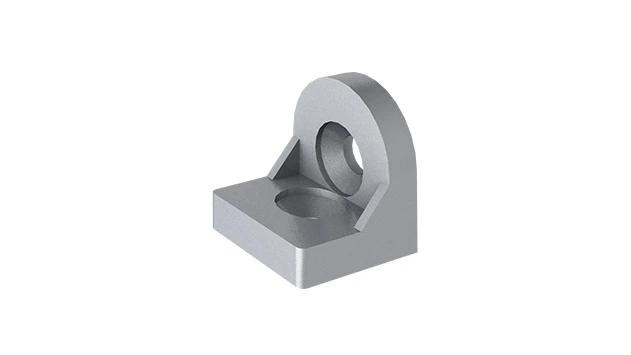
The turning angle aluminum profile connector provides a 90 degree hidden corner connection. 3030 it is means this size is used for 30 series aluminum profile.The corner code comes with set screws that allow for quick, easy connections.
In the world of manufacturing, warehousing, and industrial design, the smallest components often hold the power to transform efficiency, flexibility, and reliability. If you've ever marveled at how modular workbenches, material racks, or production lines come together—sturdy yet adaptable, built to last yet easy to reconfigure—chances are you're looking at the work of precision-engineered accessories. Today, we're diving deep into one such unsung hero: the Turning Angle Code 3030 . A staple in aluminum profile systems, this unassuming component is the backbone of countless lean manufacturing setups, workbenches, and custom structures. Whether you're a seasoned engineer, a small business owner setting up a workshop, or simply curious about the mechanics behind modular industrial design, this guide will walk you through everything from the basics of what a Turning Angle Code 3030 is to its advanced applications in modern lean systems.
What Exactly Is a Turning Angle Code 3030?
At its core, a Turning Angle Code 3030 is a specialized aluminum profile accessory designed to connect 3030 aluminum profiles at precise angles—most commonly 90 degrees, but often adjustable for other configurations. Think of it as the "joint" that holds the "bones" (the aluminum profiles) of a structure together. But it's not just any joint: unlike rigid welds or flimsy plastic connectors, the Turning Angle Code 3030 balances strength, precision, and adaptability, making it ideal for dynamic environments where structures need to evolve with changing needs.
If you're familiar with lean systems —the methodology focused on minimizing waste and maximizing value—you'll recognize why this matters. Lean manufacturing thrives on modularity: the ability to quickly reconfigure workstations, adjust material flow, or repurpose structures as production demands shift. The Turning Angle Code 3030 is a linchpin here. Its design allows for tool-free (or minimal-tool) assembly, ensuring that even complex structures can be built, modified, or disassembled in hours, not days. This isn't just about convenience; it's about keeping operations agile in a world where downtime equals lost opportunities.
Key Features That Make It Indispensable
What sets the Turning Angle Code 3030 apart from other connectors? Let's break down its standout features:
- Engineered for 3030 Profiles: As the name suggests, it's tailor-made for 3030 aluminum profiles—profiles with a 30mm x 30mm cross-section, a popular choice for medium-duty applications. This precision fit eliminates play (wobbling) between connected parts, ensuring structural integrity.
- Lightweight Yet Strong: Constructed from high-grade aluminum, it's lightweight enough to keep overall structures manageable but strong enough to support significant loads. Depending on the design, a single Turning Angle Code 3030 can help support hundreds of pounds when paired with quality 3030 profiles.
- Corrosion Resistance: Aluminum's natural resistance to rust, combined with optional surface treatments like anodizing or powder coating, makes it suitable for use in humid environments (e.g., food processing, automotive wash bays) or cleanrooms (e.g., electronics manufacturing).
- Tool-Free Adjustability: Most models use T-slot compatible bolts or set screws, meaning you can tighten or loosen connections with a simple hex key—no welding, drilling, or specialized tools required. This is a game-changer for on-the-fly modifications.
- Consistent Precision: Manufactured via aluminum extrusion and CNC machining, each Turning Angle Code 3030 meets tight tolerances. This consistency ensures that connections are reliable across an entire structure, whether you're building a small workbench or a large material rack.
These features collectively make it a favorite in industries ranging from automotive and aerospace to logistics and retail. For example, in electronics manufacturing, where static control and clean environments are critical, the non-conductive, corrosion-resistant nature of aluminum Turning Angle Code 3030s helps maintain ESD (Electrostatic Discharge) safety standards—even when used in ESD workstations .

Materials & Manufacturing: Why Quality Matters
To understand why the Turning Angle Code 3030 performs so reliably, it's worth exploring its materials and how it's made. Aluminum is the material of choice, and for good reason: it's abundant, recyclable, and offers an excellent strength-to-weight ratio. But not all aluminum is created equal—most Turning Angle Code 3030s use 6061 or 6063 aluminum alloys, known for their weldability, corrosion resistance, and mechanical properties.
The manufacturing process typically starts with aluminum extrusion: heated aluminum billets are forced through a die to create the basic shape of the angle code. This method ensures uniformity and efficiency, allowing for mass production without sacrificing quality. After extrusion, the parts undergo CNC machining to refine critical features—like bolt holes, slots, and contact surfaces—ensuring they align perfectly with 3030 profiles.
Surface treatment is the final step. Anodizing, a common choice, creates a thin oxide layer on the aluminum, enhancing corrosion resistance and giving it a sleek, matte finish. Powder coating, on the other hand, adds color (often black, silver, or gray) and an extra layer of protection, making the angle code more resistant to scratches and impacts. Both treatments are non-toxic, making them safe for use in environments where food contact or worker safety is a concern.
The result? A component that not only meets but exceeds the demands of industrial use. When you invest in a high-quality Turning Angle Code 3030, you're not just buying a connector—you're buying peace of mind that your structures will stand up to daily wear, heavy loads, and the occasional bump or scrape.

Step-by-Step Installation Guide
Installing a Turning Angle Code 3030 is straightforward, even if you're new to aluminum profile systems. Below is a step-by-step guide, along with a handy table of tools and tips to ensure success:
| Step | Action | Tools Needed | Pro Tip |
|---|---|---|---|
| 1 | Prepare the 3030 Profiles | Measuring tape, marker, hacksaw (if cutting to length) | Deburr cut edges with sandpaper to avoid sharp corners. |
| 2 | Align the Turning Angle Code | Level (optional), rubber mallet (for gentle adjustments) | Dry-fit first! Check that the angle code sits flush against both profiles before tightening. |
| 3 | insert Bolts into T-Slots | Hex key (size depends on bolt; typically 4mm or 5mm) | Use T-slot bolts with washers to distribute pressure and prevent stripping. |
| 4 | Tighten the Connection | Hex key, torque wrench (for critical applications) | Tighten until snug, but avoid over-tightening—this can warp the profile or strip threads. |
| 5 | Test Stability | Your hands (apply gentle pressure to check for wobble) | If unstable, recheck alignment—misalignment is the most common cause of wobble. |
Remember: the goal is a tight, wobble-free connection. If you're building a tall structure (like a material rack), install the base first, then work your way up, checking stability at each step. And don't hesitate to use additional supports—like gussets or cross-braces—for extra rigidity, especially if the structure will hold heavy loads.
Basic Applications: Where It Shines
The Turning Angle Code 3030 is a workhorse in everyday industrial setups. Let's explore some of its most common basic applications:
1. Workbenches
A well-built workbench is the cornerstone of any workshop, and the Turning Angle Code 3030 is key to making it both sturdy and customizable. By connecting 3030 aluminum profiles with these angle codes, you can build a frame that supports a wooden, metal, or composite top. Add shelves, tool hooks, or even a pegboard by attaching accessories to the T-slots of the profiles—all without drilling holes. Best of all, if you need to reconfigure the workbench later (e.g., add a second tier or adjust the height), simply loosen the angle codes, rearrange the profiles, and retighten.
2. Material Racks
Whether you're storing boxes, tools, or raw materials, material racks need to be strong and space-efficient. The Turning Angle Code 3030 excels here, allowing you to build multi-tiered racks with adjustable shelf heights. For example, a "Material Rack B (3 row and 3 floor)"—a common configuration in warehouses—relies on angle codes to connect vertical posts to horizontal shelves, ensuring each level can hold heavy loads without sagging. And since the connections are adjustable, you can easily expand the rack later by adding more sections.
3. Turnover Trolleys
Turnover trolleys (used to transport materials between workstations) need to be lightweight yet durable. By using 3030 profiles and Turning Angle Codes, you can build a trolley frame that's easy to push but strong enough to carry parts or tools. Add casters (another aluminum profile accessory) to the base, and you've got a mobile solution that integrates seamlessly into lean workflows—no more wasted time carrying heavy items by hand.
Advanced Applications: Pushing the Limits
Beyond basic structures, the Turning Angle Code 3030 plays a role in more complex, high-performance systems. Here are a few advanced applications that showcase its versatility:
1. Automated Conveyor Systems
In automated manufacturing lines, precision is everything. Conveyor systems that transport products between stations rely on rigid, vibration-resistant frames to keep items moving smoothly. Turning Angle Code 3030s are used to build the support structures for these conveyors, ensuring alignment with minimal flex. When paired with roller tracks (e.g., "40 steel roller track" or "38 aluminum roller track"), they create a seamless flow that reduces jams and improves throughput—key for meeting tight production deadlines.
2. ESD Workstations
Electronics manufacturing requires ESD-safe environments to protect sensitive components from static damage. ESD workstations often use aluminum profiles (which are naturally conductive) grounded to dissipate static charge. The Turning Angle Code 3030 ensures all parts of the workstation frame are electrically connected, creating a continuous path to ground. Add an ESD-safe worktop and anti-static mats, and you've got a compliant workstation that's still easy to reconfigure as production needs change.
3. Custom Test Rigs
Engineers and product developers often need custom test rigs to evaluate prototypes. These rigs must be rigid enough to hold sensors and actuators but adjustable to test different configurations. The Turning Angle Code 3030 allows for quick iteration: build a basic frame, test, then modify by adding or repositioning profiles without starting from scratch. This agility speeds up the development process, getting products to market faster.
Troubleshooting Common Issues
Even with a reliable component like the Turning Angle Code 3030, issues can arise. Here's how to troubleshoot the most common problems:
- Loose Connections: If a joint feels wobbly, check that the bolts are tight. If they loosen repeatedly, apply a small amount of thread locker (e.g., Loctite) to the bolt threads—just avoid overdoing it, as you'll want to be able to disassemble later.
- Misalignment: If profiles don't line up, the angle code may be installed at a slight angle. Loosen the bolts, realign the profiles using a level, then retighten gradually (alternating between bolts to avoid uneven pressure).
- Stripped Threads: This usually happens from over-tightening. replace the bolt and angle code if threads are damaged. To prevent this, use a torque wrench set to the manufacturer's recommended torque (typically 3-5 Nm for aluminum components).
- Corrosion: While aluminum resists rust, it can develop white oxidation in highly humid environments. Clean with a mild detergent and water, then apply a thin coat of aluminum polish to protect the surface.
Final Thoughts: Why It's a Must-Have Accessory
The Turning Angle Code 3030 may be small, but its impact on industrial design and lean manufacturing is huge. By combining strength, precision, and adaptability, it empowers businesses to build structures that grow with their needs—reducing waste, improving efficiency, and lowering long-term costs. Whether you're assembling a simple workbench or a complex conveyor system, this unassuming aluminum accessory is the key to creating reliable, flexible, and durable solutions.
So the next time you walk through a factory, warehouse, or workshop, take a closer look at the structures around you. Chances are, you'll spot the Turning Angle Code 3030 hard at work—quietly holding everything together, one connection at a time.