- Company Articles
- Products and Technology
- Product knowledge
- The Ultimate Resource for 3060 Aluminum Angle Yards: From Basics to Advanced Use

The Ultimate Resource for 3060 Aluminum Angle Yards: From Basics to Advanced Use
Related Product
3060 Aluminum Angle Yards
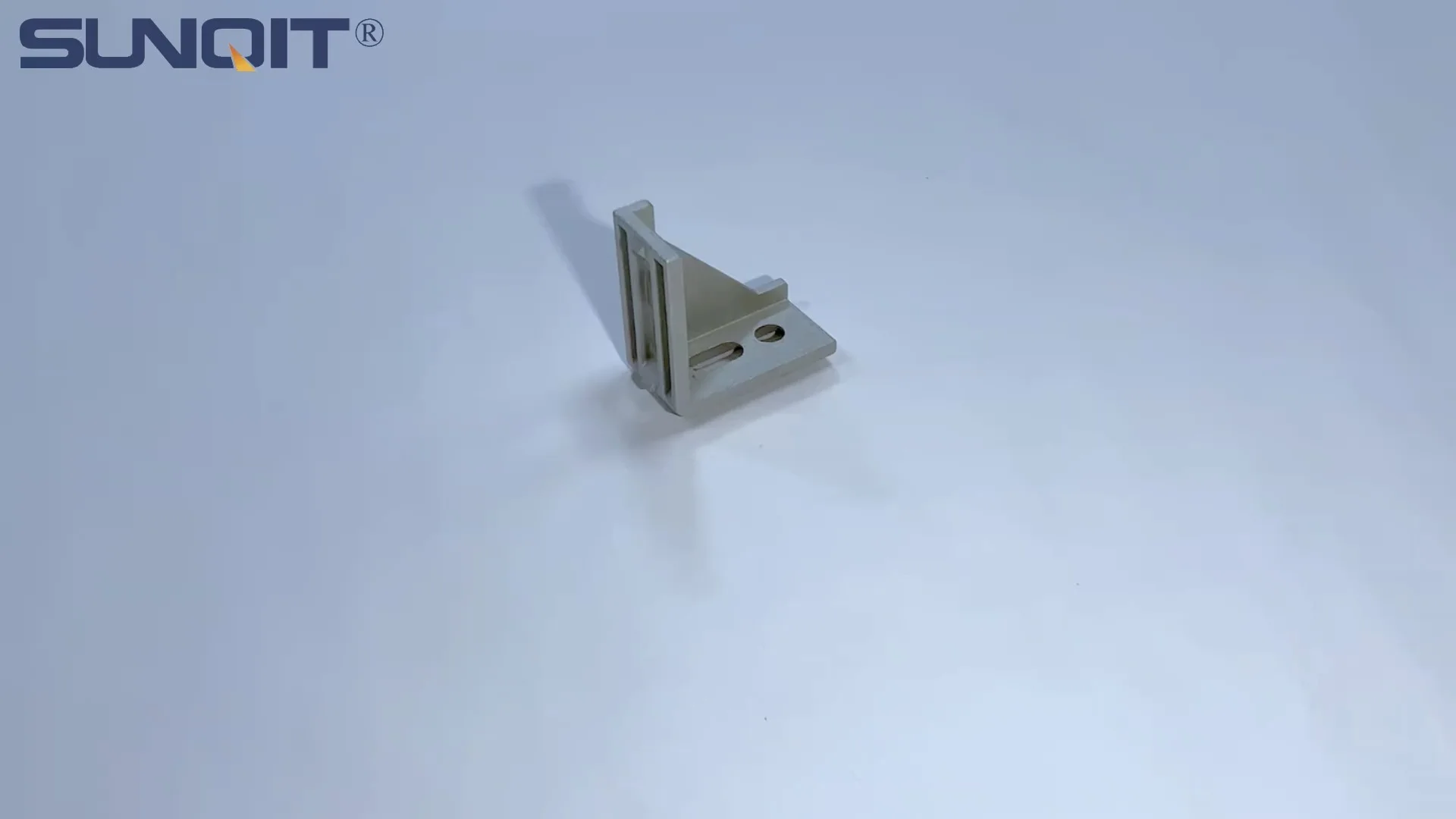
It used for 90° flat connection for 20 series aluminum profile.
In the world of manufacturing, warehousing, and industrial design, the right tools and components can make all the difference between a chaotic workspace and a streamlined, efficient operation. Among the unsung heroes of this domain are aluminum profiles—versatile, durable, and endlessly adaptable. Today, we're diving deep into one specific star player: 3060 aluminum angle yards . Whether you're a seasoned engineer, a small business owner setting up a workshop, or a DIY enthusiast exploring industrial-grade materials, this guide will walk you through everything from the basics of what 3060 angle yards are to their most advanced applications. By the end, you'll understand why these profiles have become a cornerstone in industries ranging from automotive to electronics, and how they can transform your own projects.
What Are 3060 Aluminum Angle Yards?
Let's start with the basics. 3060 aluminum angle yards are a type of structural aluminum extrusion characterized by their unique cross-sectional shape: a right angle (90 degrees) with dimensions of 30mm by 60mm. The "3060" designation refers to the width and height of the profile's legs—30mm on one side, 60mm on the other—making them wider and sturdier than smaller profiles like the 2020 or 3030, but more compact than heavy-duty options like the 4080. Unlike flat aluminum sheets or round tubes, angle yards are designed to provide rigidity and support in angular structures, making them ideal for frames, brackets, and load-bearing components.
But what truly sets these profiles apart is their versatility. Thanks to the aluminum extrusion profile manufacturing process, 3060 angle yards are produced with precision, consistency, and a range of built-in features like T-slots—longitudinal grooves that run along the length of the profile. These T-slots allow for easy attachment of accessories, fasteners, and other components without the need for welding or drilling, turning a simple piece of aluminum into a modular building block for endless configurations.
Key Specifications: Why 3060 Stands Out
To understand why 3060 aluminum angle yards are so widely used, let's break down their core specifications. These details not only highlight their structural capabilities but also explain why they're a go-to choice for both basic and advanced projects.
| Specification | 3060 Aluminum Angle Yard | Comparable Profile (3030) | Comparable Profile (4040) |
|---|---|---|---|
| Dimensions (W x H) | 30mm x 60mm | 30mm x 30mm | 40mm x 40mm |
| Wall Thickness | 1.5mm – 3mm (varies by grade) | 1.2mm – 2mm | 1.5mm – 3mm |
| Weight per Meter | 0.8kg – 1.2kg | 0.5kg – 0.7kg | 1.0kg – 1.4kg |
| T-Slot Size | M6 – M8 (standard) | M5 – M6 | M6 – M8 |
| Maximum Load Capacity (Per Meter) | 150kg – 300kg (depending on orientation) | 80kg – 150kg | 200kg – 400kg |
| Common Material | 6063-T5 Aluminum Alloy | 6063-T5 Aluminum Alloy | 6061-T6 or 6063-T5 Aluminum Alloy |
As the table shows, 3060 angle yards strike a balance between size, weight, and strength. They're not as lightweight as the 3030, but they offer significantly more load capacity, making them suitable for medium-duty applications. Compared to the 4040, they're narrower (60mm vs. 40mm in height), which can be an advantage in tight spaces while still providing ample support. This "goldilocks" balance is why they're a staple in industries where space and strength are both priorities—think assembly lines, material handling, and custom workbench construction.

Materials & Manufacturing: The Science Behind the Strength
At the heart of every 3060 aluminum angle yard is high-quality aluminum alloy. Most manufacturers use 6063-T5, a heat-treated alloy known for its excellent combination of strength, corrosion resistance, and machinability. The "T5" designation indicates that the alloy is artificially aged after extrusion, a process that hardens the material without compromising its ductility. This makes the profile strong enough to support heavy loads but still flexible enough to be cut, drilled, and shaped on-site.
The manufacturing process itself—aluminum extrusion—is what gives these profiles their precision and consistency. Raw aluminum billets are heated to around 500°C (932°F) until they're malleable, then forced through a steel die with the 3060 angle cross-section. This creates a continuous length of profile with uniform dimensions and integrated T-slots. After extrusion, the profiles are cooled, cut to standard lengths (typically 2-6 meters), and treated with a surface finish—usually anodizing, which adds a protective oxide layer that resists scratches and corrosion. Some are also powder-coated for color customization, though anodized finishes (silver, black, or clear) remain the most popular for industrial use due to their durability.

Basic Applications: Getting Started with 3060 Angle Yards
If you're new to working with aluminum profiles, 3060 angle yards are an excellent starting point. Their versatility means they can be used in simple, everyday projects that require structure and stability. Here are a few common basic applications:
1. Workbenches and Tables
One of the most popular uses for 3060 angle yards is building custom workbenches. Whether you need a sturdy surface for woodworking, electronics assembly, or lab work, these profiles make it easy to construct a bench that fits your space and needs. By combining 3060 angle yards for the frame with a plywood or metal top, you can create a bench that's both lightweight and strong enough to support tools, materials, and equipment. The T-slots along the edges even let you add accessories like tool holders, vice mounts, or LED lights—no drilling required.
2. Shelving and Storage Racks
Garages, warehouses, and workshops often struggle with cluttered spaces. 3060 angle yards offer a solution: modular shelving. By vertical frames with 3060 profiles and adding horizontal supports, you can build shelves that adjust to different heights as your storage needs change. Unlike fixed wooden shelves, these can be disassembled and reconfigured if you move or reorganize. They're also resistant to moisture and rust, making them ideal for garages or basements where humidity might be an issue.
3. Material Handling Carts
Moving heavy materials around a workspace can be a hassle, but 3060 angle yards simplify the process. With a few lengths of profile, some plywood, and caster wheels (attached via T-slot fasteners), you can build a custom cart that's tailored to your load size. Whether you're transporting tools, raw materials, or finished products, the cart will be lightweight enough to maneuver but strong enough to handle the weight—thanks to the 3060's load capacity.

Advanced Applications: Pushing the Limits of 3060
While 3060 aluminum angle yards excel in basic projects, their true potential shines in advanced applications. Engineers and designers have found innovative ways to leverage their strength, modularity, and precision in complex systems. Here are a few examples:
1. Automated Assembly Lines
In manufacturing, automated assembly lines require rigid, precise frames to support conveyors, robotic arms, and sensors. 3060 angle yards are often used to build these frames because they can be quickly assembled into custom configurations and adjusted as production needs change. The T-slots allow for easy mounting of motors, guides, and control panels, while the profiles' rigidity ensures minimal vibration—critical for precision tasks like electronics assembly or automotive part manufacturing.
2. Industrial Machine Guards
Safety is paramount in industrial settings, and 3060 angle yards are a key component in machine guards. These guards protect workers from moving parts while still allowing visibility and access when needed. By combining 3060 profiles with mesh, polycarbonate panels, or acrylic sheets (attached via aluminum profile accessories like brackets and clips), manufacturers can create guards that are both strong and lightweight. The modular design also makes it easy to replace damaged panels or reconfigure guards when machines are upgraded.
3. Custom Material Racks and Flow Systems
In warehouses and distribution centers, efficient material flow is essential. 3060 angle yards are used to build advanced flow racks—systems where products slide along inclined rollers from the back to the front, ensuring first-in, first-out (FIFO) inventory management. By integrating 3060 profiles with roller tracks (another common aluminum profile accessory ), these racks can handle everything from small parts bins to large cartons, reducing the need for manual handling and speeding up order fulfillment.
Accessories & Compatibility: Building a Complete System
A 3060 aluminum angle yard is only as useful as the accessories that accompany it. Fortunately, the market offers a wide range of compatible components designed to turn a single profile into a fully functional system. Here are the most essential accessories to consider:
T-Slot Nuts and Bolts
These are the backbone of any aluminum profile system. T-slot nuts slide into the grooves of the 3060 angle yard, allowing bolts to secure accessories without drilling. They come in various sizes (M6, M8) to match the T-slot width, and some are designed to lock in place once tightened, preventing slippage under load.
Connectors and Joints
To join 3060 profiles at angles (90°, 45°, 135°), you'll need connectors. These include corner brackets, swivel joints, and flanged connectors, many of which are made from the same 6063-T5 aluminum for consistency. Some connectors are internal (hidden inside the profile) for a clean look, while others are external for added strength in heavy-load applications.
End Caps and Covers
Raw aluminum profile ends can be sharp, so end caps are a must for safety. They also prevent dust and debris from collecting inside the profile. Most end caps are made of plastic or rubber and snap into place, though metal caps are available for high-wear environments.
Panels and Inserts
For enclosing frames (like machine guards or cabinetry), panels made of polycarbonate, plywood, or metal can be attached using panel mounts or clips that slide into the T-slots. This allows for quick installation and removal, making maintenance or reconfiguration a breeze.
Installation Tips: Getting It Right the First Time
Working with 3060 aluminum angle yards is relatively straightforward, but a few tips can save you time and frustration. Here's a step-by-step guide to basic installation:
1. Measure Twice, Cut Once
Aluminum profiles are precise, so accurate measurements are critical. Use a tape measure and square to mark cut lines, and double-check before cutting. For clean cuts, use a miter saw with a fine-tooth blade (aluminum-specific blades are best) or a hacksaw with a 32-teeth-per-inch blade. Deburr the cut edges with a file or sandpaper to remove sharp burrs.
2. Plan Your Connections
Before assembling, sketch your design and note where connectors will go. T-slot nuts should be positioned at connection points, so slide them into the T-slots before joining profiles. For 90° joints, use corner brackets; for straight runs, use straight connectors. If you're unsure about load capacity, add extra connectors or reinforce joints with gussets (triangular support plates).
3. Tighten Fasteners Properly
Over-tightening bolts can strip T-slot nuts or warp the profile, while under-tightening can lead to instability. Use a torque wrench set to the manufacturer's recommended torque (usually 4-6 Nm for M6 bolts) to ensure a secure, damage-free connection.
4. Test for Stability
Once assembled, give your structure a gentle shake to check for wobbling. If it moves, tighten loose fasteners or add diagonal braces (using 3060 angle yards cut to length) for added rigidity. For mobile systems like carts, test-roll them with a load to ensure the casters don't bind and the frame stays stable.
Maintenance & Longevity: Keeping Your 3060 Profiles in Top Shape
With proper care, 3060 aluminum angle yards can last for decades. Here's how to maintain them:
- Clean Regularly: Wipe down profiles with a damp cloth to remove dust and debris. For stubborn grime, use a mild detergent (avoid abrasive cleaners, which can scratch anodized finishes).
- Inspect Connections: Periodically check T-slot nuts and bolts for tightness, especially in systems that vibrate (like machinery frames). Retighten as needed.
- Protect from Corrosion: While 6063-T5 is corrosion-resistant, saltwater or harsh chemicals can damage it. If using profiles in wet environments, consider a marine-grade anodized finish or apply a corrosion-resistant coating.
- replace Worn Parts: Accessories like T-slot nuts or casters may wear out over time. replace them promptly to prevent damage to the profile itself.
Conclusion: Why 3060 Aluminum Angle Yards Are Worth the Investment
From simple workbenches to complex automated systems, 3060 aluminum angle yards prove that sometimes the most versatile tools are the ones that blend strength, flexibility, and precision. Their unique combination of size, weight, and modularity makes them suitable for projects of all scales, while their durable 6063-T5 aluminum construction ensures they'll stand up to years of heavy use. Whether you're a hobbyist building a garage shelf or an engineer designing a production line, these profiles offer a level of adaptability that's hard to match with wood, steel, or other materials.
So, the next time you're planning a project that needs structure, stability, and room to grow, consider 3060 aluminum angle yards. With the right accessories, a little creativity, and the tips in this guide, you'll be amazed at what you can build. After all, in the world of industrial design, the best solutions are often the ones that work as hard as you do—and 3060 angle yards are ready to roll up their sleeves.