- Company Articles
- Products and Technology
- Product knowledge
- Thermal Conductivity of 4040F EU Standard Aluminum Profile: Implications for Electronic Enclosures

Thermal Conductivity of 4040F EU Standard Aluminum Profile: Implications for Electronic Enclosures
Related Product
4040F EU Standard Aluminum Profile
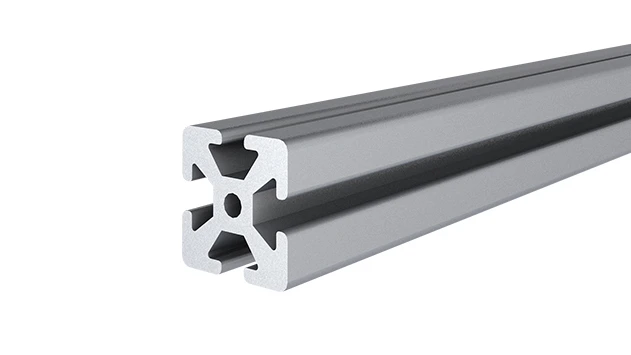
4040F is a 4.00x4.00 CM fractional 40 series square extrusion T-slot profile with four side open T-slots, each side with 4.00cm face. The profile has align-a-grooves to assist in aligning connecting profiles.
Walk into any modern factory, data center, or even a well-equipped home office, and you'll spot them: sleek, metallic enclosures housing everything from sensitive circuit boards to heavy-duty industrial controllers. These enclosures aren't just boxes—they're the unsung heroes protecting our electronics from dust, moisture, and physical damage. But there's another threat they're quietly fighting every second: heat. Electronics generate heat as they work, and too much of it can slow performance, shorten lifespans, or even cause catastrophic failure. That's where the material of the enclosure matters most. Today, we're diving deep into one material that's become a staple in this space: the 4040F EU standard aluminum profile. Specifically, we'll explore its thermal conductivity, why it matters for electronic enclosures, and how it's reshaping the way engineers design for reliability and efficiency.
Why Aluminum? The Backbone of Modern Enclosures
Before we zoom in on the 4040F profile, let's take a step back and ask: why aluminum? When it comes to building enclosures, engineers have options—steel, plastic, even wood (though that's rare these days). But aluminum has emerged as a favorite, and for good reason. It's lightweight, making it easy to install and reposition. It's naturally resistant to corrosion, so it holds up in humid factories or outdoor settings. And perhaps most importantly for our topic today, it's an excellent conductor of heat. But not all aluminum is created equal. The magic lies in the specific alloy and the way it's shaped. That's where aluminum extrusion profile comes into play.
Aluminum extrusion is a manufacturing process that pushes heated aluminum through a die, shaping it into complex cross-sections—think of it like squeezing toothpaste through a tube, but with precision engineering. This process allows for custom designs tailored to specific needs, from hollow tubes to profiles with built-in fins, channels, or mounting brackets. For electronic enclosures, extrusion is a game-changer. It means we can create enclosures that aren't just strong and lightweight, but also optimized to manage heat. And among the many extrusion profiles available, the 4040F EU standard aluminum profile has become a standout choice for electronic applications. Let's unpack what makes it unique.
What Is 4040F EU Standard Aluminum Profile?
First, let's decode the name: "4040F EU standard." The "4040" typically refers to the profile's cross-sectional dimensions—40mm by 40mm, a common size for medium-duty applications. The "F" is a bit more nuanced; in EU standards, this often denotes a specific flange design or slot configuration, which affects how accessories like brackets, panels, or hinges attach. The "EU standard" part ensures consistency: whether you're buying from a supplier in Germany, France, or Poland, a 4040F profile will have the same key dimensions and tolerances, making it easy to source and integrate into global supply chains.
Quick aside: If you've ever assembled a modular workbench or shelving unit, you've probably used aluminum profiles without realizing it. They're the backbone of those flexible, build-as-you-need systems. But in electronic enclosures, their role is far more critical than just holding things up—they're active participants in thermal management.
What sets the 4040F apart from other 40x40mm profiles? Its design prioritizes both structural integrity and adaptability. The cross-section often includes T-slots (those grooves running along the length) that let you slide in accessories like aluminum profile accessories—end caps, brackets, or even cooling fans—without drilling holes. This modularity is a boon for engineers, who can tweak the enclosure design without overhauling the entire structure. But for our focus today, the real star is its thermal performance, driven by its composition and geometry.

Thermal Conductivity: The Heat-Dissipation Superpower
Let's get technical for a moment—don't worry, we'll keep it simple. Thermal conductivity is a measure of how well a material transfers heat. It's measured in watts per meter-kelvin (W/m·K). The higher the number, the faster heat moves through the material. For example, copper, known for its excellent conductivity, clocks in around 401 W/m·K. Steel, on the other hand, is much lower, around 45 W/m·K. Plastic? Even worse, at 0.2–0.5 W/m·K. So where does aluminum stand? Most aluminum alloys used in extrusion, including those in the 4040F profile, fall between 150–250 W/m·K. That's not quite copper, but it's leaps and bounds ahead of steel or plastic. And in the world of electronic enclosures, that difference is a big deal.
Why does this matter for your average electronic enclosure? Let's say you've got a small industrial controller running 24/7. Inside, there's a microprocessor, capacitors, and resistors, all generating heat. If the enclosure is made of plastic, the heat gets trapped. The air inside warms up, the components get hotter, and before long, the system might start throttling performance to cool down. With aluminum, the heat transfers from the air inside the enclosure to the aluminum walls, then spreads across the surface and radiates out into the surrounding environment. It's like having a built-in cooling system without the need for bulky fans (though fans can still help, especially in high-heat setups).
The 4040F's Thermal Edge: Alloy and Geometry
Not all aluminum profiles have the same thermal conductivity. The 4040F's performance starts with its alloy. Most EU standard profiles use alloys from the 6000 series, like 6063 or 6061. These alloys are prized for their balance of strength, weldability, and—you guessed it—thermal conductivity. 6063, for example, has a thermal conductivity of around 201 W/m·K, which is notably higher than 6061 (around 167 W/m·K). Many 4040F profiles use 6063 because its extrusion-friendly properties let manufacturers create the complex T-slots and flanges without sacrificing thermal performance.
But the alloy is only part of the story. The geometry of the 4040F profile amplifies its thermal capabilities. Unlike a solid block of aluminum, the extrusion process lets engineers design hollow sections, fins, or internal channels. These features increase the surface area of the enclosure, which is key for heat dissipation. Imagine two enclosures: one made from a solid aluminum slab, and another from a 4040F profile with thin, outward-projecting fins. The finned one has more surface area touching the air, so it can radiate heat faster. That's why you'll often see 4040F used in enclosures for high-power electronics—its shape works with its material to move heat away from sensitive components.
Implications for Electronic Enclosures: Beyond Just "Staying Cool"
Okay, so the 4040F profile conducts heat well. But how does that translate to real-world benefits for electronic enclosures? Let's break it down into three key areas: performance, durability, and design flexibility.
1. Performance: Keeping Electronics Running at Their Best
Electronics are like athletes—they perform best when they're not overheated. A CPU, for example, might throttle its speed by 30% if it hits 90°C, leading to slower processing times. In industrial settings, this could mean delayed machine responses or reduced throughput. With a 4040F enclosure, heat is dissipated more efficiently, keeping internal temperatures stable. That means components can run at their rated speeds for longer, boosting overall system performance. Even in consumer electronics, like home servers or audio amplifiers, this stability translates to smoother operation and fewer frustrating glitches.
2. Durability: Extending Lifespans by Fighting Thermal Stress
Heat isn't just a performance killer—it's a silent aging agent. When electronics get hot, the materials inside degrade faster. Solder joints can crack, capacitors can dry out, and plastic components can warp. Over time, this leads to more frequent failures and shorter lifespans. By keeping temperatures lower and more consistent, 4040F enclosures reduce thermal stress on components. Think of it like sunscreen for your electronics: it doesn't stop the heat entirely, but it slows down the damage, helping the system last years longer than it would in a poorly conducting enclosure.
This durability is especially important in mission-critical applications. Take medical devices, for example. An MRI machine's control enclosure can't afford to fail because a capacitor overheated. Using 4040F aluminum profiles gives engineers confidence that the enclosure will manage heat reliably, even during long, continuous operation.
3. Design Flexibility: Adapting to Unique Needs with Aluminum Profile Accessories
One of the 4040F's biggest strengths is how easy it is to customize, thanks in large part to aluminum profile accessories. These are the small but mighty components—end caps, corner brackets, hinge mounts, and panel fasteners—that let you build an enclosure tailored to your exact needs. And many of these accessories are designed with thermal management in mind.
For example, you can attach heat sinks directly to the T-slots of a 4040F profile, creating a path for heat from a hot component (like a power supply) straight to the enclosure walls. Or you might use ventilation grilles (another type of accessory) to pair with the profile's natural conductivity, letting cool air circulate in while hot air escapes. Even something as simple as choosing a perforated panel (instead of a solid one) can enhance airflow, working hand-in-hand with the aluminum's heat-dissipating properties.
This flexibility is a game-changer for engineers. Instead of designing a custom enclosure from scratch for every project, they can start with a 4040F frame and mix-and-match accessories to meet the thermal, structural, and aesthetic needs of the application. It's faster, cheaper, and often more effective than one-off designs.
How Does 4040F Compare to Other Materials? A Thermal Showdown
To really appreciate the 4040F's thermal performance, let's compare it to other common enclosure materials. The table below breaks down thermal conductivity, along with key pros and cons for each:
| Material | Thermal Conductivity (W/m·K) | Key Advantages | Key Disadvantages | Best For |
|---|---|---|---|---|
| 4040F Aluminum Profile (6063 alloy) | ~201 | High thermal conductivity, lightweight, corrosion-resistant, modular with accessories | More expensive than plastic; less rigid than steel | High-heat electronics, industrial enclosures, modular systems |
| Mild Steel | ~45 | Very strong, low cost | Heavy, prone to rust, poor thermal conductivity | Low-heat, heavy-duty structural enclosures |
| ABS Plastic | ~0.2–0.3 | Low cost, easy to mold, insulating (good for electrical safety) | Poor heat dissipation, prone to warping at high temps | Low-power electronics, consumer gadgets (e.g., router enclosures) |
| Copper | ~401 | Excellent thermal conductivity | Expensive, heavy, prone to tarnishing | Heat sinks (rarely used for full enclosures due to cost) |
As you can see, 4040F aluminum strikes a sweet spot. It's not as conductive as copper, but it's far more affordable and practical for full enclosures. It outperforms steel and plastic by a mile in thermal management, and its lightweight nature makes it easier to work with than steel. For most electronic enclosures, especially those balancing cost, weight, and heat dissipation, 4040F is hard to beat.
Real-World Applications: Where 4040F Shines
Let's move from theory to practice. Where are engineers actually using 4040F EU standard aluminum profiles for electronic enclosures? Here are a few examples:
Industrial Control Panels
Walk through an automotive plant or a food processing facility, and you'll see rows of control panels managing conveyor belts, temperature regulators, and robotic arms. These panels house PLCs (programmable logic controllers), relays, and variable frequency drives—all of which generate significant heat. 4040F profiles are a staple here because they can be built into large, modular enclosures with built-in cooling. Engineers often add fans or heat exchangers to the T-slots, turning the entire panel into a thermal management system. The result? Panels that run reliably even in hot factory environments.
Server Racks and Data Center Enclosures
Data centers are all about density: packing as much computing power as possible into a small space. But more power means more heat, and server racks need to dissipate that heat to keep servers online. While many data centers use specialized cooling systems, the enclosures themselves play a role. 4040F profiles are used in custom server rack enclosures because their T-slots let technicians mount cable management systems, cooling fans, and monitoring sensors. The aluminum's conductivity helps transfer heat from the rack's interior to the exterior, where it can be picked up by the data center's HVAC system.
Medical Device Enclosures
Medical devices like MRI machines, ultrasound scanners, and patient monitors have strict reliability requirements. They also often operate in temperature-controlled rooms, but their internal components (power supplies, processors) still generate heat. 4040F enclosures are ideal here because they're non-magnetic (unlike steel), corrosion-resistant (important for sterile environments), and thermally efficient. Plus, the modularity of aluminum profile accessories means manufacturers can easily add shielding or custom mounting brackets for sensitive sensors.
Workbench Integration
Ever seen a tech repair shop or a lab workbench where all the tools and electronics are neatly organized into a single unit? Many of these workbenches use 4040F profiles as their frame, with integrated enclosures for power supplies, routers, or test equipment. The profile's thermal conductivity ensures that even when multiple devices are running on the bench, the enclosures don't become hot to the touch, keeping the workspace safe and comfortable.
Lean System Alignment: Efficiency Beyond Thermal Management
In manufacturing, "lean" is all about minimizing waste—whether that's time, materials, or energy. 4040F aluminum profiles align perfectly with lean principles, and not just because of their thermal efficiency. Their modular design reduces lead times: instead of waiting for a custom enclosure to be machined, engineers can assemble one on-site using standard 4040F profiles and aluminum profile accessories. This flexibility cuts down on inventory costs too—suppliers can stock a few standard profiles and accessories instead of dozens of custom parts.
Thermal management itself is a lean win. By preventing overheating, 4040F enclosures reduce downtime caused by component failures. They also eliminate the need for over-engineered cooling systems (like oversized fans or air conditioners), saving energy and reducing operational costs. In short, choosing 4040F isn't just about keeping electronics cool—it's about building a more efficient, waste-free operation.
Pro tip for engineers: When designing with 4040F, don't overlook the orientation of the profile. Mounting it with the T-slots facing outward (instead of inward) makes it easier to add accessories like heat sinks or fans later if thermal needs change. This future-proofs the enclosure, aligning with lean's focus on adaptability.
Choosing the Right 4040F Profile: Key Considerations
If you're convinced that 4040F is the way to go for your next electronic enclosure, here are a few things to keep in mind when selecting a profile:
- Alloy type: Ask the supplier if the profile uses 6063 or another alloy. 6063 is preferable for thermal conductivity.
- Wall thickness: Thicker walls can improve structural strength but may slightly reduce thermal conductivity (since heat has to travel through more material). Balance is key—most 4040F profiles have walls between 1.5mm and 3mm.
- Surface finish: Anodized finishes add corrosion resistance and can slightly improve heat dissipation by increasing emissivity (the ability to radiate heat). Look for clear or black anodization for best results.
- Accessory compatibility: Ensure the T-slot size (common sizes are M5, M6, or M8) matches the aluminum profile accessories you plan to use. Mismatched slots can lead to loose fittings or limited accessory options.
Conclusion: 4040F Aluminum Profile—More Than a Frame, a Thermal Partner
Heat is the silent enemy of electronics, but it doesn't have to be. The 4040F EU standard aluminum profile proves that the right material can turn an enclosure from a passive barrier into an active thermal management tool. Its combination of high thermal conductivity (thanks to alloys like 6063), smart geometry (via extrusion), and modular flexibility (with aluminum profile accessories) makes it a top choice for engineers designing enclosures that need to protect, perform, and last.
Whether you're building a small control panel for a factory floor or a large server rack for a data center, 4040F offers a balance of performance, durability, and efficiency that's hard to match. It aligns with lean principles, reduces waste, and gives designers the freedom to adapt as needs change. So the next time you see an aluminum enclosure, take a closer look—chances are, it's a 4040F profile quietly keeping the electronics inside cool, reliable, and ready to work.
In the end, the thermal conductivity of 4040F isn't just a technical spec—it's a promise. A promise that the electronics we rely on, every single day, will keep running smoothly, no matter how hard they work. And in a world powered by technology, that's a promise worth keeping.