- Company Articles
- Products and Technology
- Product knowledge
- Thermal Expansion Considerations for Roller Track Placon Mount Center Support Bracket Design

Thermal Expansion Considerations for Roller Track Placon Mount Center Support Bracket Design
Related Product
Roller Track Placon Mount Center Support Bracket
Roller track placon mount work as a connector for roller track and pipe or aluminum profile in rack syetem, it is a necessary parts in rack system which widely used in industrial plant and logistic,warehouse storage.
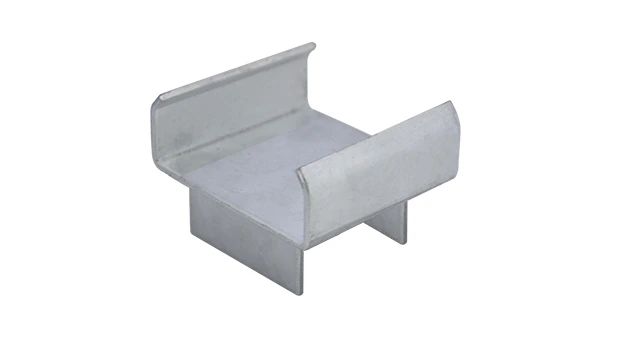
Imagine walking through a busy manufacturing plant—conveyors hum softly, workbenches are lined with precision tools, and roller tracks glide materials from one station to the next. Every piece of equipment has a job to do, and when they work together seamlessly, production flows like a well-choreographed dance. But have you ever stopped to think about the unsung heroes that keep this dance in rhythm? Today, we're zooming in on one such hero: the Roller Track Placon Mount Center Support Bracket . It might sound technical, but trust me, this small component plays a huge role in keeping your roller tracks stable, your materials moving smoothly, and your production line efficient.
But here's the thing: even the sturdiest brackets can run into trouble if we overlook one crucial factor— thermal expansion . You know how a balloon expands when you blow air into it? Well, materials do something similar when they heat up—they expand. And when they cool down? They shrink. This natural "breathing" of materials might seem tiny, but in a precision-driven environment like manufacturing, it can throw a wrench into the works. A bracket that fits perfectly at 20°C (68°F) might start warping at 35°C (95°F) on a hot summer day, or a roller track that's aligned like clockwork in the morning could develop gaps by afternoon as temperatures rise. That's why understanding thermal expansion isn't just a "nice-to-know"—it's essential for designing roller track systems that stand the test of time, no matter the temperature.
In this article, we're going to break down everything you need to know about thermal expansion and how it impacts Roller Track Placon Mount Center Support Bracket design. We'll start with the basics (no fancy physics degree required!), then dive into why it matters for your production line, what factors influence it, and most importantly, how to design brackets that can "roll with the heat" (pun intended). We'll also touch on materials like aluminum profile and lean pipe —key players in many modern manufacturing setups—and how their unique properties affect thermal behavior. By the end, you'll have a clear picture of why thermal expansion considerations are a game-changer for anyone building or maintaining roller track systems, and how getting it right can save you time, money, and a whole lot of headaches down the line.
Let's Start with the Basics: What *Is* Thermal Expansion, Anyway?
Before we jump into brackets and roller tracks, let's make sure we're all on the same page about thermal expansion. Simply put, thermal expansion is the tendency of matter to change in shape, volume, or area in response to a change in temperature. Think of it like this: when you heat up a material, its molecules start moving faster and taking up more space—so the material expands. When it cools down, the molecules slow down and huddle closer together—so it contracts. It's a natural, unavoidable process, and it happens to every material, from the steel in your car to the plastic in your water bottle.
To measure how much a material expands, scientists use something called the "coefficient of thermal expansion" (CTE), which is usually expressed in units of 10^-6 per degree Celsius (or °F). For example, if a material has a CTE of 20 x 10^-6/°C, that means for every 1°C increase in temperature, a 1-meter length of that material will expand by 0.02 millimeters (20 micrometers). That might sound tiny—like, "who cares about 0.02mm?"—but when you're dealing with long roller tracks, heavy loads, or precision equipment, those tiny changes add up. Imagine a 10-meter roller track made of a material with a CTE of 20 x 10^-6/°C: if the temperature rises by 30°C (which is common in a busy factory), that track could expand by 0.6mm (10m x 30°C x 20 x 10^-6/°C = 0.006m = 6mm? Wait, let me check that math again… 10 meters is 10,000mm. 10,000mm x 30°C x 20e-6/°C = 10,000 x 30 x 0.00002 = 6mm. Oh, that's 6mm—definitely not tiny!—over 10 meters. If the brackets holding that track don't account for that expansion, you could end up with bowed tracks, misaligned rollers, or even cracked brackets. Suddenly, 0.02mm per degree doesn't seem so small anymore, right?
Now, not all materials expand the same way. Some are "more sensitive" to temperature changes than others. For example, aluminum profile —a popular choice for lightweight, corrosion-resistant structures—has a higher CTE (around 23-24 x 10^-6/°C) compared to steel (10-12 x 10^-6/°C). That means a 1-meter aluminum bracket will expand about twice as much as a steel one for the same temperature rise. On the flip side, materials like ceramics have very low CTEs (around 1-5 x 10^-6/°C), but they're often too brittle or heavy for roller track applications. So, when designing Roller Track Placon Mount Center Support Brackets , choosing the right material isn't just about strength or cost—it's about how that material will behave when the temperature swings.
Another key point: thermal expansion isn't just about length. Materials can expand in three dimensions (length, width, thickness), but for most structural components like brackets and tracks, we're primarily concerned with "linear" expansion (changes in length). That's because the length of a bracket or track is usually the longest dimension, so even small percentage changes in length result in the most noticeable (and potentially problematic) movement. For example, a Placon Mount Center Support Bracket that's 50cm long and made of aluminum will expand by about 0.28mm if the temperature rises by 25°C (500mm x 25°C x 23e-6/°C = 0.28mm). Again, that might seem minor, but if you have multiple brackets along a track, each expanding by that amount, the total movement can add up to something that affects the track's alignment.
So, to sum up: thermal expansion is materials "breathing" with temperature changes, measured by CTE, and it varies by material. For roller track systems, where precision and stability are key, even small expansions can cause big problems. Now that we've got the basics down, let's talk about why this matters specifically for your production line.
Why Thermal Expansion Matters for Your Roller Track System
Okay, so thermal expansion is a real thing—but why should you care about it for your roller track system? Let's put it this way: imagine building a house without accounting for the fact that wood expands when it rains. Over time, the floors would warp, the doors would stick, and eventually, the whole structure might start to creak and crack. Roller track systems are no different—they're precision-engineered structures that rely on tight tolerances and stable connections. When thermal expansion is ignored, those tolerances get thrown off, and the system starts to "creak" in ways that hurt your bottom line. Let's break down the real-world consequences:
1. Misalignment: When "Straight" Becomes "Crooked"
Roller tracks need to be perfectly straight (or follow a precise curve) to move materials smoothly. Even a tiny misalignment can cause jams, where boxes or parts get stuck halfway through the track. Now, picture this: your Roller Track Placon Mount Center Support Brackets are bolted rigidly to the floor, with no room for expansion. As the temperature rises, the aluminum profile track expands, but the brackets won't let it move. The result? The track bends slightly upward or to the side, creating a "bump" in the line. When a part hits that bump, it might slow down, tip over, or even fall off the track. In a fast-paced production environment—like a 3C assembly line where phones or laptops are moving from station to station—even a 10-second jam can disrupt the entire workflow, leading to delays and missed deadlines.
Worse, misalignment doesn't just affect material flow—it also puts extra stress on the rollers and bearings. When a track is bent, rollers have to "fight" against the misalignment, leading to faster wear and tear. That means more frequent replacements, higher maintenance costs, and unexpected downtime. And if the misalignment is severe enough, it could even damage the products being transported—like delicate medical devices or high-end electronics—turning small alignment issues into expensive quality control problems.
2. Loose Connections: When Brackets Start to "Wiggle"
Most roller track systems are held together with bolts, screws, or clamps—connections that are supposed to stay tight. But thermal expansion and contraction act like a "stress cycle" on these connections. When the bracket expands, it pulls on the bolts; when it contracts, it pushes back. Over time, this back-and-forth movement can loosen even the tightest bolts, a phenomenon called "fastener relaxation." Suddenly, your once-sturdy Roller Track Placon Mount Center Support Bracket is wiggling slightly, and that wiggle travels up to the track, causing vibrations. Vibrations might not sound like a big deal, but in precision manufacturing, they can lead to:
- Noise pollution: A wiggly track is a noisy track, which can make the work environment unpleasant for employees.
- Premature wear: Vibrations cause metal-on-metal friction, wearing down brackets, rollers, and tracks faster than normal.
- Quality issues: In sensitive applications—like moving circuit boards on an ESD workstation—vibrations could even damage delicate components, leading to product defects.
And once one connection loosens, it's a domino effect. The extra stress on neighboring brackets causes their connections to loosen, and before you know it, the entire system feels "wobbly." Fixing this means constant re-tightening of bolts—a tedious, time-consuming task that takes your maintenance team away from more important work.
3. Reduced Lifespan: When "Built to Last" Becomes "Built to Break"
Every material has a limit to how much stress it can handle before it fails. When thermal expansion is ignored, brackets and tracks are subjected to "thermal stress"—the internal pressure caused by being forced to expand or contract when they're not allowed to move freely. Over time, this stress can lead to fatigue cracks, especially in areas like welds, bolt holes, or sharp corners of the bracket design. For example, if an aluminum profile bracket is bolted rigidly at both ends and expands in the middle, the center section will bow outward, putting tension on the material. Do this enough times (say, every day as the temperature rises and falls), and small cracks will start to form. Eventually, the bracket might snap under load—putting your entire roller track system out of commission.
The worst part? These failures often happen unexpectedly. One day, the system is running fine; the next, a bracket gives way, and you're looking at hours (or days) of downtime while you replace parts, investigate the cause, and get production back on track. For manufacturers, downtime isn't just inconvenient—it's expensive. According to some estimates, unplanned downtime in manufacturing costs an average of $22,000 per minute. That's a lot to pay for a problem that could have been prevented with a little thermal expansion planning.
4. Safety Risks: When "Stable" Becomes "Unsafe"
At the end of the day, the biggest concern is safety. A roller track system that's misaligned, wobbly, or cracked isn't just inefficient—it's a hazard. Imagine a heavy pallet of parts moving along a track with a bowed section: if it tips over, it could injure workers, damage equipment, or destroy expensive inventory. Loose brackets could even detach completely, sending metal components flying. In industries like automotive or aerospace, where parts are large and heavy, the risks are even higher. By accounting for thermal expansion, you're not just protecting your equipment—you're protecting the people who use it every day.
So, to recap: thermal expansion affects alignment, connections, lifespan, and safety. Ignoring it leads to jams, wear, downtime, and risks; addressing it leads to smoother operations, lower costs, and a safer workplace. Now that we've established why it matters, let's look at the factors that influence how much a Roller Track Placon Mount Center Support Bracket expands or contracts.

What Influences Thermal Expansion in Roller Track Brackets?
Thermal expansion isn't a one-size-fits-all phenomenon—how much a Roller Track Placon Mount Center Support Bracket expands depends on a mix of factors, from the material it's made of to the environment it's in. Understanding these factors is like having a roadmap: it helps you predict how your bracket will behave and design accordingly. Let's break down the key players:
1. Material Choice: Not All Metals "Breathe" the Same
We touched on this earlier, but it's worth diving deeper: the type of material is the single biggest factor affecting thermal expansion. Different materials have different coefficients of thermal expansion (CTE), as we mentioned, and this number tells you exactly how "sensitive" the material is to temperature changes. Let's compare some common materials used in roller track systems, including a few you might recognize from lean pipe and aluminum profile setups:
| Material | CTE (10^-6/°C) | Key Traits | Common Uses in Roller Tracks |
|---|---|---|---|
| Aluminum Profile | 23-24 | Lightweight, corrosion-resistant, easy to machine | Brackets, frames, guide rails (e.g., aluminum guide rail A/B ) |
| Steel (Carbon Steel) | 10-12 | High strength, low cost, high density | Heavy-duty brackets, roller axles |
| Stainless Steel | 16-18 | Corrosion-resistant, durable | Food processing, pharmaceutical, or cleanroom tracks |
| Lean Pipe (PE-Coated) | ~15-17 (PE layer) | Flexible, easy to assemble, cost-effective | Lean production lines, workbenches, lightweight tracks |
| Cast Iron | 9-11 | High rigidity, vibration-damping | Heavy machinery bases, rarely used for brackets |
Looking at this table, you can see why aluminum profile is a double-edged sword: it's lightweight and perfect for applications where weight matters (like mobile workstations or overhead tracks), but its high CTE means it expands more than steel or cast iron. That's not a problem—if you design for it. For example, if you're using aluminum brackets in a hot environment (like a factory with no air conditioning in summer), you'll need to account for more expansion than if you were using steel brackets in the same space. On the flip side, lean pipe (often PE-coated steel) has a moderate CTE, making it a good middle ground for flexible systems that need to handle some temperature variation without too much movement.
Another material consideration: composite materials, like fiberglass-reinforced plastic (FRP). FRP has a very low CTE (around 2-5 x 10^-6/°C) and is corrosion-resistant, but it's more expensive and less rigid than metal. For most roller track brackets, metal is still the go-to, but it's worth knowing your options!
2. Temperature Range: How Hot (or Cold) Does It Get?
Obviously, the bigger the temperature change, the more expansion you'll see. A bracket in a climate-controlled cleanroom with a steady 22°C (72°F) will expand far less than one in a warehouse that swings from 15°C (59°F) in winter to 40°C (104°F) in summer. But it's not just seasonal changes—day-to-day fluctuations matter too. For example, a roller track near a heat source (like a welding station or a large motor) might heat up during the day as equipment runs, then cool down at night when the plant shuts down. That daily "cycle" of heating and cooling can cause repeated expansion and contraction, which is harder on the material than a slow, steady seasonal change.
To calculate potential expansion, you'll need to know two numbers: the material's CTE and the maximum expected temperature change (ΔT). The formula is simple: Expansion (ΔL) = Original Length (L) x CTE x ΔT . Let's plug in some numbers to see how this works. Suppose you have a 2-meter aluminum profile bracket (CTE = 23 x 10^-6/°C) in a that goes from 18°C to 38°C in a day (ΔT = 20°C). The expansion would be: 2000mm x 23e-6/°C x 20°C = 0.92mm. That's almost 1mm of expansion—enough to cause misalignment if the bracket is rigidly fixed. Now, if the temperature swing is 30°C (say, from 15°C to 45°C), the expansion jumps to 1.38mm. Suddenly, that "tiny" movement starts to add up!
Pro tip: When designing, always use the extreme temperature range, not the average. It's better to overcompensate for a 40°C swing than to undercompensate for a 20°C one—you don't want to be caught off guard by an unusually hot summer day!
3. Bracket Length and Design: Longer = More Movement
Thermal expansion is proportional to length: a longer bracket will expand more than a shorter one, even if they're made of the same material. A 5-meter aluminum track will expand 5 times as much as a 1-meter track under the same temperature change. That's why long roller tracks are often divided into shorter sections with expansion joints—more on that later!
Bracket design also plays a role. For example, a bracket with a "U" shape (like a channel) might expand differently than a flat plate, because the two sides of the "U" could expand at slightly different rates if they're exposed to different temperatures. Similarly, brackets with cutouts or holes (for bolts or wiring) might have stress concentrations around those features, making them more prone to cracking when they expand. The key here is to keep designs simple and symmetrical when possible—less complexity means more predictable thermal behavior.
4. Fixed vs. Flexible Mounting: Letting It "Move" or "Locking It Down"
How you mount the bracket to the floor or frame has a huge impact on how it handles expansion. If a bracket is bolted rigidly at both ends (a "fixed-fixed" mount), it can't expand or contract freely, so thermal stress builds up. If it's bolted at one end and allowed to slide at the other (a "fixed-sliding" mount), it can expand without stress. Think of it like a railroad track: rails are never rigidly fixed to ties—they have small gaps between sections to allow for expansion, and they're mounted with clips that let them slide slightly. Roller track brackets need similar "breathing room."
Unfortunately, many manufacturers default to rigid mounting because it feels "sturdier." But in reality, rigid mounts are a recipe for thermal stress. The best designs balance stability with flexibility, using slotted holes, sliding brackets, or elastic connectors to let the bracket move without compromising support. We'll dive into specific mounting strategies later, but for now, remember: how you mount is just as important as what you mount with .
5. Load and Stress: When Weight Adds to the Pressure
Finally, the load on the bracket can influence thermal expansion—indirectly, at least. When a bracket is supporting a heavy load (like a full roller track with materials), the weight puts mechanical stress on the material. If that bracket then expands due to heat, the combined thermal and mechanical stress can be higher than either one alone. For example, a fully loaded aluminum bracket might bow more under thermal expansion than an empty one, because the weight amplifies the bending effect. This is especially true for long, unsupported spans (like a bracket that spans 3 meters between supports). The heavier the load, the more critical it is to account for expansion to avoid overstressing the material.
So, to wrap up: thermal expansion in brackets is influenced by material CTE, temperature range, bracket length/design, mounting style, and load. By understanding these factors, you can start to predict how your bracket will behave and design solutions that address each one. Next, let's get into the fun part: how to design brackets that handle thermal expansion like a pro .

Design Strategies: Building Brackets That "Roll With the Heat"
Now that we know what causes thermal expansion and why it matters, let's talk about solutions. Designing Roller Track Placon Mount Center Support Brackets that handle temperature changes isn't about "stopping" expansion—it's about managing it. The goal is to let the bracket expand and contract without causing stress, misalignment, or damage. Here are the key strategies to make that happen:
1. Choose the Right Material (Again!)
We covered material CTE earlier, but it's worth revisiting as a design strategy. If your environment has large temperature swings, consider materials with lower CTEs, even if they cost a bit more upfront. For example, if you're torn between aluminum and steel brackets for a hot factory, steel's lower CTE (10-12 vs. 23-24) might save you from headaches later. On the flip side, if weight is critical (like in overhead tracks), aluminum might still be the best choice—you'll just need to pair it with other strategies (like flexible mounting) to handle the expansion.
Another material hack: composite designs. For example, a bracket with an aluminum profile body and steel end plates. The aluminum provides lightweight strength, while the steel plates (with lower CTE) help anchor the bracket to the frame, reducing overall movement. Or, using lean pipe for the track itself (which has moderate CTE) and steel brackets (low CTE) for the supports. Mixing materials can help balance conflicting needs like weight, cost, and thermal stability.
Don't forget to consider the track material too! If your bracket is steel (low CTE) but the track is aluminum (high CTE), the track will expand more than the bracket, leading to misalignment at the connection points. The best systems match or complement material CTEs between brackets and tracks, or use transition pieces (like plastic or rubber gaskets) that can absorb the difference in movement.
2. Add Expansion Gaps: Letting It "Breathe"
One of the simplest and most effective strategies is to leave small gaps between components to accommodate expansion. Think of it like the space between floorboards in a house—without those gaps, the boards would buckle when they expand. For roller track brackets, this could mean:
- Slotted mounting holes: Instead of drilling round holes for bolts, use elongated slots. This lets the bracket slide slightly when it expands, without bending or stressing the bolts. For example, a slot that's 5mm longer than the bolt diameter gives the bracket room to move without coming loose.
- Spacers between brackets: If you have multiple brackets along a track, leave a small gap (1-2mm) between them. When they expand, they'll fill the gap instead of pushing against each other.
- Adjustable track joints: At the connection points between track sections, use couplers or flanges that have built-in play. For example, a roller track placon mount connector with a slotted design can let the track expand while keeping it aligned.
The size of the gap depends on the material, length, and temperature range. Using the expansion formula we mentioned earlier (ΔL = L x CTE x ΔT), you can calculate exactly how much gap you need. For example, a 3-meter aluminum track with a 30°C temperature swing would need a gap of at least 3000mm x 23e-6/°C x 30°C = 2.07mm. Adding a little extra (say, 3mm) gives a safety buffer for unexpected temperature spikes.
3. Flexible Mounting: Fixed-Sliding vs. Hinged Designs
As we touched on earlier, how you mount the bracket is critical. The "fixed-sliding" mount is a classic solution: bolt one end of the bracket rigidly to the frame (the "fixed" end), and mount the other end with a sliding bracket or roller that lets it move freely (the "sliding" end). This way, when the bracket expands, it slides at the sliding end instead of bending. It's simple, cost-effective, and widely used in conveyor systems and railroads.
For longer brackets or those with complex shapes, a hinged design might work better. Hinges allow rotation, which can accommodate expansion in multiple directions. For example, a bracket with a hinge at the base can tilt slightly when it expands, reducing stress on the mounting points. Hinges are especially useful for brackets that support curved tracks, where expansion might cause the track to change radius slightly.
Another option: elastic mounting. Using rubber or spring-loaded connectors between the bracket and the frame can absorb expansion forces. These connectors act like shock absorbers, reducing stress on both the bracket and the frame. They're ideal for environments with frequent temperature fluctuations or high vibration, like near heavy machinery.
4. Optimize Bracket Geometry: Shape Matters
The shape of the bracket can influence how it handles thermal expansion. For example:
- Symmetrical designs: Brackets with balanced, symmetrical shapes expand more evenly than asymmetrical ones. A "T" shape or "L" shape with equal leg lengths will expand predictably, while a lopsided design might bend or twist.
- Minimizing long, unsupported spans: The longer a bracket is without support, the more it will bend when it expands. Adding intermediate supports (like extra Placon Mount Center Support Brackets) reduces the span length, cutting down on bending and stress.
- Curved or rounded edges: Sharp corners and square edges are stress concentrators—they're more likely to crack when the bracket expands. Rounded edges distribute stress more evenly, making the bracket more durable.
Computer-aided design (CAD) tools can help here. Modern software lets you simulate thermal expansion and see how different shapes will behave under temperature changes. For example, you can model a bracket in CAD, apply a temperature load, and watch how it deforms—then tweak the design to minimize that deformation before ever building a physical prototype.
5. Thermal Insulation: Keeping the Heat (or Cold) Out
Sometimes, the best way to handle thermal expansion is to reduce the temperature change in the first place. Adding insulation to brackets or the surrounding area can keep them cooler (or warmer) and reduce expansion. For example:
- Insulating brackets near heat sources (like ovens or motors) with heat-resistant materials (ceramic, fiberglass) can prevent them from getting too hot.
- In cold environments, wrapping brackets in foam insulation can slow down cooling and reduce contraction.
- Using reflective coatings on brackets to reflect heat from sunlight (for outdoor tracks or warehouse skylights).
Insulation won't eliminate expansion, but it can reduce the ΔT (temperature change), which in turn reduces the amount of expansion you need to account for. It's a great complementary strategy to the others we've mentioned.
6. Testing and Prototyping: "Try Before You Buy"
Even with the best design strategies, it's always a good idea to test a prototype. Build a small section of the roller track with your Placon Mount Center Support Brackets, expose it to the expected temperature range (using heaters, fans, or environmental chambers), and measure how much it expands, contracts, or deforms. Does it misalign? Do the bolts loosen? Is there any visible stress or cracking? Testing lets you catch issues early, before you invest in a full system.
For example, a manufacturer we worked with once designed an aluminum bracket with slotted holes for a 3C assembly line. On paper, the design looked great—but during testing, they found that the slots were too narrow, and the bracket still bent slightly under maximum expansion. By widening the slots by 2mm, they fixed the issue, saving themselves from field failures later. Testing doesn't have to be fancy—even a simple setup with a thermometer, ruler, and heat gun can give you valuable data.
By combining these strategies—choosing the right materials, adding gaps, using flexible mounts, optimizing geometry, insulating, and testing—you can design Roller Track Placon Mount Center Support Brackets that handle thermal expansion like a pro. The result? A roller track system that's smoother, more reliable, and longer-lasting, no matter how the temperature fluctuates.
Real-World Example: How Thermal Expansion Design Saved a 3C Assembly Line
Let's put all this theory into practice with a real-world case study. A few years back, a leading 3C (computers, communications, consumer electronics) manufacturer in Shenzhen was having problems with their roller track system. The line assembled smartphone components, and the roller track was critical for moving circuit boards and delicate parts between workstations. The issue? Every afternoon, when the temperature rose to around 35°C (95°F), the track would start jamming—parts would get stuck, the conveyor would slow down, and operators had to stop production to fix it. The maintenance team checked the rollers, tightened the brackets, and even replaced the track—nothing worked. Finally, they brought in a team of engineers to diagnose the problem, and the culprit? You guessed it: thermal expansion.
The Problem: Aluminum Tracks + Rigid Brackets = Disaster
Let's break down what was happening. The track was made of aluminum profile (lightweight, perfect for cleanrooms), and the support brackets were also aluminum, bolted rigidly to the floor with no gaps or sliding mounts. The temperature swung from 22°C (72°F) in the morning to 35°C (95°F) in the afternoon—a ΔT of 13°C. Using our expansion formula: the track was 10 meters long, so ΔL = 10,000mm x 23e-6/°C x 13°C = 2.99mm (almost 3mm of expansion). But since the brackets were rigidly fixed, the track couldn't expand—so it bowed upward in the middle. The bowed section caused parts to catch on the rollers, leading to jams.
To make matters worse, the brackets were mounted with round bolt holes, so when the track expanded, the bolts started to loosen from the stress. By afternoon, the brackets were wiggling, adding vibration to the mix. The result was a system that worked great in the morning but fell apart by lunch!
The Solution: A Mix of Strategies
The engineering team proposed a multi-part solution, combining the strategies we've discussed:
- Slotted Holes and Expansion Gaps: They replaced the round bolt holes in the brackets with 8mm-long slots, allowing the brackets to slide 5mm when they expanded. They also added 3mm gaps between track sections to let the aluminum profile expand without bowing.
- Fixed-Sliding Mounts: Every other bracket was mounted with a fixed end (bolted rigidly) and a sliding end (using a Teflon pad to reduce friction and let it slide freely). This way, the track could expand toward the sliding ends without stress.
- Material Complementarity: While the track stayed aluminum (for lightweight and corrosion resistance), they switched the bracket material to steel (lower CTE: 12 x 10^-6/°C). This reduced the bracket's expansion, so it matched the track's movement better at the connection points.
- Intermediate Supports: They added extra Roller Track Placon Mount Center Support Brackets every 2 meters instead of 3 meters, reducing the unsupported span length and cutting down on bending.
The Result: Smooth Sailing (and No More Jams)
After implementing these changes, the results were dramatic. Even on the hottest days, the track stayed straight and level—no more bowing, no more jams. The slotted holes and sliding mounts let the system expand and contract freely, and the steel brackets provided stable support without adding excessive weight. The maintenance team reported that bolts stayed tight, and they spent 70% less time fixing jams or re-tightening brackets.
Best of all, production efficiency went up. The line could now run continuously through the afternoon, with no unplanned downtime. The manufacturer estimated that the changes saved them $50,000 per month in lost productivity—all from addressing a "small" thermal expansion issue!
This case study shows that thermal expansion design isn't just about engineering—it's about solving real problems and improving the bottom line. By taking the time to understand how temperature affects your roller track system, you can turn a frustrating, costly issue into a competitive advantage.
Maintenance Tips: Keeping Your System "In Tune" Year-Round
Even the best-designed roller track system needs regular maintenance to handle thermal expansion over time. Think of it like a car—you can have the best engine, but if you never change the oil, it will still break down. Here are some simple maintenance tips to keep your Roller Track Placon Mount Center Support Brackets and track system running smoothly, no matter the temperature:
- Check for loose bolts monthly: Even with sliding mounts, bolts can loosen over time. A quick once-over with a wrench ensures connections stay tight.
- Clean sliding surfaces: Dirt, dust, or grease can gum up sliding mounts or slotted holes, preventing the bracket from moving freely. Wipe them down with a dry cloth and apply a light lubricant (like silicone spray) if needed.
- Inspect for cracks or wear: Look for signs of stress, like small cracks around bolt holes or bent bracket edges. Catching these early prevents bigger failures later.
- Monitor temperature: Keep a log of temperatures, especially near the roller track. If you notice larger-than-usual swings, you might need to adjust gaps or mounts.
- Re-tighten after extreme temperature changes: After a heatwave or cold snap, check that brackets are still aligned and bolts are tight—extreme changes can cause temporary shifts.
Remember, maintenance is part of the "sustainable improvement" cycle that lean system thinking emphasizes. By keeping your roller track system well-maintained, you extend its lifespan, reduce waste (like replacing broken parts), and keep production running smoothly—all while honoring the lean principles of efficiency and reliability.
Wrapping Up: Thermal Expansion—Small Details, Big Impact
Thermal expansion might seem like a "small detail" in the grand scheme of roller track design, but as we've seen, it's a detail that can make or break your system. From misaligned tracks and loose brackets to jams and safety risks, ignoring thermal expansion leads to headaches, downtime, and unnecessary costs. But when you design with it in mind—choosing the right materials like aluminum profile or lean pipe , adding expansion gaps, using flexible mounts, and testing prototypes—you create a system that's resilient, reliable, and ready to handle whatever the temperature throws at it.
At the end of the day, roller track systems are the backbone of modern manufacturing. They move the parts that become the products we use every day—from smartphones to medical devices to cars. And the Roller Track Placon Mount Center Support Bracket ? It's the unsung hero that keeps that backbone strong. By taking the time to understand and address thermal expansion, you're not just building better brackets—you're building better, more efficient production lines that drive success.
So, the next time you look at a roller track, take a moment to appreciate the science (and the design!) that keeps it running smoothly. And remember: when it comes to thermal expansion, a little planning goes a long way. Your production line (and your maintenance team) will thank you.