- Company Articles
- Products and Technology
- Product knowledge
- Thermal Insulation Properties of Aluminum Honeycomb Panels in Industrial Settings

Thermal Insulation Properties of Aluminum Honeycomb Panels in Industrial Settings
Related Product
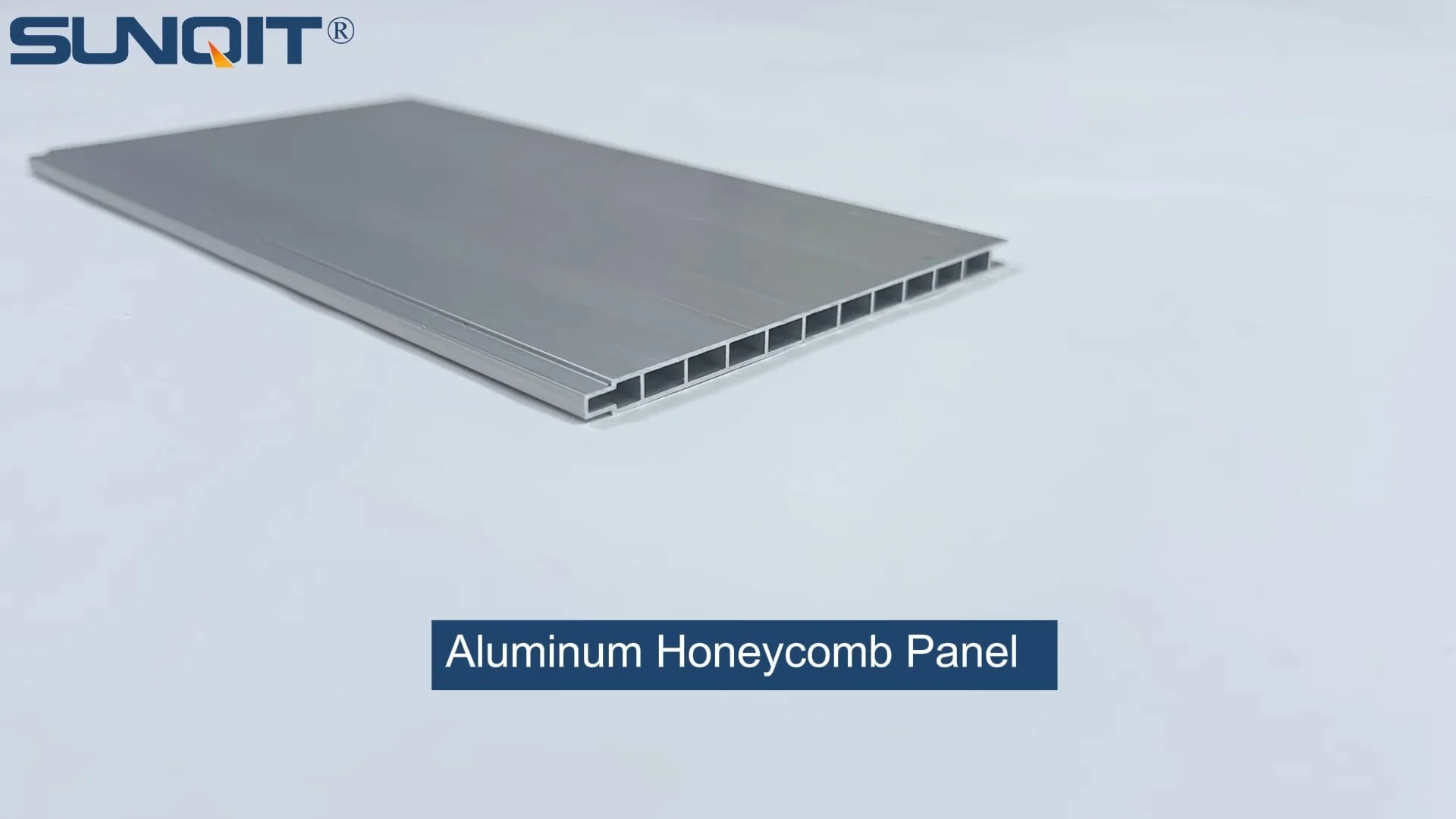
Aluminum Honeycomb Panel
Aluminum honeycomb panel used as table top, side wall, it is connected one pcs by one pcs from the side slot to make a full pieces.This panel width 105mm, 55mm, 35mm are optional for slection.
Walk into any busy factory, warehouse, or manufacturing plant, and you'll quickly notice a common challenge: temperature control. Whether it's the scorching heat of a foundry, the chill of a cold-storage facility, or the fluctuating conditions of a multi-stage production line, maintaining stable temperatures isn't just about worker comfort—it's about product quality, equipment efficiency, and operational costs. In recent years, one material has emerged as a quiet hero in addressing these challenges: the aluminum honeycomb panel. Far more than just a lightweight alternative to solid metal, these panels bring a unique set of thermal insulation properties that are transforming how industrial spaces manage heat and cold. Let's dive into why aluminum honeycomb panels are becoming a staple in modern industrial design, how they work, and where they're making the biggest impact—from workbenches to lean system setups and beyond.
What Are Aluminum Honeycomb Panels, Anyway?
Before we get into the thermal details, let's clarify what an aluminum honeycomb panel actually is. Picture a sandwich: two thin, flat sheets of aluminum (the "bread") with a core that looks like a honeycomb (the "filling"). This core, typically made of aluminum as well, is structured in a hexagonal grid pattern—just like the cells in a beehive. This design isn't arbitrary; bees evolved the hexagon as the most efficient way to store honey with minimal material, and engineers borrowed that genius for industrial materials. The result is a panel that's incredibly strong for its weight, resistant to bending and compression, and—crucially for our topic—excellent at insulating against temperature extremes.
You might be thinking, "Aluminum is a metal, and metals conduct heat. How can an aluminum panel insulate?" It's a fair question. Solid aluminum is indeed a good conductor of heat, which is why it's used in heat sinks for electronics. But the honeycomb structure changes the game. The key lies in the air (or sometimes other insulating materials) trapped within the hexagonal cells. Air is a poor conductor of heat, and when it's sealed in small, isolated pockets, it creates a barrier that slows down heat transfer. The thin aluminum skins, meanwhile, add structural rigidity without adding much bulk or conductivity. It's a perfect balance of strength, lightness, and thermal resistance—qualities that industrial environments crave.
The Science of Thermal Insulation in Honeycomb Panels
To understand why aluminum honeycomb panels excel at insulation, let's break down the three main ways heat moves: conduction (direct transfer through a material), convection (movement of heat via fluids like air or water), and radiation (heat transfer through electromagnetic waves). Aluminum honeycomb panels target the first two—conduction and convection—with remarkable efficiency.
Conduction: Slowing the Heat Flow
Conduction is what happens when you touch a hot pan and feel the heat transfer to your hand. In solid materials, heat moves quickly because molecules are packed closely together, passing energy from one to the next. In an aluminum honeycomb panel, the hexagonal core disrupts this flow. Instead of a solid block of metal, heat has to travel through the thin walls of the honeycomb cells, then across the air gaps between them. Since air conducts heat about 1000 times less efficiently than aluminum, each air pocket acts as a mini barrier. The result? Heat transfer through conduction is drastically reduced compared to a solid aluminum sheet of the same thickness.
Convection: Trapping the "Heat Currents"
Convection is the reason hot air rises and cold air sinks, creating currents that spread heat around a room. In large, open spaces, these currents can carry heat through a material quickly. But the honeycomb's small, uniform cells prevent this. Each hexagonal cell is a tiny, enclosed space, too small for significant air movement. Without room for convection currents to form, heat can't "flow" through the panel via moving air. This is why even panels with air-filled cores (as opposed to foam or other insulators) perform so well—they're essentially creating a network of micro-insulators that stop convection in its tracks.
R-Value: The Insulation Benchmark
When talking about insulation, the "R-value" is the gold standard. It measures a material's resistance to heat flow—the higher the R-value, the better the insulation. Aluminum honeycomb panels typically have R-values ranging from 1.5 to 3.0 per inch of thickness, depending on the core density and whether the cells are filled with air or a specialized insulating material. To put that in perspective, a solid aluminum sheet has an R-value close to 0 (it conducts heat almost instantly), while wood has an R-value of about 1.0 per inch, and fiberglass insulation (used in homes) ranges from 2.5 to 4.0 per inch. While honeycomb panels aren't quite as insulating as fiberglass, they offer a unique advantage: they combine that R-value with structural strength. You can't build a workbench out of fiberglass, but you can with aluminum honeycomb panels.

How Do They Compare to Other Industrial Materials?
To really appreciate the thermal benefits of aluminum honeycomb panels, let's compare them to common materials used in industrial settings. The table below pits them against solid aluminum, steel, plywood, and even standard aluminum profile sheets (the extruded aluminum beams often used in frames and structures).
| Material | Thermal Conductivity (W/m·K)* | Weight (kg/m² for 10mm thickness) | Key Thermal Advantage |
|---|---|---|---|
| Aluminum Honeycomb Panel | 0.04–0.15 | 3–5 | Low conductivity due to air-trapped core; balances insulation and strength |
| Solid Aluminum Sheet | 205 | 27 | None—excellent conductor, poor insulator |
| Steel Sheet | 45 | 78 | Better than solid aluminum but still conducts heat well; very heavy |
| Plywood | 0.12–0.17 | 6–8 | Similar conductivity to honeycomb panels but less durable and moisture-prone |
| Aluminum Profile (Extruded) | 160–180 | 15–20 | Structural but conducts heat; used for frames, not insulation |
*Lower values mean better insulation. Data based on typical industrial-grade materials.
The numbers speak for themselves. Aluminum honeycomb panels have thermal conductivity values 1000x lower than solid aluminum and 300x lower than steel. Even compared to plywood, which has similar conductivity, they're lighter and far more resistant to warping, moisture, and impact—critical factors in industrial environments where spills, heavy tools, and constant use are the norm. And while aluminum profile extrusions are essential for building frames (they're strong, modular, and easy to assemble), they're not designed for insulation. When you need a surface that's both structural and thermally resistant—say, a workbench top or a conveyor cover—honeycomb panels are the clear choice.

Real-World Applications: Where Aluminum Honeycomb Panels Shine
Enough theory—let's look at how these panels are making a difference in actual industrial settings. From small workbenches to large-scale lean system installations, their thermal properties are solving real problems.
Workbenches: Keeping Precision Tools Stable
Walk into a precision manufacturing shop—say, one that assembles electronics or medical devices—and you'll notice that the workbenches are more than just tables. They're the command centers where delicate components are handled, measurements are taken, and small parts are assembled. Temperature fluctuations here can be disastrous. A workbench top that heats up in the afternoon sun or cools down overnight can cause materials to expand or contract, throwing off measurements by thousandths of an inch. That's where aluminum honeycomb panel workbenches come in.
Consider a workstation where workers assemble circuit boards. The components on these boards—resistors, capacitors, microchips—are sensitive to heat. If the workbench surface absorbs heat from overhead lights or nearby machinery, it could transfer that heat to the components, affecting their performance. A honeycomb panel top, with its low thermal conductivity, acts as a buffer. It stays closer to room temperature, even if the air around it fluctuates. Workers don't have to pause to let the bench cool down, and the components remain stable. Some manufacturers even report reduced scrap rates after switching to honeycomb panel workbenches—proof that thermal stability translates to better quality.
Lean Systems: Reducing Energy Waste
Lean system principles are all about eliminating waste—whether it's wasted time, materials, or energy. In many factories, heating and cooling systems work overtime to maintain comfortable temperatures, but much of that energy is lost through inefficient surfaces. Imagine a lean production line with workstations, material racks, and conveyor covers made of solid steel. Those surfaces absorb heat in the summer and radiate cold in the winter, forcing HVAC systems to work harder. replace those surfaces with aluminum honeycomb panels, and suddenly the line becomes a thermal barrier. The panels reflect heat instead of absorbing it, and their insulation reduces the need for constant heating or cooling. Over time, this adds up to significant energy savings. One automotive parts manufacturer in Michigan reported a 12% reduction in monthly heating costs after retrofitting their lean system workstations with honeycomb panels—a number that quickly paid for the initial investment.
Conveyor Systems: Protecting Temperature-Sensitive Goods
Conveyors are the arteries of many industrial facilities, moving everything from raw materials to finished products. When those products are temperature-sensitive—think food, pharmaceuticals, or certain chemicals—keeping them within a safe temperature range during transport is critical. Aluminum honeycomb panels are increasingly used as cladding for conveyor systems, creating a insulated tunnel that shields goods from external temperature swings. For example, a bakery might use a conveyor to move dough from the mixing area (room temperature) to the proofing oven (warm and humid). Without insulation, the dough could cool down too much in transit, leading to uneven rising. A honeycomb panel cover keeps the heat in, ensuring the dough reaches the oven at the perfect temperature. Similarly, in a pharmaceutical plant, conveyors carrying vaccines might use honeycomb panels to block out heat from nearby machinery, maintaining the cold chain that keeps vaccines effective.
Clean Rooms and Controlled Environments
In industries like semiconductor manufacturing or biotechnology, clean rooms require not just sterile conditions but also extremely tight temperature and humidity control. Even small fluctuations can ruin batches of microchips or lab samples. Aluminum honeycomb panels are ideal here because they don't off-gas (release harmful particles) like some plastic or wood materials, and their thermal stability helps maintain the room's set temperature. Walls, ceilings, and even work surfaces made from honeycomb panels act as a consistent thermal barrier, reducing the load on the room's HVAC system and ensuring that sensitive experiments or manufacturing processes aren't disrupted by heat spikes or cold drafts.
Beyond Insulation: Other Perks for Industrial Use
While thermal insulation is a star feature, aluminum honeycomb panels bring other benefits that make them a no-brainer for industrial settings. Let's quickly touch on a few:
- Lightweight: A 10mm thick honeycomb panel weighs about 3–5 kg per square meter, compared to 27 kg for solid aluminum. This makes installation easier, reduces strain on supporting structures, and even lowers shipping costs.
- Durable: The honeycomb structure is inherently strong, so the panels resist dents, scratches, and impacts—important in busy factories where tools or materials might be dropped.
- Corrosion-Resistant: Aluminum naturally forms a protective oxide layer, and many panels are anodized or coated for extra resistance to chemicals, moisture, and rust—perfect for food processing or marine industrial settings.
- Customizable: Panels can be cut to any size, painted, or covered with other materials (like anti-slip coatings for workbenches). They also pair well with aluminum profile frames, making them easy to integrate into existing setups.
Choosing the Right Aluminum Honeycomb Panel for Your Needs
Not all aluminum honeycomb panels are created equal. If you're considering them for a thermal insulation project, here are a few factors to keep in mind:
Core Density
The density of the honeycomb core—how many cells per square inch—affects both strength and insulation. A higher density core (more cells) is stronger but may have slightly lower insulation (less air space). For thermal-focused applications, a medium density (around 3–5 cells per inch) is usually the sweet spot, balancing insulation and structural needs.
Skin Thickness
The aluminum skins can range from 0.3mm to 2mm thick. Thicker skins add strength but also increase thermal conductivity (since there's more metal to conduct heat). For insulation, stick with thinner skins (0.5–1mm) unless you need extra durability for heavy use.
Cell Filling
Most panels have air-filled cells, but some are filled with foam or mineral wool for extra insulation. Foam-filled panels have higher R-values (up to 4.0 per inch) but are heavier and more expensive. They're a good choice for extreme temperature environments, like freezers or foundries.
Surface Treatment
Anodized or powder-coated surfaces not only resist corrosion but can also reflect heat (if light-colored) or absorb it (if dark-colored). For insulation, light-colored, reflective coatings help bounce heat away from the panel, enhancing its thermal performance.
Installation and Maintenance Tips
Installing aluminum honeycomb panels is relatively straightforward, especially if you're working with aluminum profile frames (which many industrial setups already use). They can be cut with standard metalworking tools, drilled, and fastened with screws or adhesives. The key is to ensure a tight seal around the edges—gaps can let air circulate, reducing insulation efficiency. For best results, use gaskets or sealant around panel joints, especially in conveyor covers or clean room walls.
Maintenance is minimal. Unlike wood, which can warp or rot, or plastic, which can crack in extreme heat, aluminum honeycomb panels are low-maintenance. A quick wipe with a damp cloth is usually enough to clean them, and they don't require painting or sealing (though you can repaint them if you want to change colors). Just inspect the edges occasionally for signs of damage—if a panel gets dented or the core is exposed, it may lose some insulation properties and should be repaired or replaced.
The Future of Industrial Thermal Management
As industries face increasing pressure to reduce energy costs, improve sustainability, and maintain higher quality standards, the demand for materials that offer both performance and efficiency will only grow. Aluminum honeycomb panels are well-positioned to meet this demand. With ongoing advancements in core design—like using recycled aluminum for the core or integrating phase-change materials (substances that absorb and release heat to regulate temperature) into the cells—their thermal insulation properties are only getting better.
Imagine a future where a lean system isn't just about reducing waste in production, but also in energy use—powered by honeycomb panels that keep work areas comfortable without guzzling electricity. Or a warehouse where conveyor systems, clad in honeycomb panels, can transport goods across vast spaces without temperature control issues, opening up new possibilities for supply chain efficiency. It's not science fiction; it's happening now, one panel at a time.
Final Thoughts: More Than a Material—A Thermal Solution
Aluminum honeycomb panels may not have the flashy appeal of robotics or AI-driven manufacturing, but they're a workhorse in the quiet revolution of industrial efficiency. By combining lightweight strength with impressive thermal insulation, they're proving that sometimes the most impactful innovations are the ones that solve basic problems—like keeping a workbench cool, a conveyor warm, or a factory's energy bill in check. Whether you're designing a new lean system, upgrading a workbench, or retrofitting a conveyor, don't overlook the humble honeycomb panel. It might just be the key to unlocking better thermal control, lower costs, and a more sustainable industrial future.