- Company Articles
- Products and Technology
- Product knowledge
- Three Way Aluminum Pipe Joint Explained: Structure and Working Principle

Three Way Aluminum Pipe Joint Explained: Structure and Working Principle
Related Product
Three Way Aluminum Pipe Joint
Aluminum 3 way pipe joint for 28mm aluminum pipe connection in 3 direction.
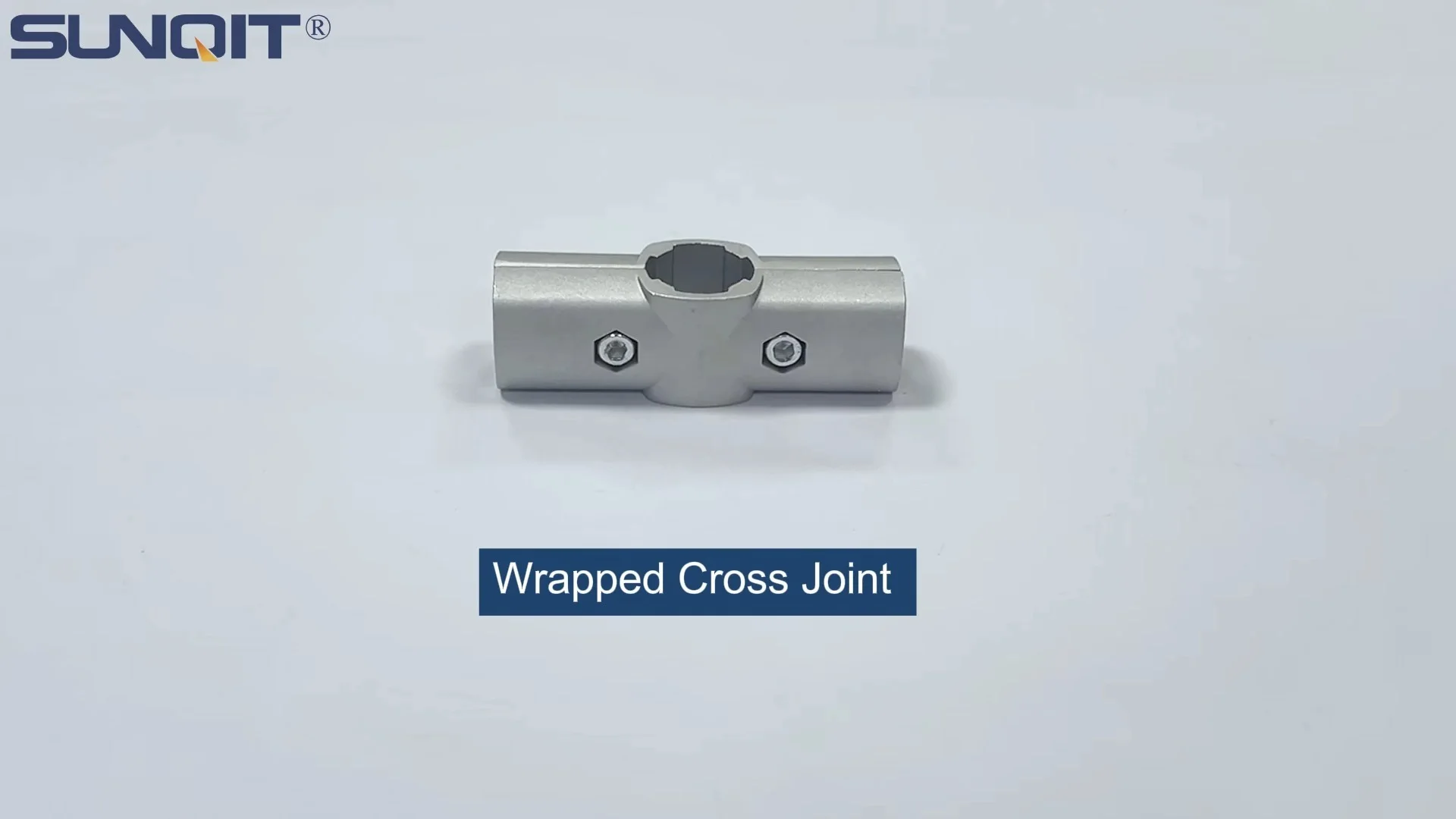
Introduction: The Unsung Hero of Modular Industrial Systems
In the bustling world of manufacturing, warehouses, and production lines, efficiency isn't just a buzzword—it's the backbone of success. Every tool, every component, and every inch of space matters when it comes to streamlining operations, reducing waste, and keeping workflows moving. Among the countless parts that make this possible, there's one small yet critical component that often flies under the radar: the three way aluminum pipe joint. Quietly holding together structures that power lean systems, workbenches, and material racks, this unassuming piece is the glue that turns simple aluminum pipes into versatile, dynamic solutions.
If you've ever walked through a modern factory or a well-organized warehouse, you've probably seen its handiwork without realizing it. The sturdy frames of assembly workstations, the smooth-flowing roller tracks of material handling systems, and the adjustable shelves of storage racks—all of these often rely on three way aluminum pipe joints to maintain stability while allowing for quick reconfiguration. Unlike rigid, welded structures that lock operations into a fixed layout, these joints enable flexibility, making it easy to adapt to changing production needs, new product lines, or shifting workflow demands.
But what exactly is a three way aluminum pipe joint, and why does it play such a pivotal role in industrial setups? In this article, we'll take a deep dive into its structure, how it works, and why it's become a cornerstone of modular design in industries worldwide. Whether you're a plant manager looking to optimize your workspace, a small business owner setting up a new production line, or simply curious about the mechanics behind efficient industrial systems, understanding this component will give you a new appreciation for the thought and engineering that goes into making modern manufacturing tick.
Understanding the Basics: Aluminum Pipes, Profiles, and the Need for Adaptable Connections
Before we zoom in on the three way aluminum pipe joint itself, let's take a step back to understand the ecosystem it operates in. At the heart of many modular industrial systems are aluminum pipes and aluminum profiles—lightweight, durable, and highly customizable materials that have revolutionized how workspaces are designed. Unlike heavy steel pipes or brittle plastic alternatives, aluminum offers the perfect balance of strength and flexibility: it's strong enough to support heavy loads, light enough to be easily maneuvered, and resistant to corrosion, making it ideal for both indoor and semi-outdoor environments.
Aluminum profiles, in particular, have become a staple in lean manufacturing. These extruded pieces come in various shapes and sizes, with pre-drilled holes or T-slots that allow for easy attachment of accessories like brackets, shelves, and, of course, joints. When combined with aluminum pipes—hollow tubes that are often used for structural support or as rails for material flow—they form the building blocks of everything from simple workbenches to complex conveyor systems. But none of this would be possible without reliable, adaptable connections. Enter the three way aluminum pipe joint.
Think of it this way: if aluminum pipes and profiles are the "bones" of a modular system, joints are the "joints" (no pun intended) that connect them, allowing for movement, stability, and customization. A three way joint, as the name suggests, is designed to connect three pipes or profiles at once, typically in a T-shape or Y-shape configuration. This might sound simple, but the engineering behind it is anything but. It needs to securely hold multiple components together, withstand the stress of daily use, and still allow for quick assembly and disassembly—all while being cost-effective and durable.
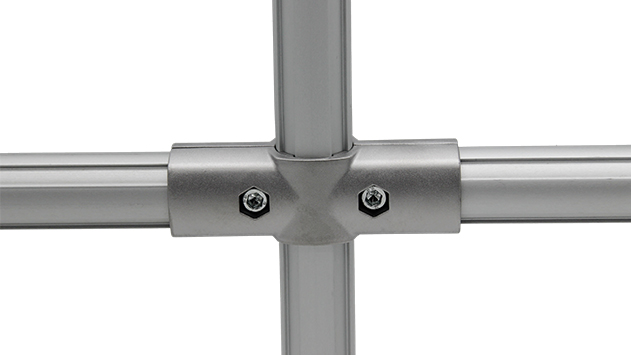
Structure of the Three Way Aluminum Pipe Joint: Breaking Down Its Design
To truly understand how a three way aluminum pipe joint works, we first need to examine its structure. While designs can vary slightly between manufacturers, most follow a core set of principles aimed at balancing strength, ease of use, and versatility. Let's break down its key components and design features.
Core Components: The Building Blocks of Connection
At its most basic, a three way aluminum pipe joint consists of three main parts: the body, connection ports, and locking mechanisms. Let's start with the body. Made from high-grade aluminum alloy—often 6063-T5, a material known for its excellent strength-to-weight ratio and corrosion resistance—the body is the central hub of the joint. Its shape is typically cylindrical or slightly tapered, with three arms (or ports) extending outward at 90-degree angles (for T-shapes) or 120-degree angles (for Y-shapes). This geometry ensures that the joint can distribute weight evenly across all three connected pipes, reducing stress points and enhancing stability.
Next are the connection ports—hollow openings at the end of each arm where the aluminum pipes or profiles are inserted. These ports are precision-machined to match standard pipe diameters, ensuring a snug, secure fit. For example, a joint designed for 28mm aluminum pipes will have ports with an inner diameter of 28.5mm (a slight tolerance to allow for easy insertion while still maintaining a tight grip). The inner walls of these ports are often smooth but may feature subtle ridges or threads to help hold the pipe in place once locked.
The third critical component is the locking mechanism. This is what keeps the pipes firmly attached to the joint, preventing slippage or separation during use. The most common type is a set screw mechanism: a small threaded hole in the side of each port, into which a screw (usually made of steel or stainless steel) is inserted. When tightened, the screw presses against the outer surface of the pipe, creating friction that holds it in place. Some designs use cam locks instead—spring-loaded mechanisms that engage with notches on the pipe for a tool-free, quick-release connection. Both options have their merits: set screws offer superior holding power for heavy loads, while cam locks excel in scenarios where frequent disassembly is needed.
Many joints also include additional features for added functionality. For instance, some have flanges or mounting tabs on the body, allowing them to be attached directly to walls, floors, or other structures. Others may have recessed areas to accommodate aluminum pipe accessories like end caps or gaskets, which protect the pipe ends from damage or debris. Some even come with rubber O-rings inside the ports to create a tighter seal, preventing moisture or dust from entering the pipes—a small detail that can significantly extend the life of the system in harsh environments.
Material Matters: Why Aluminum Alloys Are the Go-To Choice
You might be wondering: why aluminum? Why not steel, plastic, or another material? The answer lies in aluminum's unique combination of properties that make it ideal for this application. First and foremost is its weight. Aluminum is about one-third the weight of steel, which makes the joints (and the entire modular system they support) easier to handle during assembly and reconfiguration. This is a huge advantage in dynamic workplaces where layouts change frequently—imagine moving a heavy steel-jointed workbench versus one with aluminum joints; the difference in labor and time is substantial.
Corrosion resistance is another key factor. Aluminum naturally forms a thin oxide layer on its surface when exposed to air, which acts as a barrier against rust and deterioration. This makes it suitable for use in environments with moisture, chemicals, or temperature fluctuations—common in food processing plants, automotive facilities, and even outdoor warehouses. Unlike steel, which requires painting or coating to prevent rust, aluminum joints maintain their integrity with minimal maintenance, reducing long-term costs.
Strength is also a priority, and modern aluminum alloys deliver here too. While pure aluminum is relatively soft, alloys like 6063-T5 are heat-treated to enhance their hardness and tensile strength. This means the joint can withstand significant loads—often up to 500kg or more per connection, depending on the design—without bending or deforming. For context, that's enough to support the weight of a fully loaded pallet of goods or a heavy industrial workbench with tools and equipment.
Design Features for Practicality: Beyond the Basics
Beyond the core components and materials, three way aluminum pipe joints often include thoughtful design features that make them more user-friendly. One such feature is precision machining. The connection ports are drilled and tapped with extreme accuracy to ensure a perfect fit with standard aluminum pipe sizes (common diameters include 28mm, 30mm, and 40mm). This consistency is crucial for modular systems, where components from different batches or manufacturers need to work together seamlessly.
Another practical feature is the inclusion of anti-slip elements. Some joints have knurled or textured surfaces on the inside of the ports, which grip the pipe more tightly when the locking mechanism is engaged. This reduces the risk of pipes slipping out over time, even under vibration or heavy use—common in manufacturing settings where machinery is constantly running. Others use rubberized inserts or serrated edges to achieve the same effect, adding an extra layer of security.
Many manufacturers also prioritize tool-free or minimal-tool assembly. While some joints require a hex key or wrench to tighten set screws, others use quick-release levers or cam locks that can be operated by hand. This speeds up the assembly process, reduces the need for specialized tools, and makes it easier for workers with basic training to set up or reconfigure systems. In a lean system, where downtime is costly, this efficiency can have a significant impact on overall productivity.

Working Principle: How the Joint Connects and Secures Pipes
Now that we've explored the structure of the three way aluminum pipe joint, let's dive into how it actually works. At its core, the principle is simple: it connects three pipes or profiles by gripping them securely and distributing stress evenly. But the mechanics behind this process are worth examining in detail, as they reveal why this joint is so effective in modular systems.
Step 1: Insertion and Alignment
The first step in using a three way joint is inserting the pipes into the connection ports. This might seem straightforward, but alignment is key. Most joints are designed with a slight taper or guide bevel at the entrance of each port, which helps the pipe slide in smoothly and ensures it sits centered. For example, if you're connecting a vertical pipe to two horizontal pipes in a T-shape, the vertical pipe is inserted into the top port, and the horizontal pipes into the side ports. The guide bevels prevent misalignment, which could lead to uneven weight distribution or weak connections.
It's important to note that the pipes themselves are often cut to precise lengths beforehand, using a pipe cutter or saw. This ensures that the joint sits flush against the pipe ends, maximizing contact area and reducing stress. Some systems also use aluminum profile with pre-drilled holes that align with the joint's locking mechanisms, adding an extra layer of precision.
Step 2: Locking Mechanisms in Action
Once the pipes are inserted, the locking mechanism takes over. Let's focus on the most common type: set screws. Each port has one or two threaded holes (usually M5 or M6 size) that accept a steel set screw. When the screw is tightened with a hex key, its tip presses against the outer surface of the pipe, creating friction that holds it in place. The key here is the balance between tightness and damage prevention—over-tightening can dent the pipe or strip the screw threads, while under-tightening risks slippage. Many manufacturers provide torque specifications (e.g., 3-5 Nm) to guide proper installation.
For joints with cam locks, the process is even simpler. A lever or dial on the joint's body is rotated, which activates a cam (a curved or eccentric piece) inside the port. As the cam turns, it presses against the pipe, wedging it securely in place. This design allows for quick adjustments—just flip the lever to release the pipe, reposition, and lock again. It's particularly useful in applications where pipes need to be moved or replaced frequently, such as in prototyping labs or short-run production lines.
Some advanced joints combine both set screws and cam locks for added security. For example, a primary cam lock holds the pipe in place during normal use, while a set screw can be tightened for extra stability in high-vibration environments. This hybrid approach offers the best of both worlds: speed and flexibility, with the option for enhanced strength when needed.
Step 3: Load Distribution and Stability
The true test of a three way joint's design is how it handles load distribution. When a weight is applied to one of the connected pipes—say, a box placed on a shelf supported by a T-shaped joint—the joint must transfer that weight to the other two pipes. Thanks to its symmetrical geometry, the three way joint spreads the load evenly across all three arms, preventing any single port from bearing too much stress. For example, a downward force on the vertical pipe of a T-joint is distributed to the two horizontal pipes, which then transfer the load to the floor or supporting structure.
The material choice plays a role here too. Aluminum's rigidity ensures that the joint doesn't flex under load, maintaining the alignment of the pipes and preventing wobbling. This is critical for applications like conveyor systems, where even a small misalignment can cause jams or damage to products. The combination of a strong aluminum body and secure locking mechanisms means the joint acts as a rigid connection point, turning three separate pipes into a single, stable structure.

Applications: Where Three Way Aluminum Pipe Joints Shine
Now that we understand the structure and working principle of three way aluminum pipe joints, let's explore where they're actually used in the real world. Their versatility makes them a staple in a wide range of industries, from automotive manufacturing to e-commerce warehousing. Here are some of the most common applications:
Lean Manufacturing Systems: Streamlining Workflows
Lean manufacturing is all about eliminating waste and optimizing processes, and modular systems are a key part of this philosophy. Three way aluminum pipe joints are the backbone of many lean setups, as they allow for the creation of custom workstations, material racks, and flow lines that adapt to changing needs. For example, a production line might use T-shaped joints to build a U-shaped workbench, with horizontal pipes serving as shelves for tools and vertical pipes as supports. If the product design changes, the joints can be quickly disassembled, and the workbench reconfigured—no welding, no cutting, just a few turns of a hex key.
Flow racks, which use gravity to move materials from one workstation to another, are another prime example. These racks consist of inclined roller tracks supported by aluminum pipes connected with three way joints. The joints allow for easy adjustment of the track angle (to control material flow speed) and the addition of side rails (to prevent items from falling off). In a busy warehouse, this flexibility means the rack can be adapted for different-sized boxes or changed to accommodate a new product line in hours, not days.
Workbenches: Sturdy, Customizable, and Mobile
A well-designed workbench is the heart of any workshop or assembly area, and three way aluminum pipe joints make it possible to build benches that are both sturdy and customizable. For instance, a basic workbench frame might use T-shaped joints to connect vertical support pipes to horizontal rails, with additional Y-shaped joints adding cross-bracing for stability. The top can be a plywood, steel, or aluminum honeycomb panel attached to the frame using brackets—all secured with the same joints.
What's more, adding mobility is simple: just attach casters (wheels) to the bottom of the vertical pipes using specialized caster joints. This transforms a stationary workbench into a mobile cart that can be moved to where it's needed most—perfect for maintenance teams or assembly line workers who need tools at their fingertips. When mobility isn't needed, adjustable feet can be added instead, leveling the bench on uneven floors.
Material Handling and Storage: Racks, Trolleys, and Conveyors
In warehouses and distribution centers, efficient material handling is everything. Three way aluminum pipe joints are used to build everything from simple shelving units to complex conveyor systems. Material racks, for example, often use Y-shaped joints to create multi-level shelving, with each level supported by horizontal pipes. The joints allow for easy adjustment of shelf height—so you can store tall items on the bottom and short items on top, maximizing vertical space.
Turnover trolleys, used to transport goods between departments, rely on joints for their frames. A typical trolley might have a rectangular base made with T-joints, vertical support pipes, and a handle for pushing—all connected with three way joints. The lightweight aluminum design makes the trolley easy to maneuver, even when fully loaded, while the strong joints ensure it doesn't collapse under weight.
Conveyor systems, which move products along a path, use joints to connect roller tracks, side rails, and support legs. For example, a gravity conveyor might have a series of parallel roller tracks connected with cross-braces (using three way joints) to keep them aligned. The joints allow for the conveyor to be extended or shortened as needed, and even curved to navigate around obstacles in the warehouse floor plan.
Key Benefits: Why Choose Three Way Aluminum Pipe Joints?
By now, it's clear that three way aluminum pipe joints are more than just simple connectors—they're enablers of efficiency, flexibility, and cost savings. Let's summarize their key benefits:
Flexibility and Adaptability
Perhaps the biggest advantage is their flexibility. Unlike welded or glued connections, which are permanent, three way joints allow for quick assembly, disassembly, and reconfiguration. This is a game-changer in industries where needs evolve rapidly. For example, a small electronics manufacturer might start with a single workbench and later expand to a full production line by adding more joints and pipes. Or a warehouse might reconfigure its material racks seasonally to accommodate different inventory levels. With aluminum joints, these changes can be done in hours, not days, with minimal labor and no specialized tools.
Cost-Effectiveness
While the upfront cost of aluminum joints might be slightly higher than plastic alternatives, their durability and reusability make them more cost-effective in the long run. Aluminum doesn't rust, warp, or degrade easily, so the joints can be reused multiple times—even in different configurations. Plastic joints, on the other hand, may crack under heavy loads or become brittle over time, requiring frequent replacement. Steel joints, while strong, are heavier and more expensive to transport and install, adding to labor costs.
Additionally, the modular nature of aluminum systems reduces waste. Instead of buying a new workbench or rack when needs change, you can repurpose existing pipes and joints, saving money and reducing environmental impact. This aligns with the principles of lean system thinking, where minimizing waste (including material waste) is a core goal.
Lightweight and Easy to Handle
Aluminum's lightweight nature makes the joints (and the systems they build) easy to handle. This reduces the risk of workplace injuries during assembly or reconfiguration, as workers don't need to lift heavy steel components. It also lowers transportation costs, as more joints can be shipped in a single container compared to steel alternatives. For small businesses or startups with limited labor resources, this can be a significant advantage.
Low Maintenance
As mentioned earlier, aluminum's corrosion resistance means minimal maintenance. A quick wipe with a damp cloth to remove dust or debris is usually all that's needed. Unlike steel joints, which may require painting or lubrication, aluminum joints stay in good condition with little effort. This frees up maintenance teams to focus on more critical tasks, rather than constantly repairing or replacing connectors.
Technical Specifications: A Closer Look at the Numbers
To give you a better sense of the practical capabilities of three way aluminum pipe joints, let's examine some common technical specifications. The following table outlines typical parameters for standard models, though exact values may vary by manufacturer.
| Model | Compatible Pipe Diameter (mm) | Max Load Capacity (kg per Port) | Material | Surface Treatment | Locking Mechanism | Common Applications |
|---|---|---|---|---|---|---|
| T-28 | 28 | 300 | 6063-T5 Aluminum Alloy | Anodized (Silver) | 2 x M5 Set Screws | Workbenches, Small Material Racks |
| Y-30 | 30 | 400 | 6061-T6 Aluminum Alloy | Powder-Coated (Black) | 1 x Cam Lock + 1 x Set Screw | Flow Racks, Conveyor Supports |
| T-40 | 40 | 500 | 6063-T5 Aluminum Alloy | Anodized (Clear) | 2 x M6 Set Screws | Heavy-Duty Workstations, Pallet Racks |
| Y-25 | 25 | 250 | 6063-T5 Aluminum Alloy | Anodized (Gold) | Cam Lock (Tool-Free) | Lightweight Trolleys, Prototyping Frames |
As you can see, there's a joint for nearly every application, from lightweight prototyping to heavy-duty industrial use. The compatible pipe diameter is one of the most important factors—choosing a joint that matches your pipe size ensures a secure fit. Max load capacity is another key consideration; always check that the joint can handle the weight of your intended load, including dynamic forces (like items being placed or moved on a shelf).
Comparison with Other Joint Types
To fully appreciate the value of three way aluminum pipe joints, it's helpful to compare them with other common joint types used in industrial systems. Let's look at two alternatives: fixed lean pipe joints and plastic modular joints.
Three Way Aluminum vs. Fixed Lean Pipe Joints
Fixed lean pipe joints (often made of steel or zinc-plated steel) are traditional connectors used in lean manufacturing systems. They're designed to connect two pipes at fixed angles (usually 90 degrees) and are known for their strength. However, they lack the versatility of three way aluminum joints. Fixed joints are, as the name suggests, fixed—once installed, they can't be adjusted or reconfigured without cutting or welding. This makes them ideal for permanent structures but limiting for dynamic workplaces.
Aluminum joints, by contrast, are modular and reusable. They also tend to be lighter and more corrosion-resistant than steel fixed joints. While steel joints may have a higher max load capacity in some cases, aluminum joints offer a better balance of strength, weight, and flexibility for most modern applications.
Three Way Aluminum vs. Plastic Modular Joints
Plastic modular joints are lightweight and inexpensive, making them popular for low-load applications like retail displays or light-duty shelving. However, they lack the strength and durability of aluminum. Plastic can warp under heat, crack under heavy loads, and degrade over time when exposed to UV light or chemicals. Aluminum joints, while slightly more expensive, are built to last in industrial environments, making them a better investment for long-term use.
Maintenance and Care: Keeping Your Joints in Top Shape
While three way aluminum pipe joints are low-maintenance, a little care goes a long way in extending their lifespan. Here are some simple tips:
- Regular Inspection: Check the joints monthly for loose set screws or cam locks. Tighten any that have come loose to prevent slippage.
- Cleaning: Wipe the joints with a soft, damp cloth to remove dust, oil, or debris. For stubborn grime, use a mild detergent (avoid harsh chemicals that could damage the anodized finish).
- Lubrication (if needed): If your joint has moving parts (like cam locks), apply a small amount of silicone lubricant to the mechanism annually to keep it operating smoothly.
- replace Worn Parts: If a set screw strips or a cam lock breaks, replace it immediately. Most manufacturers sell replacement parts, so you don't need to buy a whole new joint.
- Avoid Overloading: Stick to the joint's max load capacity to prevent bending or deformation. If you need to support heavier loads, upgrade to a larger model.
Conclusion: The Backbone of Modern Modular Systems
In the world of industrial efficiency, it's often the smallest components that make the biggest difference. The three way aluminum pipe joint is a perfect example of this. Its simple yet ingenious design—combining a strong aluminum body, precision connection ports, and reliable locking mechanisms—turns ordinary aluminum pipes and profiles into powerful, adaptable systems that drive lean manufacturing, streamline workflows, and reduce costs.
Whether you're building a workbench, a material rack, or a full conveyor system, this joint offers the flexibility to adapt to changing needs, the strength to handle heavy loads, and the durability to last for years with minimal maintenance. It's a testament to the power of modular design: by focusing on simple, reusable components, manufacturers and warehouses can create customized solutions that grow and evolve with their businesses.
So the next time you walk through a well-organized factory or warehouse, take a moment to look at the structures around you. Chances are, there's a three way aluminum pipe joint holding them together—quietly, reliably, and efficiently. It may not be the most glamorous component, but in the quest for industrial excellence, it's truly an unsung hero.